Amaryllis is one of those plants that looks high-maintenance, but it is actually pretty forgiving once you understand two things: the bulb stores energy, and your care changes depending on the stage (sprouting, blooming, leaf growth, then rest). Get those stages right and you can keep the same bulb going for years.
Quick note on names: most “amaryllis” sold as holiday houseplants are actually Hippeastrum hybrids (not Amaryllis belladonna). The care in this guide is for the common indoor, big-blooming type you see in stores.
Safety: bulbs and plant parts are toxic if eaten. Keep away from pets and small children.
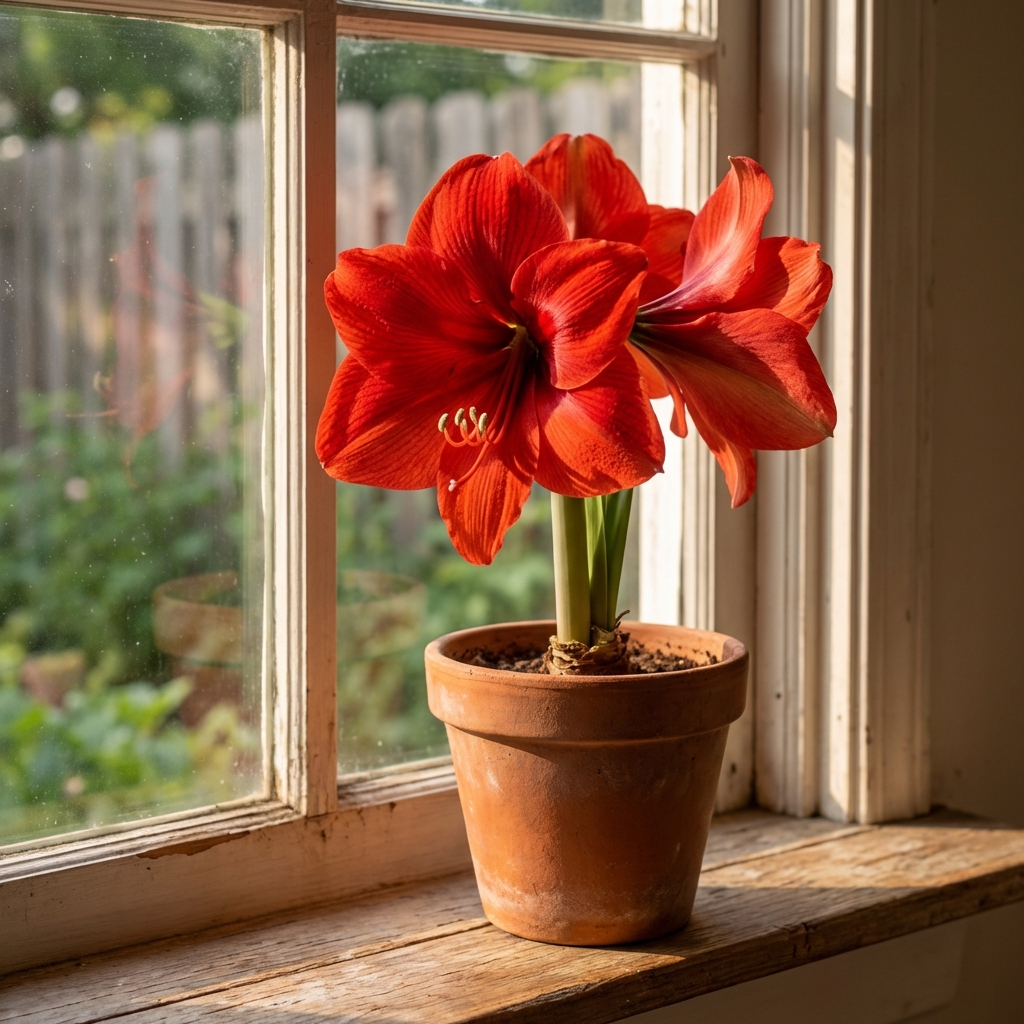
Know your amaryllis stages
Most care problems happen when we treat amaryllis like a regular houseplant year-round. It has a rhythm:
- Planting and sprouting: roots first, then a thick flower stalk (sometimes leaves too).
- Bloom time: big flowers, often 2 to 4+ weeks total per stalk depending on variety and temperature.
- Leaf growth phase: long strap-like leaves feed the bulb for next year’s flowers.
- Dormancy (rest): a cool, dry break that helps trigger reblooming.
When you know what stage you are in, the “right” watering and light level becomes obvious.
Choosing a bulb that will actually perform
If you are buying bulbs, size matters. A larger bulb has more stored energy and usually gives more flower stalks.
- Pick firm bulbs with tight, dry outer skin. Soft spots are a red flag for rot.
- Look for a fat neck (where leaves and stalks emerge). Skinny, shriveled bulbs tend to struggle.
- Check for mold around the basal plate (the flat bottom where roots grow). A little dryness is fine, fuzz is not.
If you are reusing a bulb, do not worry if it looks “ugly” from old papery layers. Firm is what matters.
Waxed bulbs: if you bought one of those wax-coated “no water needed” bulbs, it often will not rebloom well. Many are treated as one-and-done because they are sealed and may not develop roots normally.
Pot, soil, and planting depth
Pick the right pot
Amaryllis blooms best when slightly snug in its pot. Too much extra soil stays wet and invites rot.
- Pot size: choose a container about 1 to 2 inches wider than the bulb on each side.
- Drainage: non-negotiable. Use a pot with a drainage hole and a saucer.
- Weight: blooms get top-heavy. A heavier pot (ceramic or terracotta) helps prevent tipping.
Use a fast-draining mix
A basic indoor potting mix works if you lighten it. The goal is moisture retention without soggy conditions.
- 2 parts potting mix
- 1 part perlite or pumice
- Optional: a small handful of orchid bark for extra airflow
Plant at the right depth
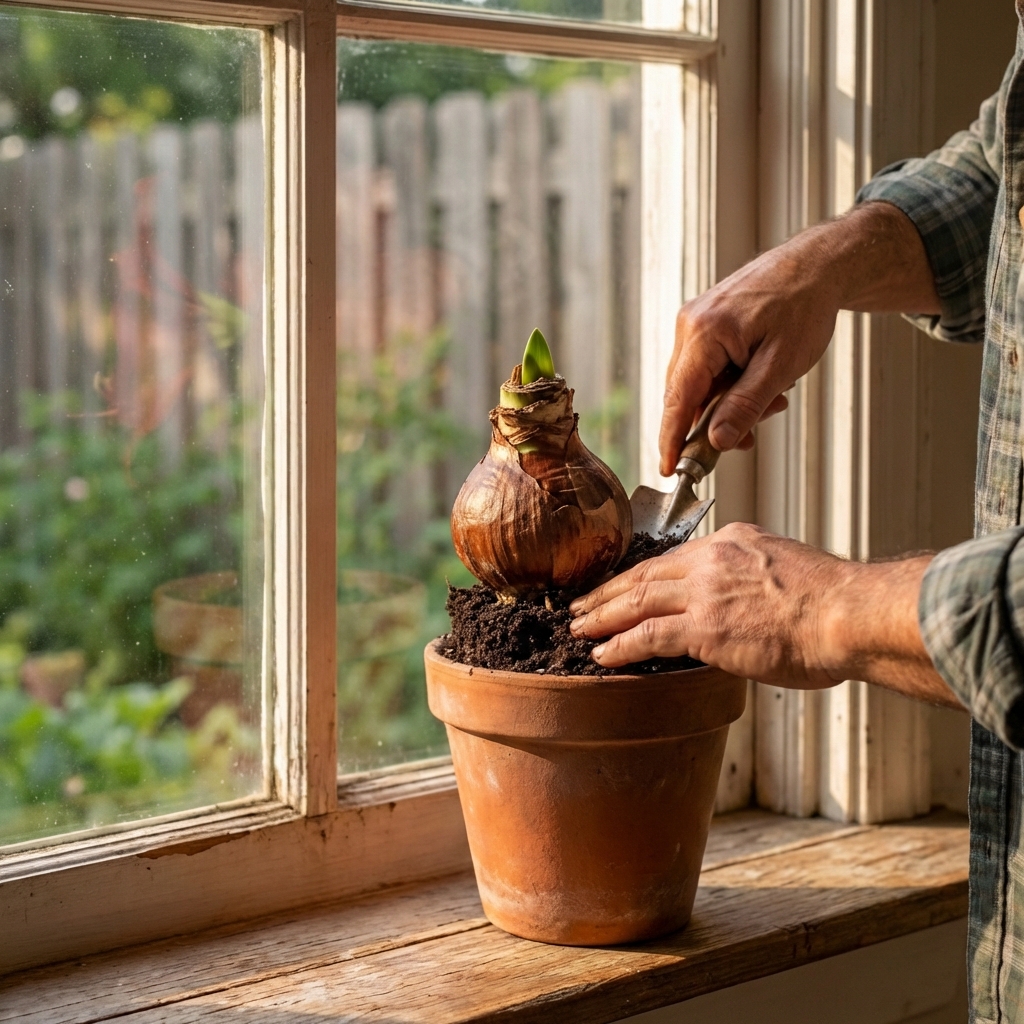
Do not bury the whole bulb. This is the most common mistake I see.
- Set the bulb so the top 1/3 to 1/2 is above the soil line.
- Press soil down gently so the bulb is stable.
- Water once to settle the mix, then let it dry slightly before watering again.
Light and temperature for strong stems and bigger flowers
Light
Bright light is your best tool for preventing floppy flower stalks. If you are unsure what “bright” means, think right up near the glass of your brightest window.
- Indoors: a south or west-facing window is ideal in many homes (east is often fine too). North windows are usually too dim unless you add a grow light.
- Rotate the pot every few days so the stalk grows straight instead of leaning.
- If light is low: expect longer, weaker stalks. A small grow light placed close (per the manufacturer’s distance guidance) helps a lot.
Temperature
Cooler indoor temperatures generally extend bloom life.
- For fast growth: around 70 to 75°F (21 to 24°C).
- To keep blooms longer: closer to 60 to 68°F (15 to 20°C).
- Avoid placing it right next to heat vents or fireplaces.
Watering without rotting the bulb
Amaryllis bulbs rot when they sit in wet soil, especially before they have a solid root system. A simple rule works well: water thoroughly, then let the soil dry partway.
Easy dryness check: use your finger, a chopstick, or a wooden skewer. If the top 1 to 2 inches are dry (or the skewer comes out mostly clean), it is time to water.
During sprouting and blooming
- Water when the top 1 to 2 inches of soil feel dry.
- Water around the bulb, not directly into the bulb neck.
- Empty the saucer after watering so it is not sitting in runoff.
During the leaf-growth phase (after blooms)
This is when you build next year’s flowers. Keep it evenly moist but never soggy.
- Water a bit more regularly because leaves are actively using moisture.
- Still let the surface dry slightly between waterings.
During dormancy
Once you put the bulb to rest, watering should be almost none. You are aiming for “barely dry,” not bone-dry dust, but definitely not moist potting mix.
Fertilizer: when it helps and when it’s a waste
Fertilizing at the right time makes a difference. Fertilizing at the wrong time just salts the soil.
Best time to fertilize
- After flowering, when leaves are growing strongly.
- Use a balanced fertilizer (like 10-10-10 or similar) at half strength every 2 to 4 weeks.
Skip fertilizer when
- The plant is dormant.
- You just planted a bulb and it has not rooted well yet.
- The bulb is stressed or showing rot symptoms.
If you prefer slow-release fertilizer, a light dose at the start of the leaf phase works fine, just do not overdo it in a small pot.
How to keep flower stalks from flopping
Amaryllis stems can lean or topple for a few very fixable reasons.
- Not enough light: move it brighter and rotate the pot.
- Pot too light: switch to a heavier pot or use a decorative cachepot for weight.
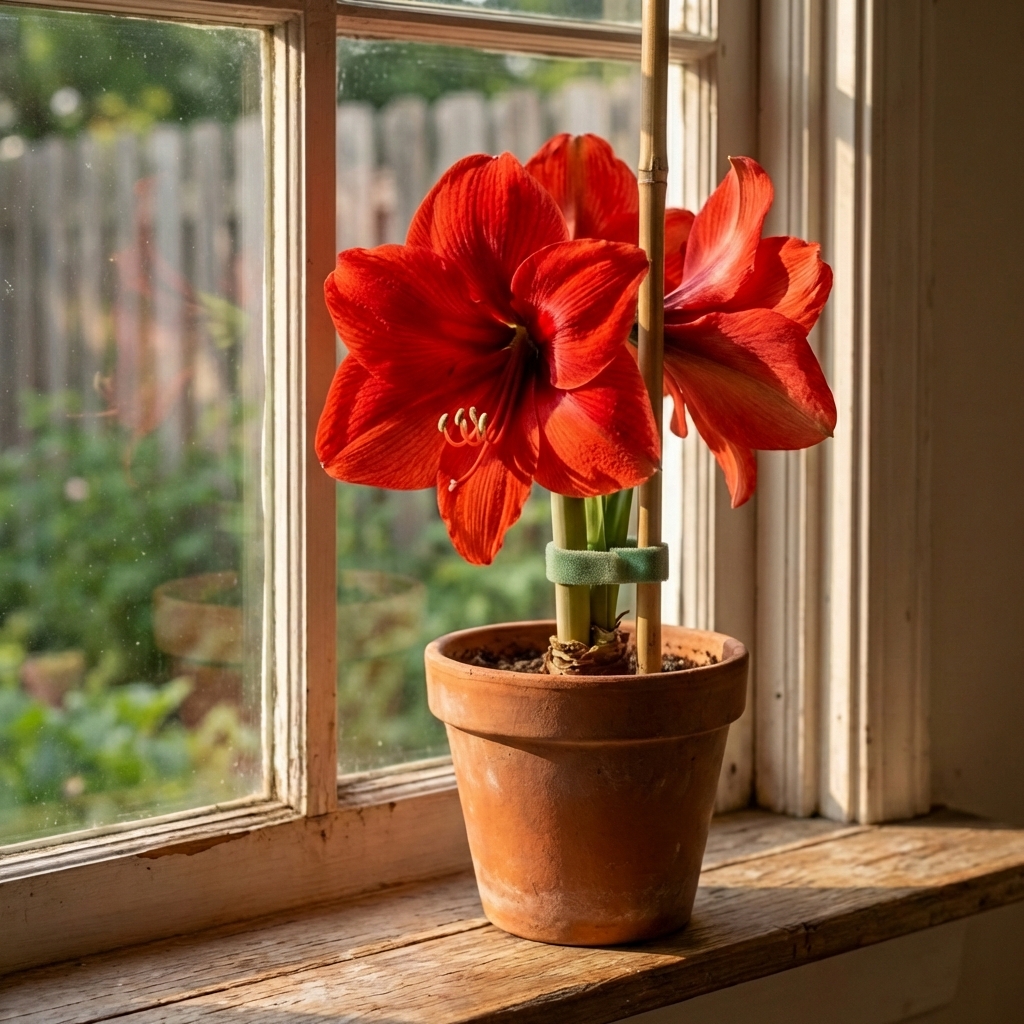
- Stalk is tall and blooms are heavy: stake it early with a thin bamboo stake and soft ties.
- Soil too wet: weak roots lead to poor anchoring. Let the mix dry a bit more between waterings.
Deadheading and bloom care
To keep the plant tidy and help the bulb focus on storage rather than seed production:
- Remove individual flowers as they fade.
- Once the whole flower stalk is finished, cut it back to about 1 to 2 inches above the bulb.
- Keep the leaves. They are the bulb’s food factory.
One trick that helps blooms last longer: keep the plant a bit cooler at night and out of strong midday heat behind glass.
After bloom: the leaf phase is where reblooming is won
If you want the same bulb to bloom again, do not treat the leaves like an afterthought. This is the “recharge” season.
Light and location
- Give it the brightest spot you have indoors.
- When weather allows, move it outside for summer in bright shade or morning sun. Acclimate it over a week so leaves do not scorch.
Ongoing care
- Water when the top of the soil dries.
- Fertilize lightly every 2 to 4 weeks.
- Keep leaves clean and dust-free so they can photosynthesize well.
If your amaryllis only makes leaves and no flowers next season, it usually means it never got enough light and feeding during this phase.
How to rebloom amaryllis (simple rest method)
There are a few ways to do it, but this is the most reliable for home growers.
Step-by-step
Late summer to early fall: start reducing watering. Let the soil dry more between waterings.
Stop fertilizing about 6 to 8 weeks before you want to begin the rest period.
When leaves yellow and flop: stop watering and cut leaves back once they are mostly yellow.
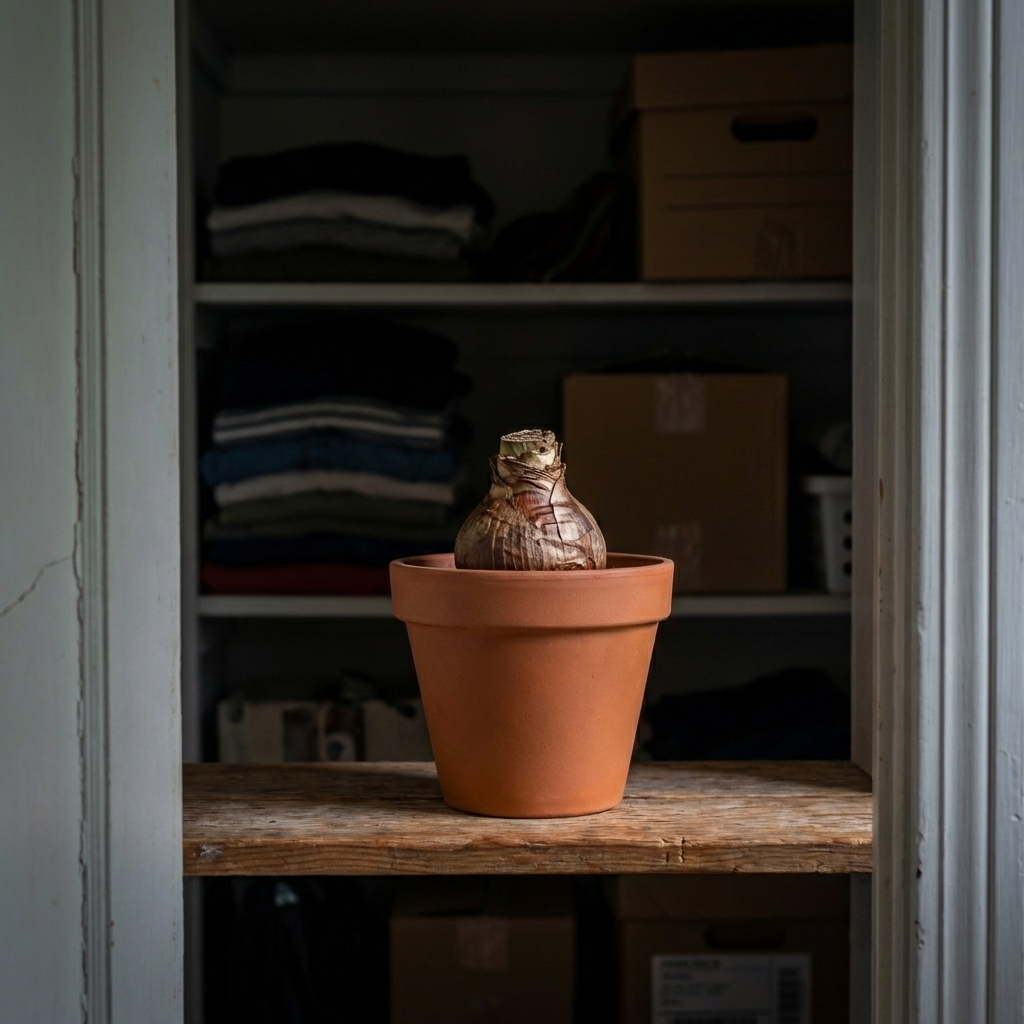
Give it a cool, dry rest for 8 to 12 weeks. Aim for about 50 to 60°F (10 to 15°C). A basement, garage, or cool closet works. Darkness is optional; cool and dry is what matters most.
After the rest period: bring it back to warmth and bright light, refresh the top layer of soil or repot if needed, then water lightly to restart growth.
Expect blooms roughly 6 to 10 weeks after you restart, depending on variety and temperature.
Repotting and dividing offsets
Amaryllis does not need frequent repotting. In fact, it often blooms well when a little crowded.
- Repot every 2 to 3 years, or when the bulb is pushing hard against the pot.
- Best timing is right before restarting growth after dormancy.
- If the bulb has small side bulbs (offsets), you can separate them when repotting. Just know offsets can take a couple years to bloom.
Common problems and easy fixes
No blooms, only leaves
- Not enough light during the leaf phase
- Not enough feeding after bloom
- Rest period too short, skipped, or too warm
Yellow leaves
- During rest prep, yellowing is normal
- Out of season, it can be overwatering, poor drainage, or low light
Bulb rot (soft, smelly bulb or mushy base)
- Remove from pot and sterilize your knife before trimming. Trim away mushy tissue.
- Dusting the cuts with sulfur (or a fungicide labeled for bulbs) can help, then let the bulb callus 24 to 48 hours in a dry spot.
- Replant in fresh, dry, fast-draining mix.
- Water lightly only after you see signs of new growth.
- Reality check: if rot has reached the basal plate (where roots emerge) or the crown, the bulb may not be salvageable.
Red blotch (red streaks on leaves or stalk)
This fungal issue (often called red scorch and commonly associated with Stagonospora) shows up as red patches or streaking. It is often tied to stressed bulbs and overly wet conditions.
- Improve airflow and avoid wetting foliage
- Keep the bulb on the drier side
- Remove severely affected leaves
- Sanitation matters: sterilize tools, and consider discarding severely infected bulbs so it does not spread
- If needed, use an appropriate fungicide labeled for ornamentals and follow the label exactly
Pests (mealybugs, spider mites)
- Wipe leaves with a damp cloth and a little soapy water
- For mealybugs, spot-treat with isopropyl alcohol on a cotton swab
- Increase humidity slightly for spider mites and rinse foliage
Outdoor amaryllis notes (warm climates)
In frost-free areas, amaryllis can be grown outdoors in the ground or pots. Care is similar, but pay attention to drainage and seasonal timing.
- Plant where soil drains quickly, or mound the soil slightly.
- Give morning sun or bright filtered light.
- Protect from hard rain and soggy spots that can rot bulbs.
- In climates with cool winters, bulbs may still benefit from a drier rest period to encourage blooms.
Quick care checklist
- Planting: top 1/3 to 1/2 of bulb above soil
- Light: brightest window, rotate regularly
- Water: soak, drain, then let top 1 to 2 inches dry
- Support: stake if tall or top-heavy
- After blooms: cut stalk, keep leaves, feed and brighten
- Rebloom: 8 to 12 weeks cool, dry rest, then restart
If you only remember one thing, make it this: flowers spend the bulb’s savings, leaves refill the account. Give that leaf phase good light and steady care and your amaryllis will reward you next season.

Jose Brito
I’m Jose Britto, the writer behind The Country Store Farm Website. I share practical, down-to-earth gardening advice for home growers—whether you’re starting your first raised bed, troubleshooting pests, improving soil, or figuring out what to plant next. My focus is simple: clear tips you can actually use, realistic expectations, and methods that work in real backyards (not just in perfect conditions). If you like straightforward guidance and learning as you go, you’re in the right place.