Fruit flies have a talent for showing up right when your kitchen is feeling clean. One overripe banana, a splash of juice in the recycling bin, or a few damp scraps in the compost caddy is all it takes. The good news is an apple cider vinegar (ACV) fly trap is one of the quickest and most reliable ways to knock the adult population down without spraying chemicals.
But traps only work well when you use the right setup and fix what is feeding them. Below you will find several natural trap options, exactly how to place them, how to empty and reset them, and the simple housekeeping moves that keep the flies from coming right back.
Why apple cider vinegar works
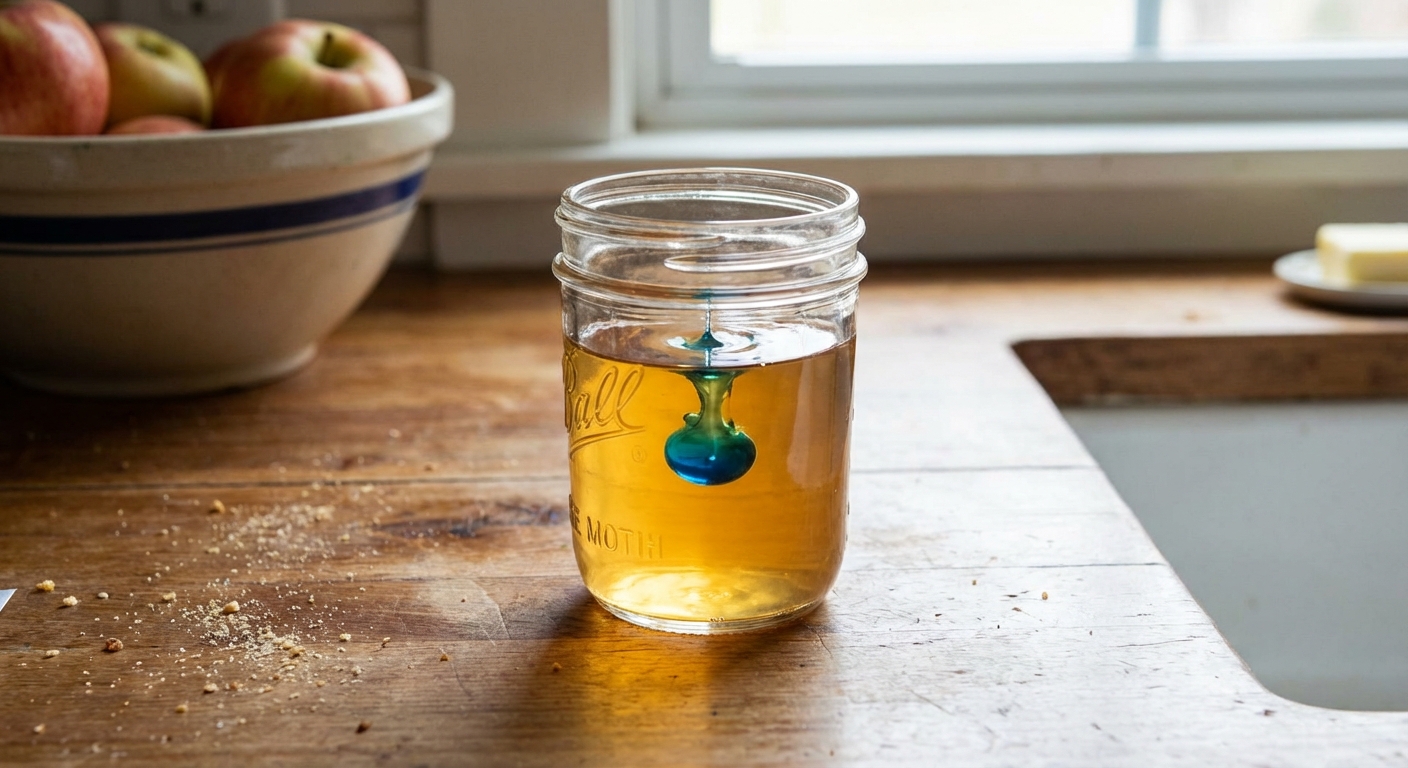
Apple cider vinegar smells like fermenting fruit, which is basically a dinner bell for fruit flies. They follow the scent, land on the liquid, and then:
- They drown if the surface tension is broken with a little dish soap.
- They get trapped if you use a paper funnel or a lid with holes.
Regular white vinegar is usually less attractive because it does not have that same fruity fermentation smell. If you have only white vinegar, you can improve it by adding a small piece of banana peel, but ACV is the easiest win.
Find the source first
If the trap is not catching much, it is often because something nearby smells even better. Before you set traps, do a quick “sniff tour” and check these common hidden sources:
- Sticky spills under the trash bag ring or inside the bin lid
- Recycling sludge at the bottom of bottles or cans (beer, wine, kombucha, juice)
- Forgotten produce (potatoes, onions, fruit) in a pantry corner
- Under appliances where a spill can sit (fridge, microwave cart, toaster area)
- Sink drain gunk or a wet dish sponge/cloth sitting out
- A mop bucket, mop head, or damp rag that never fully dried
Clean first, then place traps right where the activity is.
Best apple cider vinegar trap recipes
Pick one method below. I usually start with the dish soap method because it is fast and simple, then switch to a funnel trap if I want a less messy setup around kids or pets.
1) The classic: ACV + dish soap (fastest)
What you need:
- A small jar, cup, or ramekin
- Apple cider vinegar
- Dish soap
How to make it:
- Pour in 1/2 to 1 inch of ACV (about 1.25 to 2.5 cm).
- Add 2 to 4 drops of dish soap.
- Gently swirl once. Do not make it foamy.
Why it works: Dish soap breaks the surface tension so flies sink instead of standing on the liquid and escaping.
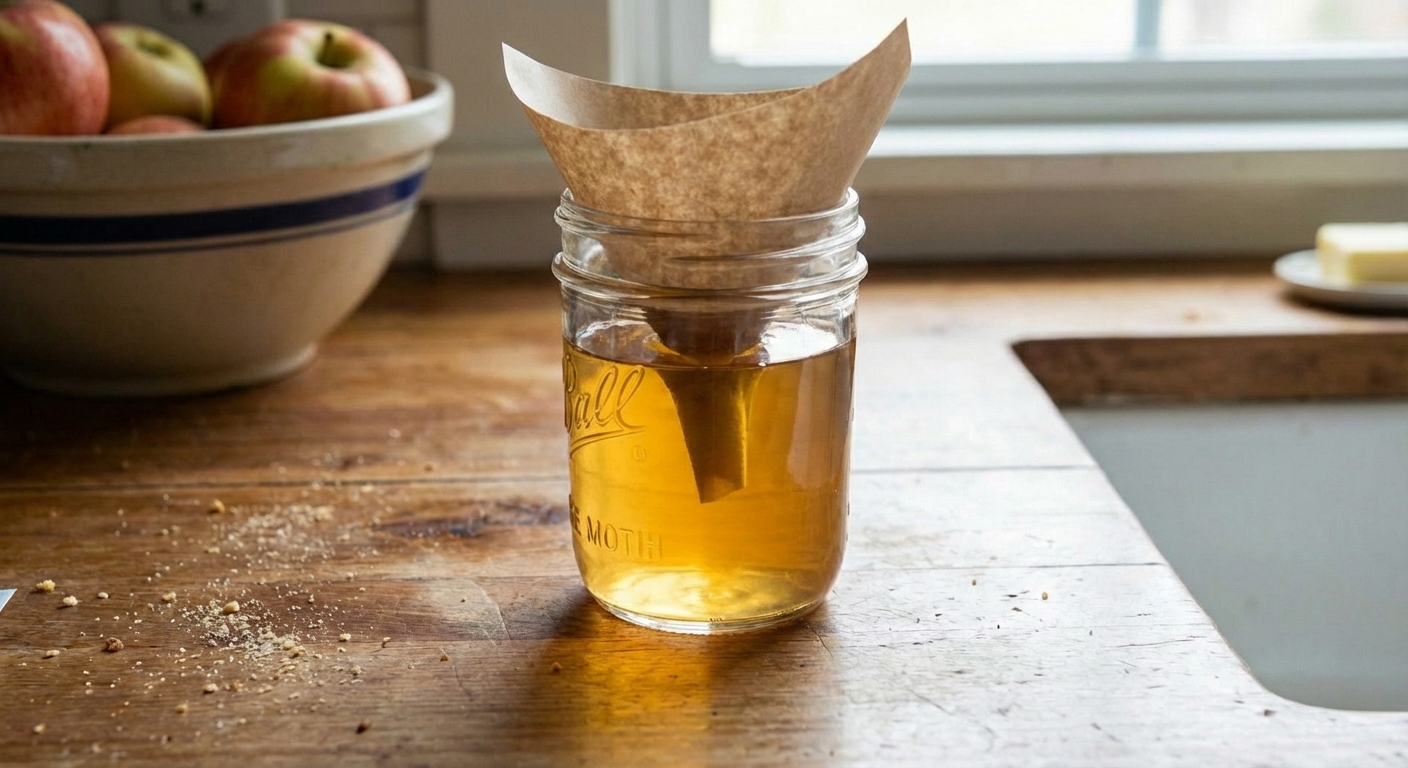
2) The funnel trap (clean and effective)
What you need:
- A jar
- Apple cider vinegar
- A piece of paper (or parchment) and tape
How to make it:
- Add 1 inch of ACV (about 2.5 cm) to the jar.
- Roll paper into a cone with a small opening at the bottom (about the size of a pencil).
- Tape it so it holds shape and place it in the jar opening, point down, without touching the vinegar.
Why it works: Flies go in easily and struggle to find the way back out.
3) The plastic wrap trap (good for wide bowls)
What you need:
- A bowl or cup
- Apple cider vinegar
- Plastic wrap (or a reusable silicone stretch lid)
- A toothpick or fork
How to make it:
- Pour 1 inch of ACV (about 2.5 cm) into the container.
- Stretch plastic wrap tightly over the top.
- Poke 6 to 10 small holes in the wrap.
Tip: Smaller holes trap better. Big holes turn it into a fly buffet with an exit door.
4) ACV + fruit bait (when vinegar alone is not enough)
If your flies are ignoring the trap, they may be locked onto a stronger smell nearby. This version can compete.
What you need:
- Jar
- Apple cider vinegar
- A small piece of very ripe fruit (banana slice, apple peel, or a few berries)
- Paper funnel or plastic wrap cover
How to make it:
- Add vinegar, then drop in the fruit piece.
- Cover with a funnel or wrap so they cannot just feed and leave.
Where to place traps
Placement is the difference between catching 5 flies and catching 50.
- Right next to the source for the first 24 hours: fruit bowl, compost caddy, recycling bin, sink area, or under-cabinet trash pullout.
- Near indoor plants if you suspect damp soil or decaying leaves are involved.
- Low and shaded often works better than high and sunny. Fruit flies like edges and corners.
- Away from strong airflow like vents, open windows, and blasting fans that can scatter the scent.
How many traps? Use one trap per problem zone. In a typical kitchen, that is 2 to 4 traps. One lonely trap across the room rarely wins.
How long it takes
Most homes see a noticeable drop within 24 to 48 hours, but you usually need about 1 to 2 weeks to break the cycle depending on temperature and how well you remove breeding spots. Fruit flies reproduce quickly, and new adults can keep showing up if anything is still feeding them.
- Replace the vinegar every 2 to 3 days, or sooner if it gets cloudy, diluted, or full of flies.
- Top off if it evaporates, especially in warm kitchens.
- Keep traps running for a few days after you stop seeing flies.
How to dump and reset traps
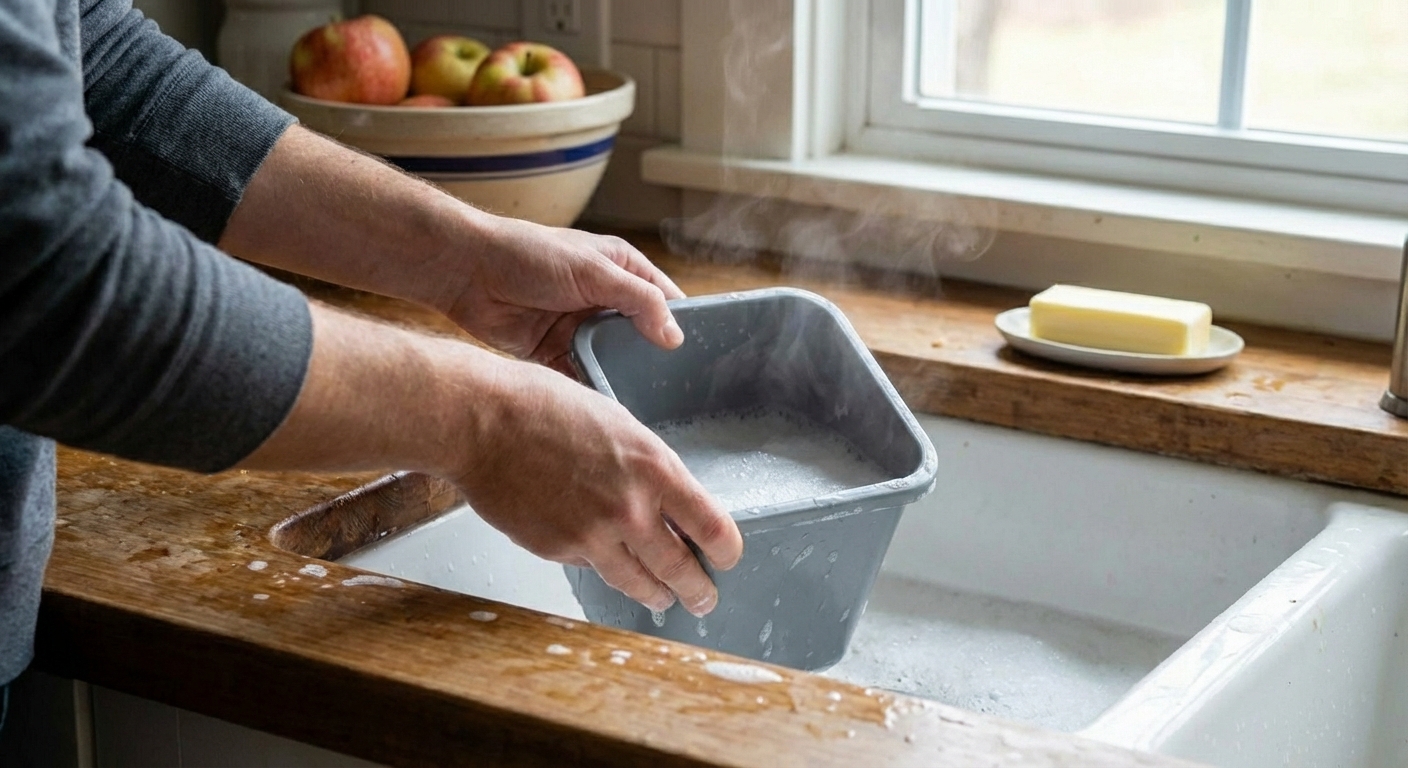
- Pour carefully into the sink or toilet, then rinse the container with hot, soapy water.
- Wipe the rim so there is no sticky smell left behind.
- Refill and reset the same day if you are still seeing flies.
If you are squeamish, cover the container with plastic wrap before you move it, then dump and rinse.
Why your trap might not be working
If you are not catching many flies, one of these is usually the culprit.
The trap is competing with a stronger smell
A sticky spill under the trash bag ring, a forgotten potato, or fermentation in the recycling bin can out-smell your trap. Clean first, then set traps right beside the problem spot.
No dish soap, or too much soap
No soap means flies can land and leave. Too much soap can make the trap less effective by overpowering the vinegar scent. A few drops is enough.
Trap opening is too big
For funnel or wrap traps, big openings let them escape easily. Tighten the funnel tip or make smaller holes.
You are dealing with fungus gnats instead
Fungus gnats usually hover around houseplants and damp potting soil. They are often more slender with longer legs and tend to hang out near the soil surface. Fruit flies are more likely to swarm around produce, trash, recycling, and drains. Fruit fly traps may catch a few gnats, but gnat control is mostly about letting soil dry and using sticky cards.
Natural prevention
Traps catch adults. Prevention removes the nursery.
Kitchen and pantry fixes
- Rinse recyclables (wine bottles, kombucha bottles, juice containers) before they sit.
- Empty the kitchen trash more often for a week, even if it is not full.
- Wipe the bin rim and lid. That sticky ring is prime breeding real estate.
- Store produce smart: move very ripe fruit into the fridge, or cover the fruit bowl.
- Scrub the sink drain: fruit flies can breed in gunk. Use a drain brush, then flush with very hot water. If buildup is stubborn, an enzyme drain cleaner can help break down biofilm (follow label directions).
Compost and houseplant fixes
- Keep compost scraps covered and empty the countertop caddy daily during an outbreak.
- Freeze scraps in a container if you cannot empty compost often.
- Let indoor plant soil dry between waterings and remove dead leaves off the soil surface.
More natural options
ACV traps are the workhorse, but these add-ons help in stubborn infestations:
- Sticky traps near fruit bowls and houseplants to catch roamers.
- Vacuum method: a quick pass with a handheld vacuum around the fruit bowl and trash area can remove a bunch of adults fast. Empty the vacuum outside.
- Alcohol bait: a small cup of leftover red wine can work similarly to vinegar. Add a drop of dish soap.
- Store-bought traps: if you do not want DIY, commercial fruit fly traps and lures can be a simple alternative. They are especially handy for ongoing prevention near compost or recycling.
Safety tips
- Use a covered trap (funnel or wrap) if you have curious pets.
- Place traps out of reach, like the back corner of a counter.
- Do not mix vinegar with bleach during cleaning. If you use bleach in drains, rinse thoroughly and ventilate.
Quick checklist
- Set 2 to 4 ACV traps in problem zones.
- Clean the trash can rim, compost caddy, and recycling bin.
- Brush the sink drain and flush with very hot water.
- Refrigerate ripe fruit for a few days.
- Replace trap bait every 2 to 3 days until no activity.
If you do those steps together, you usually go from “flies everywhere” to “where did they go?” pretty quickly. The trap is the visible fix. The cleanup is what makes it last.

Jose Brito
I’m Jose Britto, the writer behind The Country Store Farm Website. I share practical, down-to-earth gardening advice for home growers—whether you’re starting your first raised bed, troubleshooting pests, improving soil, or figuring out what to plant next. My focus is simple: clear tips you can actually use, realistic expectations, and methods that work in real backyards (not just in perfect conditions). If you like straightforward guidance and learning as you go, you’re in the right place.