Let’s clear something up right away. Bed bugs are not a garden pest. They do not eat plants or live in soil the way garden insects do, and they do not infest raised beds like a beetle or grub would. What they are great at is hitchhiking. If you garden at a community plot, pick up secondhand items, bring home deliveries, or travel, you can accidentally carry bed bugs into your house on clothing, bags, or items stored near the home.
This guide is built for normal people with normal schedules. You’ll get a prevention routine that is simple enough to keep doing, plus the specific situations where gardeners are more likely to run into problems.
Know the enemy
Bed bugs feed on blood and prefer to hide close to where people rest. They squeeze into cracks and seams and come out mostly at night. They do not jump or fly, but they crawl well and can hide in surprisingly tight spaces.
Most of the time, bed bugs are found indoors. However, they can occasionally survive for a while in sheltered “in-between” spots, like clutter near entryways, outdoor furniture stored right against a home, or piles of items in a garage. That is why your routine matters.
What they look like (fast ID)
- Adults: small, flat, reddish-brown, about the size and shape of an apple seed
- Nymphs: smaller and paler, sometimes almost translucent
- Eggs: tiny, whitish, and hard to spot without close inspection
What gardeners often misunderstand
- They do not come from plants or compost. If you find bugs in mulch or soil, they are almost always something else.
- They can show up after yard work anyway if they were picked up from a car seat, a shared bench, a storage area, or secondhand goods you brought home.
- Clean homes can get bed bugs. Prevention is about habits, not shame.
Common lookalikes
People often confuse bed bugs with other small insects, especially outdoors. Common lookalikes include carpet beetles, spider beetles, and some rove beetles. If you are not sure, take a clear photo and compare it to a trusted resource or ask a local extension office or pest professional for an ID.
How gardeners bring them home
Most bed bug introductions are boring, everyday stuff. Here are the ones I see most often tied to gardening and outdoor routines.
- Community gardens and shared sheds: benches, lockers, hooks, and borrowed tools can be contact points.
- Secondhand items: potting benches, patio cushions, wicker baskets, storage totes, planters stored indoors, and especially anything upholstered.
- Deliveries and packaging: bed bugs can hitchhike in boxes, though it is less common than travel or used furniture. Still worth a simple routine.
- Travel for plant swaps or garden tours: hotels and shared accommodations are a classic source.
- Storage areas near living spaces: garages, mudrooms, and laundry rooms become “transfer zones” when bags and clothing pile up.

Your simple prevention routine
If you only adopt one thing from this page, make it this: separate your gardening gear from your indoor life. You are creating a buffer zone.
Step 1: Make a dirty-gear zone
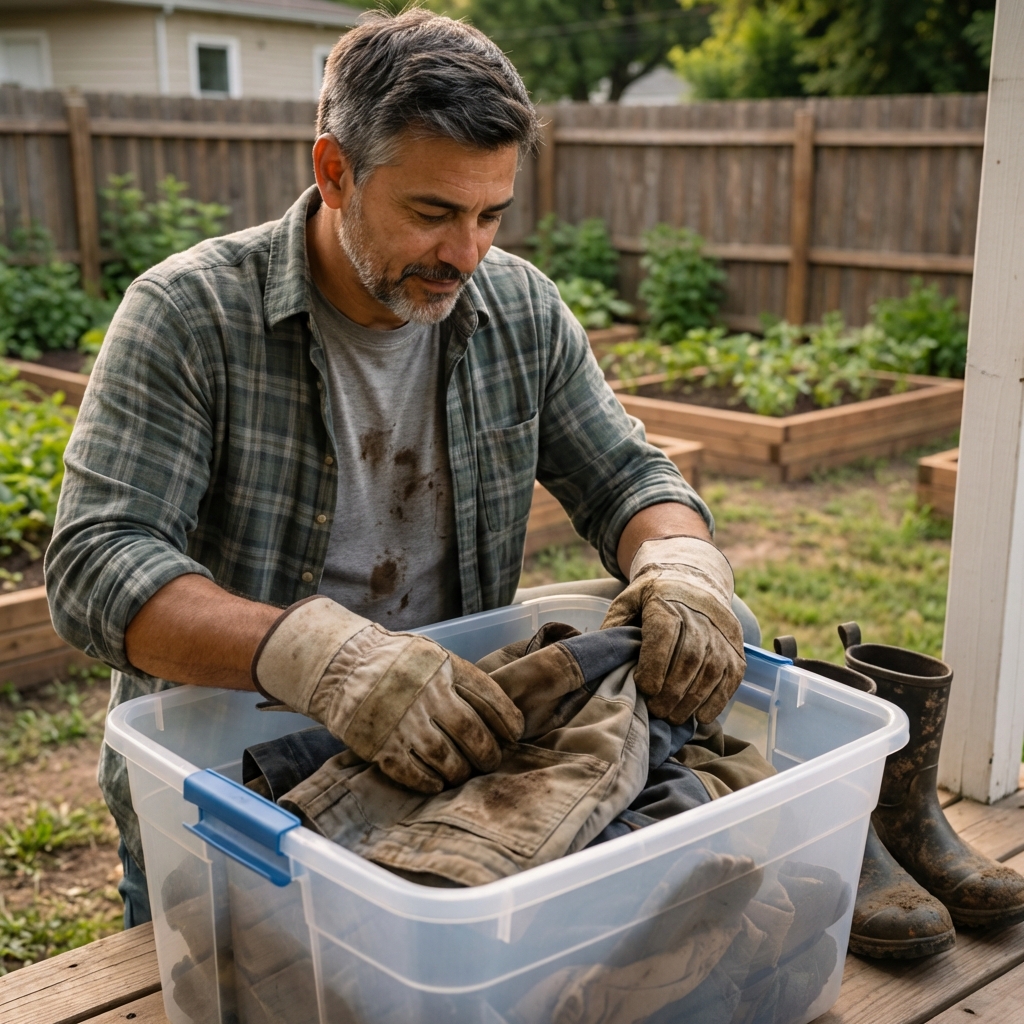
- Pick one spot: porch, mudroom, garage corner, or even a small entry mat.
- Store garden shoes and gloves there only.
- Use a lidded bin (plastic is easiest) for garden kneelers, aprons, and hats.
Step 2: Change fast after gardening away from home
If you garden at a community plot or help friends with their yard, treat it like you would a gym visit.
- Bring a spare bag for worn clothes.
- Do not toss worn clothes on your couch or bed “just for a minute”.
- When you get home, put them directly into the washer or into a sealed bag until wash day.
Step 3: Use dryer heat (it is the reliable part)
Heat is one of the most reliable tools for bed bugs. Dryer heat kills. Washing alone may not, because many washers do not get hot enough long enough to do the job.
- Dry first if needed: For items that are already clean but might be contaminated, run them in the dryer on high heat for about 30 to 40 minutes, as the fabric allows.
- Then wash normally to remove dirt and sweat.
- Check the care label so you do not ruin your gear.
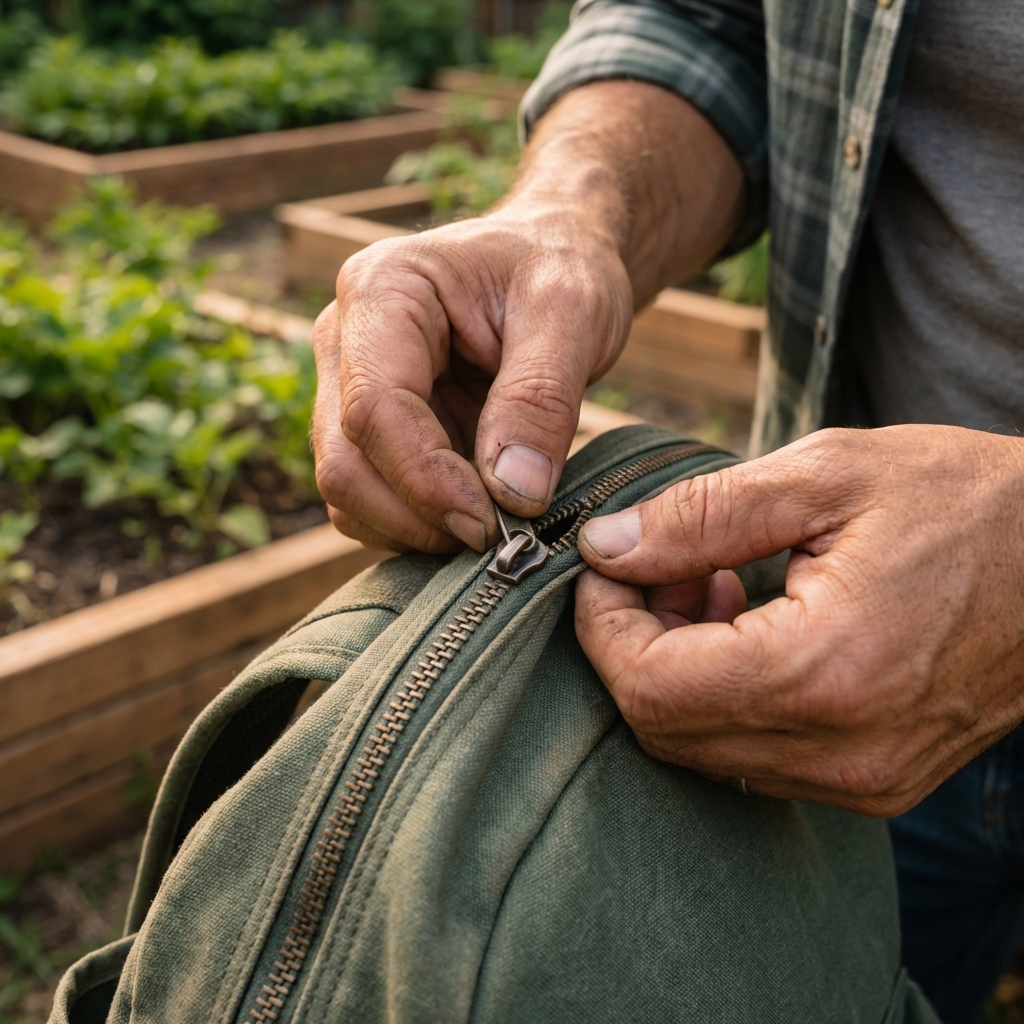
Step 4: Quick check of the items that touch the ground
You do not need to inspect every leaf in your yard. Focus on the few places bed bugs like to hide.
- Backpack seams and zippers
- Folded kneeling pads and fabric tool totes
- Cuffs of pants and pockets
- Glove seams, especially at the wrist
Deliveries and supplies
Bed bugs are much more likely to arrive via travel or used items than a bag of potting mix. Still, a tidy unboxing routine reduces risk and also keeps your storage area cleaner.
Unboxing routine
- Open boxes outside or in the garage when possible.
- Remove items, then break down cardboard immediately and move it to recycling.
- Do a fast visual check on seams of fabric items like knee pads, gloves, aprons, and tool bags.
- Store new fabric gear in a sealed bin until first use if you want an extra layer of caution.
Cardboard storage tip
If your garage has a habit of collecting boxes, this is your sign. Cardboard makes great hiding places for all kinds of household pests. Use plastic totes with lids for long-term storage instead.
Secondhand items
Buying used can be a big money saver, but it is also one of the most common ways people bring bed bugs home. The trick is knowing which items are low-risk and which ones need extra scrutiny or a hard “no”.
Lower risk
- Plastic pots and trays
- Metal tools
- Ceramic planters
- Solid wood items with simple surfaces
Higher risk
- Patio cushions
- Upholstered outdoor furniture brought indoors for storage
- Wicker or rattan baskets and furniture with lots of crevices
- Fabric grow bags, tool bags, aprons, and kneeling pads
- Anything that came from a bedroom, living room, or hotel cleanout
Used-item inspection checklist
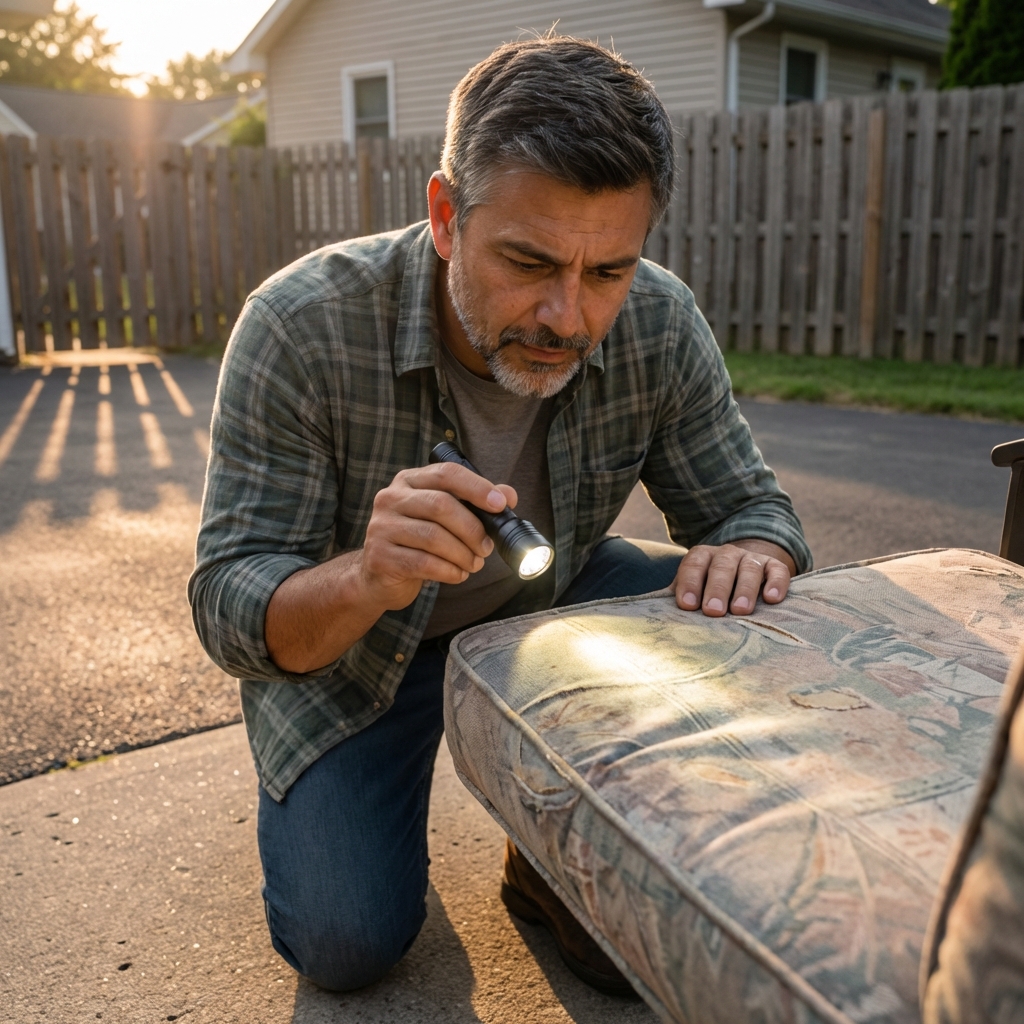
- Check seams, folds, staple lines, and screw holes.
- Look for tiny dark spots (fecal spotting) and shed skins.
- Use a flashlight and take your time. A 2-minute glance is not an inspection.
- If you feel rushed or weird about the item, skip it. There will be another deal.
If you must bring home a high-risk item
- Isolate it immediately: keep it outside, in a garage, or in a sealed plastic cover or tote. Do not set it on carpet “for now”.
- Do not bring it into bedrooms: keep it far from sleeping areas until you are confident it is clean.
- Use heat where appropriate: removable covers that can handle it should go through a high-heat dryer cycle (about 30 to 40 minutes).
- When in doubt, call a pro: some items are not worth the risk, and professional advice is cheaper than an infestation.
Protect your car
If you garden away from home, your car can become the bridge between an infested location and your bedroom. The good news is you can cut down the risk with a couple of habits.
- Keep a large plastic bin with a lid in the trunk for gear and worn clothes.
- Avoid placing bags and jackets on upholstered seats if you can keep them contained.
- Vacuum the car mats and seat seams regularly, especially after traveling.
Think you found bed bugs?
If you suspect bed bugs, the goal is to act quickly without spreading them around the house.
How to confirm (without spiraling)
- Bites are not a sure sign. Many things cause bites and rashes, and some people do not react to bed bug bites at all.
- Look for evidence: live bugs, shed skins, and tiny dark spotting on sheets, mattresses, or along cracks.
- Check the usual indoor spots first: mattress seams, the headboard, bed frame joints, nearby baseboards, and furniture seams.
Do this today
- Do not move clutter from room to room. That spreads hiding places.
- Bag and seal bedding and recently worn clothing until you can launder and dry on high heat (if fabric allows).
- Vacuum along baseboards and bed frame seams, then empty the vacuum contents into a sealed bag and take it outside.
- Reduce hiding spots by clearing items from under the bed.
Important: vacuuming helps, but vacuuming alone will not eliminate an infestation.
Know when to call a professional
Bed bugs are hard to eliminate completely with DIY methods alone. If you confirm bed bugs or bites are ongoing, a licensed pest professional can help you build a treatment plan that includes monitoring, targeted applications, and follow-ups.
Avoid DIY foggers and “bug bombs”. They are often ineffective for bed bugs and can push bugs deeper into hiding.
If you are renting, check your local tenant rules and notify your landlord or property manager promptly.
Quick checklist
- Keep a dedicated dirty-gear zone with lidded storage.
- Do not place worn garden clothes on beds or couches.
- Use the dryer on high heat (about 30 to 40 minutes) for fabrics that can handle it.
- Inspect high-risk seams: bags, kneelers, cuffs, glove wrists.
- Be picky with secondhand fabric and wicker items.
- Contain gear in the car with a sealed bin.
- Act fast if you suspect bed bugs and avoid spreading items around.
FAQ
Can bed bugs live in garden soil or mulch?
Bed bugs are not soil pests. They prefer indoor hiding spots near people. Bugs found in soil or mulch are usually other insects. If you are unsure, do a photo ID before assuming the worst.
Can I bring bed bugs home on my gardening clothes?
It is possible if you were in an infested area or had contact with contaminated items. That is why changing quickly and using high-heat dryer cycles (when safe for the fabric) is such a solid prevention step.
Do I need to spray pesticides around my garden to prevent bed bugs?
No. Outdoor pesticide use will not prevent indoor bed bug problems and can harm beneficial insects. Focus on containment, inspection, and laundry routines.

Jose Brito
I’m Jose Britto, the writer behind The Country Store Farm Website. I share practical, down-to-earth gardening advice for home growers—whether you’re starting your first raised bed, troubleshooting pests, improving soil, or figuring out what to plant next. My focus is simple: clear tips you can actually use, realistic expectations, and methods that work in real backyards (not just in perfect conditions). If you like straightforward guidance and learning as you go, you’re in the right place.