Pineapple is one of those plants that looks tropical and complicated, but the day-to-day care is pretty simple once you understand what it wants: bright light, warm temperatures, fast-draining soil, and patience. You can grow one indoors, on a patio, or in the garden if your climate stays warm enough. And yes, you can start from a grocery store pineapple.
Quick climate note: Pineapple is happiest when nights stay above about 55 to 60°F (13 to 16°C). If you grow it outdoors in summer, bring it in before nights dip into that range.
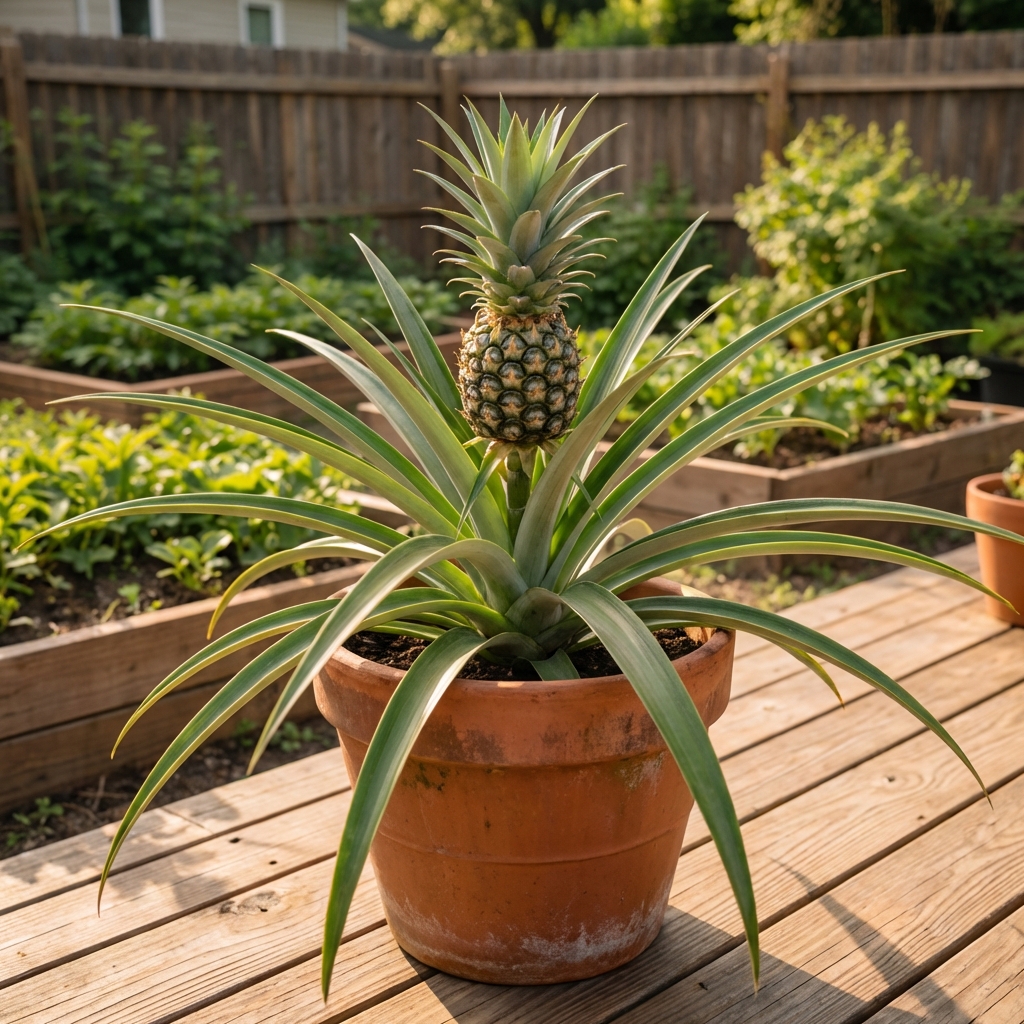
What to expect (so you do not get discouraged)
Pineapple is not a quick crop. Most homegrown plants take about 18 to 36+ months to produce fruit depending on warmth, light, and overall growth speed. Indoors or in low light, it can take longer, sometimes closer to 24 to 48 months.
- First few weeks: rooting the crown (top) and settling in
- First year: leaf growth and building a stronger root system
- Year 2 or 3: flowering and fruit development (once the plant is mature enough)
The upside is that pineapple is a great “set it up right and maintain it” plant. It is also surprisingly tough once rooted.
Realistic fruit expectations: a plant started from a grocery-store crown can produce a delicious pineapple, but the fruit is often smaller than store-bought, especially indoors. Still very worth it.
How to start a pineapple from the top
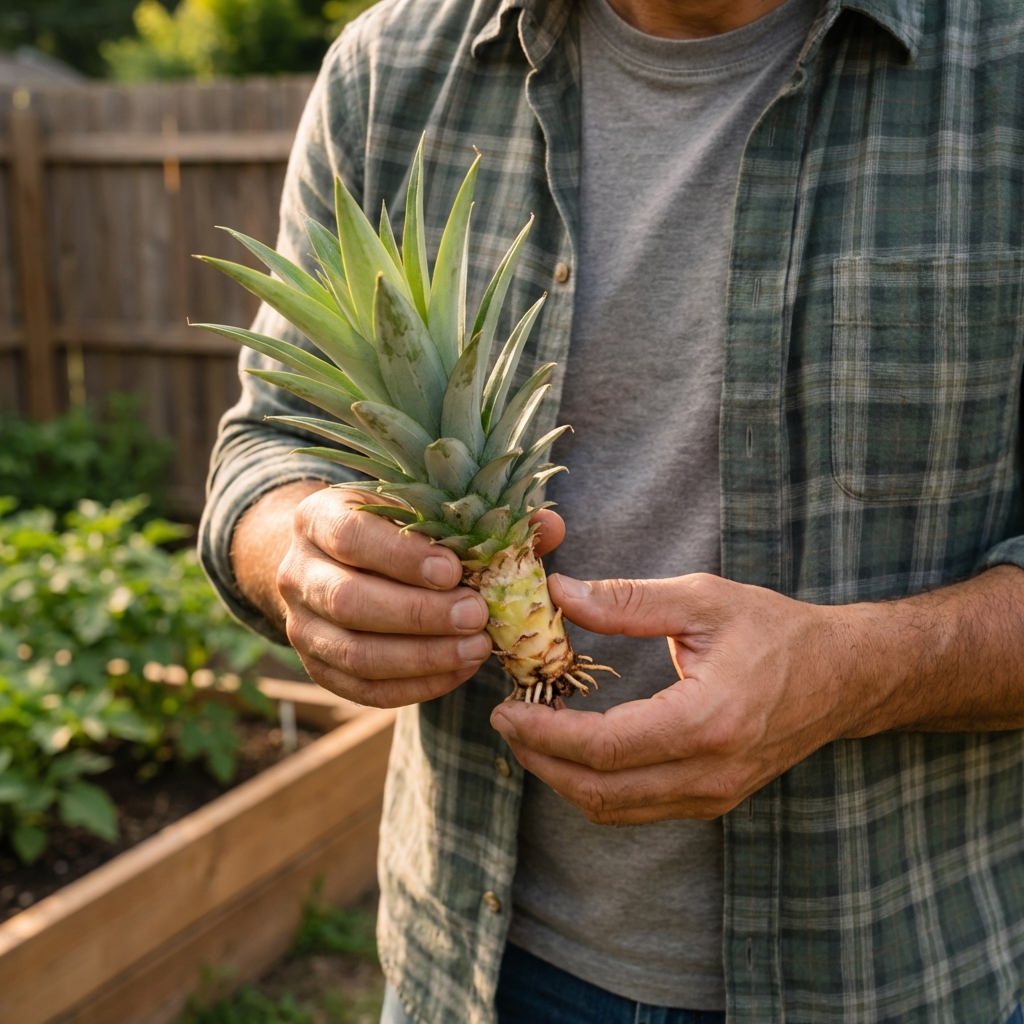
The easiest beginner method is planting the pineapple crown, which is the leafy top. Choose a pineapple with healthy, green leaves and no soft, mushy spots at the base.
Step-by-step
- Twist off the crown (or cut it off). If you cut, trim away extra fruit so only the tough core remains.
- Remove a few lower leaves to expose about 1 to 2 inches of stem. You may see little brown bumps. Those are root initials.
- Let it dry for 1 to 3 days in a shaded spot. This helps the cut area callus and reduces rot. (In very dry homes, lean closer to 24 to 48 hours.)
- Plant in a small pot with fast-draining mix. Bury the bare stem, not the leaves.
- Water lightly and keep warm and bright.
Rooting usually takes 2 to 8 weeks. If the center of the crown pulls out easily or smells rotten, it failed. Do not take it personally. Try again with a fresher crown and drier conditions.
Handling tip: some pineapple varieties have sharp leaf edges. Gloves help, especially when stripping lower leaves.
Light requirements
Pineapple wants a lot of light. Outdoors, give it full sun if your summers are not extremely hot. In very hot climates, afternoon shade can prevent leaf scorch. Indoors, the best spot is usually a south- or west-facing window.
- Ideal: 6 to 8+ hours of strong light daily
- Indoor tip: rotate the pot every week or two so it grows evenly instead of leaning
- If growth is slow: add a simple grow light in winter or low-light homes
- Sun transition tip: if you move it outside, increase sun gradually over 7 to 10 days to avoid scorch
Low light is the most common reason indoor pineapples stall out and never get big enough to fruit.
Best soil and pot for pineapple
Pineapple hates “wet feet.” Your goal is soil that drains fast but still holds a bit of moisture.
Soil mix (simple and effective)
- High-quality potting mix
- Plus extra perlite or pumice for drainage
- Optional: a small amount of orchid bark or coarse sand for even more airflow
Pot size and drainage
- Start in a 4 to 6 inch pot for a newly rooted crown.
- Move up gradually to 10 to 12 inches as it grows (up to 14 inches for large, outdoor-grown plants).
- Always use a pot with drainage holes.
A terracotta pot can help beginners because it dries a little faster than plastic.
How to water a pineapple plant
Watering is where most people go wrong, usually by being too generous. Pineapple is drought-tolerant once established, but it grows best with consistent watering while still allowing a partial dry-down.
Basic watering rule
Water when the top 1 to 2 inches of soil are dry, then water thoroughly until it drains out. Do not let the pot sit in a saucer of water.
Can you water in the “cup” (leaf rosette)?
Outdoors in warm conditions, rain and humidity often wet the center naturally. Indoors, constantly keeping water in the rosette can invite rot if airflow is poor. If you do add a little water to the cup, keep it minimal and refresh it regularly so it does not get stagnant.
Extra nuance: even outdoors, standing water can become a problem in cool weather or shady spots. In those conditions, it is safer to water the soil and let the rosette stay mostly dry.
Signs you are overwatering
- Soft base or foul smell near the crown
- Yellowing leaves paired with soggy soil
- Gnats hovering around the pot
Signs you are underwatering
- Leaf tips browning and crisping
- Soil pulling away from the pot edges
Temperature and humidity
Pineapple grows best in warmth. If you are growing it as a houseplant, it will appreciate summer outdoors if you can provide sun and protect it from cold nights.
- Best range: about 68 to 86°F (20 to 30°C)
- Slow-down zone: below about 60°F (15°C)
- Frost: can severely damage or kill the plant
Average home humidity is usually fine. Just aim for decent airflow and avoid leaving the crown constantly wet.
Cold-season indoor care
Winter care is mostly about preventing slow, cold, wet conditions.
- Water less: let the mix dry a bit more between waterings when growth slows.
- Boost light: move to your brightest window or add a grow light.
- Avoid drafts: keep it away from cold windows and exterior doors at night.
Fertilizing for steady growth
If you want fruit someday, the plant needs enough nutrition to build size. Think of fertilizer as “slow and steady,” not “strong and fast.”
Easy feeding schedule
- Spring through early fall: feed every 4 to 6 weeks with a balanced liquid fertilizer at half strength
- Winter: reduce feeding or pause if growth slows due to low light
Compost is great in the garden, but for pots, too much heavy organic matter can hold water. Keep container mixes airy.
Repotting and routine care
Repot when roots are filling the pot or the plant feels top-heavy. Go up one size at a time, not a huge jump.
- Remove brown, dead leaves at the base to reduce hiding spots for pests.
- Wipe dusty leaves so the plant can photosynthesize better indoors.
- If it goes outside for summer, harden it off for a week by slowly increasing sun exposure.
Common pineapple problems (and quick fixes)
Leaves turning yellow
- Most common cause: overwatering or poor drainage
- Fix: let soil dry more between waterings, switch to a faster-draining mix, ensure drainage holes are open
Brown tips
- Common cause: underwatering, very dry indoor air, or salt buildup from fertilizer
- Fix: water more consistently, flush the pot with clean water every couple months, trim tips if you want it tidy
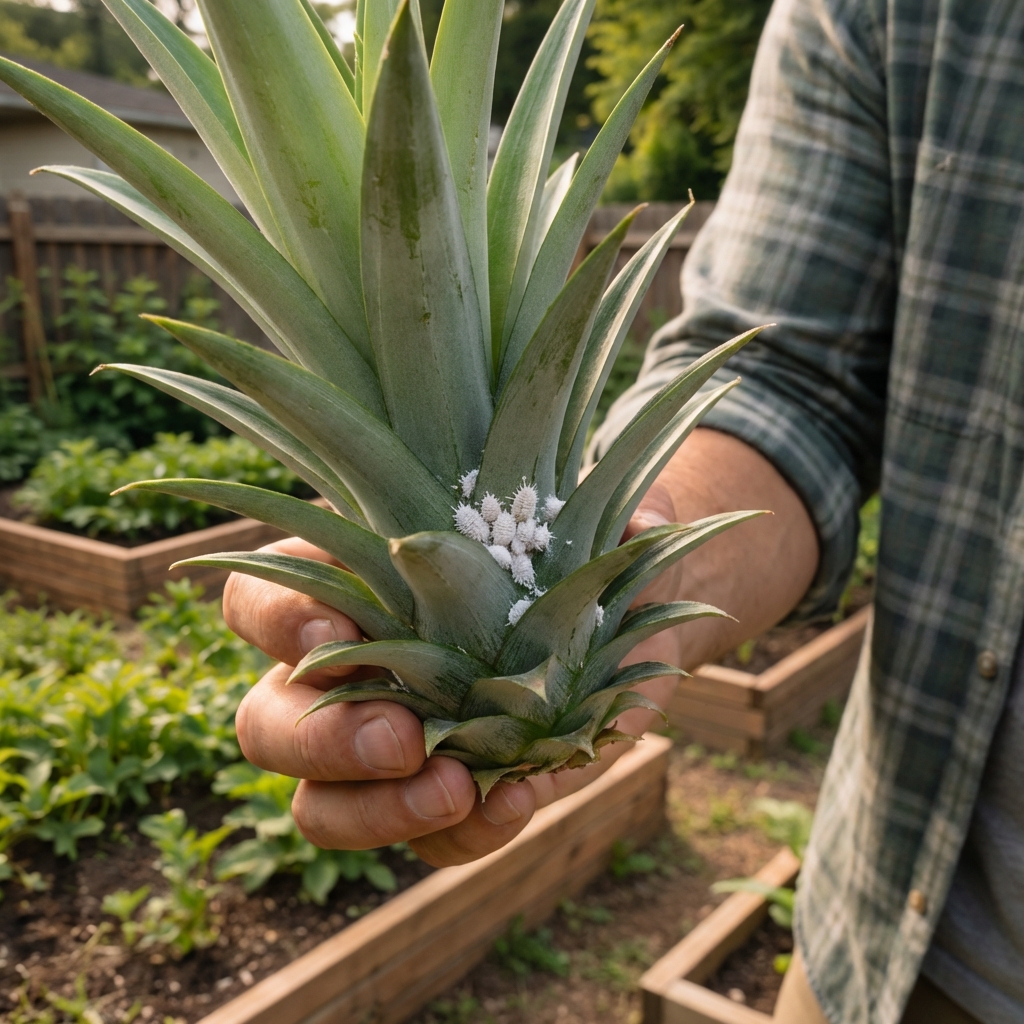
Pests (mealybugs, scale, spider mites)
- What to look for: sticky residue, cottony clumps, tiny bumps on leaves, fine webbing
- Fix: isolate the plant, wipe leaves with a damp cloth, treat with insecticidal soap or horticultural oil, repeat weekly as needed
How to get your pineapple to fruit
A pineapple plant typically fruits when it is mature enough, usually after it has built a sturdy rosette and strong root system. Indoors, the two big limiting factors are light and time.
- Keep it in the brightest light you can provide.
- Feed modestly during active growth seasons.
- Do not up-pot too frequently. Slightly snug roots are not a bad thing.
Some growers use ethylene (from apples) to encourage flowering on mature plants. It can work, but it is not magic. It is most likely to help a fully mature plant, and results vary. For beginners, focus on growing a strong plant first. A stressed, undersized pineapple is not going to produce quality fruit.
Harvest: how to tell when it is ready
Once the fruit forms, it takes months to size up and ripen. Harvest timing matters because pineapple does not sweeten much after picking.
Ripeness signs
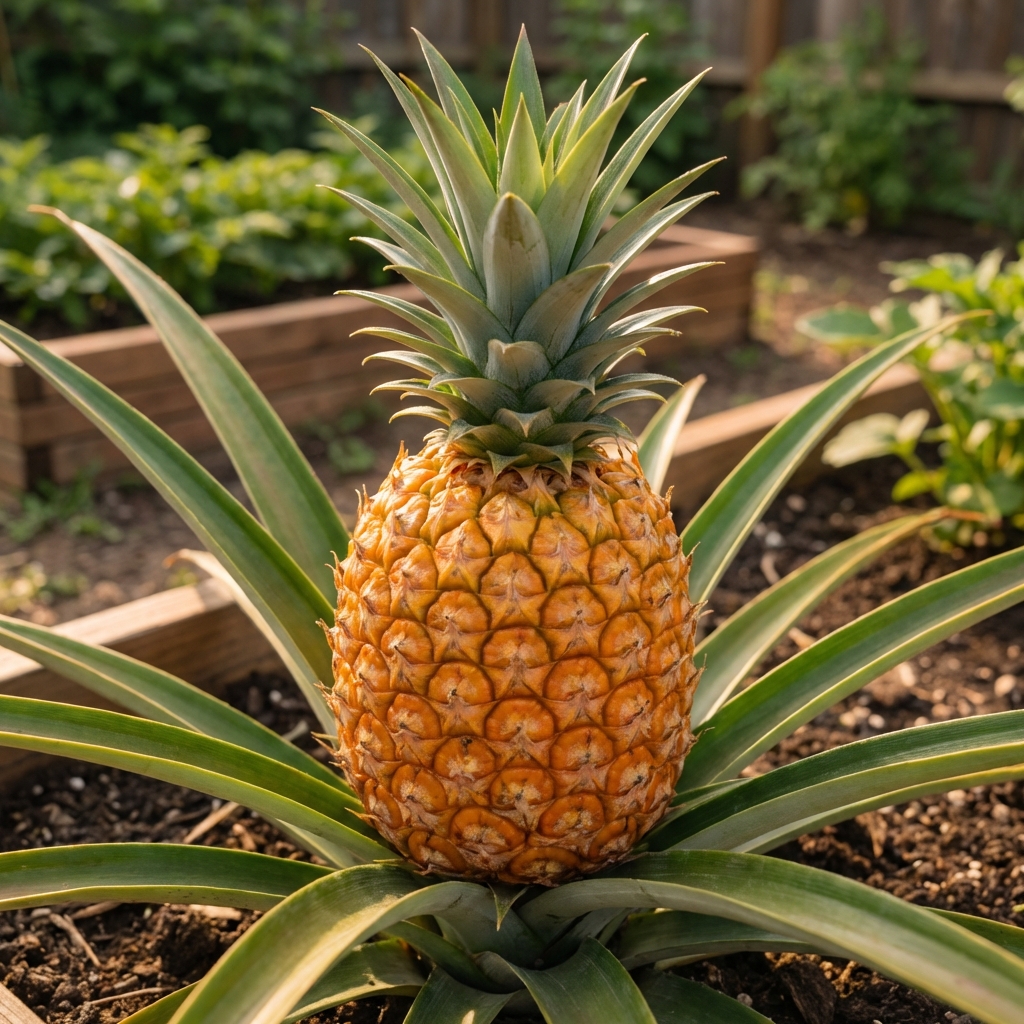
- The fruit turns golden starting from the base and moving upward.
- You can smell a sweet pineapple fragrance near the base.
- The “eyes” look flatter and the fruit feels firm, not rock-hard.
To harvest, cut the fruit off with clean pruners, leaving a short stem.
What happens after fruiting (pups and new plants)
After fruiting, the main plant slowly declines, but it usually produces pups (baby plants) from the base or along the stem. You might also hear the terms suckers (from the base) and slips (along the fruit stalk). This is how you keep the pineapple going.
- Let pups grow until they are roughly 6 to 8 inches tall.
- Twist or cut them off with a clean blade.
- Pot them up in the same fast-draining mix.
In other words, one pineapple can turn into a long-term pineapple “family” if you keep propagating the pups.
Quick beginner checklist
- Light: as bright as possible, ideally 6 to 8+ hours
- Soil: fast-draining potting mix with extra perlite
- Water: only when the top layer dries, never soggy
- Warmth: protect from cold and frost, bring indoors when nights drop under about 55 to 60°F
- Patience: expect about 18 to 36+ months for fruit (longer in low light)
- Safety: watch sharp leaf edges, especially around kids and pets
If you get the light and drainage right, you are already ahead of most first-time pineapple growers.

Jose Brito
I’m Jose Britto, the writer behind The Country Store Farm Website. I share practical, down-to-earth gardening advice for home growers—whether you’re starting your first raised bed, troubleshooting pests, improving soil, or figuring out what to plant next. My focus is simple: clear tips you can actually use, realistic expectations, and methods that work in real backyards (not just in perfect conditions). If you like straightforward guidance and learning as you go, you’re in the right place.