Indoor gardening is one of the few garden projects that can look great and make you feel successful fast, as long as you set it up around your actual conditions. The best indoor plant garden is not the one with the rarest plants. It is the one that matches your light, your schedule, and your space so the plants stay healthy without constant rescuing.
This how-to walks you through building a simple indoor plant setup that scales from a sunny windowsill to a full plant wall.
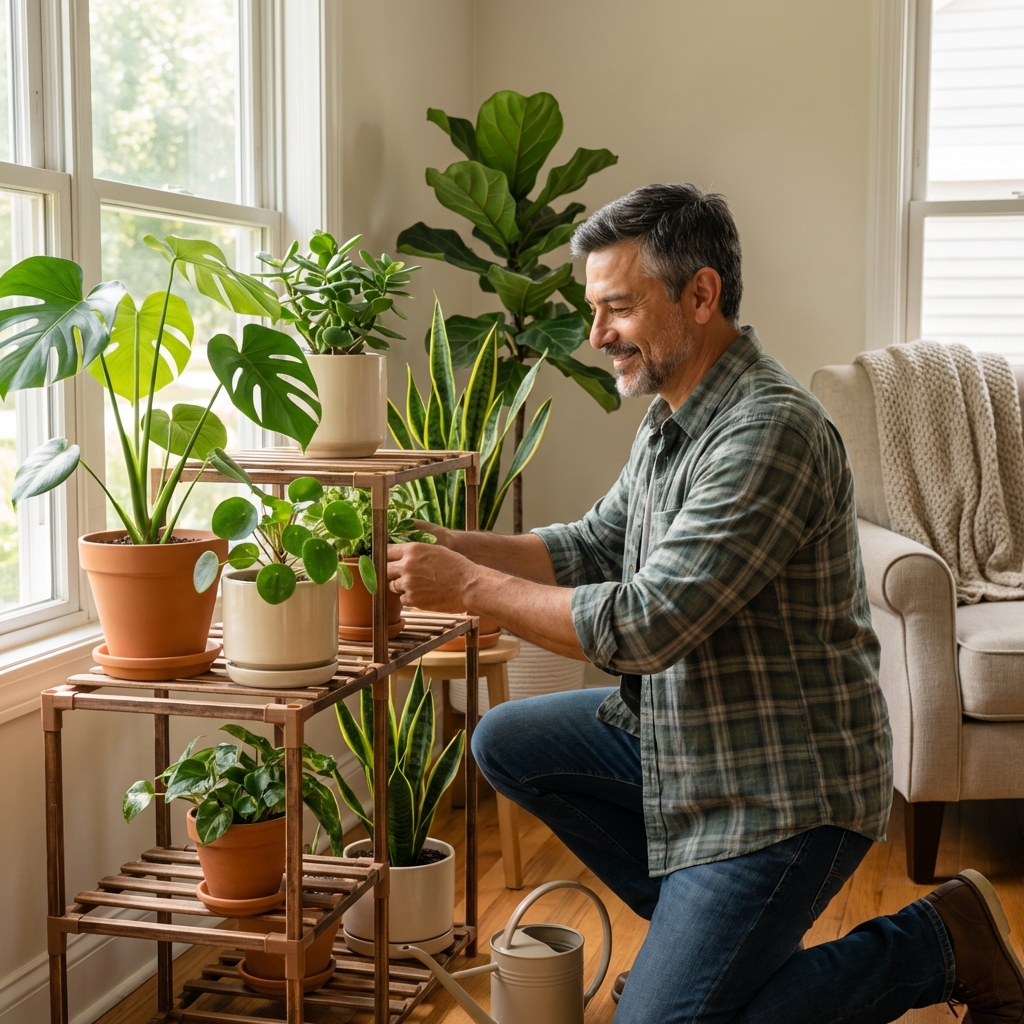
Start with your light, not your plant wishlist
Light is the make-or-break factor indoors. Before you buy plants, spend a day observing where the brightest spots are and how long they stay bright.
Quick window note: window direction depends on hemisphere. In the Northern Hemisphere, south and west windows often get the strongest sun. In the Southern Hemisphere, north-facing windows often do.
Quick light levels you can use
- Bright direct light: Sun hits the leaves for 3 to 6+ hours. Great for succulents, cacti, many herbs.
- Bright indirect light: The area is very bright but sun does not hit leaves for long. Great for pothos, philodendrons, and many tropicals.
- Medium light: You can comfortably read there without turning on a lamp, but it is not intensely bright. Good for snake plant, ZZ plant, cast iron plant.
- Low light: Dim corners away from windows. Few plants truly thrive here without a grow light. Expect slow growth.
A quick home test (rough estimate)
At midday, hold your hand about 12 inches from a wall near the plant spot. This is a quick estimate and it will vary by season, cloud cover, and window coverings.
- Sharp shadow: likely direct light
- Soft shadow: likely bright indirect
- Barely visible shadow: medium to low
If you want more precision, a phone lux meter app can help you compare spots around your home.
If you want fast growth, plan to add a grow light even if you have windows. Windows are great, but winter and short days can stall plants.
Pick a home base and build outward
A good indoor garden feels organized, not scattered. Choose one main area as your plant hub so care stays simple.
Best places to build an indoor plant garden
- Near a bright window: easiest option for most homes.
- Next to a balcony or patio door: often strong light and easy airflow.
- Kitchen window: great for herbs and small leafy plants, but watch heat and dry air from cooking.
- Bathroom with a window: ideal humidity for ferns and some tropicals.
Set up a simple plant station
Keep a small tote or basket nearby with: a watering can, pruners, a microfiber cloth (for dusty leaves), sticky traps, and a small bag of potting mix. This one step makes indoor care feel quick instead of annoying.
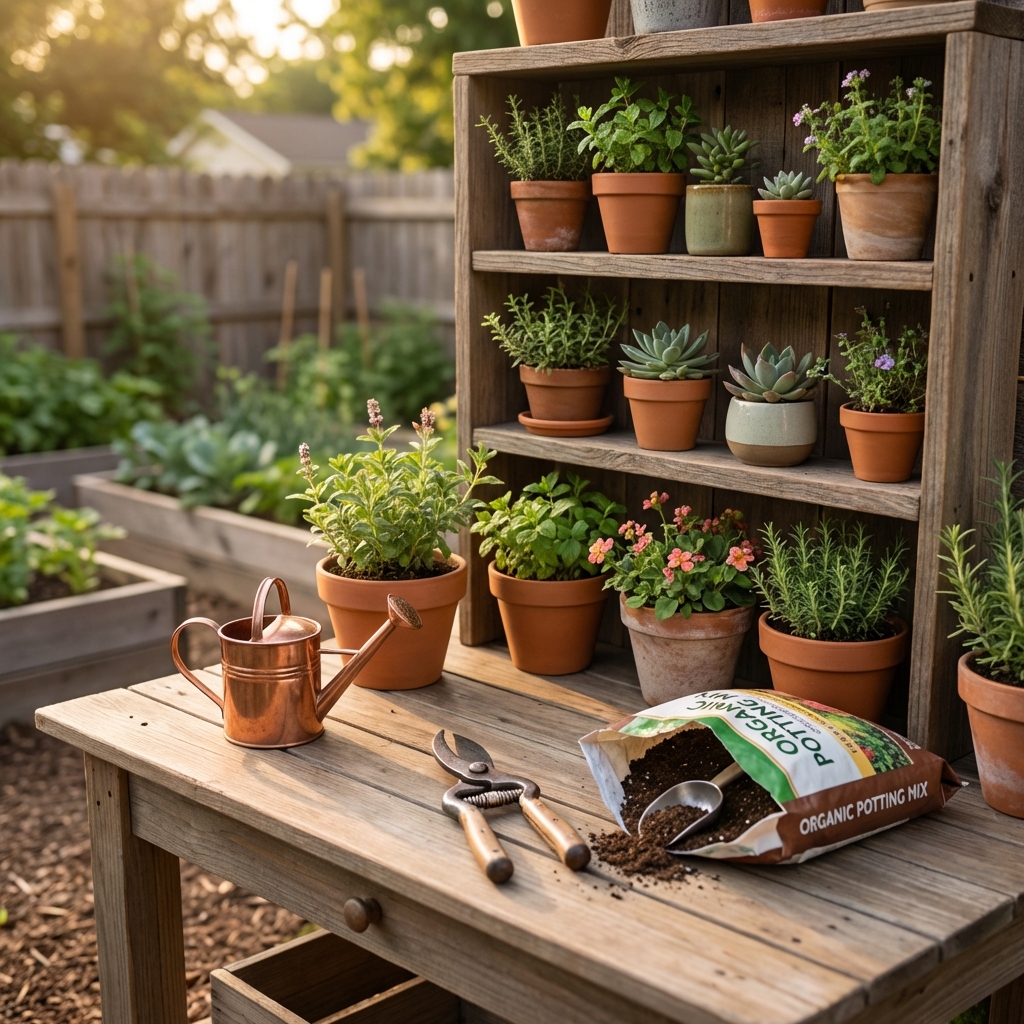
Choose containers that prevent overwatering
Many indoor plants decline from root stress, and root stress often starts with too much water and not enough drainage.
Non-negotiables for pots
- Drainage holes: always. If you love a pot without holes, use it as a cover pot and keep the plant in a plastic nursery pot inside.
- Saucers or trays: protect floors and make watering less stressful.
- Right size: choose a pot 1 to 2 inches wider than the root ball when repotting. Jumping to a huge pot keeps potting mix wet too long.
Cover pot best practice
If you are using a cover pot, pull the nursery pot out to water at the sink, let it drain completely, then put it back. If water pools in the bottom of the cover pot, roots will pay for it.
My realistic rule for pretty pots
If a pot makes watering complicated, it will eventually lead to mistakes. Keep it simple and make the plant the star.
Use the right potting mix for indoor plants
Indoor potting mix needs to balance moisture and air. Many bagged mixes hold too much water for typical homes, especially in cooler months.
Easy, reliable mix recipes
For most tropical houseplants (pothos, philodendron, monstera, peperomia):
- 2 parts quality indoor potting mix
- 1 part perlite or pumice
- Optional: a handful of orchid bark for chunkiness and airflow
For succulents and cacti:
- 1 part cactus mix
- 1 part perlite or pumice
For moisture lovers (ferns, calathea types):
- 2 parts indoor potting mix
- 1 part fine bark or coco coir
- Optional: a small amount of perlite for airflow
Skip “rocks in the bottom of the pot.” It does not improve drainage the way most people think. Drainage comes from a good mix plus holes in the pot.
Plan your layout: height, airflow, and access
Indoor plant gardens look best when you vary height and keep plants easy to reach.
Simple layout ideas that work
- Plant shelf near a window: best bang for your buck. Put higher-light plants on top shelves and lower-light plants on lower shelves.
- Hanging plants: great for pothos, philodendron, spider plant. Keep them where you can still water without dripping everywhere.
- One statement floor plant: like a rubber plant or dracaena to anchor the space.
- Propagation corner: a small tray or stand for water props and new cuttings.
Airflow matters
Constantly damp potting mix and humid, still conditions encourage fungus gnats and mildew. Airflow helps the mix dry at a healthier pace. If your home is humid or you water often, a small fan on low for part of the day can make a noticeable difference.
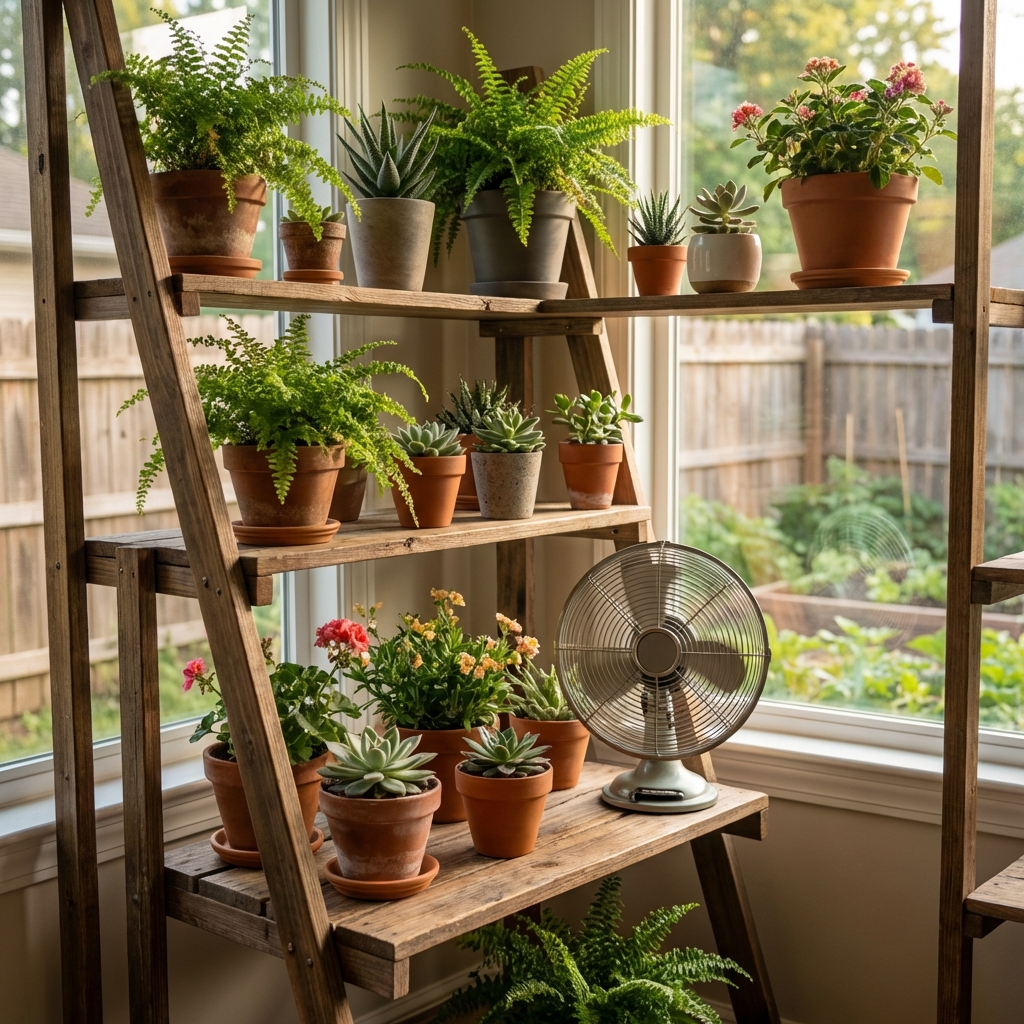
Add grow lights for consistent results
If you only do one upgrade for an indoor garden, make it lighting. A basic LED grow light helps in winter, supports growth away from windows, and makes plant care more predictable.
What to look for in a grow light
- LED full spectrum
- Enough coverage for your shelf or area (manufacturers list coverage distance)
- Timer so you are not guessing
Simple timing
- Most foliage plants: 10 to 12 hours per day
- Herbs and seedlings indoors: 12 to 16 hours per day
Keep lights close enough to matter. Many plants need the light within about 8 to 18 inches depending on the fixture. If plants stretch and lean, the light is too weak or too far away.
Watering that actually works indoors
A schedule like “water every Sunday” sounds neat, but it is how a lot of houseplants get overwatered. Indoors, plants use water based on light, temperature, pot size, and season.
The best watering method for beginners
Use the finger test: stick a finger 1 to 2 inches into the potting mix.
- If it is damp, wait.
- If it is dry, water thoroughly until water drains from the bottom.
Bottom watering: when it helps
Bottom watering can reduce mess and encourage deep roots. It also helps if potting mix has become hydrophobic (water runs down the sides). Place the pot in a tray of water for 10 to 20 minutes, then let it drain well.
Common watering mistakes to avoid
- Leaving water in the saucer: this can rot roots fast.
- Letting water pool inside a cover pot: cover pots are fine, but do not let the nursery pot sit in leftover water.
- Watering on low-light weeks: plants drink less in winter and during cloudy stretches.
Water quality and salt buildup
If you see crusty white buildup on the pot rim or the mix surface, you are likely seeing mineral salts from tap water or fertilizer. A simple fix is to flush the pot occasionally: run water through the pot for 30 to 60 seconds, then let it drain fully. For sensitive plants, filtered water or rainwater can help. If you use tap water, letting it sit out overnight can help it come to room temp and can reduce some odor from disinfectants.
Humidity and temperature: comfortable, not perfect
Most houseplants tolerate average home humidity, but some are picky. Before you buy a humidifier, start with the basics.
Easy humidity improvements
- Group plants together: creates a small, slightly more humid zone.
- Use a pebble tray correctly: water below the top of the pebbles so the pot is not sitting in water. Expect modest results right around the plant.
- Run a humidifier for the needy plants: especially in heated winter air.
Watch for hot and cold blasts
Keep plants away from heating vents, radiators, and drafty doors. Sudden temperature swings cause leaf drop and crispy edges faster than most people expect.
Best plants for an indoor plant garden (by goal)
Pick plants based on what you want the indoor garden to do for you. Here are dependable options that fit real homes.
If you want low maintenance
- Snake plant (Sansevieria/Dracaena trifasciata): tolerates low light, forgiving watering.
- ZZ plant (Zamioculcas): slow growing, handles missed waterings.
- Pothos (Epipremnum aureum): fast, easy, and great for shelves.
If you want fast growth and a jungle look
- Philodendron hederaceum: vines quickly in bright indirect light.
- Monstera deliciosa: bigger leaves with better light.
- Rubber plant (Ficus elastica): strong statement plant with enough light.
If you want indoor edible plants
- Basil, mint, parsley, chives: best near a bright window or under a grow light.
- Green onions: easy regrow in water, then pot up for longer term.
- Microgreens: fast harvests in trays under lights.
Be honest about light before buying herbs. In weak winter light, most kitchen herbs turn into leggy, sad plants unless you add a grow light.
Pet and kid safety note
Many common houseplants, including pothos, philodendron, monstera, and ZZ plant, can be toxic if chewed. If you have pets or small kids, look up each plant before you buy and place questionable plants out of reach.
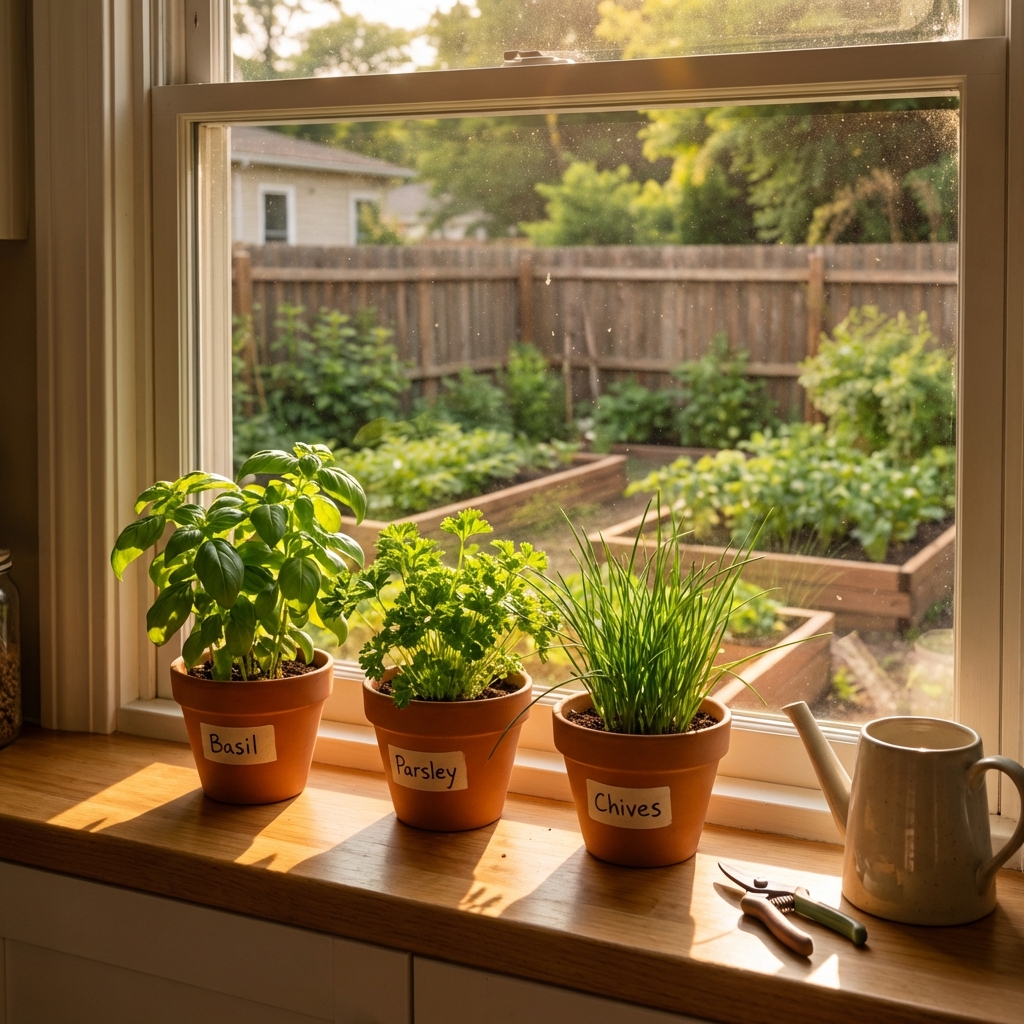
Fertilizing without overdoing it
Indoor plants need fewer nutrients than outdoor gardens, but they still appreciate consistent, light feeding during active growth.
A simple fertilizing plan
- Spring through early fall: fertilize every 4 to 6 weeks with a balanced houseplant fertilizer at half strength.
- Late fall and winter: reduce or pause for most plants, especially in low light.
If your plant is not growing because of low light, fertilizer will not fix that. It can actually stress the plant.
Keep pests from taking over
Indoor pests happen even in clean homes. The goal is to catch issues early.
Fast weekly check (2 minutes)
- Look under a few leaves.
- Check new growth tips.
- Scan the potting mix surface for gnats.
Common indoor plant pests and what to do
- Fungus gnats: let the top of the potting mix dry more between waterings, use sticky traps, consider a BTi drench if persistent.
- Spider mites: rinse leaves, wipe with a mild soap solution, improve humidity and airflow.
- Mealybugs: dab with rubbing alcohol on a cotton swab, isolate the plant, repeat weekly.
- Scale: scrape gently, treat with horticultural oil or soap, repeat since eggs hatch later.
New plant rule that saves headaches: quarantine new plants for 1 to 2 weeks away from your main collection.
Pruning, cleaning, and repotting basics
Indoor gardening is part growing and part housekeeping. A little upkeep prevents bigger problems.
Pruning
- Remove yellow leaves at the base.
- Trim leggy vines above a node to encourage branching.
- Use clean scissors to avoid spreading disease.
Leaf cleaning
Dust blocks light. Wipe larger leaves with a damp cloth monthly. For small-leaf plants, a gentle shower rinse works well.
When to repot
- Roots circling the bottom or coming out of drainage holes.
- Water runs straight through without soaking in.
- Plant dries out much faster than usual.
Best time to repot is spring. If you must repot in winter, keep changes minimal and avoid heavy fertilizing right after.
Troubleshooting: quick fixes for common problems
Yellow leaves
- Most common cause: overwatering or low light.
- Fix: let potting mix dry more between waterings, move to brighter light, check for root rot smell.
Brown crispy edges
- Common causes: dry air, inconsistent watering, salt buildup.
- Fix: water more evenly, flush the pot occasionally, consider a humidifier for sensitive plants.
Leggy growth
- Cause: not enough light.
- Fix: move closer to a window or add a grow light, prune to encourage bushier growth.
Mold on potting mix
- Cause: potting mix staying wet too long, poor airflow.
- Fix: increase light and airflow, let the top layer dry, scrape off surface mold and top-dress with fresh mix.
A simple indoor plant garden plan
If you want a straightforward setup that works for most homes, start here:
Pick one bright spot near a window.
Add a shelf or plant stand to create height and keep plants organized.
Choose 4 to 6 dependable plants (pothos, snake plant, ZZ, philodendron, spider plant, rubber plant).
Use pots with drainage and a chunky indoor mix (potting mix plus perlite).
Set a weekly check day for watering needs, pest scans, and quick leaf cleanup.
Add a grow light on a timer if you want consistent growth year-round.
Once that first zone is stable and easy to care for, expand. That is how you build the best indoor plant garden without turning it into a constant rescue mission.
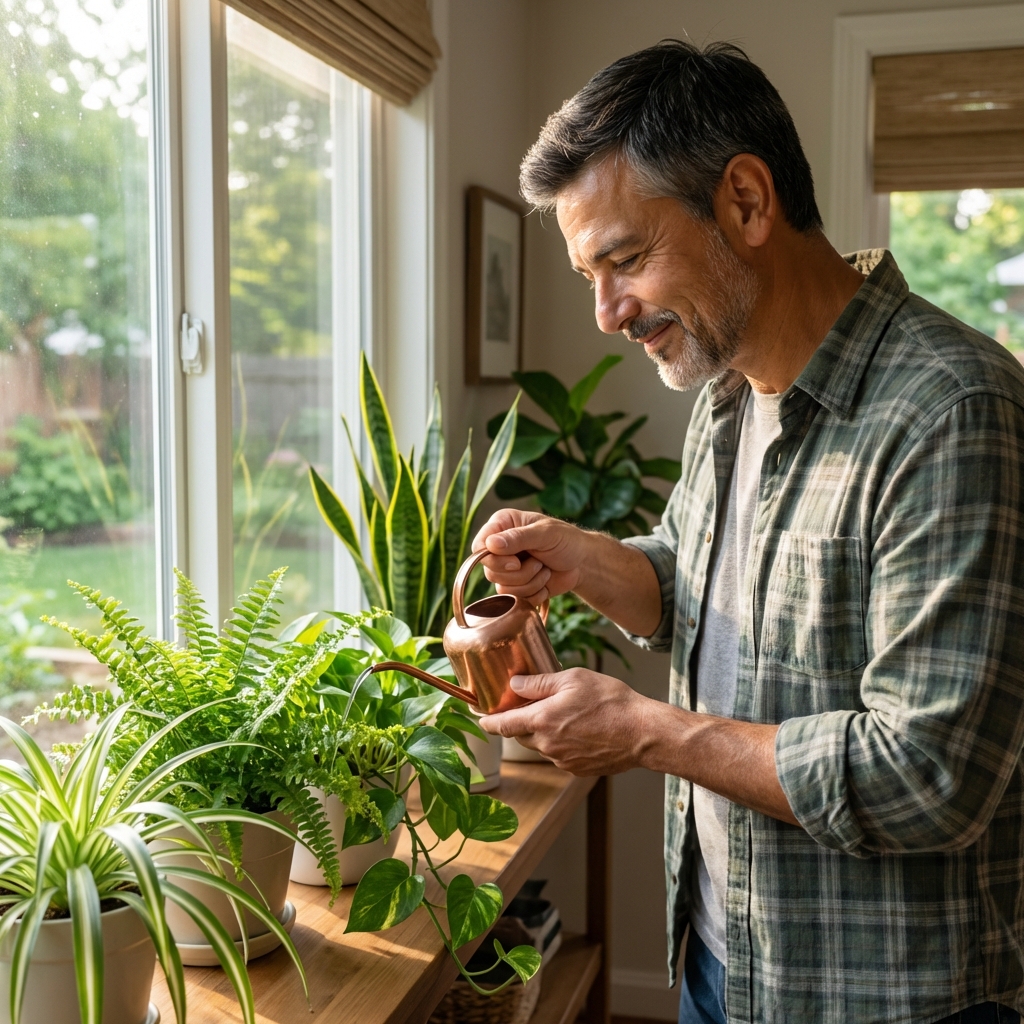
Image note
For publication, replace the empty image src fields with real file paths or URLs (and make sure the alt text matches the images you actually use).

Jose Brito
I’m Jose Britto, the writer behind The Country Store Farm Website. I share practical, down-to-earth gardening advice for home growers—whether you’re starting your first raised bed, troubleshooting pests, improving soil, or figuring out what to plant next. My focus is simple: clear tips you can actually use, realistic expectations, and methods that work in real backyards (not just in perfect conditions). If you like straightforward guidance and learning as you go, you’re in the right place.