Peonies are the kind of plant you put in once and enjoy for years. But they are also picky about when and how they are planted. If you get the timing right and keep the buds at the correct depth, you will set yourself up for healthier plants and better blooms.

Best time to plant peonies
Fall is best for most gardens
The best time to plant peonies is fall, usually from late September through November depending on your climate. You want the plant to focus on rooting in cool soil, then go dormant, then wake up ready to grow in spring.
- Ideal condition: cool days, cool nights, soil still workable
- Goal: 4 to 6 weeks before the ground freezes hard
- Why it works: peonies establish roots without heat stress
Can you plant peonies in spring?
Yes, but expect a slower start. Spring planting often means the plant is trying to grow top growth before it has a strong root system. If spring is your only option, plant as early as you can when the soil is workable, keep moisture consistent, and do not expect big blooms right away.
Container peonies vs bare-root peonies
You will see peonies sold two main ways:
- Bare-root divisions: most commonly planted in fall and usually the best value.
- Container-grown plants: can be planted in spring or fall, but still do best when installed in cooler weather.
Know your peony type before you plant
Planting basics are similar, but growth habits and pruning differ. Most home gardens have herbaceous peonies, but tree peonies and intersectional types show up more each year.
- Herbaceous peonies: die back to the ground each winter. Most common.
- Tree peonies: woody stems that stay above ground year-round.
- Intersectional (Itoh) peonies: hybrid vigor and strong stems, die back like herbaceous types.
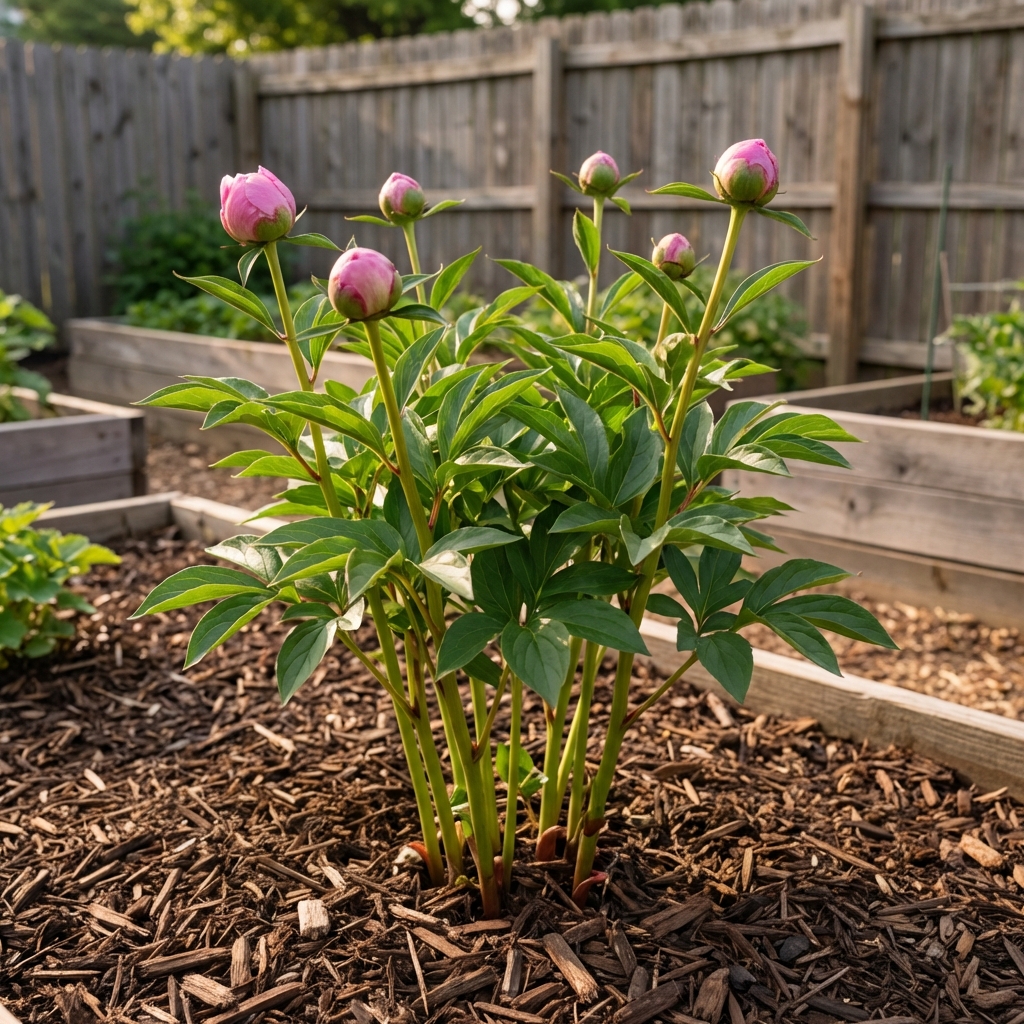
The #1 rule: planting depth (so they actually bloom)
If peonies are planted too deep, they often grow leaves but refuse to bloom. This is the most common reason for “healthy plant, no flowers.”
How deep to plant peonies
- Bare-root herbaceous peonies: place buds (eyes) 1 to 2 inches below the soil surface.
- Intersectional (Itoh) peonies: treat like herbaceous and keep the eyes about 1 to 2 inches below the surface.
- Warmer climates: aim closer to 1 inch for herbaceous and Itoh types.
- Colder climates: closer to 2 inches is fine for herbaceous and Itoh types, but avoid going deeper.
- Tree peonies (grafted): plant deep. Bury the graft union (the swelling where the top was joined to the rootstock) about 4 to 6 inches below the soil line. This encourages the tree peony to form its own roots and helps prevent the rootstock from taking over.
If you are planting a container peony, set it so the crown ends up at the right depth for its type. Do not automatically trust the soil line in the pot. Nursery plants are sometimes potted too deep or too shallow. Gently check where the buds (or graft union on a tree peony) actually sit, then adjust at planting so you land at the correct final depth.
Where to plant peonies for best growth
Sunlight
Peonies bloom best with full sun, meaning at least 6 hours of direct light. In hot climates, a little afternoon shade can help blooms last longer, but too much shade means fewer flowers.
Soil and drainage
Peonies want soil that is rich but not soggy. If water sits after rain, fix drainage before planting.
- Best soil: loamy, well-drained
- Avoid: heavy clay that stays wet or low spots where water collects
- pH preference: slightly acidic to neutral is generally fine for home gardens
Spacing
Give peonies room. Good airflow helps prevent disease and makes plants easier to support.
- Herbaceous and Itoh: space about 3 feet apart
- Tree peonies: often need 4 to 5 feet depending on the variety
Step-by-step: how to plant peonies (bare-root)
- Pick your spot with sun and drainage.
- Dig a wide hole about 12 to 18 inches across. Depth depends on how you will position the buds or graft union.
- Loosen the bottom and mix in compost if your soil is thin. Do not overdo rich amendments in the planting hole. You want roots to grow outward into native soil.
- Set the root on a small mound so the buds (herbaceous and Itoh) sit 1 to 2 inches below the final soil line, or so the graft union (tree peonies) ends up 4 to 6 inches below.
- Backfill and firm gently to remove air pockets.
- Water deeply once to settle the soil.

Care after planting
Watering
After planting, keep soil evenly moist while the plant settles in. Once established, peonies are fairly drought tolerant, but they perform best with consistent moisture during spring growth and bud formation.
- New plant: water when the top few inches of soil start to dry
- Established plant: deep watering during dry spells, especially in spring
Mulch, but keep it off the crown
A thin layer of mulch helps with moisture and weeds, but do not pile mulch over the crown. Covering the buds too deeply can reduce blooming.
Fertilizer basics
Peonies do not need heavy feeding. Too much nitrogen can mean lots of leaves and fewer flowers. If your soil is average, compost and a light, balanced fertilizer in early spring is usually enough.
Ants on buds are normal
If you see ants crawling over peony buds, do not panic. Ants are attracted to the sticky sap on the outside of the buds. They do not hurt the plant, and they are not required for the flower to open. If you are cutting blooms for indoors, a quick shake or a rinse in cool water usually takes care of any hitchhikers.
When will peonies bloom after planting?
Peonies teach patience. A newly planted peony often takes time to settle in.
- Year 1: small plant, few or no blooms is normal
- Year 2: more stems, some blooms
- Year 3 and beyond: stronger flowering and fuller plant
If you get blooms earlier, great. But if you do not, it does not automatically mean you did something wrong. First check planting depth and sun exposure.
Common mistakes that stop blooms
- Planting too deep: the most common issue for herbaceous and Itoh types. Buds should be 1 to 2 inches under soil.
- Planting tree peonies too shallow: grafted tree peonies do better when the graft union is 4 to 6 inches below soil.
- Too much shade: fewer than 6 hours of sun often reduces flowering.
- Overmulching: mulch piled on the crown acts like planting deeper.
- Moving them too often: peonies hate frequent transplanting. Pick a permanent spot.
- Too much nitrogen: lush leaves, fewer flowers.
Pruning and support tips
Staking
Many peonies flop when the blooms get heavy, especially after rain. A simple grow-through ring support installed in early spring keeps stems upright without looking messy later.
Deadheading
After blooms fade, snip the flower head off above a set of leaves. This keeps the plant tidy and helps it focus on storing energy for next year.
End-of-season cleanup
- Herbaceous: cut back after frost when foliage declines.
- Itoh: cut back after frost in most gardens. If you notice short, woody stem bases, you can leave a few inches in place and trim to healthy tissue in spring.
- Tree peonies: do not cut to the ground. Remove only dead wood and shape lightly if needed.
Quick planting checklist
- Plant in fall if possible, about 4 to 6 weeks before hard freeze
- Full sun or close to it
- Well-drained soil
- Herbaceous and Itoh: buds 1 to 2 inches below soil line
- Tree peony (grafted): graft union 4 to 6 inches below soil line
- Water to settle, then keep evenly moist until dormant
- Mulch lightly, keep it off the crown
If you take nothing else away, remember this: correct planting depth is what gets you flowers. Most peony “problems” trace back to being planted at the wrong depth or grown in too much shade.

Jose Brito
I’m Jose Britto, the writer behind The Country Store Farm Website. I share practical, down-to-earth gardening advice for home growers—whether you’re starting your first raised bed, troubleshooting pests, improving soil, or figuring out what to plant next. My focus is simple: clear tips you can actually use, realistic expectations, and methods that work in real backyards (not just in perfect conditions). If you like straightforward guidance and learning as you go, you’re in the right place.