Potatoes are one of those crops that feel like they should be easy to store, until you end up with a box of sprouts, mushy spots, or wrinkled skins. The best way to store potatoes is not complicated, but it is specific: you want them cool, dark, well ventilated, and not bone-dry (meaning: not sitting in warm, forced-air heat that dries them out fast).
This page walks you through a practical, home-gardener setup that works whether you grew your own or brought home a big bag from the store.
The quick answer
Best overall storage conditions for potatoes:
- Temperature: 45 to 55°F (7 to 13°C) for most home storage
- Light: total darkness (or very low light)
- Airflow: steady ventilation, not sealed plastic
- Humidity: moderately high so they do not shrivel, but not wet
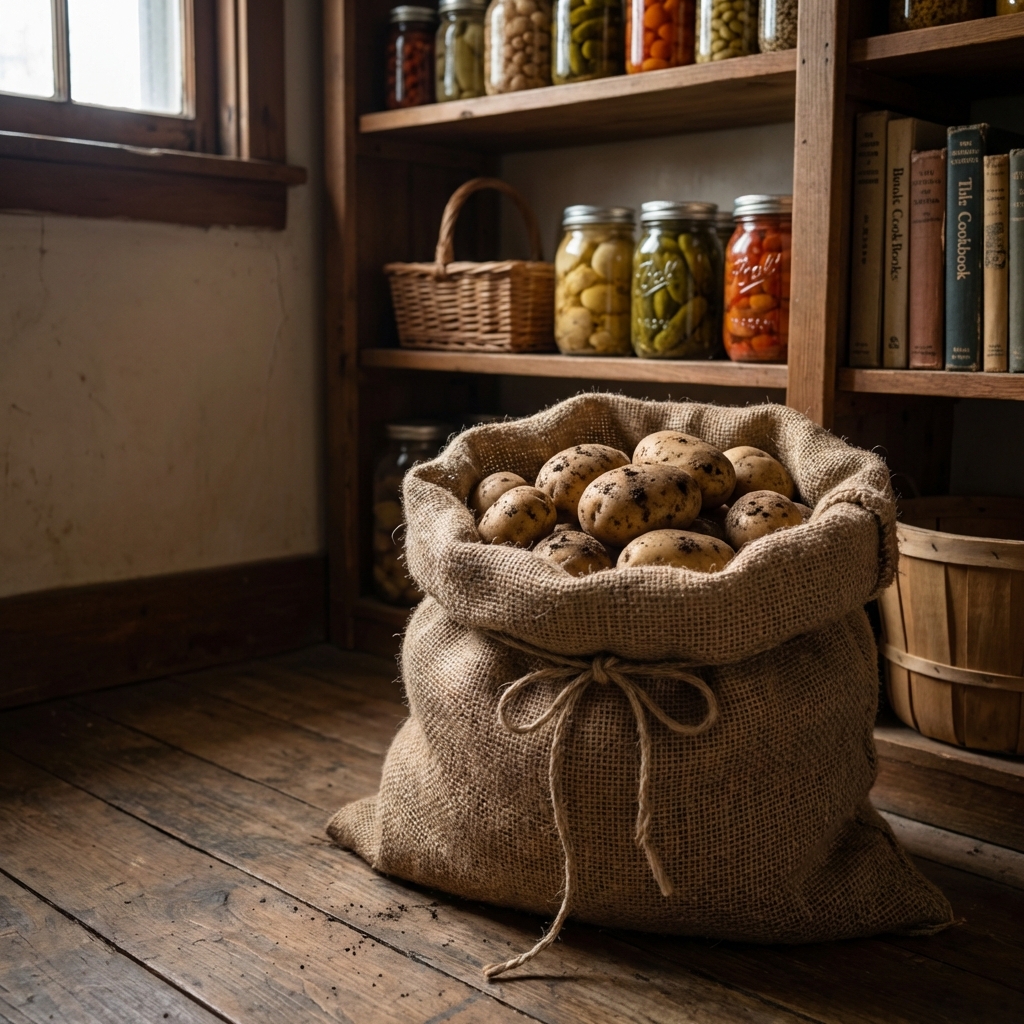
- Container: paper bag, burlap sack, ventilated bin, or cardboard box with holes
If you can hit those, you will dramatically reduce sprouting and soft rot.
A note on temperature: If you are storing potatoes for the long haul, many varieties last longest closer to 38 to 45°F (3 to 7°C). The tradeoff is that colder temps can make potatoes taste sweeter and brown faster when frying. For most kitchens, 45 to 55°F is a good balance for all-purpose “table potatoes.”
Why potatoes go bad in storage
Most storage problems trace back to one of these:
- Too warm: speeds up sprouting and decay.
- Too bright: turns skins green and can raise solanine, which is not something you want to eat.
- Too dry: potatoes lose moisture and shrivel.
- Too wet or no airflow: encourages rot and mold.
- Hidden damage: small nicks and bruises spread problems fast.
Step 1: Start with the right potatoes
Homegrown potatoes
If you grew them, harvest gently. A fork through a potato skin is basically an open door for storage rot. Brush off loose dirt, but do not wash potatoes meant for long storage.
New potatoes (thin skin): Treat these as “eat soon” potatoes. They do not store like mature, fully cured potatoes.
Store-bought potatoes
If they came in a plastic bag, get them out. Plastic traps moisture and limits airflow, which is a fast track to slimy soft rot.
Step 2: Cure potatoes (the part most people skip)
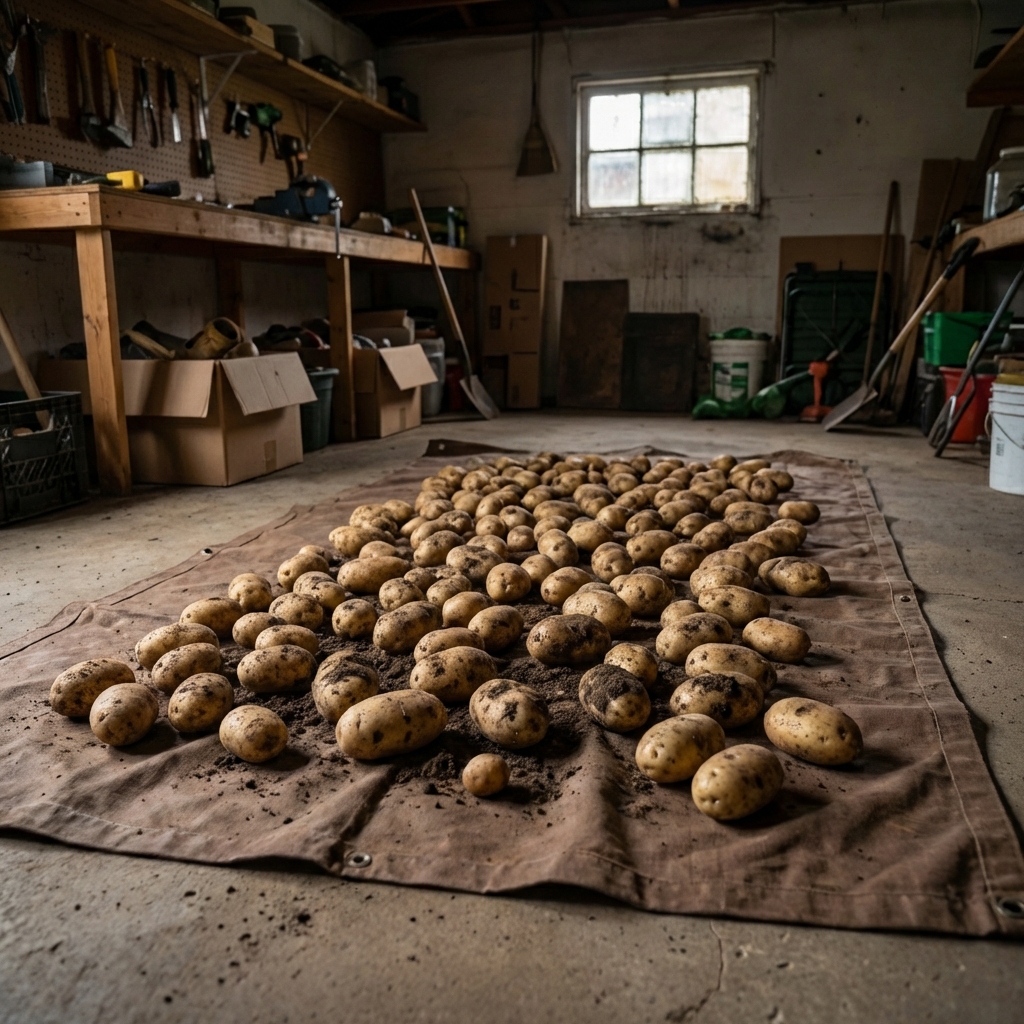
Curing toughens up the skin and helps tiny nicks seal over. It is one of the biggest “easy wins” for longer storage.
- Time: 7 to 14 days
- Temperature: around 55 to 65°F (13 to 18°C), with some varieties doing fine a bit warmer
- Light: dark
- Airflow: good airflow, spread out in a single layer if possible
- Humidity: moderately high (not damp-wet), so skins do not dry out while they heal
After curing, gently remove excess soil. Still do not wash them for long-term storage.
Step 3: Choose a container that breathes
Your goal is airflow plus darkness. These options work well at home:
- Paper bags: simple and effective, especially if you do not have a root cellar.
- Burlap sack: excellent airflow and naturally dark.
- Cardboard box with ventilation holes: easy DIY option. Line with paper, not plastic.
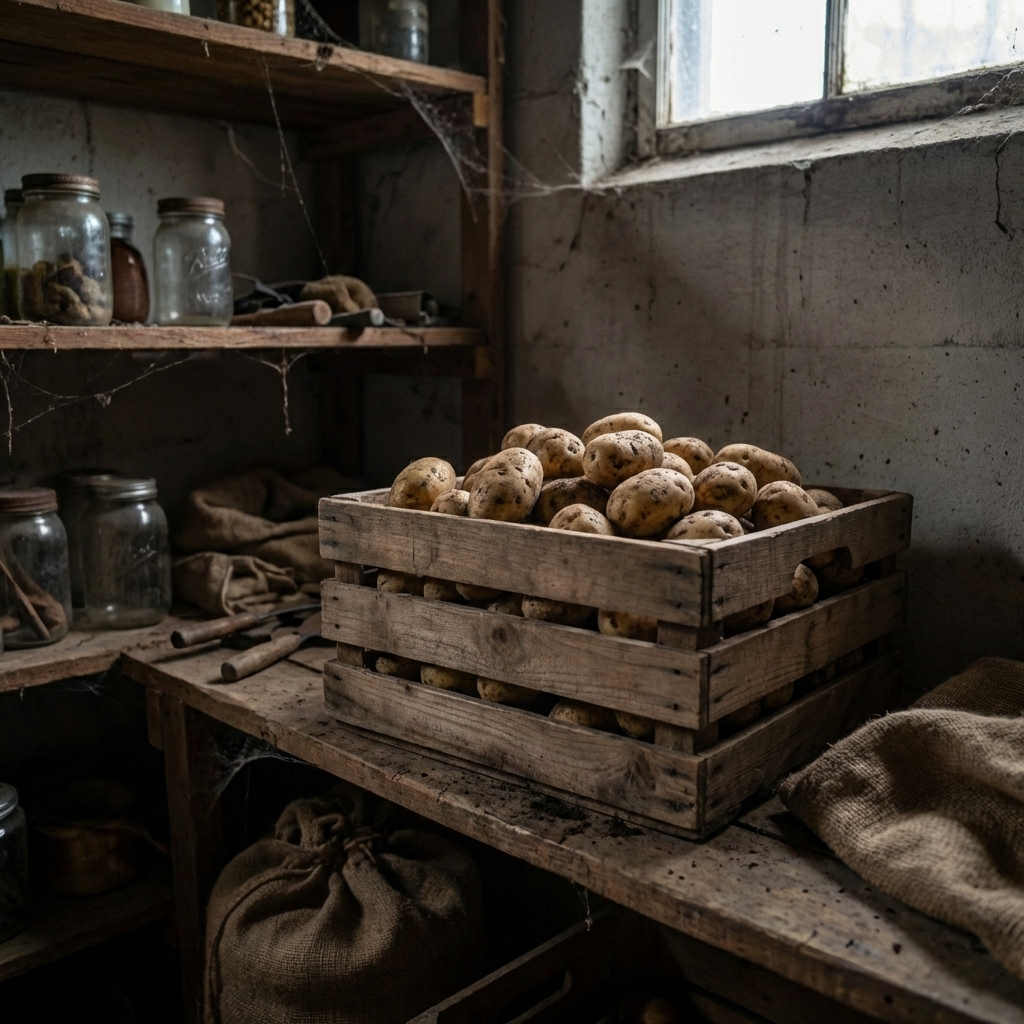
- Ventilated crate or bin: great for bigger harvests, cover with a towel to block light.
Avoid sealed bins and plastic bags. If you see condensation, storage is too wet or not ventilated enough. Also avoid airtight drawers or closed cabinets that stay stuffy.
Step 4: Put them in the best spot in your home
Most homes do not have a perfect root cellar, so we aim for “good enough” and stable.
Good locations
- A cool basement corner away from the furnace or water heater
- An unheated closet on an outside wall (if it stays cool)
- An attached garage in mild climates (only if it will not freeze)
Locations to avoid
- On the counter: too warm and too bright.
- Near onions: commonly discouraged. Onions like it drier, potatoes like it more humid, and storing them together can shorten shelf life for both.
- Near apples or bananas: they give off ethylene, which can encourage sprouting.
- In the refrigerator: often too cold for many varieties and can lead to a sweeter taste from starch converting to sugar.
- Anywhere that freezes: freezing damages texture and invites rot when thawed.
Dialing in temperature and humidity
Potatoes want it cool, but not necessarily refrigerator-cold. They also store best with fairly high humidity, which helps them stay firm.
- Best range for most homes: about 45 to 55°F (7 to 13°C)
- Best range for longest storage: about 38 to 45°F (3 to 7°C), with the tradeoff of more sweetening and darker browning when frying
- Ideal humidity (rough target): about 85 to 90% relative humidity, meaning “humid enough to prevent shriveling,” but not wet enough to cause condensation
Too warm (above 60°F) means more sprouting, faster shrink, and shorter storage life. Too cold (near fridge temps) can change flavor and cooking behavior.
If your storage area is very dry, a simple trick is to keep potatoes in a breathable container and add a layer of paper on top. It helps buffer humidity without trapping moisture the way plastic does.
Sort, then check them regularly
One bad potato really can spoil the bunch. Here is a routine that keeps small issues from turning into a mess.
Before storing
- Set aside any potatoes with cuts, deep scuffs, or soft spots. Eat those first.
- Do not store potatoes that are wet from rain or washing.
- Keep different varieties separate if you can. Some store better than others.
During storage
- Check every 1 to 2 weeks.
- Remove sprouting potatoes and use them soon.
- Remove any potato with a sour smell, leaking, or spreading soft rot.
How long will potatoes last?
Storage life depends on variety, starting condition, and temperature.
- New potatoes (thin skin): 1 to 2 weeks, best eaten fresh.
- Most mature potatoes in decent conditions: 1 to 3 months.
- Best keepers (often russets and some late-season varieties): 3 to 6 months in near-root-cellar conditions.
If your potatoes are lasting only a couple weeks, the most common culprit is heat. The next most common is light exposure.
Sprouts, green skins, and soft spots: what to do
Food safety note: Do not eat potatoes that taste bitter, are significantly green, or are badly sprouted and soft. When in doubt, throw it out. Keep questionable potatoes away from children and pets.
If potatoes sprout
Small sprouts mean they are trying to grow, usually from warm temperatures. If the potato is still firm, you can trim sprouts and use it soon. If it is soft, rubbery, or shriveled, compost it.
If potatoes turn green
Green skin means light exposure. If there is just a small green patch, you can peel deeply to remove all green flesh and use the potato soon. If greening is extensive, or the potato tastes bitter, discard it.
If potatoes get soft or wrinkled
That is typically dehydration from warm, dry storage. You can still cook mildly wrinkled potatoes, but they will not store much longer.
If you find rot
Remove the rotten potato immediately and check neighboring ones. Improve airflow and lower humidity if the area feels damp.
Recap checklist
If you want a simple method that works for most gardeners, here is the whole setup in one place:
- Do not wash potatoes you want to store.
- Cure mature potatoes 7 to 14 days in the dark with good airflow and moderately high humidity.
- Store in a paper bag or burlap sack.
- For extra darkness and protection, set the bag inside a ventilated cardboard box.
- Keep them in the coolest dark spot you have that will not freeze.
- Keep them away from onions and ethylene-producing fruit like apples and bananas.
- Check every 1 to 2 weeks and remove anything questionable.
This is not fancy, but it hits the big four: cool, dark, breathable, and stable.
Frequently asked questions
Should I store potatoes in the fridge?
Usually no. Refrigerators are often colder than ideal and can change flavor and cooking behavior, especially for frying. A cool pantry, basement, or closet is typically better.
Can I store potatoes and onions together?
It is better to store them separately. Onions prefer drier conditions, potatoes prefer higher humidity, and storing them close can shorten shelf life for both.
Do I need to wash homegrown potatoes before storing?
For long storage, do not wash. Let them cure, then gently brush off loose soil. Washing adds moisture and increases rot risk.

Jose Brito
I’m Jose Britto, the writer behind The Country Store Farm Website. I share practical, down-to-earth gardening advice for home growers—whether you’re starting your first raised bed, troubleshooting pests, improving soil, or figuring out what to plant next. My focus is simple: clear tips you can actually use, realistic expectations, and methods that work in real backyards (not just in perfect conditions). If you like straightforward guidance and learning as you go, you’re in the right place.