Snake plants (also sold as Sansevieria or Dracaena trifasciata) are famous for being tough. They handle missed waterings, low light, and busy schedules better than most houseplants. But the “unkillable plant” reputation can lead to the one thing that actually takes them out: too much water.
This guide sticks to the classic basics so you can keep your snake plant upright, green, and growing without overthinking it.
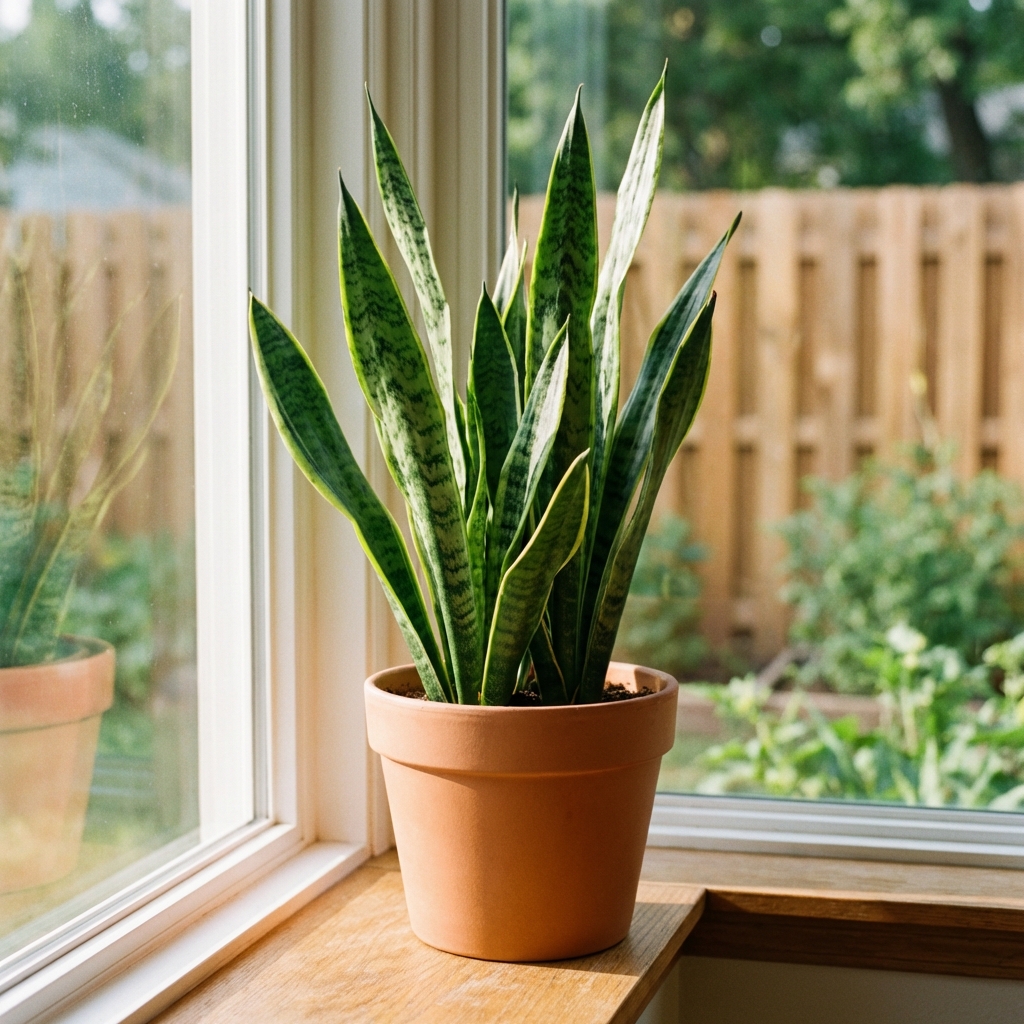
Snake plant care in 60 seconds
- Light: Bright indirect is best, but it tolerates low light.
- Water: Let soil dry out completely, then water thoroughly and drain.
- Soil: Fast draining mix, cactus or succulent style works great.
- Pot: A pot with a drainage hole is strongly recommended.
- Fertilizer: Light feeding in spring and summer only.
- Biggest mistake: Watering on a schedule instead of by soil dryness.
Light: where it thrives (and where it survives)
Snake plants are flexible, but they grow best with bright, indirect light. Think a few feet back from a sunny window or in a room with consistent daylight.
Best window spots
- East window: Great choice, gentle morning sun.
- South or west window: Works well if you pull it back from harsh direct sun or filter light with a curtain.
- North window: Usually fine, growth will be slower.
If your plant has been living in low light, don’t jump it straight into full sun. Increase light over a week or two to avoid stress and scorching.

Watering: the simple rule that prevents most problems
The classic rule is easy: water only when the pot is dry all the way down. Not just dry on top. Dry down near the roots.
How to check dryness
- Stick a finger 2 to 3 inches into the soil. If it is cool or damp, wait.
- Use a wooden skewer or chopstick. If it comes out with dark, moist soil, wait.
- Lift the pot. Dry soil feels much lighter than wet soil.
How to water correctly
- Water slowly until you see water run out of the drainage hole.
- Let it drain completely. Do not let it sit in a saucer of water.
- Do not “sip water” little by little every week. That keeps roots damp.
Typical timing: In many homes, that’s every 2 to 4 weeks in warm months and every 4 to 8+ weeks in winter. But always let the soil tell you, not the calendar.
Soil: the right mix makes care easier
Snake plants want soil that drains fast and dries out reliably. Heavy potting soil that stays wet is the main reason people run into mushy leaves and root rot.
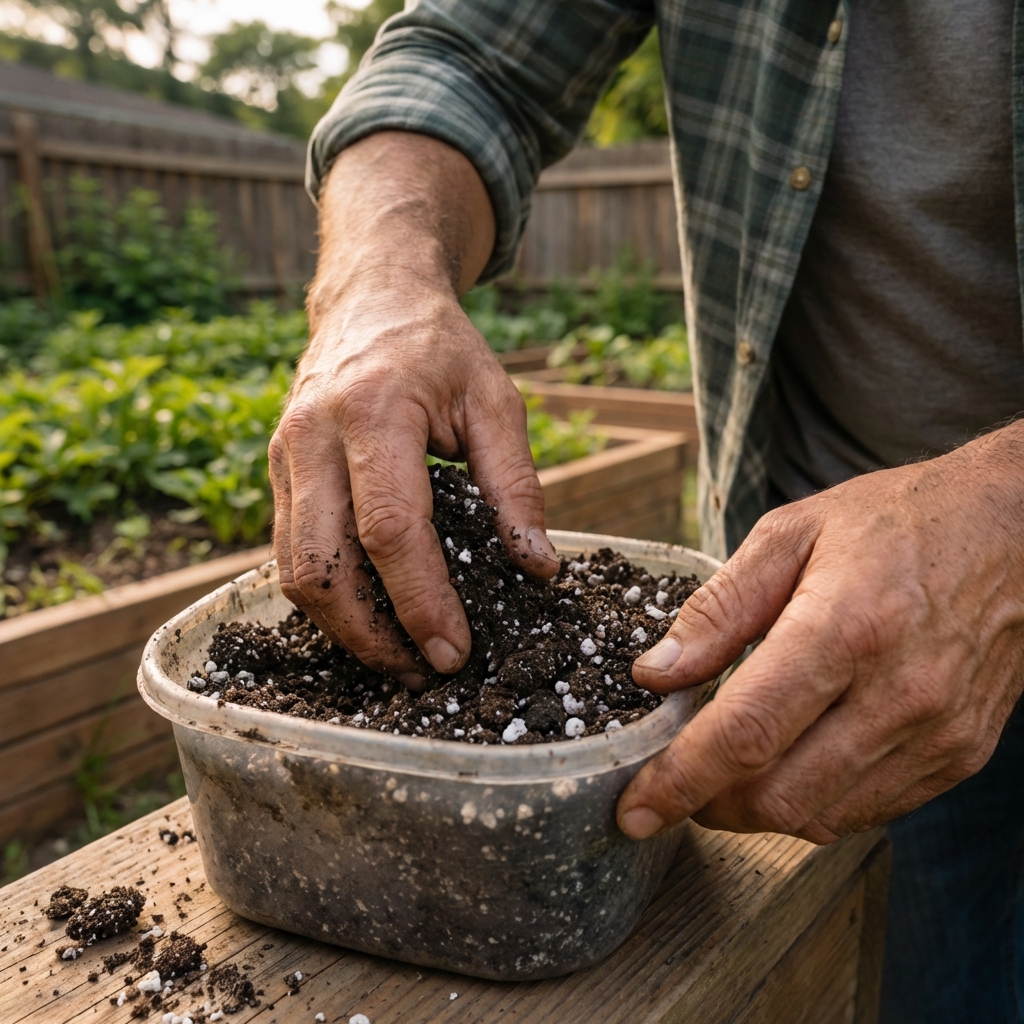
Easy soil recipe
- Option 1 (simple): Cactus or succulent mix straight from the bag.
- Option 2 (more forgiving): 2 parts potting mix + 1 part perlite or pumice.
- Option 3 (very fast draining): 1 part potting mix + 1 part perlite or pumice + a handful of orchid bark.
Pots and drainage: choose boring and functional
If you want a snake plant to live for years, pick a pot that helps the soil dry out.
- Drainage hole: This is the big one. It gives excess water a way out.
- Material: Terracotta dries faster and is great for heavy waterers. Plastic holds moisture longer and can still work if you water carefully.
- Size: Slightly snug is fine. Oversized pots hold extra wet soil and slow drying.
If you love decorative cachepots (pots with no holes), keep your snake plant in a nursery pot with holes and set it inside. Water it at the sink, let it drain, then return it.
Temperature and humidity: normal home conditions are perfect
Snake plants do well in typical indoor conditions.
- Ideal temperature: Roughly 60 to 85°F (16 to 29°C).
- Cold warning: Avoid cold drafts and temperatures below about 50°F (10°C).
- Humidity: Average household humidity is fine.
Fertilizer: less is more
Snake plants are slow growers, so they do not need much feeding. Too much fertilizer can cause weak, floppy growth or salt buildup.
- Feed in spring and summer only.
- Use a balanced houseplant fertilizer at half strength every 6 to 8 weeks, or use a gentle slow-release option once in spring.
- Skip fertilizer in fall and winter when growth slows.
Repotting: when to do it and how
Snake plants like being a little tight in their pot, so repotting is not a frequent chore. Many only need it every 2 to 4 years.
Signs it is time
- Roots circling heavily and pushing the plant up.
- The pot dries out extremely fast because it is packed with roots.
- The plant is top-heavy and tipping easily.
- Cracks in the pot from strong roots (yes, they can do that).
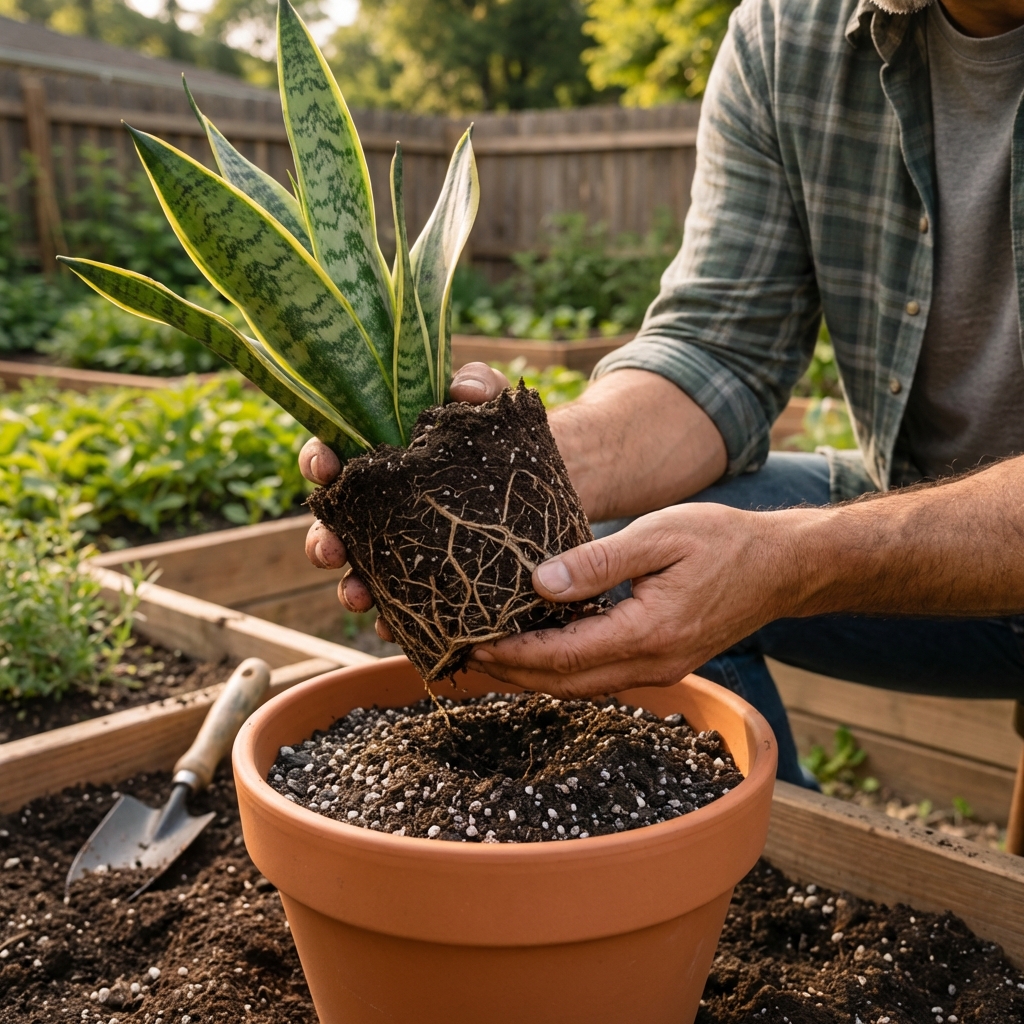
Quick repot steps
- Choose a pot 1 to 2 inches wider than the current one.
- Use dry or lightly moist, fast draining soil mix.
- Keep the plant at the same depth it was before.
- After repotting, wait 3 to 7 days to water if you disturbed roots a lot. This lowers rot risk.
Pruning and cleanup
You do not “prune” a snake plant for shape the way you would a shrub. You mostly remove damaged leaves.
- Use clean scissors or pruners.
- Cut damaged leaves at the soil line for the cleanest look.
- If a leaf is just scratched, you can leave it. Cosmetic damage will not heal, but it is not harmful.
Propagation: the classic, easiest methods
Snake plants are easy to multiply. The two dependable methods are division and leaf cuttings.
Option 1: Division (fastest, keeps the look)
When you repot, you can split off pups, also called offsets. This is the quickest way to get a full new plant, and it keeps the same variegation pattern as the parent.
- Remove the plant from the pot and find a pup with its own roots.
- Separate gently or cut with a clean knife.
- Pot it in fresh, fast draining mix and water lightly after a few days.
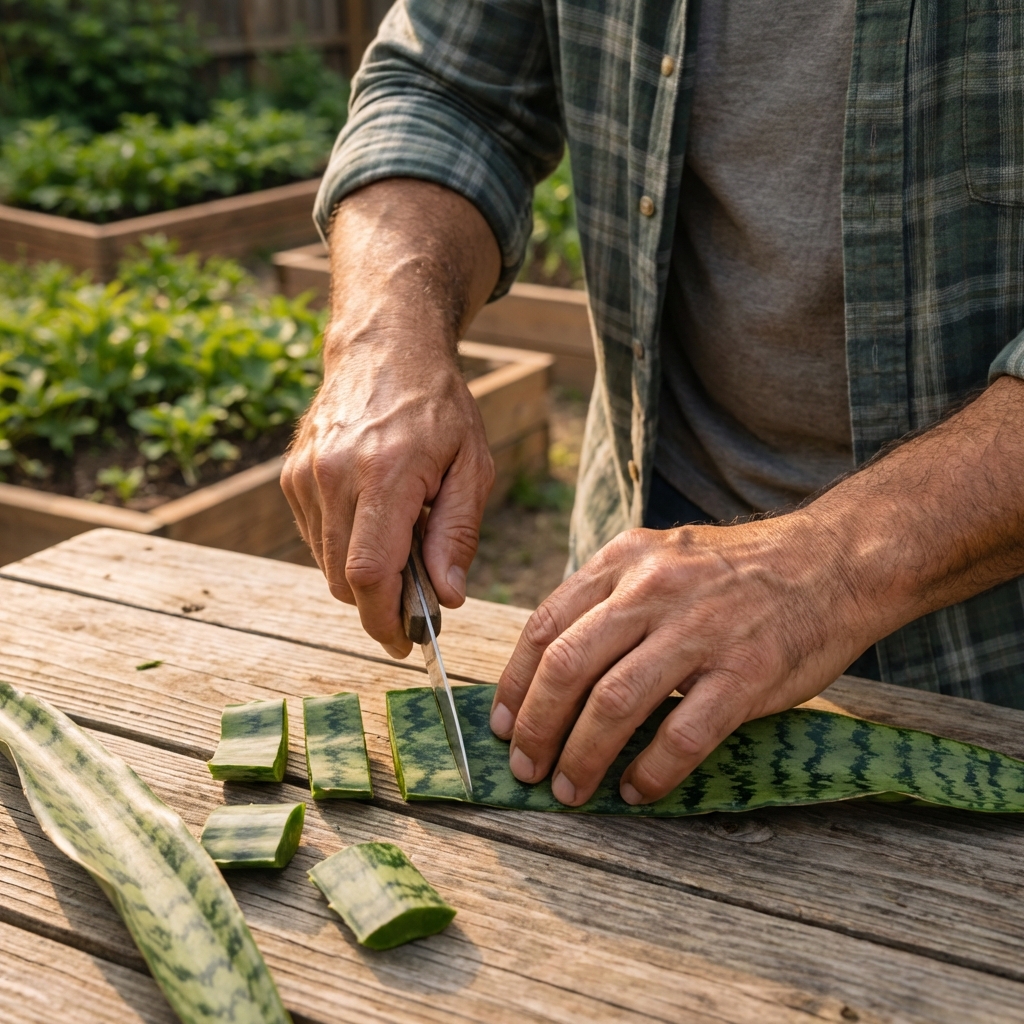
Option 2: Leaf cuttings (slower, can change variegation)
Cut a healthy leaf into segments and root them in soil. This takes time, and many variegated varieties revert to greener growth from leaf cuttings. Division is the better choice if you want the new plant to match the original.
Troubleshooting: quick fixes for common problems
Soft, mushy base or leaves falling over
Most likely cause: Overwatering and root rot.
- Stop watering immediately.
- Unpot the plant and inspect roots. Trim any black, mushy roots.
- Repot into dry, fast draining mix in a pot with a drainage hole.
- Wait several days before watering again.
Wrinkled leaves or curling inward
Most likely cause: Underwatering or very dry soil that is repelling water.
- Water thoroughly until it drains.
- If water runs straight through, soak the pot in a bowl of water for 20 to 30 minutes, then drain well.
Yellow leaves
Most likely causes: Too much water, poor drainage, or low light combined with wet soil.
- Let soil dry fully before watering again.
- Move to brighter indirect light.
- Consider repotting into a grittier mix.
Brown tips
Common causes: Inconsistent watering, mineral buildup from hard water, or too much fertilizer.
- Water deeply but less often, only when dry.
- Flush the pot with clean water every couple months to rinse salts.
- Cut brown tips for looks if you want, matching the natural shape of the leaf.
Leaves leaning or flopping
Common causes: Low light, overwatering, or the plant being root-bound and top-heavy.
- Increase light.
- Check the base for softness and adjust watering.
- Repot if the pot is packed with roots.
Pests (mealybugs, spider mites)
Snake plants are not major pest magnets, but it happens.
- Wipe leaves with a damp cloth.
- Spot treat with insecticidal soap or a diluted alcohol wipe for mealybugs.
- Isolate the plant until pests are gone.
Pet safety note
Snake plants are considered toxic if chewed by cats and dogs and can cause drooling, vomiting, or upset stomach. If you have pets that nibble, place the plant out of reach or choose a pet-safer option for that spot.
A simple care routine that works
- Weekly: Quick look at the soil and leaves. Rotate the pot a quarter turn for even growth.
- When dry: Water thoroughly and drain.
- Monthly: Wipe dust off leaves so the plant can use the light it gets.
- Spring: Consider a light feeding and repot only if the plant truly needs it.
If you remember just one thing, make it this: snake plants prefer dryness over attention. Give them light, let them dry out, and they will do their job.

Jose Brito
I’m Jose Britto, the writer behind The Country Store Farm Website. I share practical, down-to-earth gardening advice for home growers—whether you’re starting your first raised bed, troubleshooting pests, improving soil, or figuring out what to plant next. My focus is simple: clear tips you can actually use, realistic expectations, and methods that work in real backyards (not just in perfect conditions). If you like straightforward guidance and learning as you go, you’re in the right place.