Eggplant is one of those crops that can look tough, but it is surprisingly sensitive to early pest pressure and uneven watering. Companion planting will not “magically” solve everything, but it can tip the odds in your favor by attracting beneficial insects, adding ground cover (a living mulch), and making it harder for pests to find their favorite snack.
This guide focuses on companion planting that actually works in real home gardens: a few reliable plant partners, simple layouts, and practical solutions when things go sideways.

What eggplant needs first
Before we talk companions, make sure the basics are covered. Companion plants help most when eggplants are already growing in decent conditions.
- Heat and sun: Full sun is best. Eggplant wants warm soil and warm nights. For most gardens, wait to transplant until nights are consistently around 55°F (13°C) or warmer.
- Space and airflow: Most varieties do well with 18 to 24 inches between plants, more for large types.
- Steady moisture: Inconsistent watering is a common cause of blossom drop and bitter fruit.
- Fertility: Eggplant is often a heavier feeder than peppers, but needs vary by variety and soil. Mix in compost and avoid overdoing nitrogen once flowering starts.
Container note: Eggplant can do great in pots, but it is less forgiving. Use a 5 to 10 gallon container per plant, keep it in full sun, and water more consistently than you would in-ground.
Best companion plants for eggplant
The best companions do one of three things: attract beneficial insects, confuse pests, or cover the soil so it stays more evenly moist and the root zone stays moderated (less temperature swing).
Herbs that pull in beneficial insects
- Basil: Easy, compact, and a strong pollinator draw when allowed to flower. Plant 8 to 12 inches from the base of eggplant.
- Dill: Excellent for attracting beneficial insects like hoverflies and parasitic wasps. Best placed near, not shading, eggplant.
- Cilantro: Let a few plants bolt and flower. It brings in tiny beneficial wasps that help with aphids and caterpillars.
- Thyme and oregano: Low-growing, useful as living mulch around the edges of the bed.
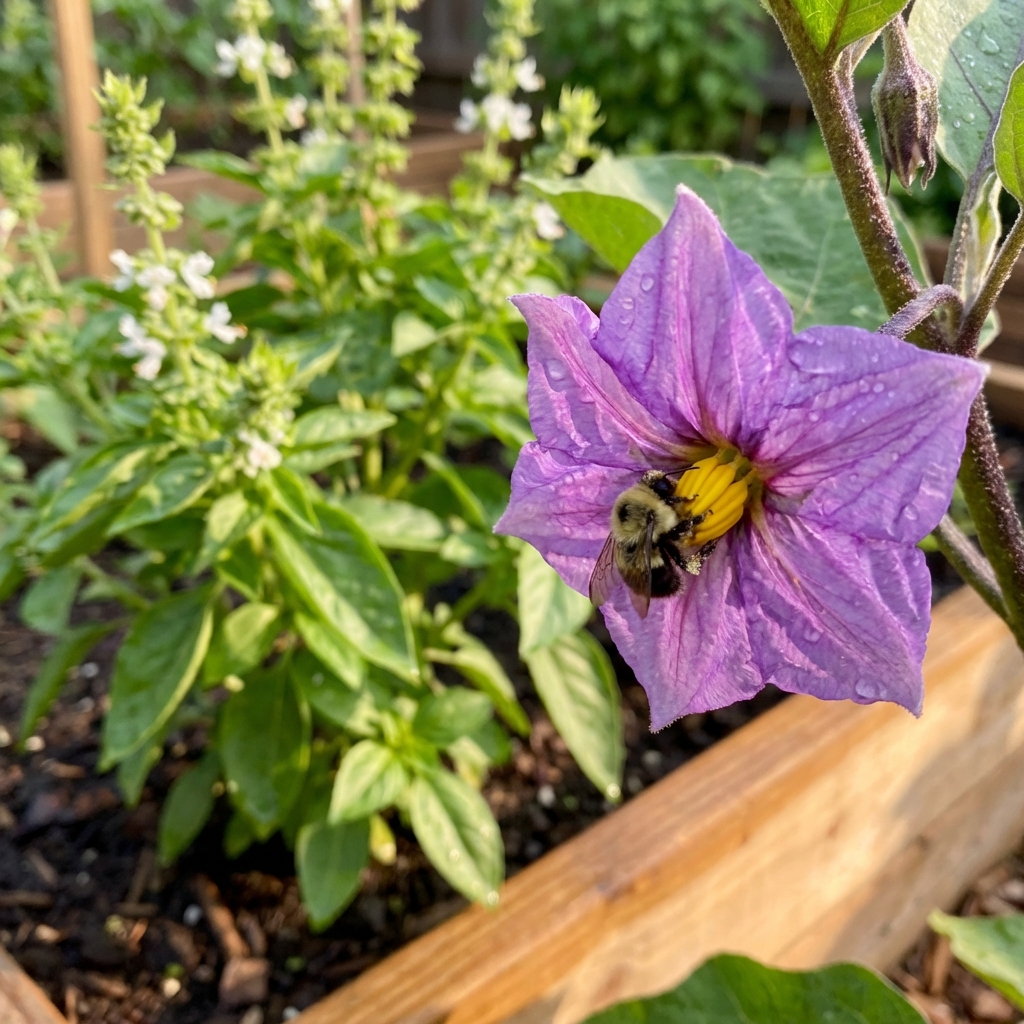
Flowers that help with pests
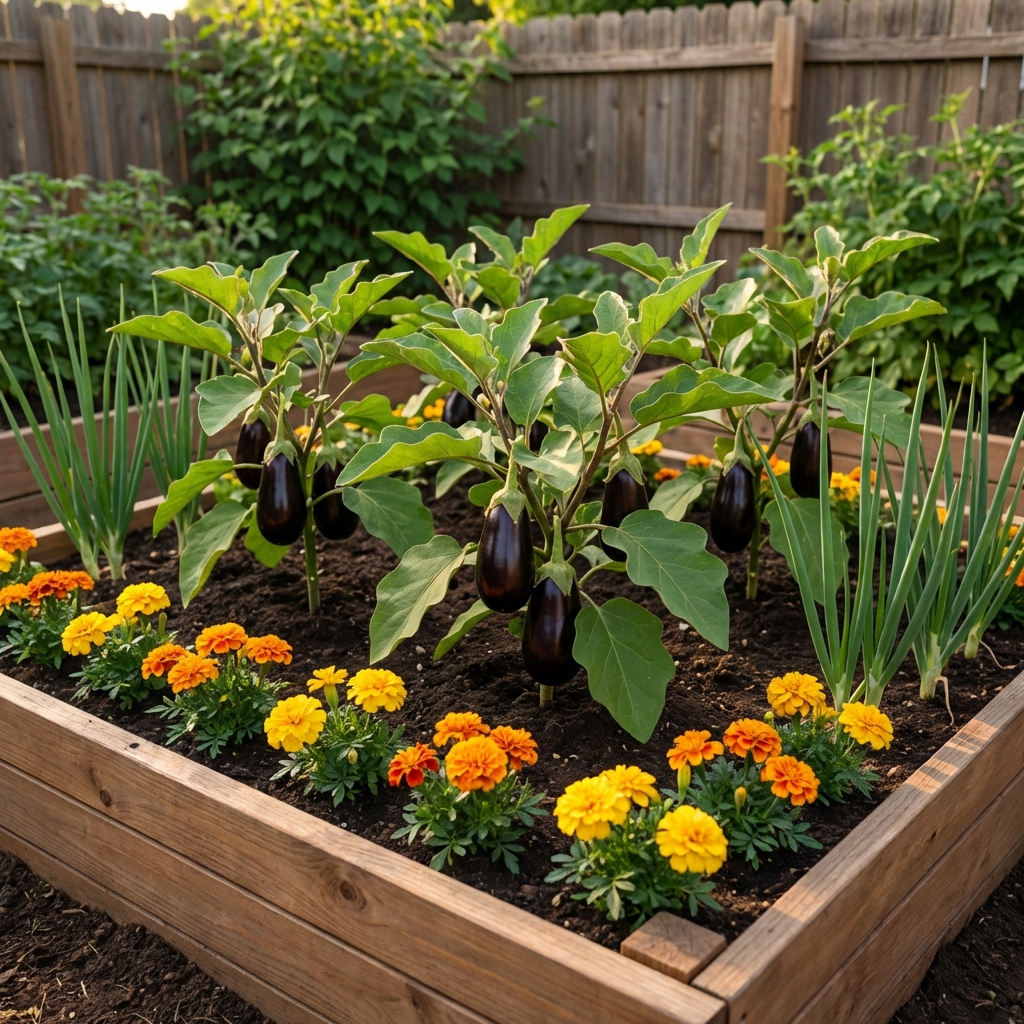
- Marigolds (French marigolds): Great as a beneficial-insect draw and a handy border plant. They may help reduce certain pest pressures in some gardens, but results vary, so treat them as support rather than a cure-all.
- Nasturtiums: Often used as a “sacrificial” plant for aphids and it also attracts pollinators. Check it regularly and remove heavily infested growth so it does not become an aphid nursery. Let it trail outside the bed or down the side of a raised bed.
- Calendula: Easy to grow, long-blooming, and useful for bringing in beneficial insects.
Vegetables that pair well in the same bed
- Beans (bush types): Can fit nearby without competing too hard, and they help shade the soil. Give eggplant its space and place beans toward the edge.
- Peas (cool season): Early peas can be grown first, then removed as eggplant goes in. This is more succession planting than true companionship, but it is a smart use of space.
- Lettuce and spinach: Shallow-rooted cool-season greens can act as early living mulch before eggplant gets big. Harvest them as the canopy fills in.
- Alliums (green onions, chives): Helpful as a light pest-confuser and easy to tuck around the edges.
Plants to avoid near eggplant
Most “avoid” lists online are too dramatic. The real issues are shared pests, heavy competition, and disease risk.
- Other nightshades in the same spot every year: Tomatoes, peppers, potatoes. They share pests and diseases. It is fine to grow them in the same garden, but avoid planting them right next to each other if pest pressure is high, and rotate beds year to year.
- Potatoes (especially): Can share flea beetles and, in some regions, Colorado potato beetle pressure. Also, digging potatoes can disturb eggplant roots if you harvest close by.
- Fennel: Can inhibit growth of many garden plants. Best grown in its own area.
- Very tall, dense crops that shade: Corn or sunflowers can work in the same garden, but avoid placing them where they block afternoon sun from eggplant.
- Overcrowding vines: Big cucurbits (some squash, pumpkins) are not “bad,” but they can sprawl into eggplant space fast and reduce airflow.
Usually fine: Brassicas (like cabbage, kale, broccoli) are typically okay nearby, as long as you keep enough space for light and airflow.
Simple layouts that fit
Use these as templates, then adjust based on your bed size and the varieties you are growing.
Layout 1: Pest-pressure reducer
- Eggplant in a single row, 18 to 24 inches apart.
- Basil planted between every eggplant or every other eggplant.
- Marigolds as a border around the bed.
- Green onions tucked into open corners.
Layout 2: Living mulch for hot spells
- Eggplant spaced wide for airflow.
- Nasturtiums trailing over the edge of the bed to shade soil and attract beneficial insects.
- Calendula sprinkled in gaps where you have space.
Quick tradeoff: Living mulch can also compete for water. In dry climates, use drip irrigation and do not let ground covers crowd the root zone.
Layout 3: Early greens then eggplant
- Start the bed with spinach or lettuce early.
- Transplant eggplant after nights warm up.
- Harvest greens as eggplant grows, then top-dress with compost.
Common problems and fixes
Problem: flea beetles shredding young leaves
Flea beetles are one of the most common reasons eggplants stall early. You can lose weeks of growth from stress.
- Best solution: Use a light row cover right after transplanting and remove it when flowering begins.
- Companion support: Plant a border of marigolds and add flowering herbs (dill, cilantro) nearby to increase beneficial insect activity.
- Extra tip: Keep plants growing fast with consistent watering and a compost top-dress. Slow plants get hit harder.
Problem: aphids on new growth
Aphids show up when plants are tender and weather is mild. Ants often “farm” them, which makes it worse.
- Best solution: Blast them off with a strong stream of water and repeat every few days.
- Companion support: Let dill, cilantro, and calendula flower to attract lady beetles and hoverflies.
- Watch for ants: If ants are present, focus on disrupting ant traffic too or aphids will bounce back.
Problem: flowers dropping, few fruits forming
This is usually heat swings, drought stress, or poor pollination. Eggplant flowers are “perfect” flowers, but they still benefit from insect activity and steady plant health.
- Check watering: Deep, consistent watering beats frequent shallow watering.
- Add mulch: Straw, shredded leaves, or untreated grass clippings help stabilize soil moisture.
- Companion support: Basil, nasturtiums, and calendula keep pollinators working your bed.
- Hand help: In still weather, gently tap flower clusters mid-morning to shake pollen loose.
Problem: leaves yellowing and plants not growing
Yellowing can be from overwatering, underfeeding, poor drainage, or root stress from cool soil.
- First check: Soil moisture and drainage. Eggplant hates sitting in soggy soil.
- Feed lightly: Use compost, then a balanced fertilizer when flowering starts. Avoid heavy nitrogen late or you may get lots of leaves and fewer fruits.
- Companion support: Living mulch like thyme or oregano around bed edges can reduce evaporation, but keep the stem area clear to prevent rot.
Problem: fruit is small, seedy, or bitter
- Harvest timing: Pick when fruit is glossy and firm. Overripe eggplant gets bitter and seedy.
- Stress reduction: Irregular watering and extreme heat make bitterness more likely.
- Companion support: Ground cover that shades soil can help reduce heat stress in very hot locations, as long as water stays consistent.
Keep it simple
- Do not crowd the base: Keep 3 to 4 inches of open space around the eggplant stem to reduce rot and keep airflow.
- Choose a few companions and repeat them: A border of marigolds plus basil and one flowering herb is plenty.
- Let some plants flower: You only get the beneficial insect boost if herbs are allowed to bloom.
- Rotate nightshades: Even the best companion plan cannot outwork soil-borne disease buildup.
Quick pick list
Best companions
- Basil
- Dill
- Cilantro (flowering)
- Marigolds
- Nasturtiums
- Calendula
- Green onions or chives
- Lettuce or spinach (early)
- Thyme or oregano (bed edges)
Avoid nearby when possible
- Potatoes (shared pest pressure and root disturbance at harvest)
- Nightshade clusters in the same bed year after year
- Fennel (can inhibit nearby plants)
- Dense shade from tall crops
- Overcrowding vines that kill airflow
When companions are not enough
If your eggplants are consistently getting hammered by flea beetles or you have recurring disease issues, treat companion planting as a support tool, not the main tool. Row covers early, crop rotation, healthy soil, and steady water are what turn eggplant from “fussy” into “reliable.” Once the plants are growing strongly, companion plants help you keep that momentum.

Jose Brito
I’m Jose Britto, the writer behind The Country Store Farm Website. I share practical, down-to-earth gardening advice for home growers—whether you’re starting your first raised bed, troubleshooting pests, improving soil, or figuring out what to plant next. My focus is simple: clear tips you can actually use, realistic expectations, and methods that work in real backyards (not just in perfect conditions). If you like straightforward guidance and learning as you go, you’re in the right place.