Ants are tiny, persistent, and honestly pretty organized. If you only wipe up the ones you see, you are usually just trimming the front line. The goal with natural ant control is to (1) figure out where they are coming from, (2) remove what is attracting them, and (3) use a method that reaches the colony when needed.
This guide walks you through a practical, do-it-today approach using common household items. You will also see where natural methods work great, and where you may need to step up your strategy.
What attracts ants
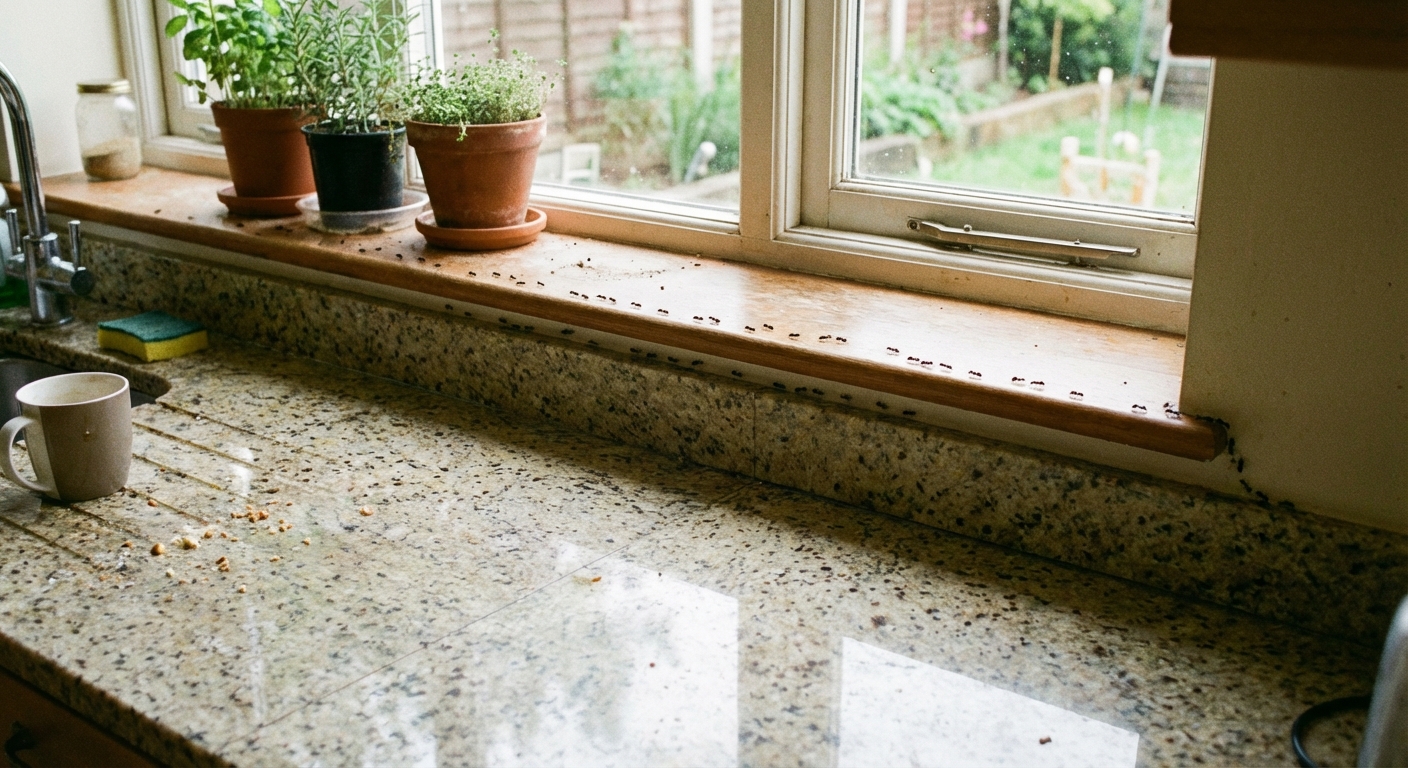
Most indoor ant problems come down to food, water, and easy access. Ant scouts find a resource, lay a scent trail, and the rest follow.
- Sweet foods: honey, syrup, fruit, soda spills, pet treats
- Greasy foods: crumbs, cooking oil residue, dirty stove tops
- Moisture: leaky pipes, damp sponges, pet water bowls, condensation
- Entry points: gaps under doors, window tracks, cracked caulk, utility penetrations
If you only spray ants but leave the attractant and entry point, they usually come back within days.
Find where they come in
Follow the trail
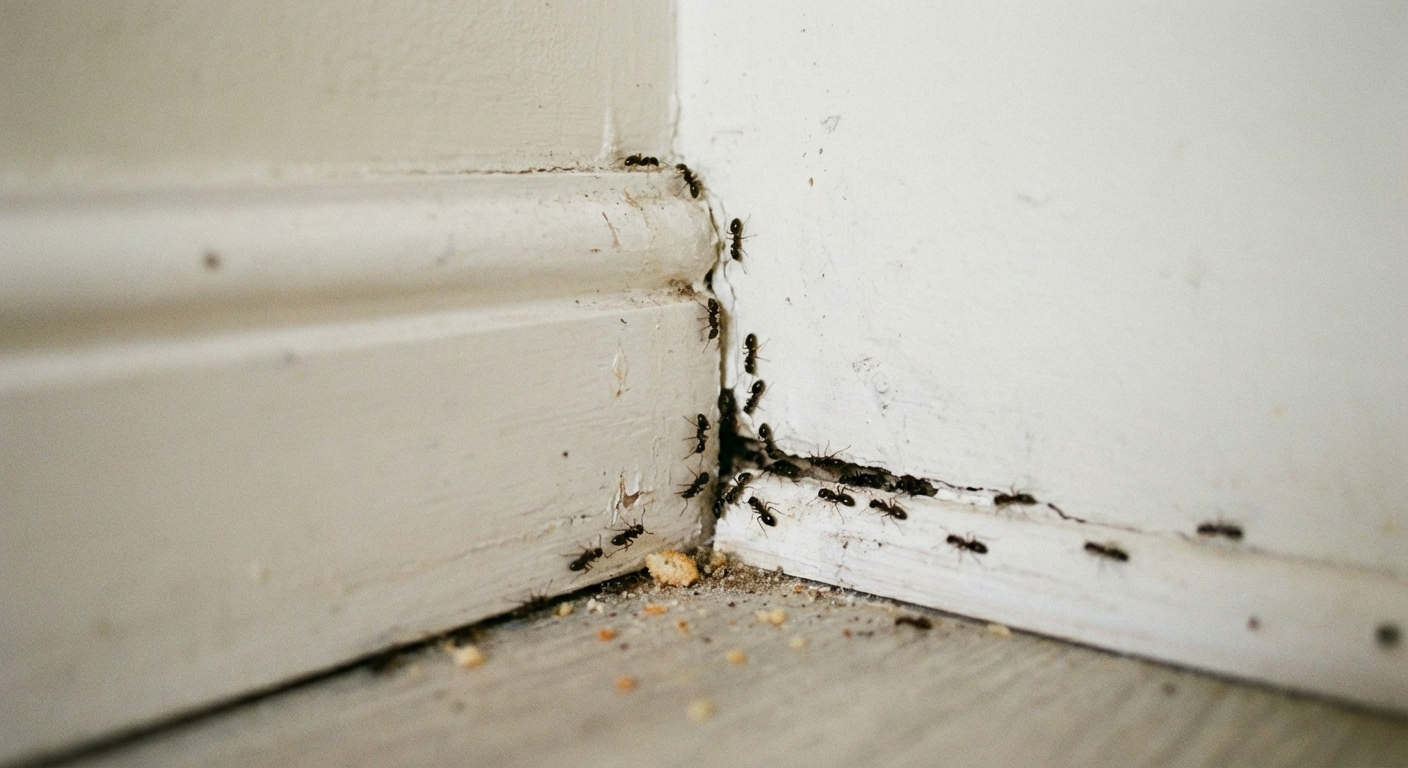
Pick a time when you see the most activity. Use a flashlight and slowly follow the line backward. Common routes include baseboards, behind appliances, under sinks, window tracks, and around pet bowls.
Mark the entry spot
As soon as you find the crack or gap they are using, put a piece of tape next to it so you can seal it later. Sealing is your long game. Baits and sprays are your short game.
Erase the scent trail
Ants communicate with scent trails. If you remove that trail, you break the “ant highway” and slow reinforcements.
Simple trail wipe (safe and effective)
- Mix equal parts white vinegar and water in a spray bottle.
- Spray the trail, wait 1 to 2 minutes, then wipe with a paper towel.
- Repeat on baseboards, countertops, and window sills where you see traffic.
Stone note: Avoid vinegar on natural stone (especially marble, limestone, and travertine). Granite can also be sensitive depending on the type and sealer. If you are not sure it is acid-safe, use warm soapy water instead and dry well.
Bait tip: If you are planning to bait, do your heavy cleaning first. Once bait is down, wipe trails away from the bait station, but do not scrub the exact path the ants are using to find the bait.
Pick a method
Natural ant control works best when you pick the right tool for the situation:
- Baits: slower, but most likely to reduce the nest because workers carry it back.
- Contact sprays: fast knockdown for the ants you see, but usually does not solve the colony.
- Barriers and sealing: prevents new ants from entering once the immediate problem is under control.
A proven DIY bait (borax)
If you want one beginner method with a strong track record, this is it. Borax (sodium borate) is a mineral salt often sold in the laundry aisle. The bait works because ants take it back to the colony and share it.
Safety note
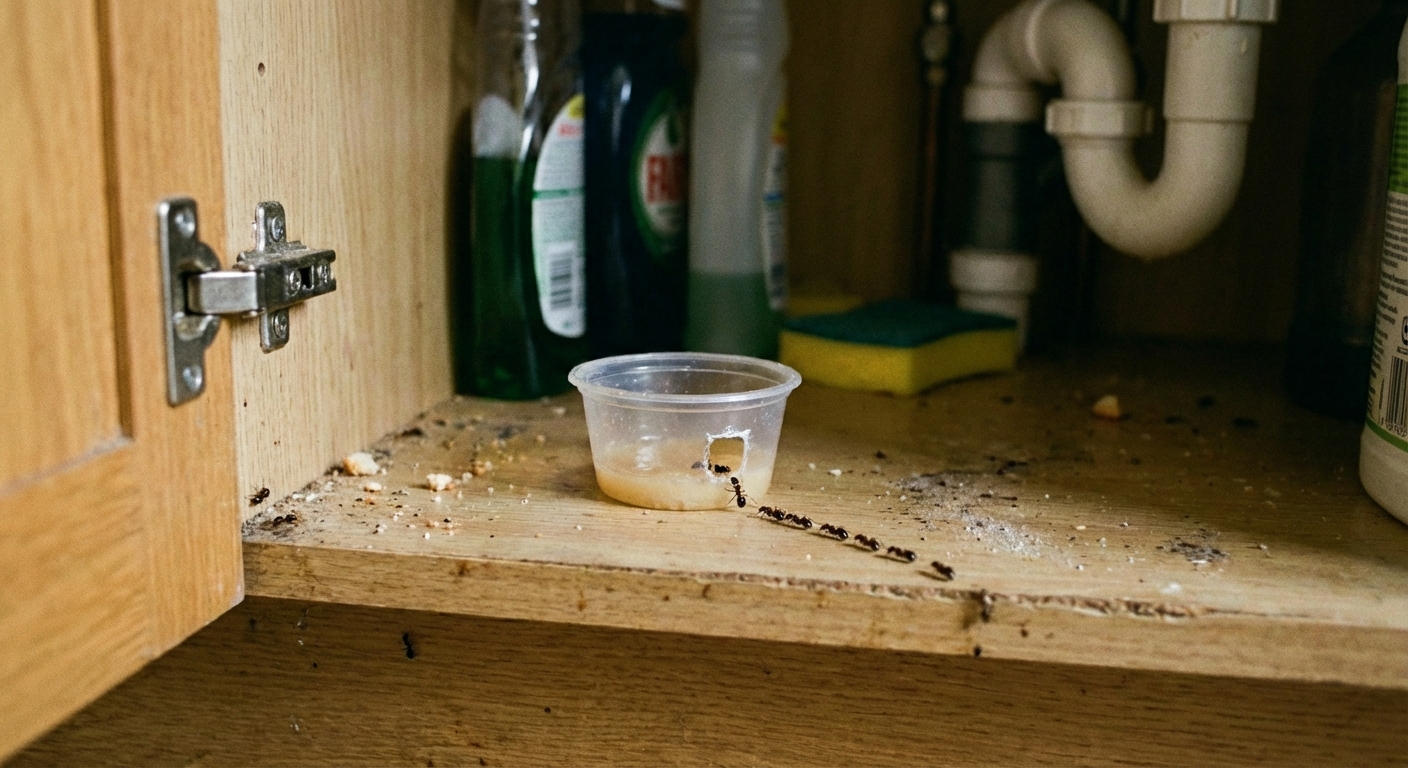
Borax is “natural,” but it is not edible and should be treated like any household chemical. Keep it away from kids and pets. Place bait in protected spots like inside a bait station, under the sink behind a cabinet lip, or in a jar lid placed inside a small container with an ant-sized entrance. Label the station, wash hands after handling, and dispose of leftovers in a sealed bag.
Sweet bait (start mild)
- 1/2 cup warm water
- 2 to 3 tablespoons sugar
- 1/2 to 1 tablespoon borax
Stir until dissolved. Soak cotton balls and place them in shallow lids near the trail, but not directly in the middle of where people and pets walk.
Protein bait (for grease lovers)
Some ants ignore sugar and go for protein and fats. If they are swarming around grease or pet food, try this:
- 2 tablespoons peanut butter
- 1/4 to 1/2 tablespoon borax
Place a small amount in a protected bait station. Refresh every 2 to 3 days.
Troubleshooting (important)
- Dead ants right next to the bait: the mix may be too strong and is killing them before they can bring it home. Dilute it (add more water and sugar for sweet bait, or more peanut butter for protein bait).
- They ignore the bait: try the other food type (sweet vs. protein), or move the station closer to the trail but still protected.
- Do not mix methods: avoid spraying cleaners, vinegar, or essential oils right next to bait. Strong smells can make ants avoid feeding and slow results.
What to expect
You may see more ants for 1 to 2 days. That is often a good sign because the bait is being collected. Most minor infestations improve in 3 to 7 days. Some species have multiple queens or satellite nests, so bigger problems can take 2 weeks or longer.
Fast natural sprays
Use these when you need immediate relief, then follow with bait or prevention so the problem does not restart tomorrow.
Dish soap spray
- 2 teaspoons dish soap
- 2 cups water
Spray directly on ants and along the trail, then wipe. Soap can damage the waxy coating on insects and helps remove the scent trail. Avoid using on delicate plants.
Vinegar spray (deterrent)
Equal parts vinegar and water works well on hard, non-stone surfaces. Skip natural stone unless you know it is acid-safe.
When to skip sprays
If you are using bait, do not spray strong-smelling products right next to the bait. Heavy cleaners and essential oils can discourage ants from feeding, which slows the bait down.
Keep them out
Seal entry points
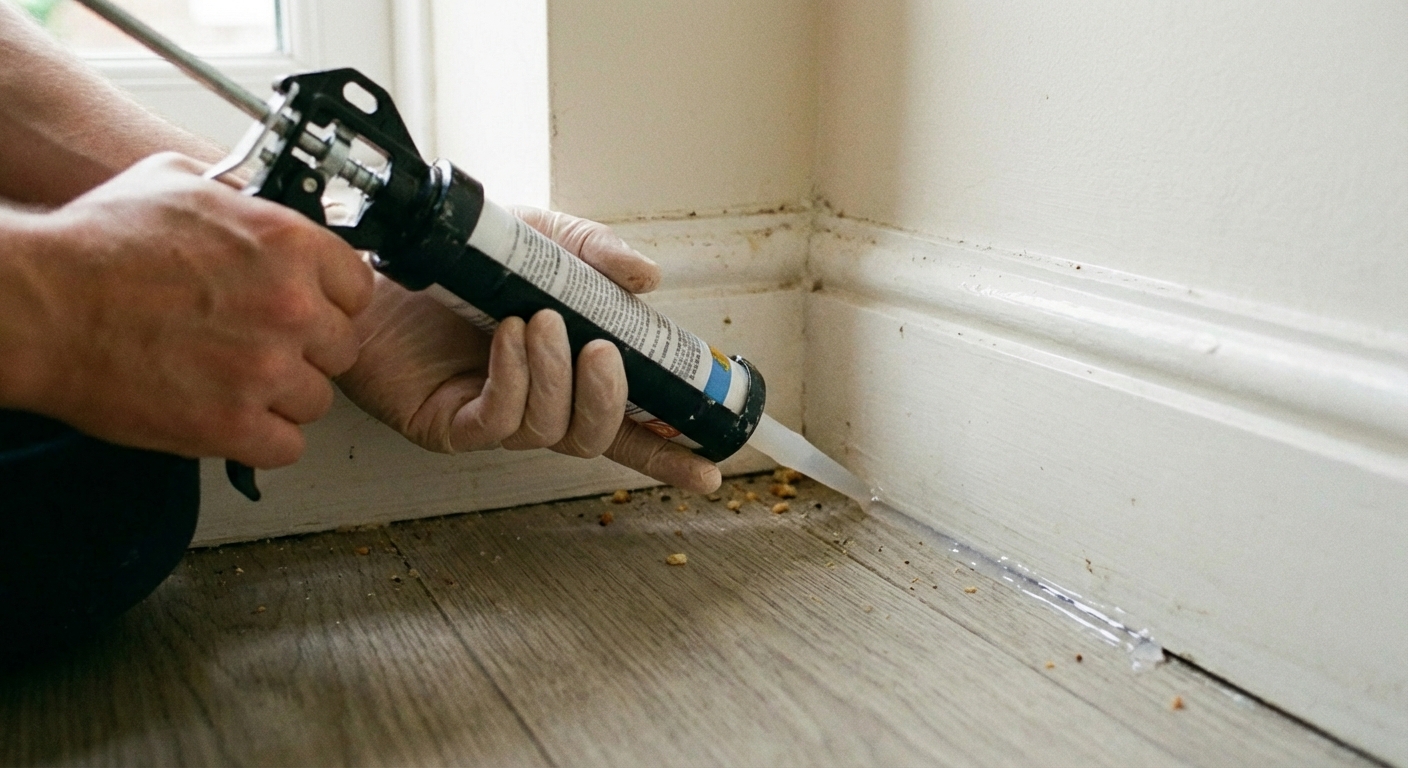
- Use silicone caulk along baseboards, around window trim, and where pipes enter walls.
- Add a door sweep if you can see daylight under an exterior door.
- Repair torn window screens and clean window tracks.
Sequencing note: If you have active trails indoors, reduce activity first (clean and bait) before you fully seal the main entry crack. This helps avoid trapping stragglers inside and makes it easier to see whether the bait is working.
Use a dry barrier (optional)
These can help in dry locations like along a garage threshold or behind appliances, but they are not a standalone fix for a strong colony.
- Diatomaceous earth (food grade): A light dusting in cracks and along edges. Keep it dry to work. Avoid creating airborne dust. Keep kids and pets away during application until the dust settles, since it can irritate lungs and eyes.
- Baking soda with powdered sugar: Sometimes suggested as a mild bait, but it is not as well-supported as borax or commercial baits. If it fails, switch to a borax bait.
Cut off the buffet
- Store sweets and pet food in sealed containers.
- Rinse recyclables and keep trash tightly closed.
- Wipe counters nightly, especially around the stove and toaster.
- Fix leaks and do not leave wet sponges sitting in the sink.
Quick ant ID
You do not need a lab to make progress, but a quick ID can help you choose the right urgency.
- Tiny kitchen ants: Often show up for sweets and moisture. Baits and sealing usually work well.
- Pavement ants: Common near foundations and sidewalks, may go for both sweets and grease. Baiting plus exterior sealing helps.
- Carpenter ants: Larger ants that may indicate damp or damaged wood. They do not eat wood, but they can excavate it. Treat as a red flag and investigate moisture and wood damage.
Outdoor control
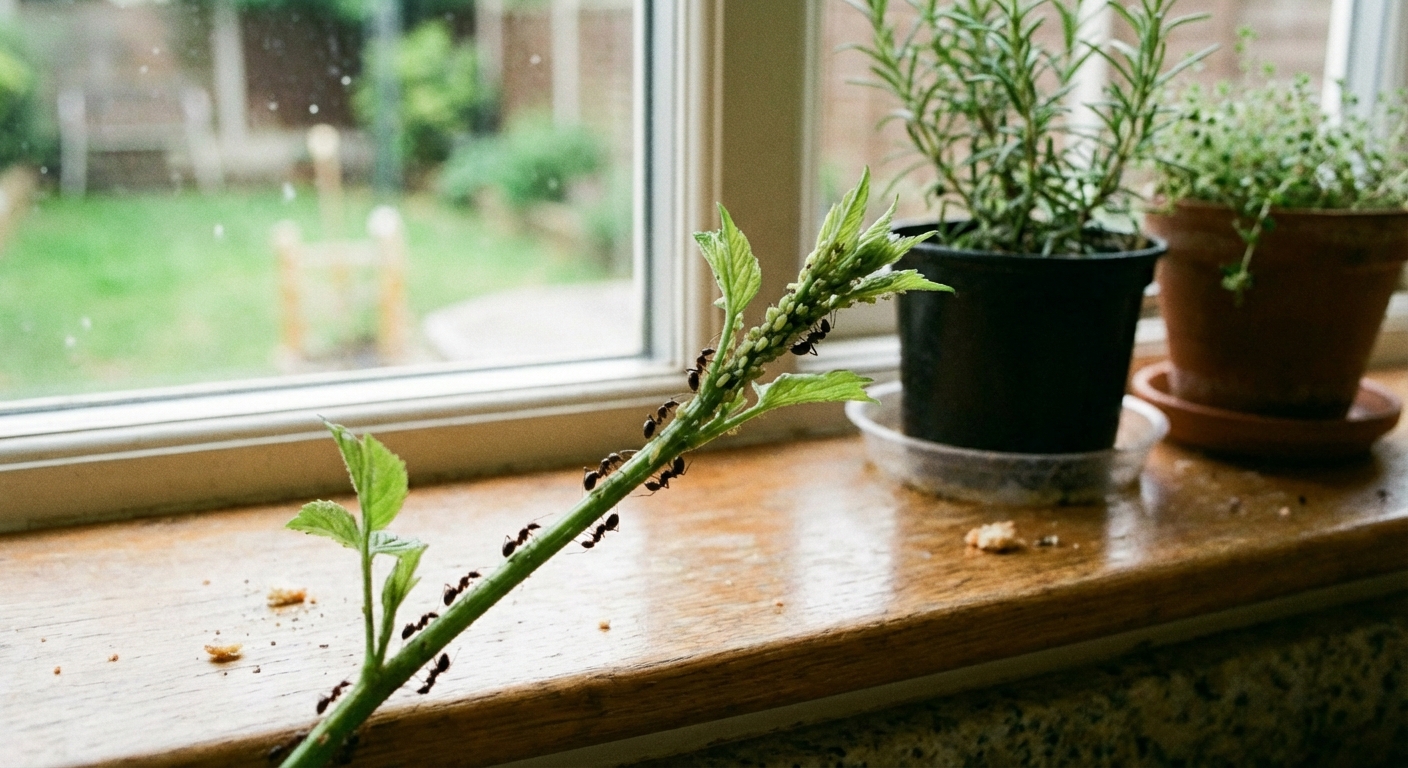
Outside, ants are not always “bad.” They can help break down organic matter and they often show up because aphids are producing sticky honeydew on plants. If you see ants farming aphids on stems, treating the aphids can reduce the ants.
Target the problem spots
- Keep mulch pulled back 2 to 4 inches from foundations to reduce nesting near your home.
- Water stressed areas occasionally. Very dry soil can, in some cases, encourage certain ants to move closer to irrigated areas or indoors.
- Control aphids with a firm water spray or insecticidal soap if needed.
For patio nests
If ants are nesting between pavers, you can pour boiling water directly into the nest entrance. It is pesticide-free, but it can take multiple treatments and it will kill plants it touches. Use extreme care to avoid burns and keep kids and pets away during application.
Common mistakes
- Mistake: Killing every ant you see with spray. Do instead: Clean the trail, then set bait so workers can bring it back.
- Mistake: Putting bait in the open where kids or pets can reach it. Do instead: Use a protected bait station and place it in low-traffic areas.
- Mistake: Switching methods every day. Do instead: Give bait 3 to 7 days unless activity is clearly getting worse.
- Mistake: Spraying strong cleaners near bait. Do instead: Keep the bait area calm and low-odor so ants keep feeding.
- Mistake: Ignoring moisture issues. Do instead: Fix leaks and dry out the area, especially under sinks and near dishwashers.
When natural methods are not enough
If you have ants in multiple rooms, you cannot find a trail, or they return hard after two weeks of baiting and sealing, you may be dealing with a larger outdoor colony or a difficult species. Some infestations also involve multiple nests, which can take longer to fully knock back.
Red flags
- Carpenter ants: large ants, sawdust-like debris near wood, activity around damp windows or decks
- Constant daily swarms even after cleaning and baiting
- Ants around electrical outlets or inside wall voids
In those cases, consider contacting a licensed pest professional, especially if you suspect carpenter ants and possible wood damage.
Quick plan for today
- Day 1: Follow the trail, wipe with vinegar water (or soapy water), remove food sources, set borax bait in a protected station.
- Days 2 to 4: Do not disturb the bait. Refresh if it dries out. Wipe new trails away from the bait location, but let ants keep a clear path to the station.
- Days 5 to 14: Seal entry points, keep counters dry, and check for outdoor nesting near the foundation.
If you do those steps in that order, most everyday ant problems shrink fast and stay gone longer.

Jose Brito
I’m Jose Britto, the writer behind The Country Store Farm Website. I share practical, down-to-earth gardening advice for home growers—whether you’re starting your first raised bed, troubleshooting pests, improving soil, or figuring out what to plant next. My focus is simple: clear tips you can actually use, realistic expectations, and methods that work in real backyards (not just in perfect conditions). If you like straightforward guidance and learning as you go, you’re in the right place.