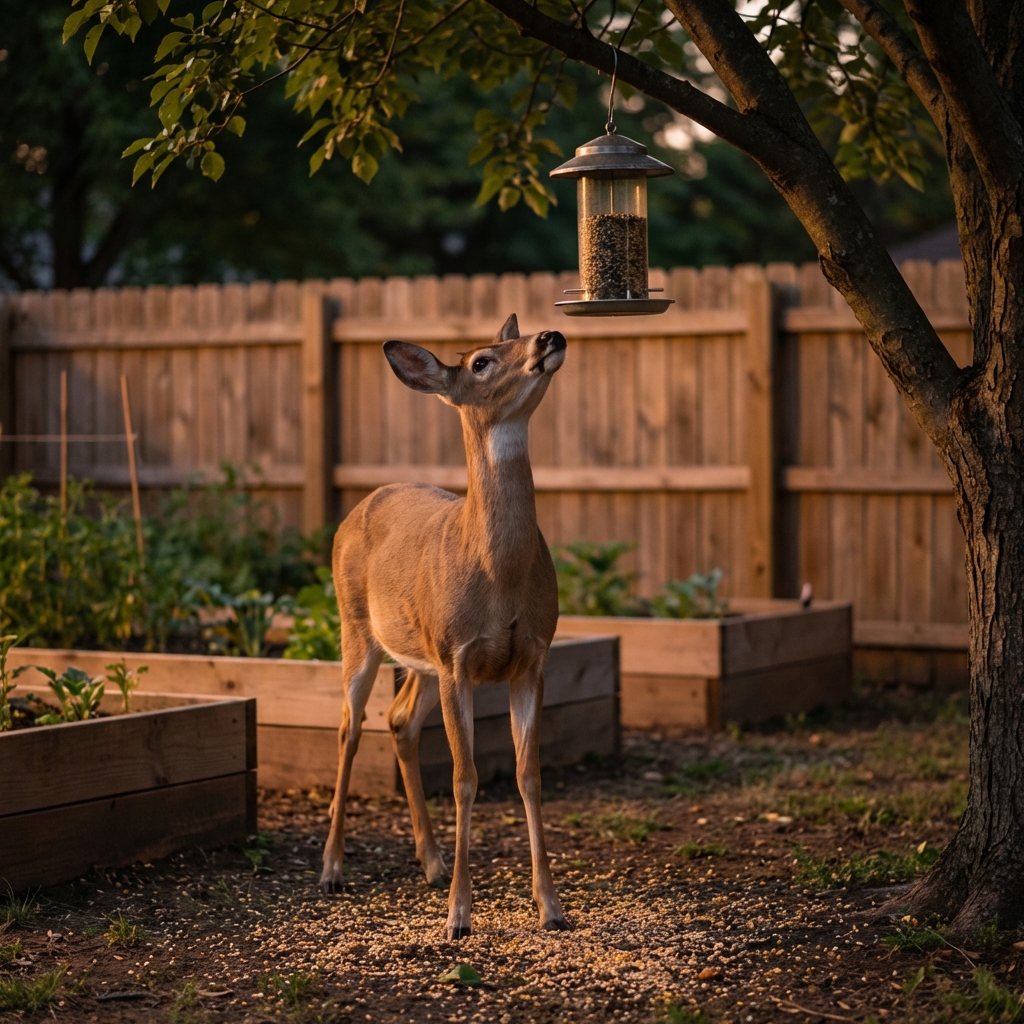
If you have ever walked outside and found your feeder area cleaned up like a vacuum went through, you are not alone. Deer are opportunistic. If your yard offers an easy, calorie-dense snack, they will take it. Bird seed is basically a trail mix buffet, and deer do not need much encouragement to show up.
The good news is you do not have to give up feeding birds to reduce deer visits. Most fixes come down to placement, cleanup, and choosing equipment that does not spill like crazy.
Quick note: In some areas, feeding deer is restricted, and even bird feeders can be considered an attractant if deer are using them. If deer pressure is heavy where you live, it is worth checking local wildlife guidance and ordinances.
Do deer really eat bird seed?
Yes. Deer will eat bird seed, especially when it is on the ground. They will also nibble from low feeders, tip lightweight poles, and lick at suet if they can reach it.
Deer are browsers by nature, but they are not picky. In many neighborhoods and suburban areas, deer learn quickly that feeders mean dependable food. During late fall, winter, early spring, drought, or whenever natural forage is limited, bird seed becomes even more attractive.
Why deer are drawn to feeders
- High calories for low effort: Sunflower, safflower, cracked corn, and mixed seed are energy-dense.
- Routine: If you fill feeders regularly, deer learn your schedule.
- Spillage: Many feeders drop seed constantly. Deer often focus on the ground because it is the easiest place to eat, but they will also reach for feeders if they can.
- Salt and fat: Suet and “high-energy” blends can be especially tempting.
- Cover nearby: Hedges, woods, tall ornamental grasses, and shrubs let deer approach and retreat easily.
Signs deer are eating your bird seed
It is easy to blame squirrels and raccoons, but deer leave a few telltale clues.
- Large tracks around the feeder, often with a heart-shaped hoof print.
- Pellets that look like small, dark beans clustered on the ground.
- Feeder hardware bumped or bent, or a pole that leans overnight.
- Seed disappears fast, especially after dusk and before morning.
- Browsed plants nearby, like hostas, tulips, or new shrub growth, often nipped with a ragged edge.
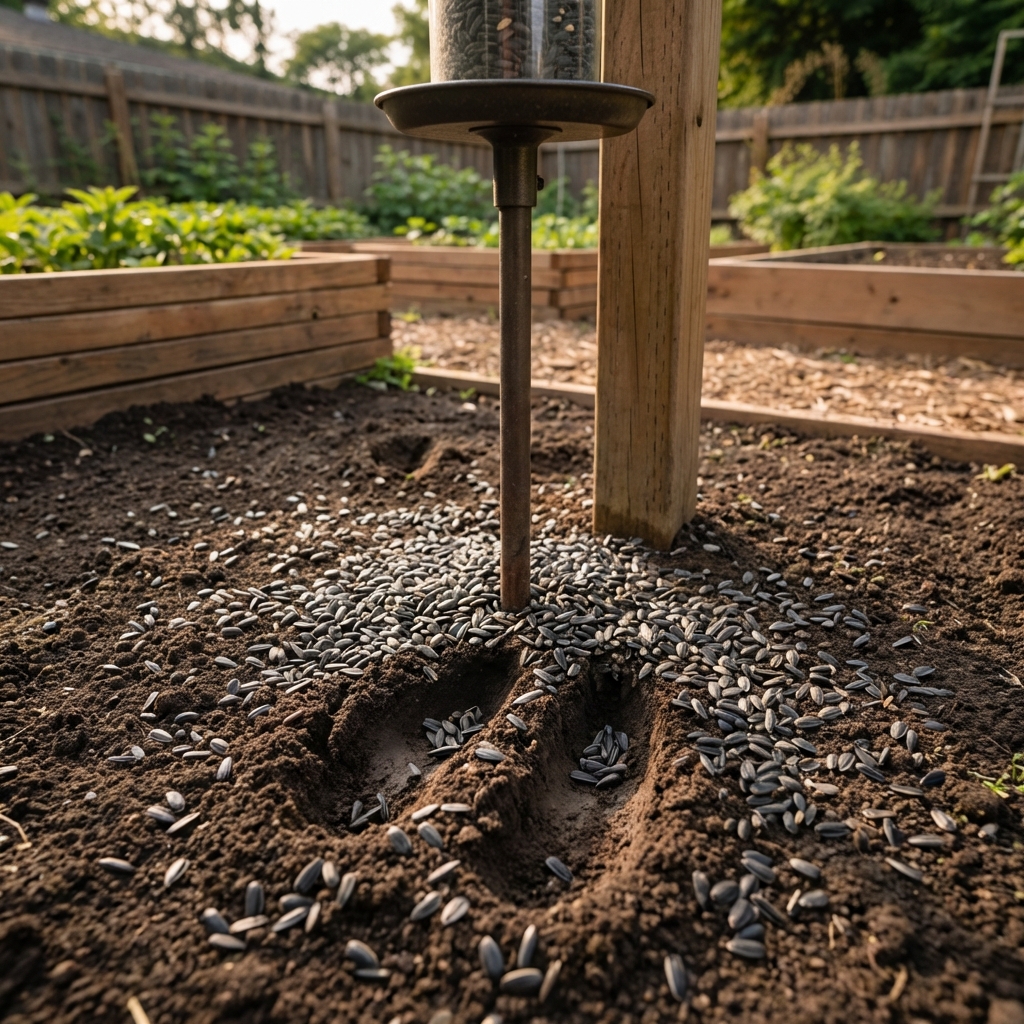
Which bird foods attract deer most?
Deer are not choosing bird seed because it is “for birds.” They choose it because it is easy food. These are common deer favorites:
- Cracked corn and whole corn
- Sunflower seed (black oil and striped)
- Peanut pieces and blends with nuts
- Suet and suet nuggets
- Mixed seed that spills readily
Also note: deer will lick up fines, hulls, and tiny fragments under the feeder. Even “waste” looks like a snack to them.
Quick fixes that reduce deer raids
If you want the biggest impact with the least hassle, start here.
1) Move the feeder and change the setup
Deer prefer low-risk feeding. Put the feeder in a spot that is inconvenient for them and convenient for you to monitor.
- Hang feeders higher when possible, often around 6 to 8 feet, and position them so deer cannot simply lean in from a slope, deck rail, or nearby object. This helps reduce direct access, but it is not a guarantee.
- Use a smooth metal pole that is less likely to tip when bumped.
- Keep feeders away from cover (brush lines, woods edges). A more open area makes deer feel exposed.
2) Stop the spill
Spilled seed is the main deer meal. Fixing spill fixes a lot.
- Switch to a no-waste feeder or a feeder that keeps seed inside the body instead of in open trays.
- Add a seed catcher tray under the feeder to collect seed that falls before it hits the ground.
- Stop overfilling. Small, frequent refills reduce the amount that ends up scattered.
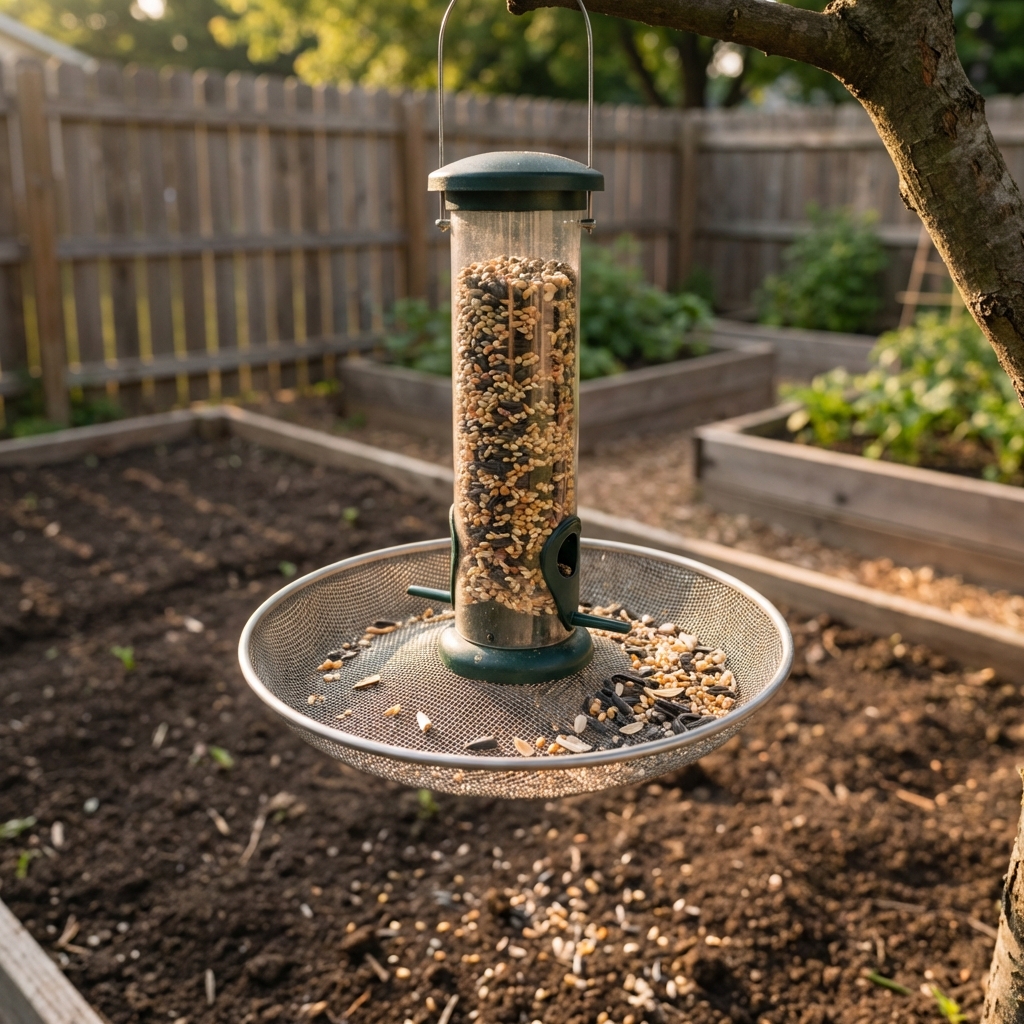
3) Clean up like it matters
It does. A quick rake or sweep every few days can often break the habit, especially if you stay consistent for 1 to 2 weeks while deer are learning that the free buffet is gone.
- Rake under feeders and remove seed buildup.
- Consider placing feeders over easy-to-clean surfaces like gravel, pavers, or a bare mulch-free patch where seed is easier to see and collect.
- Dump collected seed into a sealed container and discard it if it is wet or moldy.
4) Give deer space
If you spot deer under the feeder, do not approach or try to chase them off at close range. Give them room and let them move along. It is safer for you and less stressful for the animal.
Equipment that helps (and what disappoints)
Better options
- Hanging feeders on a tall, sturdy hook anchored well, with minimal spill.
- Seed catcher tray or a ground mat you can shake out.
- Sturdy baffles that reduce mess and discourage other animals that create spill.
- Deer fencing around the feeder area if deer pressure is heavy. Even a small fenced “bird zone” can work.
- Rodent-proof seed storage (metal cans with tight lids) to keep the situation from snowballing once deer and rodents learn your feeder routine.
Often unreliable
- Most scent repellents in rain or high deer pressure. They can help, but they need reapplication and rotation.
- Motion sprinklers when water is limited or in freezing weather.
- Lightweight feeder poles that deer can bump and tip.
Seed choices that reduce interest
You cannot make bird seed “deer-proof,” but you can reduce what deer want most.
- Skip cracked corn if deer are a recurring issue. It draws deer and also brings in other nighttime visitors.
- Use shelled sunflower hearts if spill is your main problem. They cost more but create less hull mess and less ground cleanup.
- Try safflower for certain birds. Deer may still eat it, but many people find it is less of a magnet than corn-heavy mixes.
Whatever you choose, the main thing is control the ground food. Deer are not usually standing on tiptoes to eat from a tube feeder. Most of the time, they are cleaning the floor. That said, a hungry deer will absolutely reach for a feeder that is within range.
Is it bad for deer to eat bird seed?
A little spilled seed is not likely to harm a healthy deer, but it can create bigger problems:
- Habit forming: Deer learn to rely on yards and return more often.
- More deer pressure: More visits usually means more browsing on your plants.
- Health and safety risks: Concentrating wildlife around a predictable food source can increase animal-to-animal contact and may raise neighborhood risks like deer lingering near roads. Many state wildlife agencies discourage feeding deer for these reasons.
- Mold risk: Wet, spoiled seed can be unhealthy for wildlife. It also attracts rodents.
When to pause feeding
If deer have added your feeder to their daily route, a short pause can be the quickest reset. Consider stopping for 10 to 14 days, then restarting with a cleaner, lower-spill setup.
- Resume with smaller amounts so nothing piles up on the ground.
- Refill when you can monitor activity (for many people, daytime refills make it easier to notice problems quickly).
- Restart in a new location that is farther from cover and easier to clean under.
A simple plan you can follow this week
If deer are hitting your feeder right now, do this in order:
- Clean up the ground under the feeder and remove all spilled seed.
- Switch seed away from corn-heavy mixes.
- Add a seed catcher or swap to a low-spill feeder.
- Move the feeder farther from cover and raise it if possible (aim for height and placement that prevents easy reaching).
- If raids continue, fence a small feeding area or pause feeding for 10 to 14 days to break the routine.
That last step is the one people avoid, but it is often the fastest reset when deer have made your yard part of their route.
FAQ
Will deer knock down a bird feeder?
They can. Sometimes it is accidental while they are reaching for spilled seed, and sometimes they bump poles and hanging hooks to see what falls. If your setup wobbles, a deer will eventually test it.
Do deer eat from bird feeders directly?
They will if they can reach. Low hanging suet cages, tray feeders, or feeders mounted on short posts are easiest for them. Most of the time, though, they are there for what drops.
What time do deer come to eat bird seed?
Commonly at dusk, overnight, and early morning. In areas where deer are comfortable around people, they may show up in daylight too.

Jose Brito
I’m Jose Britto, the writer behind The Country Store Farm Website. I share practical, down-to-earth gardening advice for home growers—whether you’re starting your first raised bed, troubleshooting pests, improving soil, or figuring out what to plant next. My focus is simple: clear tips you can actually use, realistic expectations, and methods that work in real backyards (not just in perfect conditions). If you like straightforward guidance and learning as you go, you’re in the right place.