If you have deer in your area, sunflowers can feel like a buffet you planted on purpose. The short answer is yes, deer eat sunflower plants. They browse young leaves, snap off top growth, and will even go after buds right before the plant finally pays you back with blooms.
The good news is you can protect sunflowers organically. You just need to match the defense to the stage your plant is in, because seedlings and forming buds are often the highest-risk times (though it varies by region, season, and how much other forage is around).
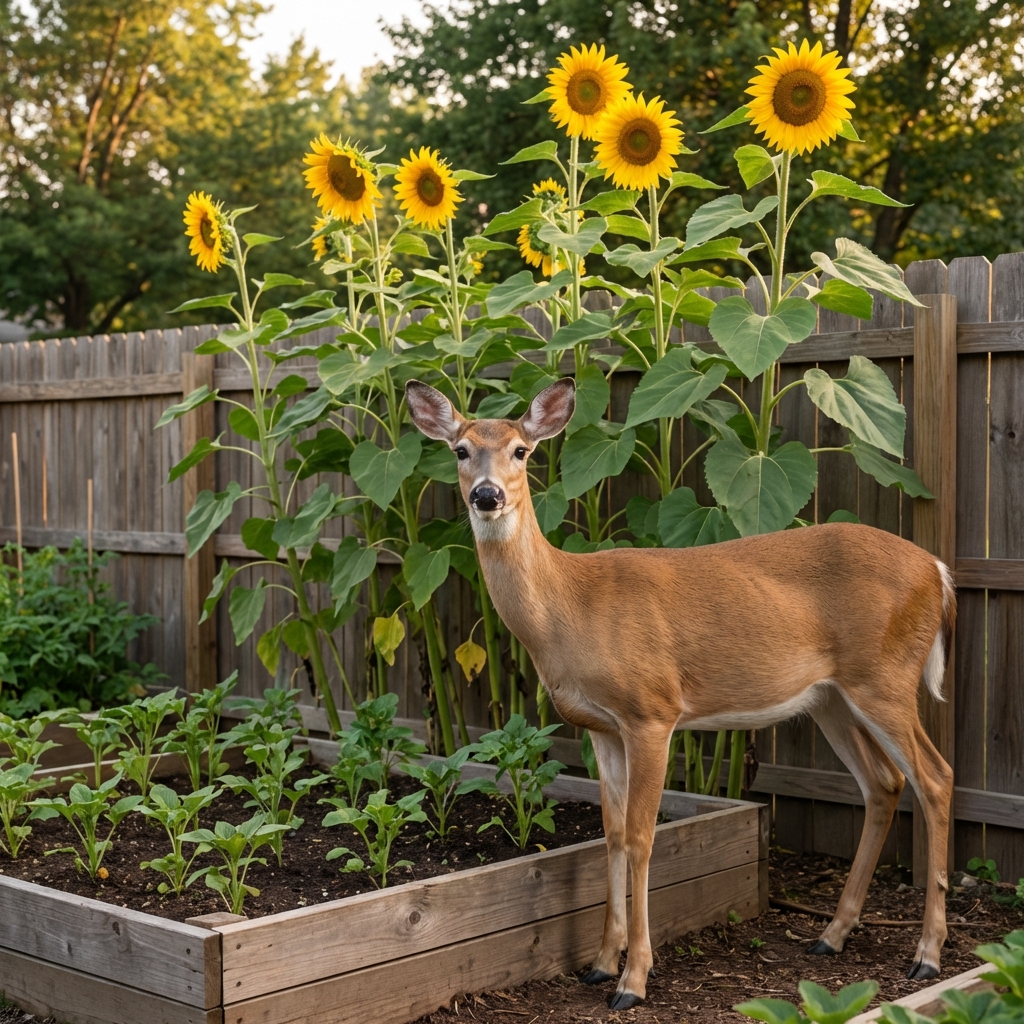
Why deer go after sunflowers
Sunflowers are tender and moisture-rich, especially early in the season. Deer are opportunistic browsers. If they are already visiting your yard for hostas, roses, beans, or fruit trees, they will try sunflowers too.
- Seedlings: tender leaves and stems are easy pickings.
- Vegetative growth: deer often bite off the top, which can stunt height and delay flowering.
- Buds: buds are dense, nutritious, and often targeted right before blooming.
- Drought or late-season pressure: when wild forage is dry or deer are moving more, garden plants can become even more attractive.
How to tell if deer are eating your sunflowers
Sunflower damage can look like a lot of things, so it helps to know the usual deer signs.
- Ragged, torn edges on leaves (deer do not make clean cuts like rabbits often do).
- Stems snapped or the whole top bitten off (often at browsing height, and sometimes higher if deer are reaching up).
- Buds missing or chewed down to a stub.
- Hoof prints nearby and pellet-like droppings in the bed.
If the plant looks like it was clipped neatly at ground level, that is more often rabbits or groundhogs. If the top is shredded or pulled, deer are a prime suspect.
Quick organic tips that work
For deer, the most reliable solution is always a physical barrier. Repellents can help, but they are not magic. Here are the best organic-friendly options, from fastest to most dependable.
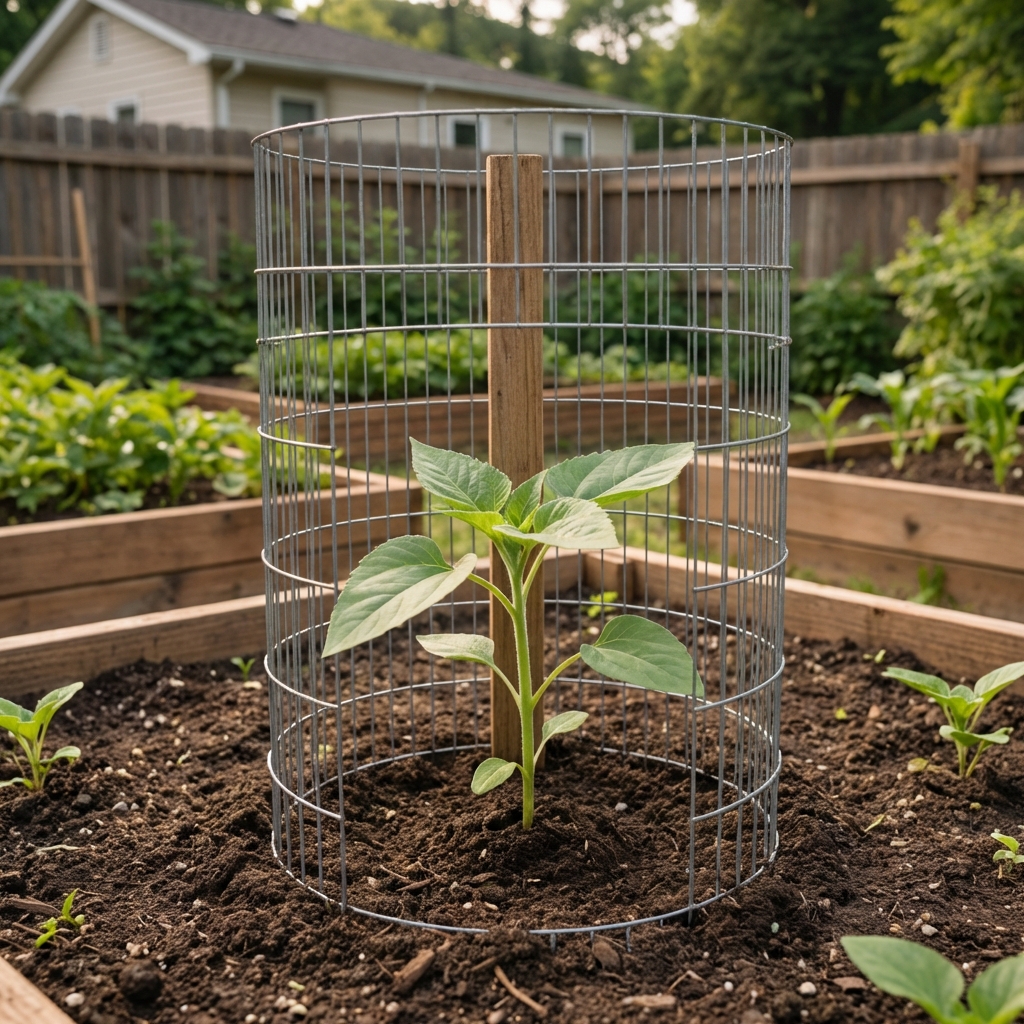
1) Protect young plants with netting or a simple cage
If your sunflowers are under 2 feet tall, you can often save the whole planting with quick protection.
- Individual cages: circle each plant with 2x4 inch welded wire or similar and stake it. Make the cage wide enough that leaves are not touching the wire, and leave room for growth (about 6 to 12 inches of clearance around the plant is a good starting point).
- For very small plants: if rabbits are also a problem, use hardware cloth (smaller openings) at the bottom portion.
- Netting over hoops: drape netting over a few stakes or hoops so it is not sitting directly on the leaves, and secure the edges with landscape staples, boards, or rocks so deer cannot nose underneath.
This works well because deer like easy meals. Make it annoying and they usually move on.
Netting safety note: use wildlife-safe netting when you can, keep it pulled taut, and check it regularly to reduce the risk of entangling birds, snakes, or other wildlife.
2) Use a fence for a long-term fix
For regular deer pressure, fencing beats everything else.
- Height matters: many gardeners aim for 7 to 8 feet for consistent deer exclusion.
- Temporary fencing: plastic deer fencing can work seasonally if it is tight, well-staked, and there are no easy gaps.
- Small area trick: if you are only protecting a tight bed, a well-built barrier can be easier than trying to defend the whole yard.
3) Rotate scent-based repellents and reapply after rain
Organic repellents can reduce browsing, especially when combined with a barrier. Results are situational, but many gardeners find they help most when used consistently and started early.
- Choose a labeled deer repellent that relies on strong odors like garlic, putrescent egg solids, or botanical oils.
- Apply before browsing starts if possible, then keep up with the schedule.
- Reapply regularly, especially after rain or overhead watering, and always follow the label.
- Alternate products if deer pressure is high or a product seems to lose effectiveness over time.
Tip: spray the perimeter plants and the sunflower stems and leaves. If you plan to harvest seeds for people to eat, avoid spraying developing seed heads and follow label directions closely.
4) Try motion-based deterrents
Motion-activated sprinklers or lights can be a helpful, chemical-free add-on. They work best as part of a bigger plan (especially with a fence or cages) and may be less effective once deer get used to them.
5) Add “sacrificial” plants away from the sunflowers
This is not a guarantee, but it can help in some yards. If deer have an easier snack away from your prized patch, they sometimes browse there first.
Keep it practical: do not plant something you would hate to lose. In heavy deer areas, this approach works best alongside fencing or netting.
6) Plant more than you need and stagger planting dates
Sunflowers are one of those crops where overplanting is a real strategy. If you sow a few batches 2 to 3 weeks apart, you improve the odds that at least some reach the taller, tougher stage.
What to do if deer already ate the tops
It depends on the sunflower type and how much was removed.
- Branching sunflowers: often recover and produce side shoots and multiple blooms if the main tip is eaten.
- Single-stem giants: may be permanently stunted or fail to form a strong main flower if the growing tip is removed early.
Quick recovery steps:
- Protect immediately with a cage, netting, or fencing so new growth is not eaten again.
- Water deeply if soil is dry, especially for stressed seedlings.
- Do not over-fertilize with high nitrogen. It can push soft growth that deer love.
- Resow if plants are repeatedly hit. Sunflowers grow fast and can still bloom from mid-season plantings in many areas.
Are sunflowers deer resistant?
Not really. Some gardeners get lucky if deer pressure is low or there is plenty of natural forage. But in most neighborhoods with steady deer traffic, sunflowers are best treated as deer-attractive, especially early on.
Fast checklist for tonight
If you need a quick plan you can actually do after work, start here:
- Put wire cages around seedlings and any plants with forming buds.
- Set up stakes plus netting for small patches you cannot fence yet, and secure the bottom edge so deer cannot push under.
- Apply a deer repellent (ideally before heavy browsing) and mark your calendar to reapply after rain, per label.
- If deer visits are frequent, price out temporary deer fencing now. Waiting usually costs more in lost plants.
Common questions
Will deer eat sunflower heads and seeds?
Yes, they can. Deer may nibble petals and developing seeds, especially if the heads are at a comfortable height or they can reach up. Birds are usually the bigger seed thieves, but deer absolutely contribute.
Do coffee grounds keep deer away from sunflowers?
Sometimes they help for a short time, but results are hit-or-miss. In my experience, deer adapt quickly to mild smells. If you try it, use it as a bonus, not your main defense.
What is the most effective organic method?
A physical barrier. A tall fence is the most reliable. For small plantings, cages and netting are quick and very effective when installed before deer get in the habit.

Jose Brito
I’m Jose Britto, the writer behind The Country Store Farm Website. I share practical, down-to-earth gardening advice for home growers—whether you’re starting your first raised bed, troubleshooting pests, improving soil, or figuring out what to plant next. My focus is simple: clear tips you can actually use, realistic expectations, and methods that work in real backyards (not just in perfect conditions). If you like straightforward guidance and learning as you go, you’re in the right place.