Squirrels are opportunistic eaters, and mealworms are often highly attractive to them. If you put out dried or live mealworms for bluebirds, wrens, robins, chickadees, or other insect-loving birds, squirrels will usually notice fast and keep coming back until the easy food is gone.
The good news: you can usually solve this with a few practical changes. Below is a step-by-step way to identify whether squirrels are taking your mealworms and then control the problem in a humane, realistic way.
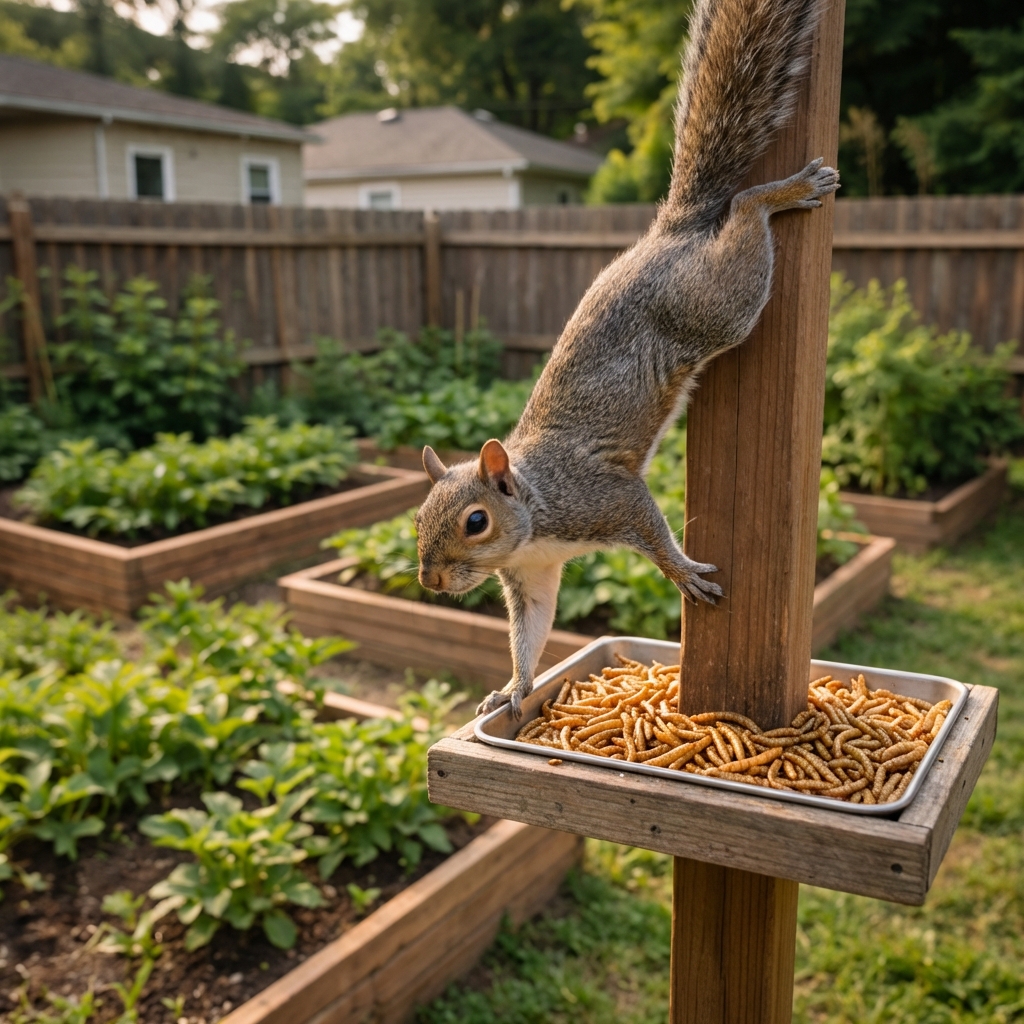
Quick answer: do squirrels eat mealworms?
Yes. Gray squirrels, fox squirrels, and red squirrels all eat animal protein when they find it. In the wild, that can include insects and other animal material, and they may occasionally take eggs, nestlings, carrion, or very small prey opportunistically. At a feeder, dried mealworms are an easy, calorie-dense snack.
They will eat:
- Dried mealworms (most common because they store well and are easy to steal)
- Live mealworms (especially if offered in an open dish)
- Suet with mealworms (a double temptation)
Step 1: Know what squirrel theft looks like
Before you buy new gear or move feeders around, look for patterns. Squirrel damage is usually messy and repeated.
Common signs
- Mealworms vanish early (often within an hour or two of morning feeding)
- Feeder looks disturbed, tilted, spun, or pulled to one side
- Scattered mealworms on the ground below from grabbing and spilling
- Chew marks on wood, plastic, or mesh edges
- Paw prints in dust on the feeder tray or nearby railings
If you only notice the mealworms disappearing at night, do not assume squirrels. Other night visitors like raccoons, opossums, rats, mice, or even skunks can clean out a tray.
Step 2: Confirm it is squirrels
Identifying the right culprit saves you time. Here are easy ways to confirm squirrels without guesswork.
Check timing
- Squirrels are mostly active from dawn through daytime (and in some areas you may see them near dusk).
- Raccoons and opossums are mostly nighttime visitors.
Look for access routes
Squirrels rarely “teleport” to a feeder. They use launch points.
- Overhanging branches within about 8 to 10 feet
- Fence rails, deck posts, or shrubs directly below
- Nearby roof edges or a shed they can jump from
Use a quick camera test
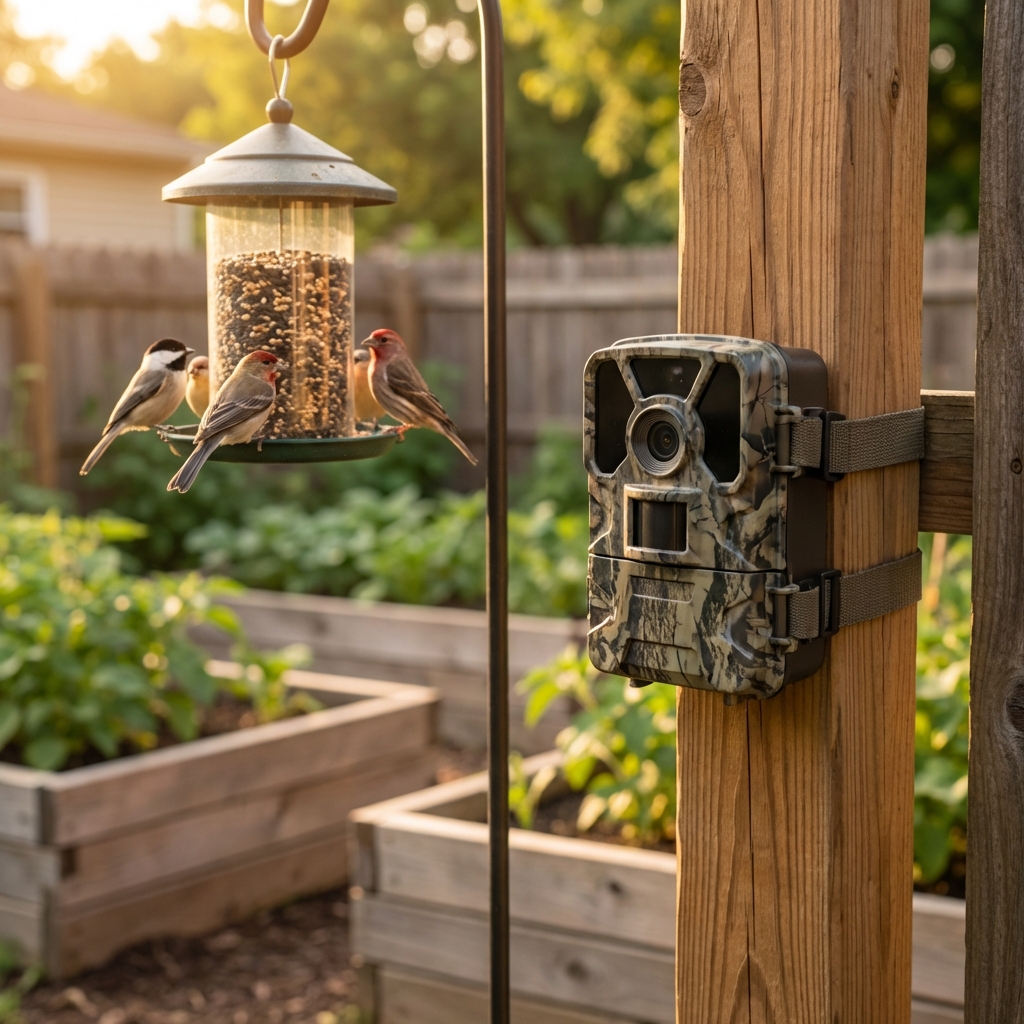
A basic motion-activated camera or an old phone aimed out a window for a morning time-lapse will usually catch the culprit within a day.
Step 3: Decide what you are protecting
This is a helpful mindset shift: you are not trying to remove squirrels from your yard. You are making mealworms harder for squirrels to access than they are worth.
Start by asking:
- Are you feeding bluebirds or other ground-feeding birds?
- Do you need open access (tray feeder) or can you switch to a protected feeder?
- Are you putting out too many mealworms at once?
Step 4: Start with the easiest fixes
Offer smaller amounts more often
If you dump out a big bowl, squirrels can justify the effort. Try putting out a small portion (what birds can eat in 20 to 30 minutes), then refill later.
Feed when birds are active
Many insect-eating birds hit feeders early. Put mealworms out in the morning, then bring the tray in once activity slows. Less time out equals fewer theft opportunities.
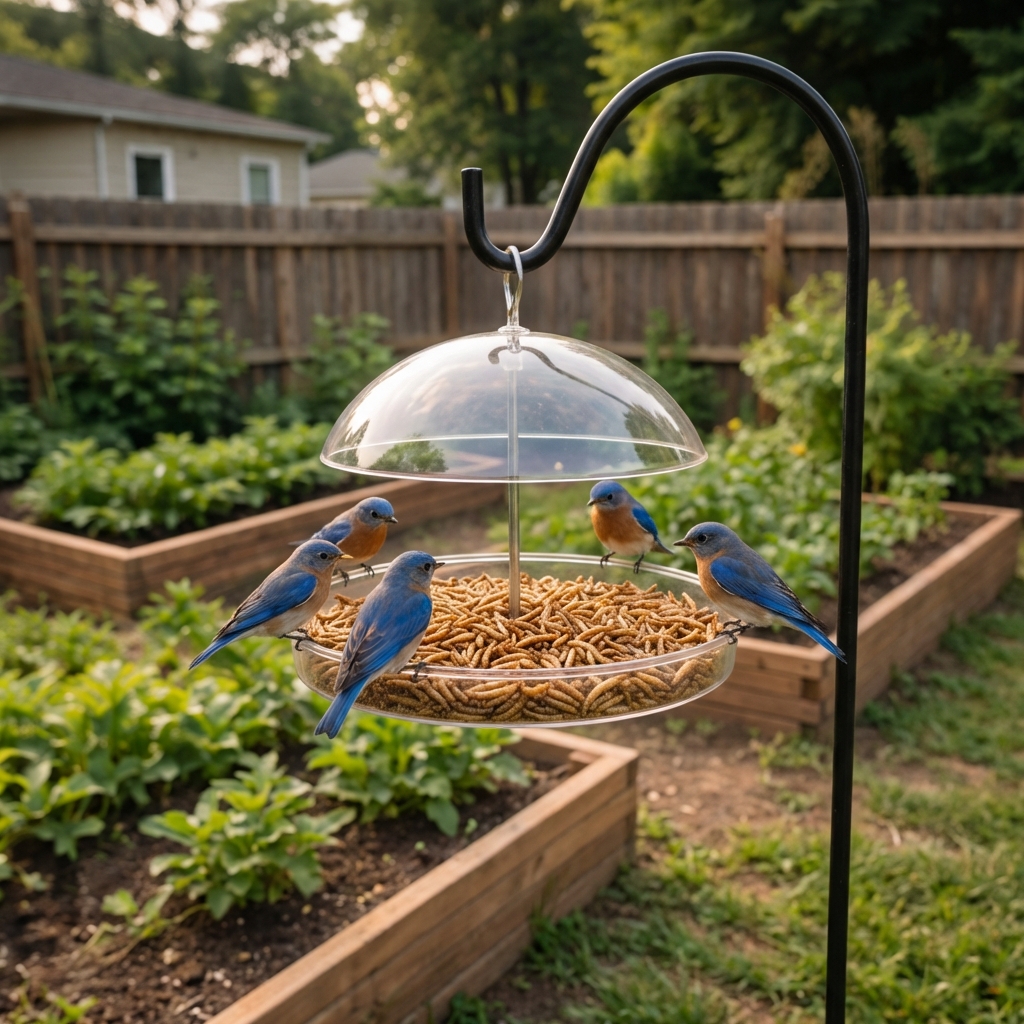
Use a domed or caged mealworm feeder
Look for designs where birds can slip in, but squirrels cannot.
- Dome mealworm dish (a clear dome with side entrances)
- Caged feeder (wire cage with openings sized for small birds)
Do not leave mealworms out overnight
This helps with more than squirrels. Leftover mealworms and spills can attract rodents and other nighttime visitors. Bring trays in at night and clean up what hits the ground when you can.
Step 5: Make the feeder pole squirrel-resistant
If your feeder is on a pole, you can solve most squirrel problems with one upgrade.
Add a baffle
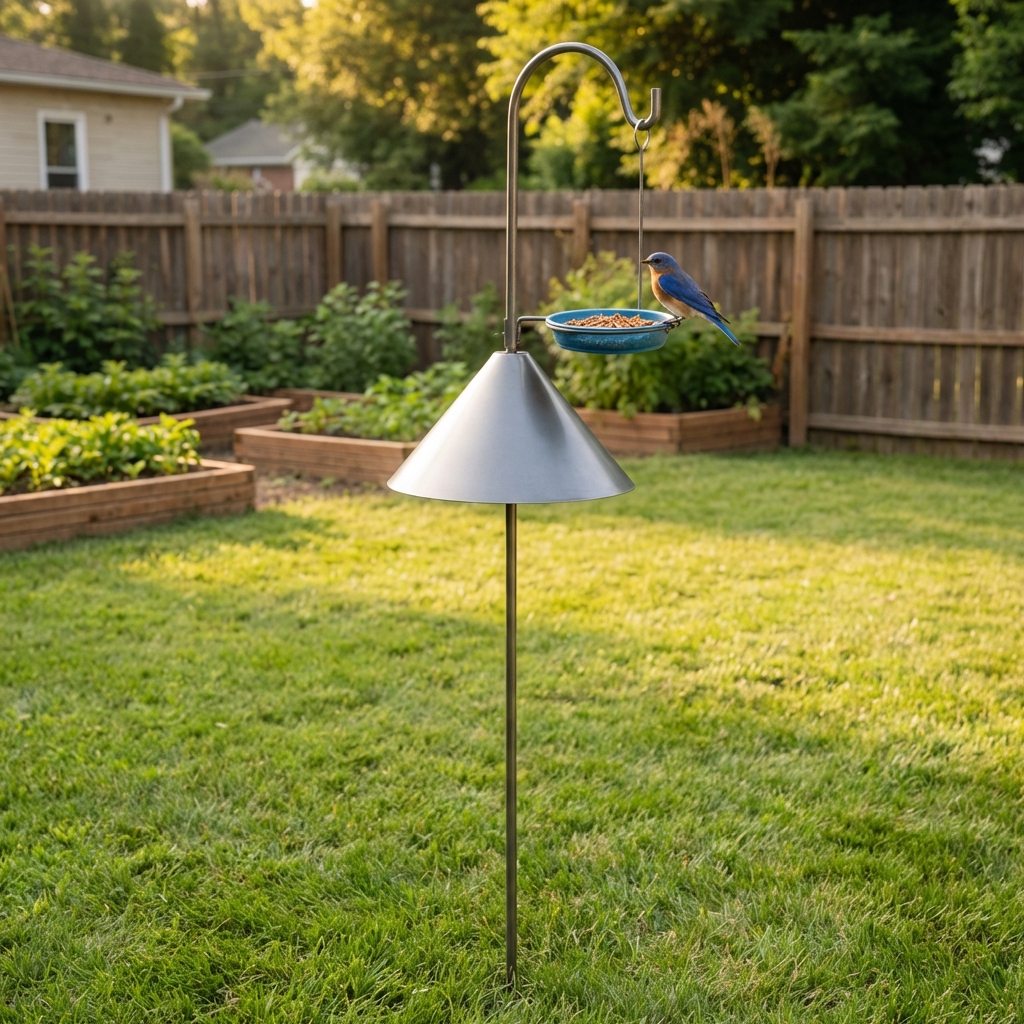
A cone or cylinder baffle below the feeder blocks climbing. For best results (general guidelines that work in many yards):
- Mount baffles on a smooth pole, not wood.
- Place the baffle about 4 to 5 feet above the ground.
- Keep the feeder itself about 8 to 10 feet from jump-off points (branches, fences, decks).
Check height and spacing
- Feeder height: around 5 to 6 feet is usually plenty for viewing and cleaning.
- Distance from trees and fences: aim for about 8 to 10 feet.
If your pole sits close to a fence, squirrels often jump from the fence to the feeder and ignore your baffle entirely. In that case, moving the pole a few feet can do more than any gadget.
Note: Squirrel jumping and climbing ability varies by species and your setup. If a squirrel can jump to your feeder, assume it will.
Step 6: Remove easy launch points
Squirrels are excellent jumpers. If they can jump to the feeder, they will.
Prune and reposition
- Trim branches back so the feeder is not under a canopy.
- Move the feeding station away from railings, stacked firewood, and trellises.
- Do not place mealworm trays on deck rails unless you are okay feeding squirrels too.
Step 7: Use deterrents carefully
Spicy coatings
Capsaicin often helps deter squirrels on seed and suet because birds do not taste heat the same way mammals do. With mealworms, it can be trickier. Coating mealworms can turn birds off, get messy, and may not be appropriate for all species you are trying to attract.
If you try it, use a product made for bird feeding and start small. Watch bird behavior for a few days.
Smell deterrents
Strong-smelling repellents (peppermint, predator urine, etc.) are inconsistent outdoors and need frequent reapplication. They can also bother you more than the squirrel. I treat these as a last resort.
Decoy feeding
Some gardeners set a squirrel feeder away from bird feeders. It can reduce pressure, but it can also increase the number of squirrels visiting. If your neighborhood already has plenty, decoys may backfire.
Step 8: If squirrels keep winning
Sometimes you do everything right and one persistent squirrel still figures it out. At that point, simplifying is the fastest path to peace.
Try these resets
- Pause mealworms for 1 to 2 weeks to break the habit, then restart with a protected feeder.
- Offer mealworms only when you are watching (morning coffee method). Birds learn your routine quickly.
- Relocate the feeding station to a more open spot with fewer launch points.
Are mealworms bad for squirrels?
In small amounts, mealworms are not “toxic” to squirrels. The real issue is that a steady supply of easy, high-protein food can encourage squirrels to hang around your feeders and bully birds away.
If you are feeding mealworms to support nesting birds, it is worth protecting that food source so it actually reaches the birds you intended.
What about chipmunks and mice?
Chipmunks, mice, and rats will also take mealworms, especially if they can feed under cover or after dark. If you are seeing missing worms overnight or finding lots of activity under the feeder, focus on timing (bring food in at night), cleanup, and raising or protecting the feeding area so it is less accessible from the ground.
Troubleshooting
“Birds stopped coming when I switched feeders.”
Give it time. Many birds need a few days to a couple of weeks to accept a new feeder style, depending on species, season, and what else is available. Keep the feeder in the same general area at first, and offer a small amount consistently.
“Squirrels can still reach the tray from above.”
You likely have an overhanging branch or a fence within jumping distance. Move the feeder or prune back until the feeder is in a more open zone.
“I see mealworms on the ground.”
Some spillage is normal, but big spills often mean a larger animal is grabbing. Tighten mounting hardware, use a deeper dish, or switch to a domed feeder. Cleaning spills helps avoid attracting rodents.
Simple setup that works
If you want a straightforward setup that usually solves it:
- Metal pole feeding station
- Cylinder or cone baffle installed properly
- Domed or caged mealworm feeder
- Placed about 8 to 10 feet from trees, fences, and deck rails
- Small mealworm portions in the morning, brought in later
Bottom line
Squirrels do eat mealworms, and once they find them they can be stubborn. But you do not need extreme measures. Confirm the culprit, remove easy jump points, and protect the feeder with a baffle and a bird-friendly mealworm design. In most backyards, those steps are enough to keep mealworms going to the birds instead of fueling the neighborhood squirrel gym.
Skip poisons, glue traps, and risky DIY tactics. They are inhumane, can harm pets and birds, and relocating wildlife is often illegal or ineffective. The goal is simple: make your feeder setup squirrel-resistant and let the birds eat in peace.

Jose Brito
I’m Jose Britto, the writer behind The Country Store Farm Website. I share practical, down-to-earth gardening advice for home growers—whether you’re starting your first raised bed, troubleshooting pests, improving soil, or figuring out what to plant next. My focus is simple: clear tips you can actually use, realistic expectations, and methods that work in real backyards (not just in perfect conditions). If you like straightforward guidance and learning as you go, you’re in the right place.