Anthuriums are some of the best “reward plants” you can grow indoors. Give them steady light, a chunky mix, and the right watering rhythm, and they will push glossy leaves and those long-lasting spathes for months. The eco-friendly approach is not about doing less care. It is about doing smarter care: fewer chemical shortcuts, less waste, and more habits that keep both your plant and your indoor environment healthier.
Quick note on blooms: The colorful “flower” is actually a spathe. The tiny true flowers are packed on the spadix (the spike in the center).
Safety note: Anthuriums contain calcium oxalate and can irritate mouths and skin. Keep them away from kids and pets, and wear gloves if you are sensitive.
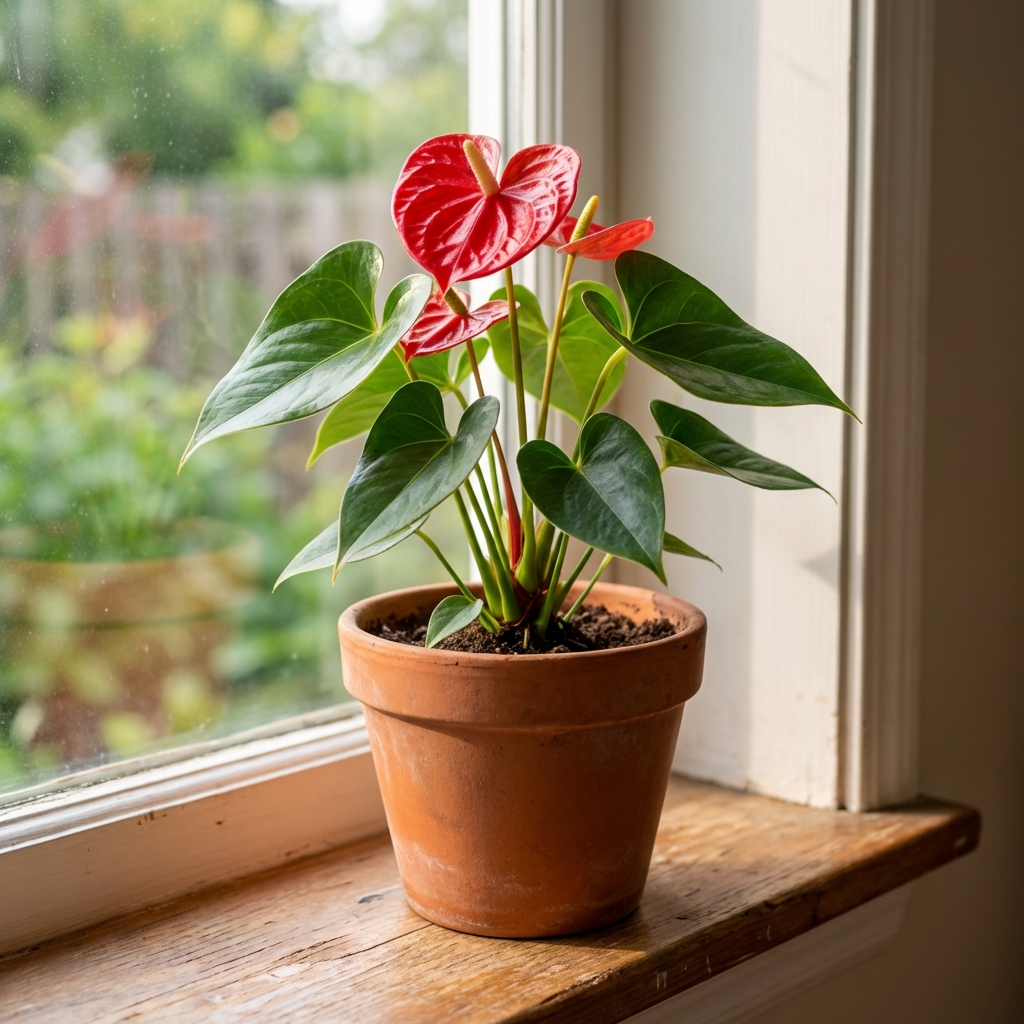
Know what your anthurium wants
Most common houseplant anthuriums (like Anthurium andraeanum) are tropical understory plants. In nature, they grow in bright shade with lots of airflow, frequent moisture, and a loose root zone. That tells you the big three needs indoors:
- Bright, indirect light for flowering
- Moist but airy roots to avoid rot
- Warm temps and moderate humidity for steady growth
A good indoor target is about 65 to 80°F (18 to 27°C) and 45 to 60 percent humidity. Avoid cold drafts near winter windows and keep plants away from heat vents that dry them out fast.
Eco-friendly care is mostly about recreating those conditions with minimal inputs.
Light: the cleanest “fertilizer” you can give
If your anthurium grows leaves but rarely flowers, light is usually the missing piece. Strong, indirect light powers blooms without any extra product.
Best placement
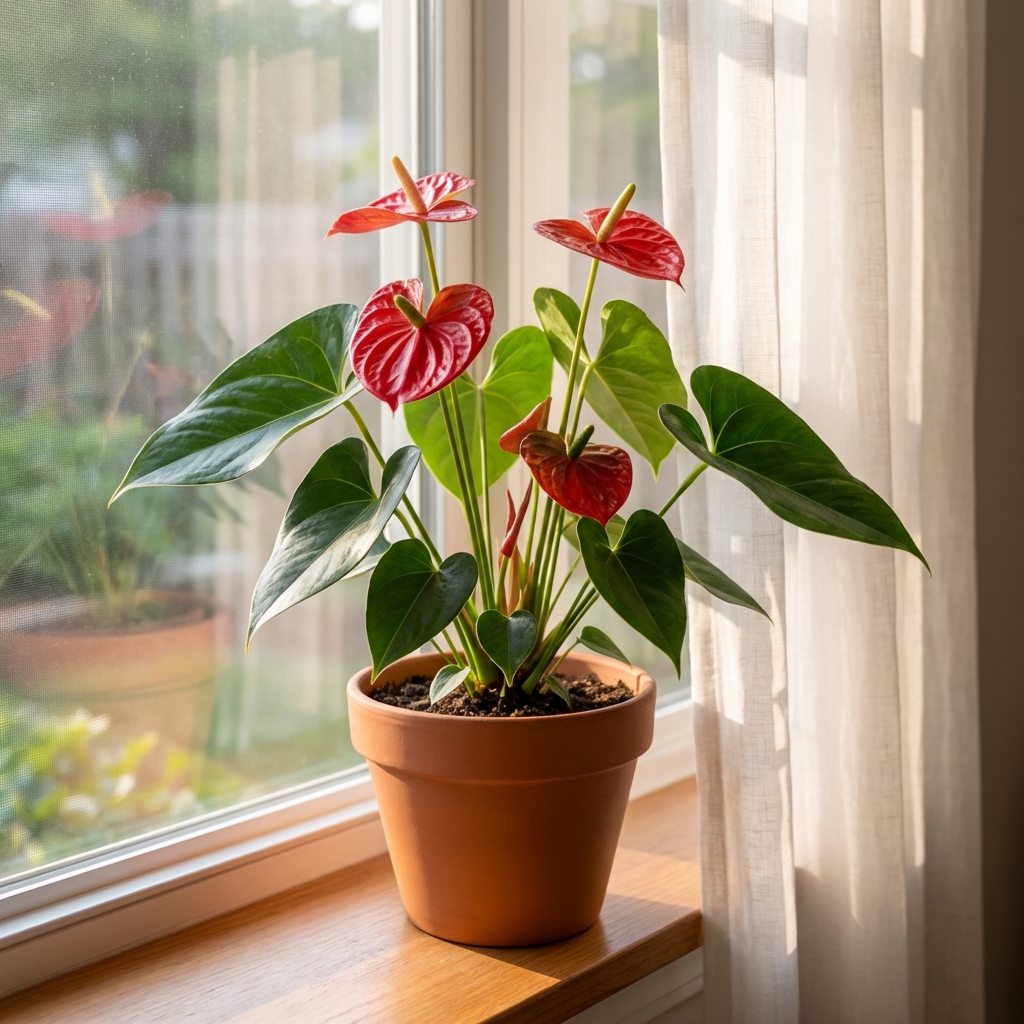
- East window: often ideal. Gentle morning sun, bright rest of the day.
- South or west window: works if filtered with a sheer curtain or placed a few feet back.
- North window: may be too dim in many homes, especially in winter.
Eco-friendly tip
Before buying a grow light, try a simple upgrade: rotate the plant weekly and move it closer to the brightest window where leaves do not get scorched. If you do use a grow light, choose an efficient LED on a timer and run it only as long as needed.
Watering without waste or root rot
Overwatering is one of the fastest ways to lose an anthurium. The goal is consistent moisture in an airy mix, not constant wetness.
A simple watering rule that works
Water when the top 1 to 2 inches of the mix feels dry, then water thoroughly until it drains. Do not let the pot sit in runoff.
Make tap water more plant-friendly
- Use a watering can and catch runoff: If the runoff is clear, you can often use it on other non-sensitive houseplants the same day.
- Let chlorinated water sit: Fill a container and let it sit uncovered overnight. This can help if your water uses free chlorine.
- Chloramine note: Many cities use chloramine, which does not off-gas easily. If your plants seem sensitive (leaf tip burn, stubborn mineral crust, or stalled growth), consider filtered water, rainwater, or occasional distilled water instead.
- Consider filtered water if you see crust: White mineral buildup on the soil or pot can mean hard water. Switching water sources can help without adding extra products.
Signs your watering needs adjusting
- Yellowing lower leaves + soggy mix: too wet
- Crispy edges + fast-drying mix: too dry, too much sun, or low humidity
- Droopy leaves that perk up after watering: underwatering
Soil mix: go chunky, not boggy
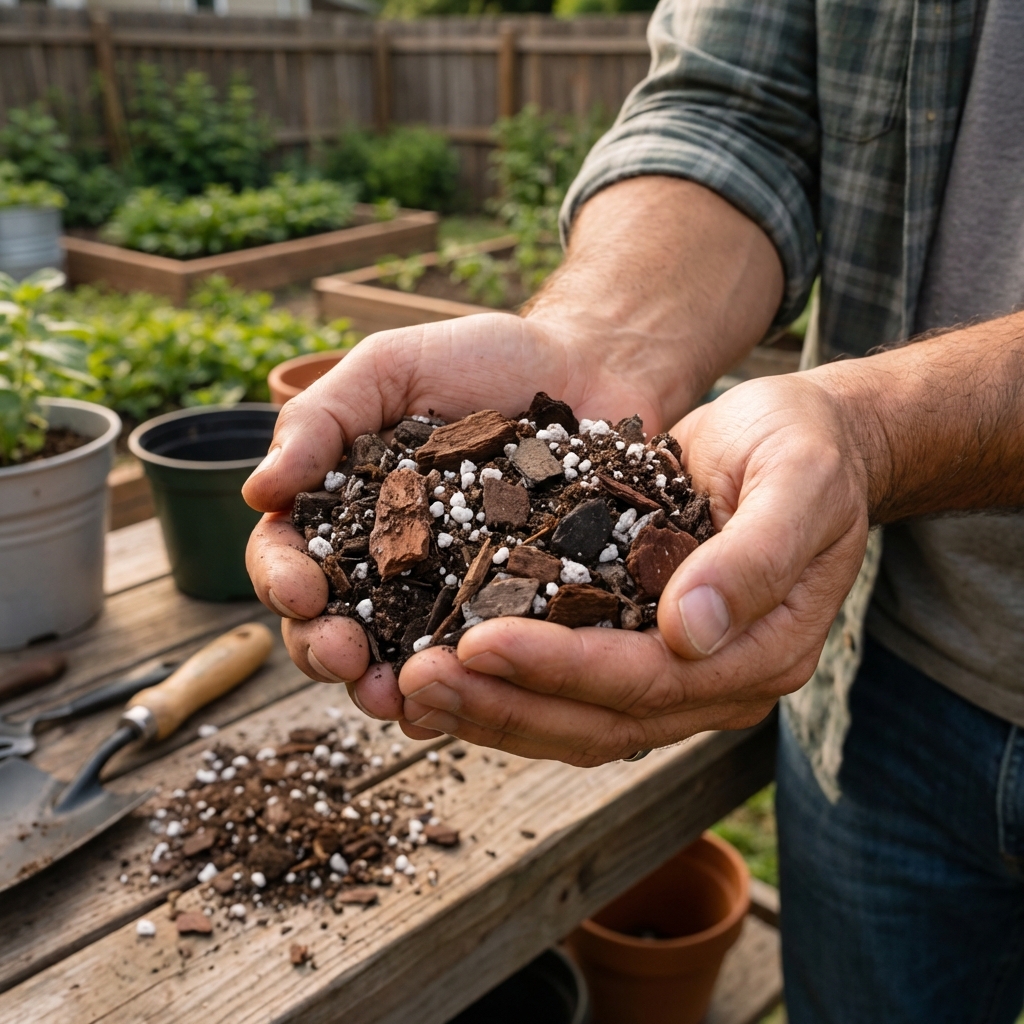
Anthuriums do best in a mix that drains fast but still holds a little moisture around the roots. Regular potting soil alone is usually too dense indoors.
An eco-friendly anthurium mix (easy version)
- 2 parts high-quality potting mix (or coco coir based mix)
- 1 part orchid bark (fir bark or similar)
- 1 part perlite or pumice
If you have it, a small handful of horticultural charcoal can help keep the mix fresher longer, but it is optional.
Low-waste tip
Buy components in sizes you will actually use, and store them dry. If you only have one or two houseplants, splitting bags with a friend keeps costs and waste down.
Pot choice and drainage
Use a pot with drainage holes. That single detail prevents a lot of root issues and wasted rescue efforts later.
- Terracotta: dries faster and can be helpful if you tend to overwater, but you will water more often.
- Plastic or glazed ceramic: holds moisture longer and is great for steady watering routines, but you need to be more careful not to keep the mix soggy.
Fertilizing gently (and sustainably)
Anthuriums are not heavy feeders, especially in lower winter light. Over-fertilizing causes salt buildup and leaf edge burn, which then leads to extra flushing and wasted water.
What to do instead
- Feed lightly in spring and summer: a diluted balanced houseplant fertilizer works well.
- Skip or reduce in winter: most indoor plants slow down.
- Flush occasionally: every couple of months, water thoroughly to move salts out of the pot. Do this in a sink or tub, and let it drain well.
Eco-friendly option
If you prefer a lower-impact approach, look for fertilizers with clearer sourcing and packaging, or use a gentle organic liquid at low strength. The key is consistency, not “stronger.”
Humidity and airflow without fancy gadgets
Anthuriums like moderate humidity, but they also need airflow to avoid fungal issues. The sweet spot in many homes is 45 to 60 percent humidity.
Simple ways to raise humidity
- Group plants together: creates a small humidity pocket.
- Pebble tray: can slightly boost humidity right around the plant. Set the pot above water level on stones so roots never sit in water.
- Choose the right room: a bright bathroom or kitchen can work if light is good.
Do not forget airflow
If you increase humidity, crack a window when weather allows or run a small fan on low across the room. Still, damp air invites problems.
Natural pest control: start with the least intense fix
Common anthurium pests include spider mites, mealybugs, and scale. Eco-friendly pest control is about catching problems early and using targeted steps before you reach for harsh sprays.
Step-by-step approach
- Isolate the plant for a couple of weeks to protect your other houseplants.
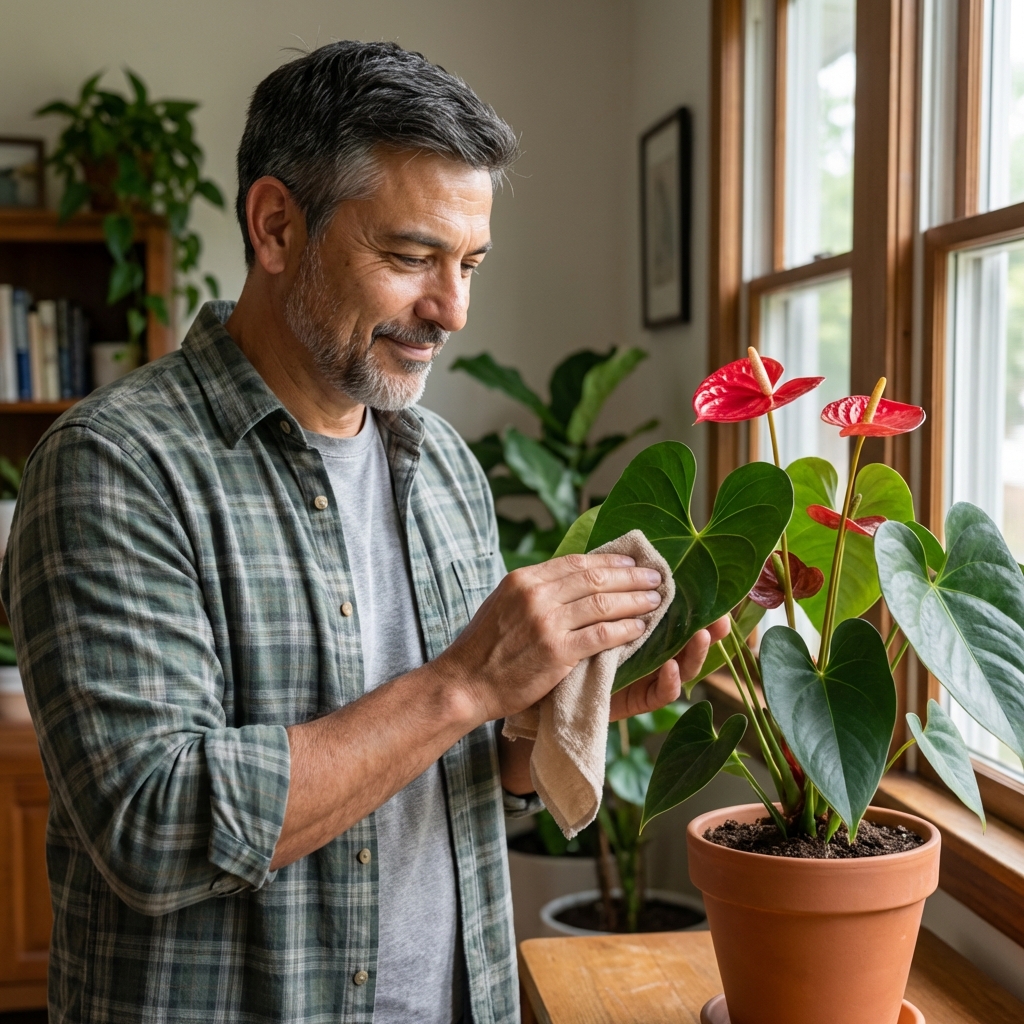
- Rinse and wipe: use a lukewarm shower or spray bottle, then wipe leaves (top and bottom) with a soft cloth.
- Spot treat: dab mealybugs and scale with cotton swabs dipped in 70 percent isopropyl alcohol.
- Use insecticidal soap if needed: follow the label, test on one leaf first, and repeat as directed.
Preventive habit that matters
Spider mites thrive in warm, dry conditions and can be easy to miss early on. Keeping leaves clean helps photosynthesis and makes it easier to spot pests before they spread. A quick monthly wipe with plain water goes a long way.
Repotting with less waste
Anthuriums often like being slightly snug, but they do need fresh mix as it breaks down. Repotting every 1 to 2 years is typical for actively growing plants, while slower growers may go longer.
When to repot
- Roots circling heavily or poking out of drainage holes
- Water runs through too fast because the mix has collapsed or become hydrophobic
- Plant dries out unusually quickly even after proper watering
Eco-friendly repotting tips
- Reuse pots: wash with hot soapy water. If you had pests, disinfect with a diluted bleach solution, then rinse well.
- Size up gradually: go 1 to 2 inches wider. Big jumps waste mix and increase rot risk.
- Compost old mix only if healthy: if the plant had rot or pests, discard in trash rather than spreading problems.
Pruning and cleanup that keeps the plant blooming
Dead flowers and yellowing leaves are normal. Removing them helps the plant focus energy on new growth.
How to prune
- Use clean snips and cut spent flower stalks near the base.
- Remove fully yellow leaves. If a leaf is partly green, let it stay and support the plant.
- Wipe tools with alcohol between plants to avoid spreading disease.
If you want to be extra mindful, compost pest-free trimmings.
Troubleshooting: quick fixes for common anthurium problems
Yellow leaves
- Most likely: overwatering or low light
- Fix: let the mix dry slightly more between waterings, and move to brighter indirect light
Brown tips
- Most likely: dry air, inconsistent watering, hard water, or fertilizer salts
- Fix: water more evenly, flush the pot, and consider a humidity boost or a gentler water source
No flowers
- Most likely: not enough light
- Fix: brighter indirect light and light feeding during active growth
Droopy plant with wet soil
- Most likely: early root issues
- Fix: stop watering, improve airflow, and consider repotting into a fresh chunky mix if the pot stays wet too long
A simple eco-friendly weekly routine
- Once a week: check soil moisture with your finger, rotate the pot, and look under leaves for pests.
- Every 2 to 4 weeks: wipe leaves with plain water.
- Spring and summer: feed lightly and consistently.
- As needed: prune spent blooms and yellow leaves.
That is really it. Most anthurium problems come from “kindness overload,” meaning too much water, too much fertilizer, or too much fuss. Keep conditions steady, stay observant, and let the plant do what it is built to do.

Jose Brito
I’m Jose Britto, the writer behind The Country Store Farm Website. I share practical, down-to-earth gardening advice for home growers—whether you’re starting your first raised bed, troubleshooting pests, improving soil, or figuring out what to plant next. My focus is simple: clear tips you can actually use, realistic expectations, and methods that work in real backyards (not just in perfect conditions). If you like straightforward guidance and learning as you go, you’re in the right place.