Christmas cactus (Schlumbergera) is one of those houseplants that feels easy until it is time to bloom. Then suddenly you are guessing about light, watering, and why the buds fall off right before the big show.
The good news is you can get reliable blooms with simple, low-waste habits. Think: gentler soil, smarter watering, and small adjustments that match how this plant actually grows in nature as an epiphyte tucked into tree debris, not a desert cactus in sand.
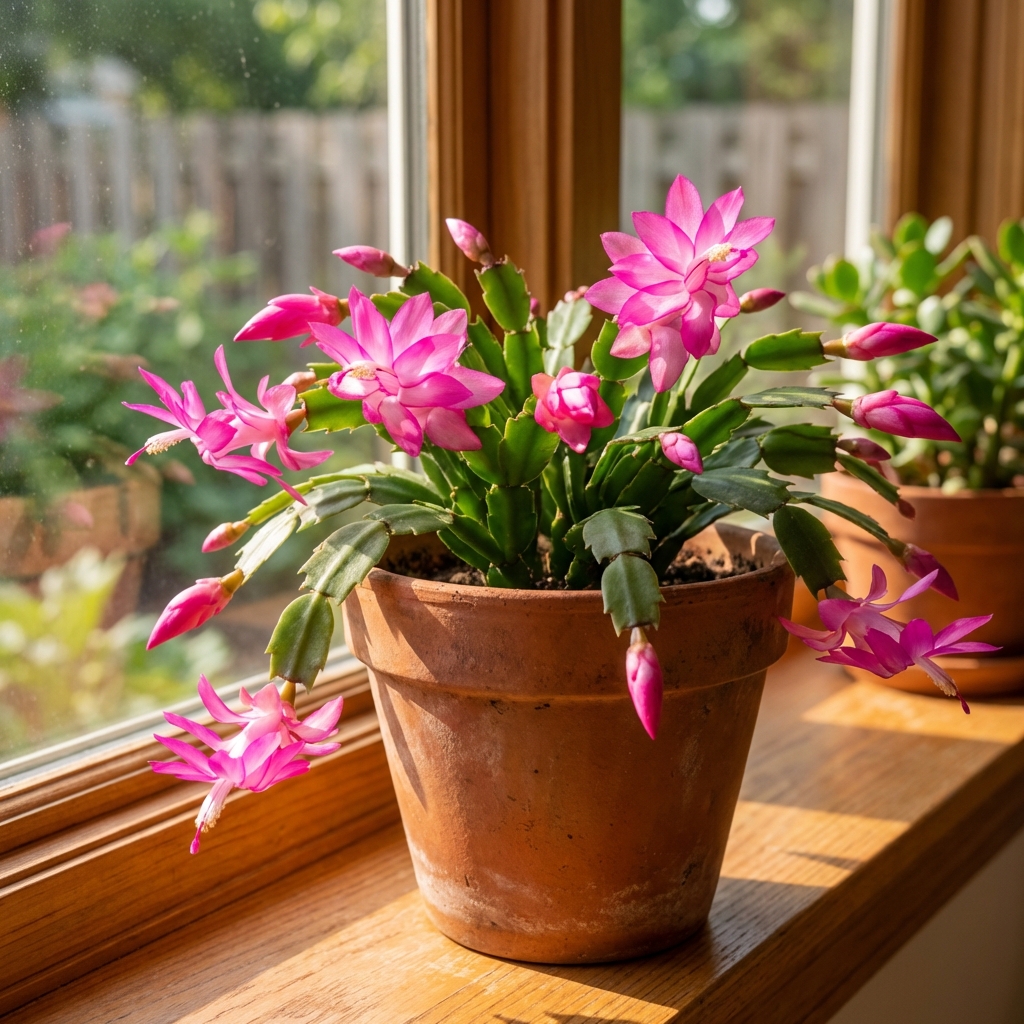
Know what you are growing
Most plants sold as “Christmas cactus” today are actually holiday cactus types that bloom somewhere between November and January. Care is similar across Christmas, Thanksgiving, and Easter cactus, but timing can vary. In this guide, I will use holiday cactus as the umbrella term.
If you want a quick ID: Thanksgiving cactus (often Schlumbergera truncata hybrids) usually has pointed “teeth” on the segments. True Christmas cactus (often in the S. × buckleyi group) tends to have more rounded, scalloped segments and blooms a bit later.
- They like bright, indirect light, not hot sun all day.
- They like even moisture, not bone dry for weeks.
- They like airy roots, because they naturally grow in loose organic debris.
If you treat it like a typical desert cactus, it will usually survive, but blooming gets hit or miss.
Light for more buds
Blooms start with light management. You want enough daytime brightness to build energy, and then longer nights to trigger buds.
Best indoor light
- Bright, indirect light near an east window is ideal.
- South or west windows can work if you use a sheer curtain or pull the plant back from the glass.
- If the segments turn reddish or look bleached, the light is too intense.
Night darkness matters (no fancy gear needed)
For 4 to 8 weeks in early fall, aim for long, uninterrupted nights. Bud set is strongest when the plant gets roughly 12 to 14 hours of darkness. That means avoiding lamp light late at night.
- Move it to a room that stays dark at night.
- Or cover it with a breathable box or cloth in the evening, then uncover in the morning.
Most “my cactus won’t bloom” issues come down to this: a plant parked in a bright living room under lights every night.
Watering that prevents bud drop
Holiday cactus wants a rhythm: soak, drain, then lightly dry. Not constant wetness, and not long droughts.
A practical watering check
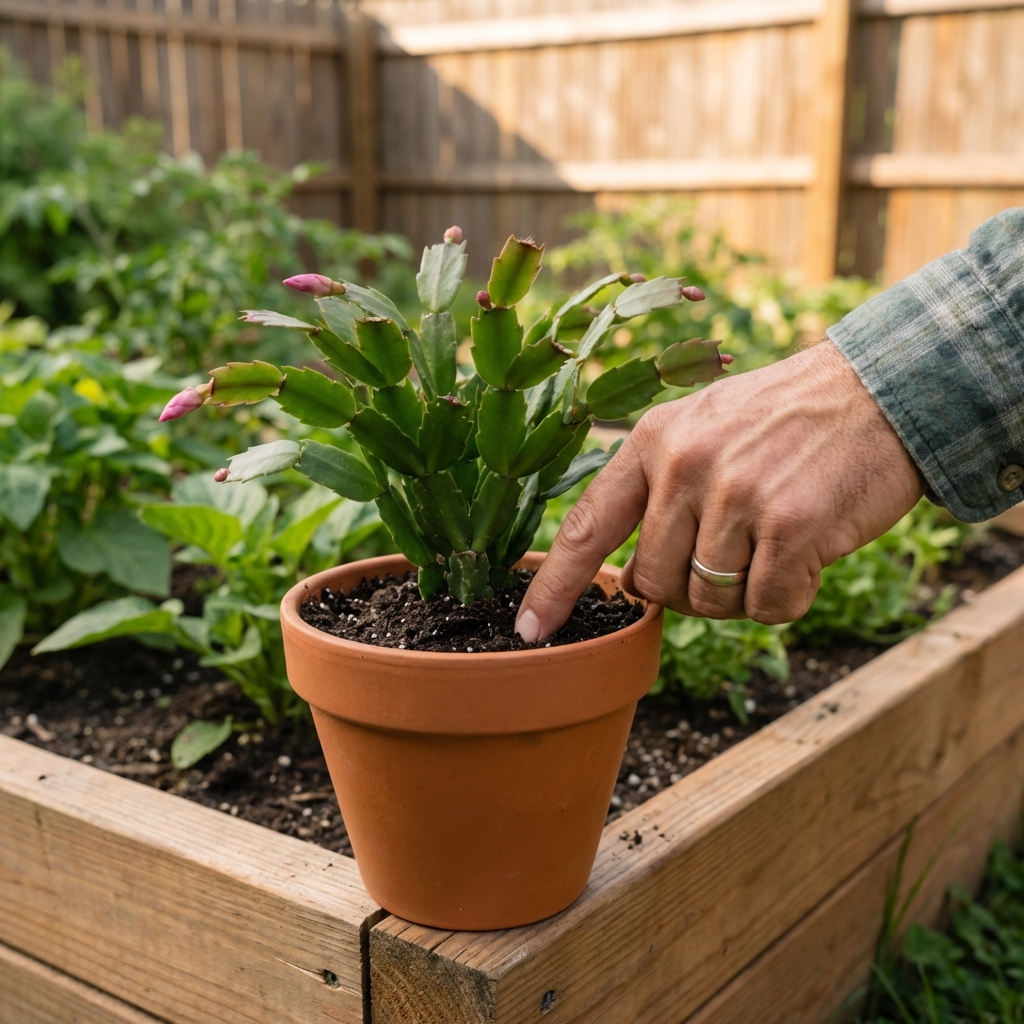
- Stick a finger in the pot. Water when the top 1 inch feels dry.
- Water thoroughly until it drains out, then empty the saucer. Do not let it sit in water.
- In bud and bloom season, avoid big swings from dry to soaked.
Low-waste watering tips
- Use room-temperature water. Cold water can shock roots.
- Reuse clean household water when safe, like dechlorinated aquarium water or cooled cooking water from boiling eggs or veggies (no salt, no oil, and only if it is clear and not greasy). If you are fighting fungus gnats, skip any “food-y” water and stick to plain water.
- If you collect rainwater, it is great for holiday cactus.
Watch the plant: limp, wrinkled segments usually mean underwatering. Mushy segments or a sour smell usually means too much water or poor drainage.
Soil and pots
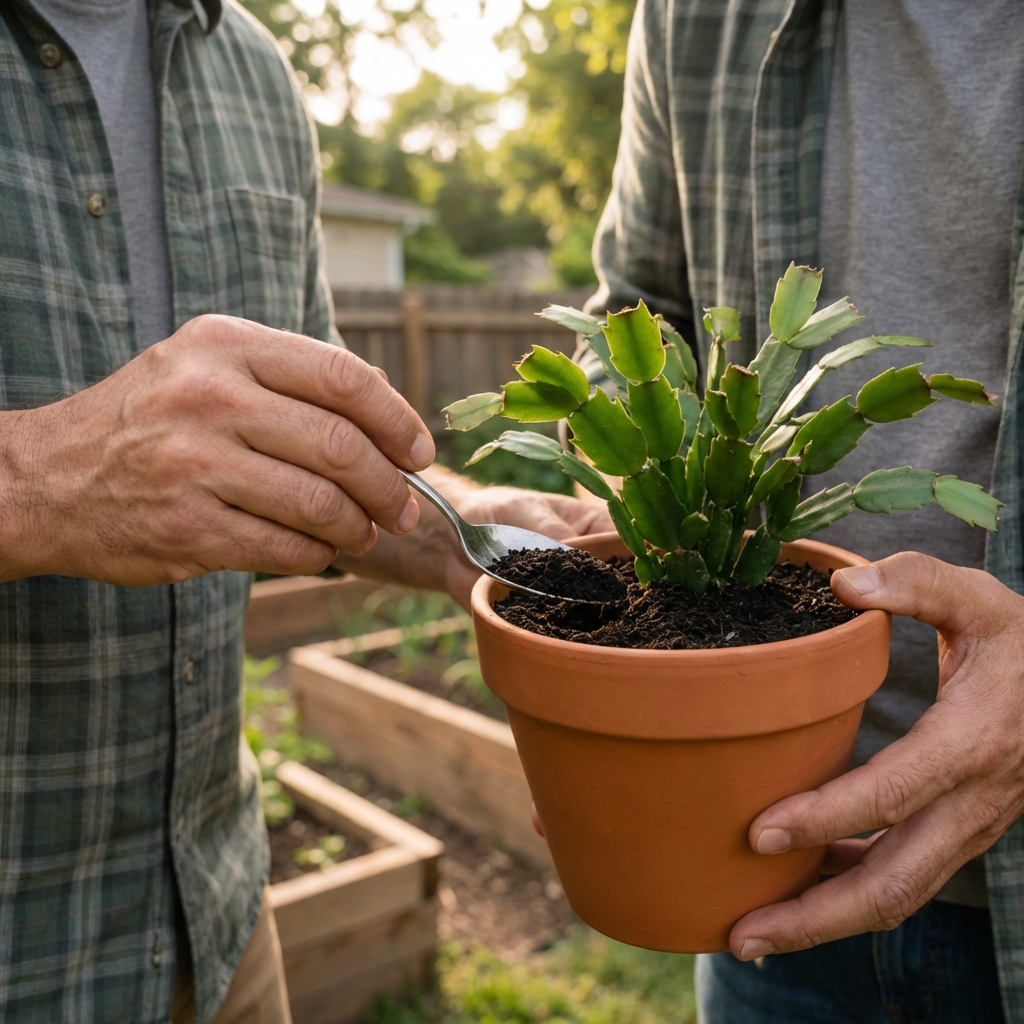
Since Schlumbergera likes air around its roots, the best “bloom boost” is often a better potting mix, not more fertilizer.
An easy, peat-reduced mix
Many standard houseplant mixes hold too much water. Aim for a mix that drains fast but still holds some moisture.
- 2 parts coco coir based potting mix (or any peat-reduced mix)
- 1 part orchid bark (small to medium)
- 1 part perlite or pumice
This mimics the airy, organic “tree crotch” conditions they like.
Pot choice
- Clay pots breathe and help prevent soggy soil.
- Plastic works too, but you must be more careful with watering.
- Always use a pot with drainage holes.
Repot timing: Repot after blooming, not during bud set. Most plants only need repotting every 2 to 3 years.
Gentle feeding for better blooms
Holiday cactus is not a heavy feeder, and over-fertilizing can mean lots of green growth with fewer blooms.
What to use
- Compost tea (very diluted), used occasionally in spring and summer.
- Worm castings as a thin top-dress after blooming.
- A gentle organic liquid fertilizer at half strength every 3 to 4 weeks during active growth.
When to stop feeding
Pause fertilizing in early fall when you are trying to trigger buds, and throughout blooming. Restart lightly after flowers fade.
Tip: If you only do one thing, top-dress with a small amount of worm castings after bloom season. It is simple, low odor, and hard to overdo if you keep it light.
Temperature and humidity
Temperature shifts help trigger bud formation, and stable conditions help buds stay put. Some plants will set buds with cooler nights even if darkness is not perfect, but the most reliable results usually come from cool nights plus long nights.
For bud set
- Ideal nights: roughly 55 to 65°F (13 to 18°C)
- Days: 65 to 75°F (18 to 24°C)
For bud retention
- Avoid heat vents, fireplaces, and drafty doors.
- Avoid cold shock from open windows on freezing nights.
- Do not move the plant around once buds form.
Humidity that helps (without fuss)
These plants appreciate moderate humidity. A pebble tray may help a little, especially in a smaller space, but it is not a magic fix in a large open room. Try:
- A reusable pebble tray with water under the pot (pot sits above the water line).
- Grouping plants together to create a slightly more humid microclimate.
- If your home is very dry, a whole-room humidifier can be more effective. Models that do not rely on disposable filters can keep waste down.
Why buds fall off (and how to stop it)
Bud drop is frustrating, but it is usually a reaction to change. Here are the most common causes I see in real homes.
Top causes of bud drop
- Sudden watering changes (very dry then soaked)
- Moving the plant to a new spot or rotating it
- Warm, dry air from heating vents
- Overwatering with cold, soggy soil
- Light at night after buds have started forming
- Drafts or temperature swings (hot or cold)
- Ethylene gas from ripening fruit nearby (a sneaky one)
Quick rescue steps
- Pick one good location and leave it there.
- Keep soil evenly moist, not wet.
- Move it away from heat vents, drafty doors, and fruit bowls.
- Give it true darkness at night if you are still in the bud-setting window.
Natural pest control
Holiday cactus is not usually pest-prone, but when it gets stressed, pests can move in. The goal is to handle issues early with the least disruptive option.
Common pests
- Mealybugs: white cottony clusters in joints
- Spider mites: fine webbing, speckled dull segments
- Scale: small brown bumps on stems
Gentle control options
- Start with a strong rinse in the sink to knock pests off.
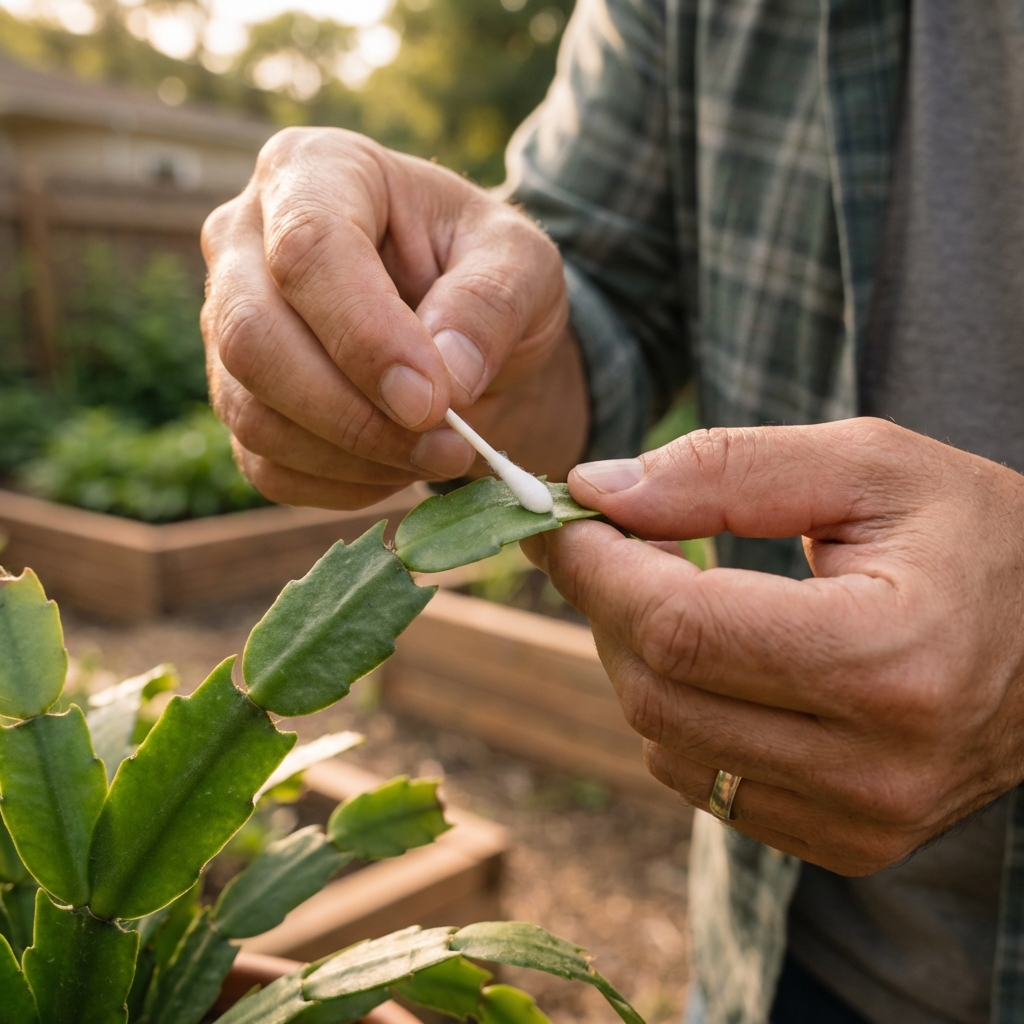
- Spot-treat mealybugs with a cotton swab dipped in 70% isopropyl alcohol.
- If needed, use insecticidal soap or neem sparingly and only when the plant is not in full sun.
Important: Always test sprays on a small area first. Holiday cactus segments can be sensitive. Avoid spraying open flowers, and do not soak the soil surface with treatments.
Low-waste propagation and pruning
Pruning is not just for shape. Light pruning after blooming encourages branching, and more branches usually means more flower sites next season.
How to prune
- After blooming, twist off 1 to 2 segments from the ends of a few stems.
- Do not take more than about a third of the plant at once.
How to propagate with minimal waste
- Let cut pieces dry for a day.
- Root in a small pot of your airy mix, barely moist.
- Reuse nursery pots or small food containers with drainage holes poked in the bottom.
Propagating your own plants is one of the most eco-friendly ways to “buy” new houseplants.
Bloom timeline you can follow
If you want a simple seasonal plan that does not require perfect conditions, use this as your baseline:
- Spring to summer: Bright indirect light, water when the top inch dries, feed lightly, prune after blooms.
- Early fall: Reduce feeding, keep slightly cooler nights if possible, give long dark nights for 4 to 8 weeks.
- Bud set and bloom: Keep conditions stable, avoid moving the pot, water evenly, no heavy feeding.
- After bloom: Deadhead spent flowers, ease into a short rest period (a few weeks of slightly less frequent watering), then resume light feeding. Repot if rootbound.
Quick FAQ
Should I put my Christmas cactus outside?
It can help in summer if you have a shaded spot protected from hot sun and heavy rain. Bring it in before nights drop below about 50°F (10°C).
Do I need a “bloom booster” fertilizer?
Usually no. Better light, stable watering, and an airy mix do more than high-phosphorus products for most home growers.
Why is mine growing but not blooming?
Most often it is getting light at night, staying too warm in fall, or it never gets enough bright daytime light.
The simple low-waste takeaway
For better blooms, focus on the basics that matter most: bright days, dark nights in fall, even watering, and airy soil. Add gentle feeding, skip harsh chemicals, and keep the plant stable once buds show up. That combination works in real homes, not just perfect greenhouse setups.

Jose Brito
I’m Jose Britto, the writer behind The Country Store Farm Website. I share practical, down-to-earth gardening advice for home growers—whether you’re starting your first raised bed, troubleshooting pests, improving soil, or figuring out what to plant next. My focus is simple: clear tips you can actually use, realistic expectations, and methods that work in real backyards (not just in perfect conditions). If you like straightforward guidance and learning as you go, you’re in the right place.