Fleas are tiny, stubborn, and honestly pretty rude. They bite your cat, they bite you, and they multiply fast. The good news is you can make a big dent with eco-friendly home remedies if you focus on the whole flea life cycle, not just the adult fleas you can see.
Here is the plain truth: many (and often most) of the fleas in a home are not on your cat at any given moment. They are in carpets, bedding, couch seams and crevices, and anywhere your cat likes to nap. So your best “home remedy” is a routine that hits eggs, larvae, and adults consistently over a few weeks.
First, make sure it is really fleas
Before you start treating everything, confirm what you are dealing with.
- Flea dirt test: Comb your cat over a white paper towel. If you see pepper-like specks, drip a little water on them. If they turn reddish-brown, that is flea dirt.
- Where your cat itches: Fleas often cause scratching around the base of the tail, belly, and thighs.
- Check the house: Flea bites on humans usually show up as small itchy bumps around ankles and lower legs.
If your cat has open sores, hair loss patches, pale gums, or seems lethargic, skip the home experiment phase and call your vet. Kittens and older cats can get hit hard quickly.
The eco-friendly flea plan
Think of this as a 3-part approach: treat your cat safely, treat the home aggressively, and keep the cycle from restarting.
1) Vacuum like you mean it
This is the most effective low-tox step you can take. Vacuuming removes adult fleas, eggs, and larvae. It also can encourage flea pupae to emerge due to vibration and activity, which helps you catch them in the next rounds.
- Vacuum carpets, rugs, couch cushions, baseboards, and under furniture.
- Go slow. Flea eggs fall deep into fibers.
- Daily for 7 to 10 days, then every other day for another week (or longer if you are still seeing activity).
- Empty the canister outside right away, or seal the vacuum bag in a trash bag before tossing.
2) Heat-wash the right items
Heat is your friend. Wash what your cat touches the most.
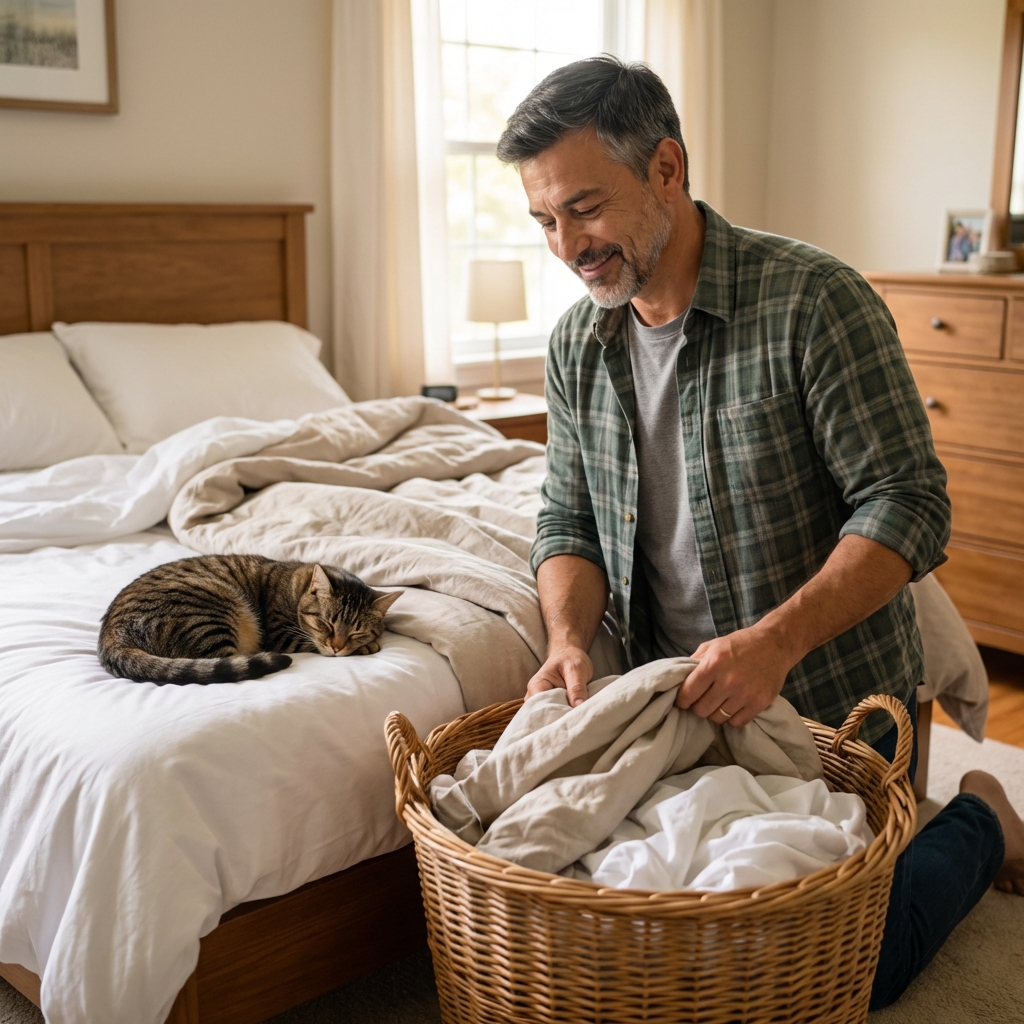
- Wash pet bedding, blankets, throw covers, and washable cat beds in hot water.
- Dry on high heat when fabric allows.
- Repeat every few days during the first two weeks.
Non-washable items? Put them in a hot dryer for 20 to 30 minutes if safe for the material, or seal in a bag for several weeks. In some homes, especially cool or humid ones, you may need 2 to 8 weeks because pupae can be stubborn. Keep vacuuming during this time.
3) A simple flea trap for monitoring
Traps will not solve a big infestation alone, but they can help reduce adults and show you if your plan is working.
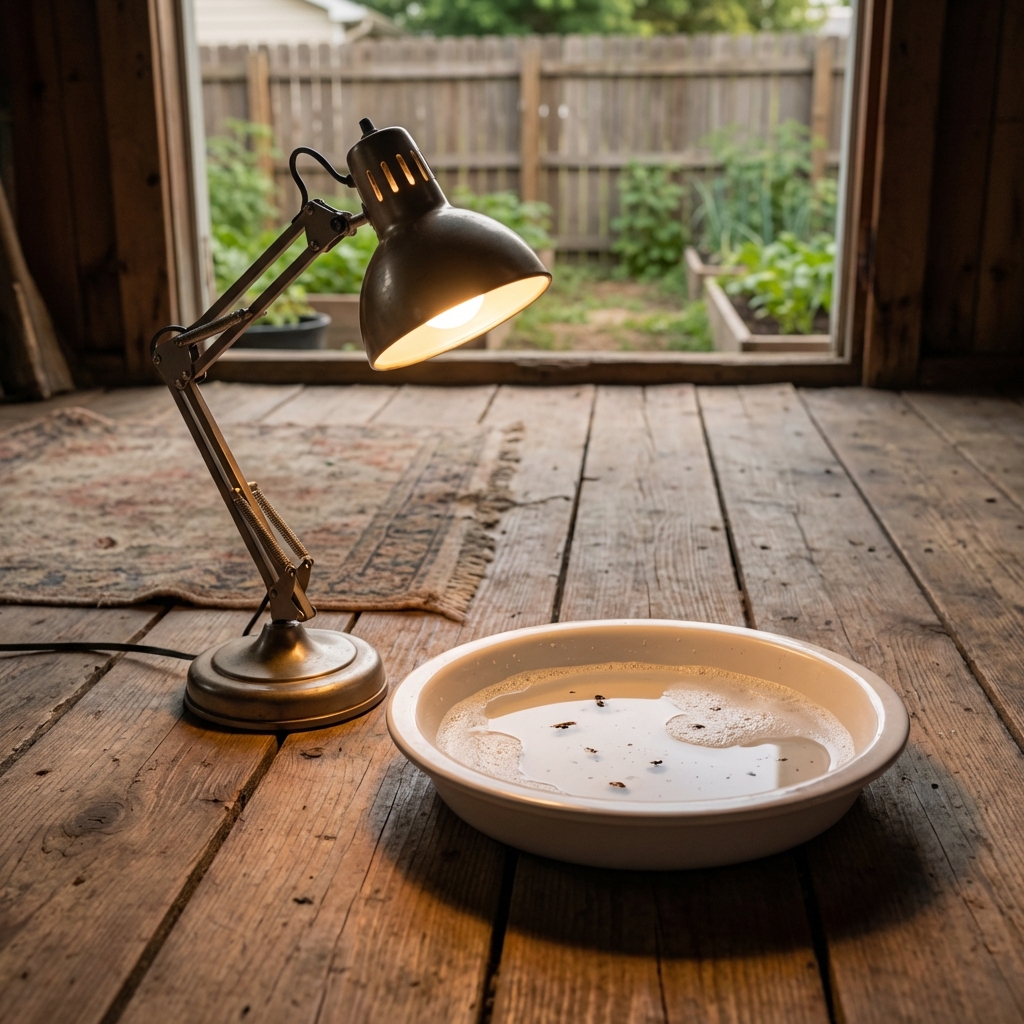
- Option A (easy DIY): Place a shallow dish with warm water and a small drop of dish soap near where your cat sleeps.
- Shine a small lamp toward the dish at night. Fleas tend to move toward warmth and light, fall in, and cannot escape.
- Option B (often more effective): A small light over a sticky pad trap works well for monitoring and catching adults.
Safety note: Put the trap where kids and pets cannot tip it. Use a stable dish, keep cords tucked away, and do not place it where your cat will drink from it.
Check traps each morning. If you are still catching a lot after a week of vacuuming and washing, you likely need stronger pet treatment guidance from a vet.
4) Grooming and combing (good support, not the whole solution)
Use a metal flea comb daily for a week, then a few times a week. Keep a cup of warm soapy water nearby and dunk the comb as you go.
- Focus on the neck, behind ears, and base of tail.
- Be consistent, especially during the first two weeks.
This helps reduce adult fleas on your cat, but remember most of your problem is in the environment.
Cat-safe treatment basics
If you want the eco-friendly truth: skipping effective pet treatment usually drags this out. The “greener” move is often a targeted, vet-recommended product plus strong cleaning, not a cabinet full of DIY sprays.
- Treat all pets at the same time: If you have multiple cats or a dog, everyone needs a plan or the fleas just rotate hosts.
- Use cat-specific products only: Never use canine flea products on cats. Products containing permethrin (common in dog-only spot-ons) can be dangerously toxic to cats.
- Ask your vet for a cat-safe option: Modern oral or topical preventatives are typically the fastest way to stop biting adults from laying more eggs.
Home remedies you can use carefully
Pet-safe options for the home
These can help when used the right way, especially alongside vacuuming and hot laundry.
- Steam cleaning: Steam carpets and upholstery if you have a steamer. Heat can kill multiple flea stages on contact.
- Soapy water wipe-down: For hard floors and baseboards, a simple mop with warm water and mild soap can remove eggs and dirt where larvae feed.
- Targeted decluttering: Piles of laundry, blankets, and floor cushions create flea-friendly hiding spots. Reducing these helps more than most sprays.
Use caution: diatomaceous earth (DE)
You will see food-grade diatomaceous earth suggested everywhere. It can dehydrate insects, but it is also a fine dust that can irritate lungs, eyes, and skin. Cats can also inhale it while grooming.
- If you choose to use it, use food-grade only.
- Apply a very light dusting to cracks and along baseboards. Do not puff it into the air.
- Do not apply on pet bedding or areas your cat rolls in, lounges on, or will groom heavily.
- Keep pets and people out of the room while applying, then let dust settle.
- Vacuum thoroughly after 24 to 48 hours.
If anyone in the home has asthma or respiratory issues, or if your cat has breathing problems, I would skip DE and lean on vacuuming, heat, and vet-recommended treatments.
Skip these “natural” flea fixes (important)
Some popular DIY remedies are risky for cats or simply do not work well enough.
- Essential oils on cats: Tea tree, peppermint, clove, eucalyptus, citrus oils, and many blends can be toxic to cats. Do not apply them to fur, collars, or bedding.
- Garlic or apple cider vinegar as a cure: Not reliable for flea control, and garlic can be dangerous for cats.
- Alcohol sprays: Skin irritation and inhalation risk, plus it is not a full life-cycle solution.
Yard and entryway tips
If your cat goes outdoors, or if fleas are coming in on dogs or wildlife, your yard can keep re-seeding the problem.
- Trim and tidy: Fleas love cool, shaded, humid spots. Mow grass and remove damp leaf piles.
- Create a dry buffer: Keep a simple gravel or mulch strip between tall vegetation and the house foundation.
- Wash pet outdoor hangouts: Porch mats, outdoor beds, and blankets should be cleaned regularly.

How long it takes
Even with strong cleaning, fleas can seem to “reappear” because pupae can hang out and hatch over time. A realistic timeline:
- Days 1 to 3: Many people notice fewer bites and see fewer fleas after heavy vacuuming and laundry, but results vary.
- Week 1: Often a big reduction, but you may still catch fleas in traps or see a few on your cat.
- Weeks 2 to 3: This is where consistency pays off. Many infestations break here if you stay on the routine.
If you do not see meaningful improvement after 10 to 14 days of consistent cleaning, it is time to reassess. Often the missing piece is effective pet treatment or treating all pets in the home at the same time.
When to talk to a vet
Eco-friendly does not have to mean “do nothing.” There are vet-recommended flea preventatives that are very effective and, in many cases, safer than DIY experimenting with essential oils or harsh pesticides.
Call your vet if:
- Your cat is a kitten, senior, pregnant, or has a chronic condition.
- You see tapeworm segments (fleas can transmit tapeworms).
- Your cat has skin infections, scabs, or significant hair loss.
- Someone in the home is having severe reactions to bites.
- You are still seeing lots of fleas after a couple of weeks of consistent cleaning and pet treatment.
If your household is getting overwhelmed, ask about an IGR (insect growth regulator) or professional treatment. IGRs target eggs and larvae and can be a helpful “last resort” add-on when cleaning alone is not enough.
Quick checklist
- Comb your cat and confirm fleas.
- Hot wash and high-heat dry bedding and blankets.
- Vacuum floors, rugs, and furniture daily for 7 to 10 days.
- Use a light-and-soapy-water trap (or sticky trap) to monitor.
- Steam clean carpets or upholstery if possible.
- Avoid essential oils and risky DIY treatments on cats.
- Treat all pets with cat-safe, vet-recommended flea control. Never use dog-only products on cats.
- If the problem persists, ask a vet about next steps, including an IGR or professional help.
Fleas are beatable, but they are rarely a one-and-done situation. Stay steady for a couple weeks, keep the routine simple, and you will usually see the home swing back in your favor.

Jose Brito
I’m Jose Britto, the writer behind The Country Store Farm Website. I share practical, down-to-earth gardening advice for home growers—whether you’re starting your first raised bed, troubleshooting pests, improving soil, or figuring out what to plant next. My focus is simple: clear tips you can actually use, realistic expectations, and methods that work in real backyards (not just in perfect conditions). If you like straightforward guidance and learning as you go, you’re in the right place.