Orchids get labeled as “fussy,” but many common problems come down to one thing: roots that cannot breathe. The good news is you can pot and repot orchids in a way that keeps those roots happy and cuts down on plastic, wasted potting media, and chemical-heavy habits.
Below are eco-friendly potting tips I use and recommend for real homes where you want the plant to thrive without turning every repot into a trash day.
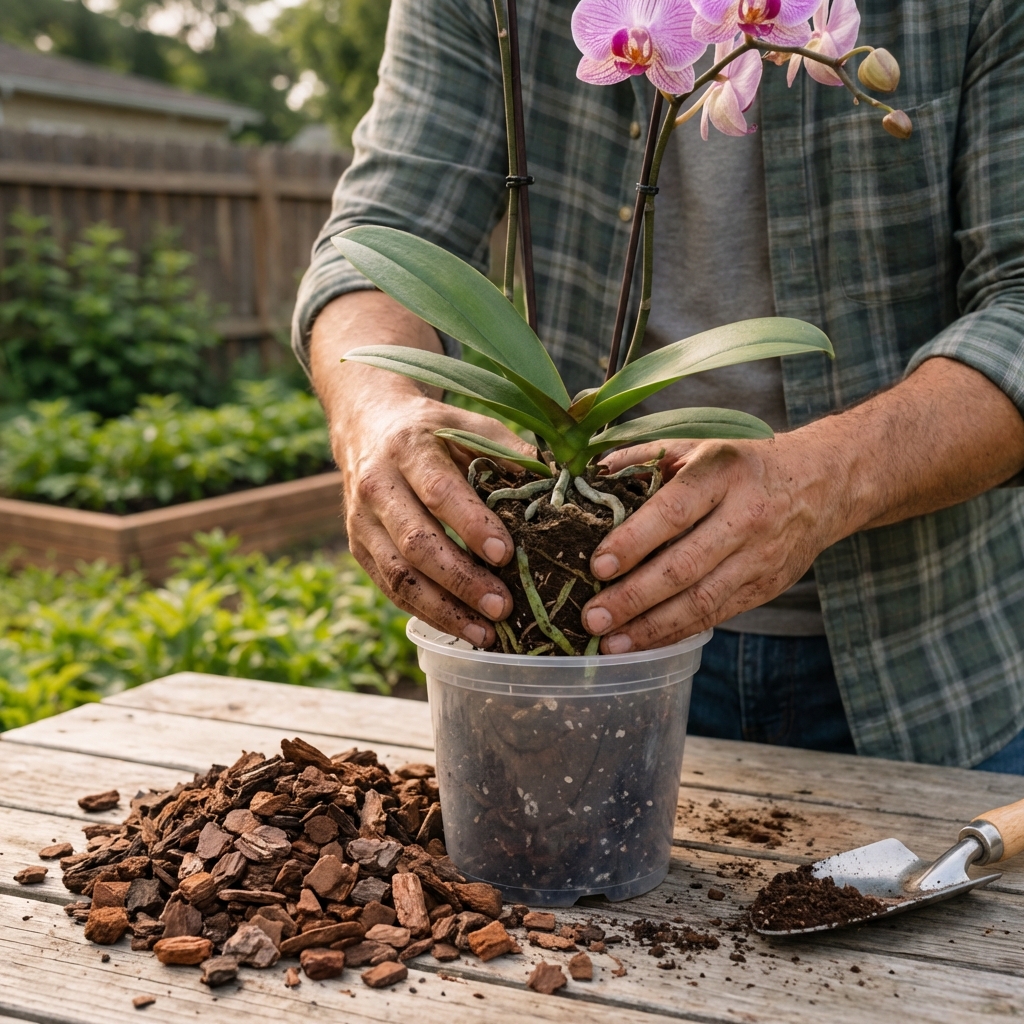
Start with the right repotting timing
Eco-friendly potting starts by repotting less often and only when it actually helps the plant. Repotting too frequently wastes media and stresses the orchid.
Repot when you see these signs
- Media breaking down: bark looks dark, crumbly, or smells sour or swampy.
- Roots are crowded: roots circle the pot tightly and watering becomes tricky.
- Watering issues: the pot stays wet too long (often from compacted, broken-down mix) or dries way too fast (often because the mix, pot, or conditions are not a match).
- After blooming for many common orchids (like Phalaenopsis), when new roots begin to grow.
If the mix is still fresh, roots look firm, and the plant is stable, you can often wait. For many bark mixes, that typically means repotting about every 12 to 24 months depending on your home conditions. With high-quality, chunky bark and careful watering, some growers go 2 to 3 years. Moss-heavy setups usually need refreshing more often.
Choose a pot that reduces waste and supports roots
Orchids want air around their roots. Your pot choice affects plant health and how often you need to repot.
Eco-friendly pot options that work
- Reuse a clear plastic orchid pot: It is lightweight, durable, and lets you see root health. Reuse is often greener than buying a new “eco” item every time.
- Secondhand cachepots: Thrift a ceramic outer pot and place the orchid in a reusable inner pot for drainage and airflow.
- Terracotta with care: Breathable and long-lasting, but it can dry mixes faster. Great if your home runs humid or you tend to overwater.
Avoid containers without drainage or pots that hold water in the bottom. Those often lead to root rot, which is one of the fastest routes to wasted plants and wasted effort.
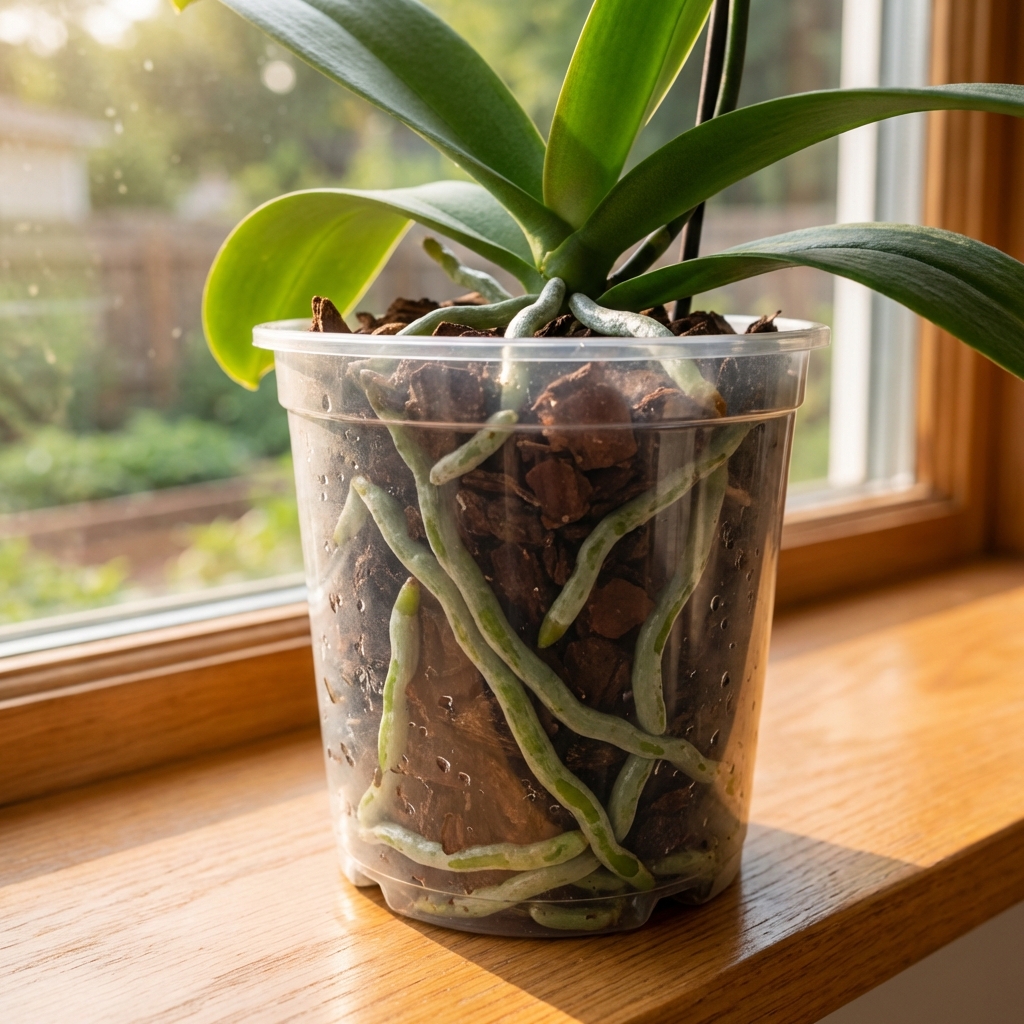
Use a sustainable potting mix strategy
Most household orchids are epiphytes, meaning they naturally grow on trees, not in soil. So the goal is a mix that stays airy, drains well, and does not break down quickly.
Lower-waste media choices
- Quality fir or pine bark: Long-lasting and widely available. Larger bark chunks break down slower, which can reduce repot frequency.
- Coconut husk chips: Renewable, holds moisture well, but needs thorough rinsing and soaking to reduce salts.
- Pumice or lava rock: Durable, reusable, and improves airflow. Great for mixing in to reduce how often you replace organic media.
- Sphagnum moss (use sparingly): Harvest impacts vary by source. If you use it, buy responsibly sourced, and pack it loosely to avoid suffocating roots.
A simple eco-friendly mix that works for many Phalaenopsis
- 80% medium bark
- 10% pumice or lava rock
- 10% sphagnum moss (optional) to help with even moisture
Adjust for your home. Dry air and a warm window often needs a touch more moisture retention. Cool, dim rooms usually need a chunkier, faster-drying mix.
Note: These tips are written mainly for epiphytic orchids commonly grown as houseplants (like Phalaenopsis). Terrestrial or semi-terrestrial orchids such as Cymbidium and Paphiopedilum often prefer finer mixes and a different moisture rhythm.
Clean and reuse what you can safely
Reusing pots and clips is an easy win, but orchid hygiene matters. You are not trying to make things sterile like a hospital, just clean enough to avoid spreading disease.
How to clean pots and tools with less environmental impact
- Wash first: Hot water and a small amount of soap remove biofilm better than disinfectant alone.
- Disinfect: Use 70% isopropyl alcohol on pruners and stakes. For pots, a diluted hydrogen peroxide rinse is a common low-fuss option, but when disease is suspected, a measured dilute bleach solution is the most reliable disinfectant. Let items air dry.
- Skip heavy bleach when possible: Bleach works, but it is harsh and easy to overuse. If you do use it, measure carefully and rinse thoroughly.
Tip: Keep one small spray bottle of alcohol for tools. A quick spritz between plants prevents problems and avoids making big chemical batches.
Repot step-by-step
This process keeps the plant stable and helps you avoid tossing media unnecessarily.
- Hydrate first: Water the orchid a few hours before repotting. Roots are more flexible and less likely to snap.
- Remove old media gently: Tease bark out with your fingers and shake loose bits away. Discard the old mix from the pot rather than blending it into the new mix. Mixing old media with new can speed breakdown and invite rot issues.
- Trim only what needs trimming: Cut mushy, hollow, or black roots. Keep firm roots, even if they are silver or slightly stained.
- Set the height: The crown should sit above the mix. Do not bury it.
- Fill with airy mix: Tap the pot to settle media instead of packing it tight.
- Stabilize: If the plant wobbles, use a reusable stake or clip. Movement damages new root tips.
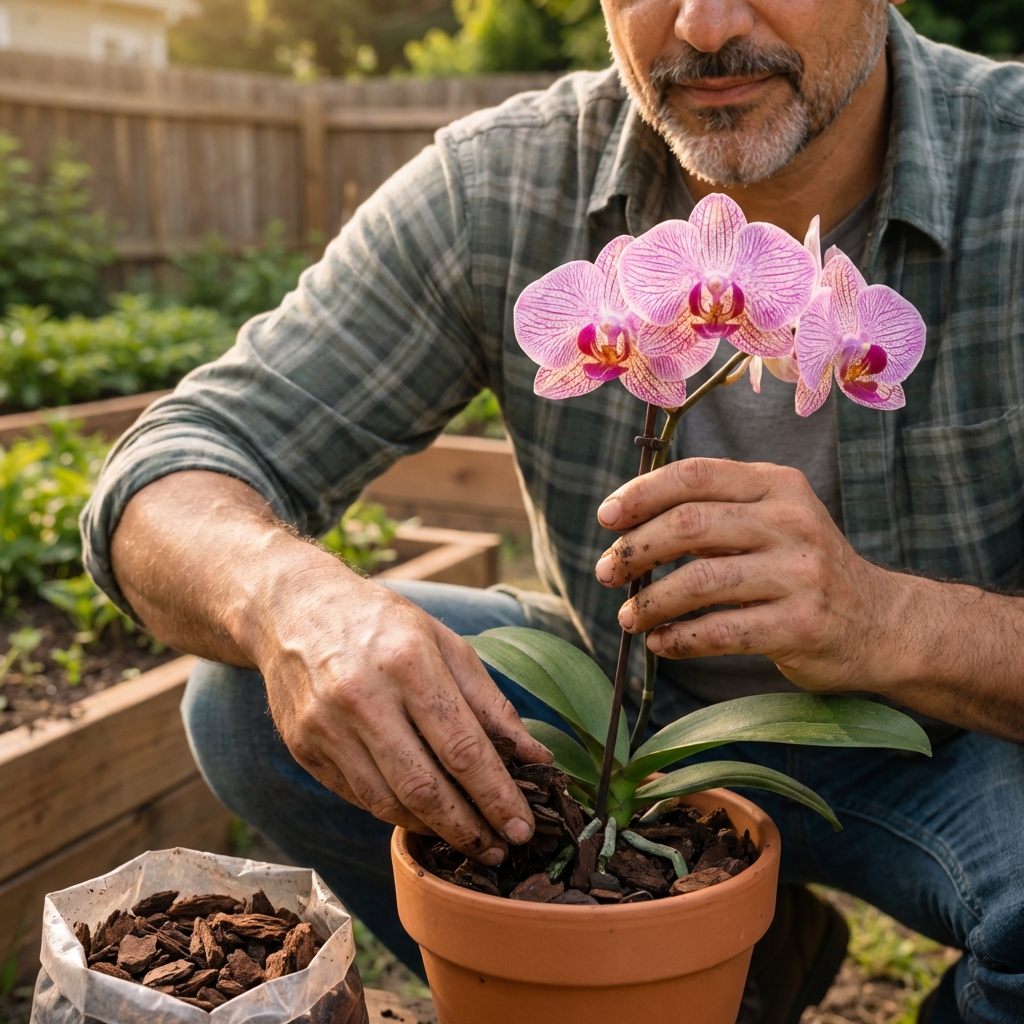
After repot care
Repotting success is mostly about the first week.
- Watering after trimming: If you cut a lot of roots, many growers wait 1 to 3 days before the first full watering so cuts can dry and callus a bit. If you barely trimmed, you can usually water normally.
- Keep conditions steady: Bright, indirect light and stable temperatures help the plant settle in. Avoid harsh sun for a week or two.
- Hold fertilizer briefly: If the plant is stressed or you did major trimming, give it a week or two before resuming fertilizing.
Watering habits that prevent waste
Overwatering is not “too much water once.” It is watering again before the mix has had a chance to breathe.
More sustainable watering tips
- Soak and drain: Water thoroughly, let it drain completely, then put it back. This reduces the temptation to keep adding a little water every day.
- Use room-temperature water: Very cold water can slow uptake or stress plants, especially in cool winter conditions.
- Collect water when you can: If you have access to rainwater, orchids often love it. Just use a clean container and do not store it forever.
- Do not let it sit in runoff: Standing water in a saucer is a common root rot trigger.
- Flush occasionally: Every few weeks, run extra water through the pot to rinse out fertilizer salts. It helps roots and can extend the life of your mix.
If you are trying to be extra low-waste, you can reuse a bowl or container to soak multiple orchids, but only if the plants are healthy. If any plant is struggling or you suspect pests or disease, use fresh water per plant.
What to do with old orchid media
Old orchid bark is usually not great for potting orchids again, but it does not have to go straight to the trash.
Reuse ideas (when the media is not moldy or diseased)
- Compost: Mix small amounts into compost to add structure. It will break down slowly.
- Garden pathways: Use as a temporary top layer in low-traffic spots to reduce mud.
- Mulch for non-sensitive plants: Use lightly around shrubs, not pressed against stems.
Skip reuse if the old mix smells rotten, has obvious fungus gnats breeding, or came from a plant with suspected disease. In that case, bag it and dispose of it to protect your other plants.
Common eco-friendly potting mistakes
- Using regular potting soil: It holds too much water and suffocates roots.
- Packing moss tightly: A little moss can help, but tight moss stays wet and causes rot.
- Choosing “natural” containers with no drainage: A pretty bowl is not worth a dead orchid.
- Repotting to fix a watering issue without adjusting the routine: mix and pot matter, but habits matter more.
Quick checklist
- Clean, reusable pot with drainage
- Fresh bark-based mix plus a durable additive like pumice
- Alcohol spray or mild disinfecting method
- Sharp scissors or pruners
- Stake or clip if the plant is top-heavy
If you want the most “pro” move with the least waste, focus on two things: keep the mix airy and make repotting the exception, not the routine. Orchids reward steady, boring care.

Jose Brito
I’m Jose Britto, the writer behind The Country Store Farm Website. I share practical, down-to-earth gardening advice for home growers—whether you’re starting your first raised bed, troubleshooting pests, improving soil, or figuring out what to plant next. My focus is simple: clear tips you can actually use, realistic expectations, and methods that work in real backyards (not just in perfect conditions). If you like straightforward guidance and learning as you go, you’re in the right place.