Growing plants in water is one of the easiest ways to cut down on potting mix, plastic pots, and the usual dirt mess on the counter. It is also a great option if you have gnats in your soil, limited space, or you just like seeing roots grow. The key is choosing plants that handle constant moisture well and giving them clean water, decent light, and a little nutrition.
Below are eco-friendly, practical options you can grow in water, plus plant care tips that keep things healthy without turning it into a science project.
Quick note on safety: Several popular water-grown houseplants are toxic if chewed (including pothos, philodendron, ivy, and tradescantia). Keep them out of reach of pets and small kids.
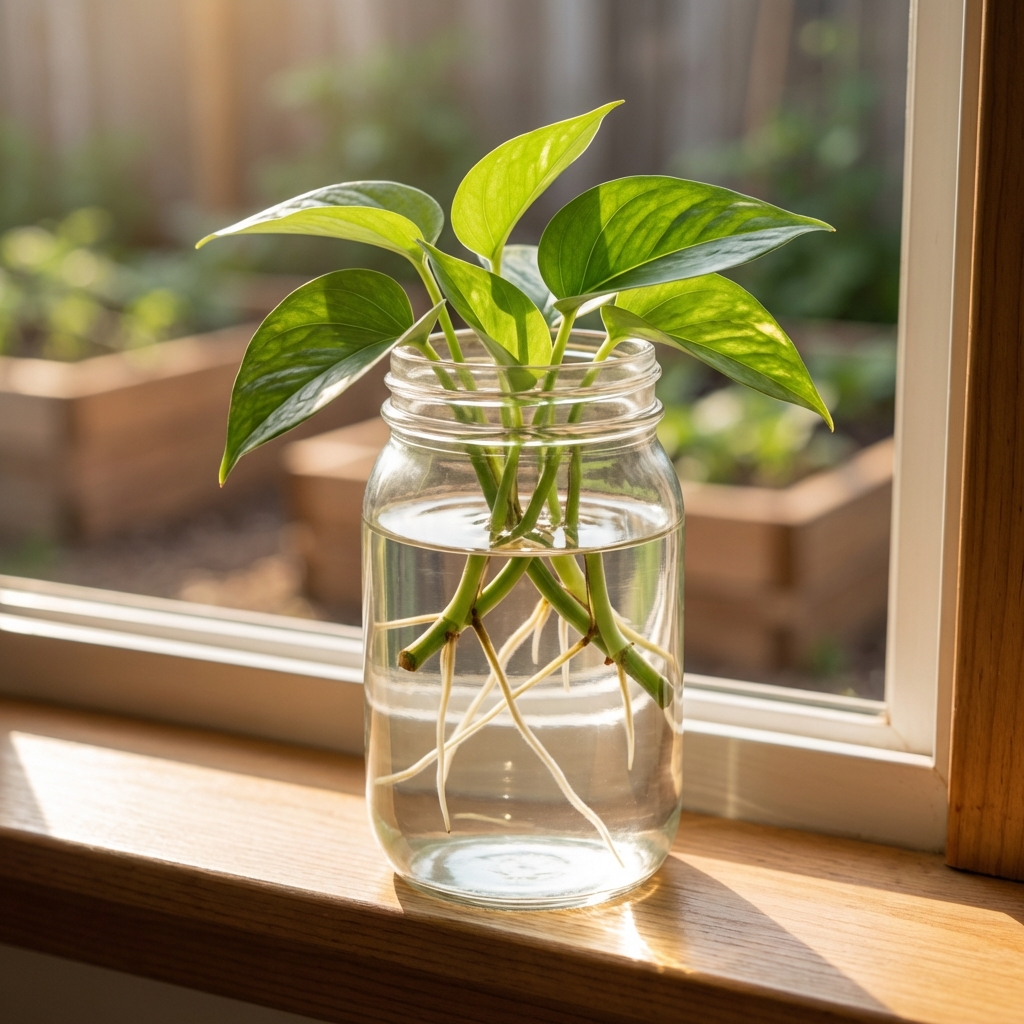
Why growing in water can be more eco-friendly
- Less waste: You can reuse jars, bottles, and vases instead of buying new pots.
- Less soil use: Potting mixes often come in plastic bags and may include peat. Water growing reduces how often you need them.
- Fewer pests: Fungus gnats and soil-borne issues are much less common.
- Easy propagation: One healthy plant can become several, which means you buy fewer new plants.
Realistic expectation: Many “water plants” are really common houseplants that root easily in water. Long-term growth in water is closer to hydroponic or semi-hydro care, meaning you will get the best results when you manage nutrients and keep roots oxygenated with regular water changes. Growth is often slower than in soil if you do not provide nutrients, although well-managed water setups can grow just as fast.
Best plants to grow in water
These are dependable choices for real homes and real schedules. Most start easily from cuttings. If you are new to this, start with pothos or philodendron and build confidence from there.
Pothos (Epipremnum aureum)
Pothos is the easiest gateway plant for water growing. It roots fast, tolerates missed water changes, and grows in average indoor light.
- Water start: Take a cutting with at least 1 to 2 nodes and remove leaves that would sit underwater.
- Light: Bright, indirect light is best, but medium light works.
- Tip: If the vine gets leggy, cut it back and root the pieces to thicken the plant.
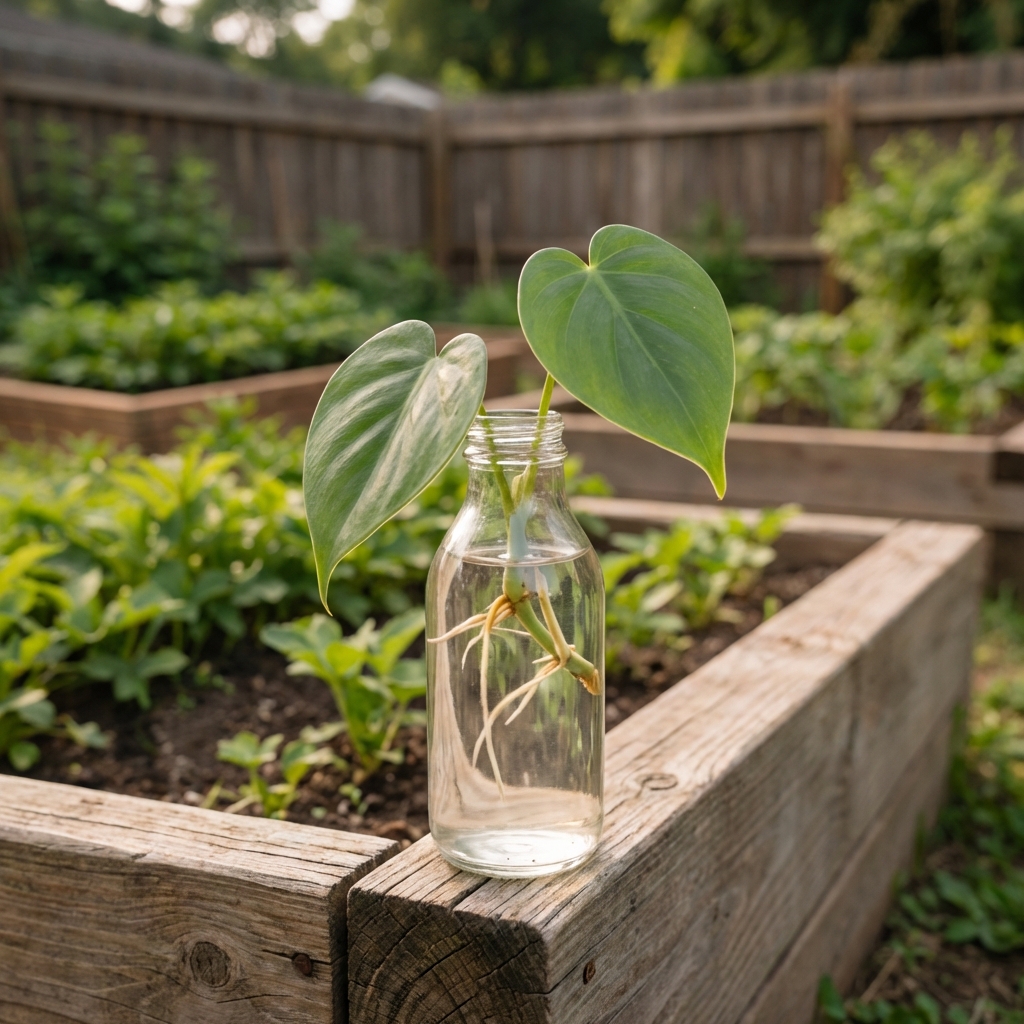
Heartleaf philodendron (Philodendron hederaceum)
Similar to pothos, philodendron roots easily and stays attractive even if you are not perfect with care.
- Water start: Cut just below a node, place the node in water.
- Light: Medium to bright indirect light.
- Tip: Rotate the jar weekly so it grows evenly toward the light.
Lucky bamboo (Dracaena sanderiana)
Lucky bamboo is often sold already growing in water. It is tough, compact, and works well on desks and countertops.
- Setup: Support stems with smooth stones or glass pebbles. Keep roots covered, not the whole stem.
- Light: Low to medium indirect light.
- Tip: Chlorinated or fluoridated tap water can cause leaf tip burn in some homes. If you see browning tips, try filtered water or let water sit out (uncovered) overnight before using.
Spider plant babies (Chlorophytum comosum)
Spider plants make little plantlets that root quickly in water. This is an easy way to reuse a jar and make gifts.
- Water start: Suspend the baby so the base touches water, not the leaves.
- Light: Bright indirect light.
- Tip: Once roots reach a few inches, you can keep it in water or move to soil.
Tradescantia (inch plant)
Tradescantia is fast, forgiving, and a great “instant success” plant in water. The stems root at nodes quickly.
- Water start: Strip lower leaves and submerge a couple of nodes.
- Light: Bright indirect light for best color.
- Tip: Pinch tips often. It encourages bushier growth.
English ivy (Hedera helix)
Ivy can root in water, especially from fresh cuttings. That said, it can be picky indoors long-term and may attract spider mites, especially in warm, dry rooms.
- Water start: Cut a young stem and keep at least one node underwater.
- Light: Bright indirect light.
- Tip: If leaves start crisping, move it away from heat vents and strong sun. Cooler temps and steadier humidity help.
Herbs you can root and regrow
Some kitchen herbs are perfect for water because you can start them from store-bought stems. Think of it as low-waste cooking plus plant propagation. Most herbs are happiest as short-term rooting or regrow projects unless you provide strong light and regular nutrients.
- Best bets: Mint and basil root easily. Oregano can root well. Rosemary and sage are slower and can be finicky in water.
- Light: Bright light, often a sunny window or a grow light.
- Tip: If you want herbs to keep producing in water, plan on nutrients and very bright light. Otherwise, root them in water, then pot them up.
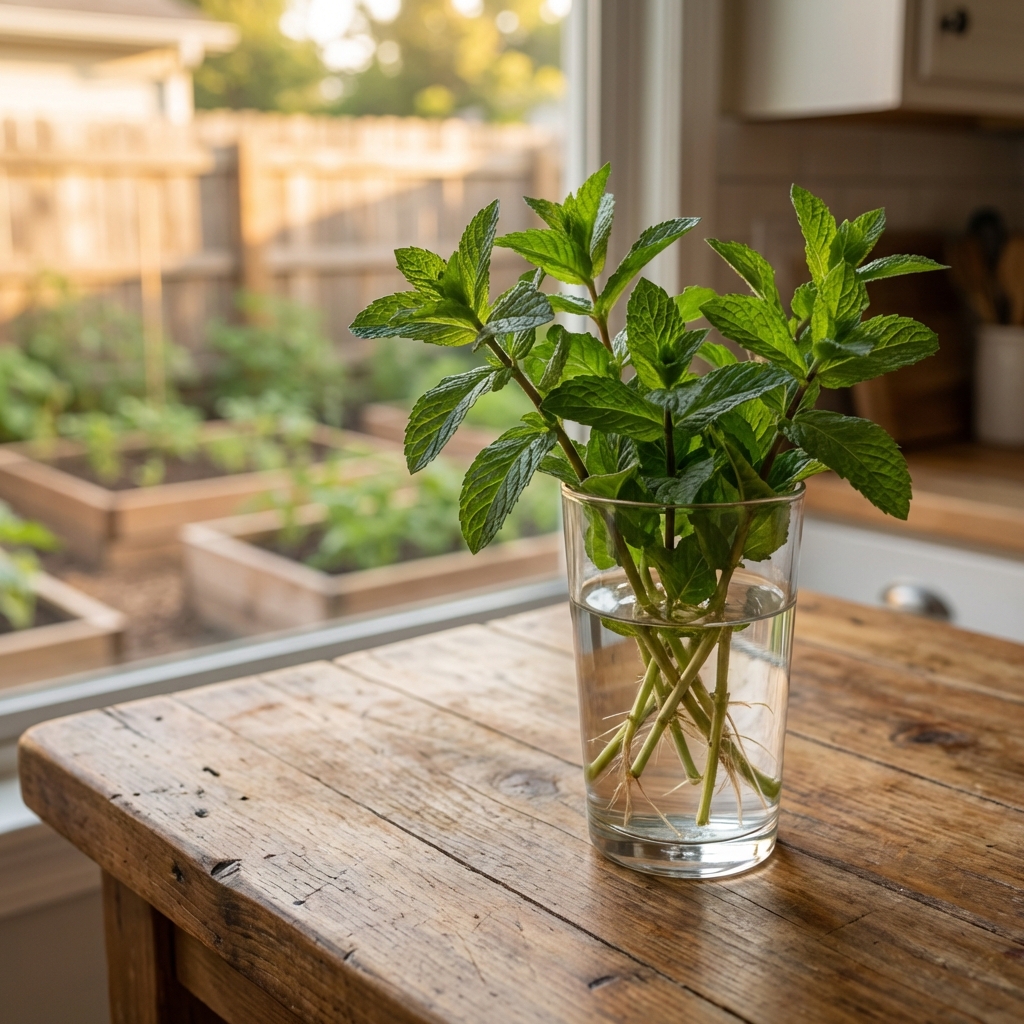
Simple water-growing setup
You can keep it very simple and still get strong results.
What you need
- A clean container: A glass jar, vase, or bottle works great. Clear containers make it easier to spot algae or root problems early.
- Room-temperature water: Cold water can shock fresh cuttings.
- Optional support: Smooth stones, glass pebbles, or a narrow-neck bottle to hold stems upright.
Quick setup steps
- Rinse the container with hot water. Avoid soap residue if possible.
- Take a cutting with at least one node.
- Remove any leaves that would sit underwater.
- Fill the container so the node is submerged and leaves stay dry.
- Place in bright, indirect light.
One easy rule: Leaves stay out of the water. If leaves sit underwater, you will get rot and cloudy water faster.
Care tips for healthy roots
Change the water on a schedule
For most homes, a full water change every 7 to 14 days works well. Treat that as a starting point and adjust based on light, container size, temperature, and how many cuttings you have in the jar. If the water looks cloudy, smells off, or algae shows up, change it sooner.
- New cuttings: Change weekly until roots are established.
- Established plants: Every other week is often fine if water stays clear.
Rinse roots gently
When you change water, give the roots a gentle rinse. Healthy water roots are often white to tan and firm, but color can vary by plant and even by water conditions. If you see mushy, dark roots or a bad smell, trim them back with clean scissors.
Use light wisely to avoid algae
Algae is basically “light + nutrients + water.” If your jars turn green:
- Move the container out of direct sun.
- Switch to an opaque container, or slip the jar into a sleeve like a paper bag or ceramic cover.
- Change water more often for a few weeks.
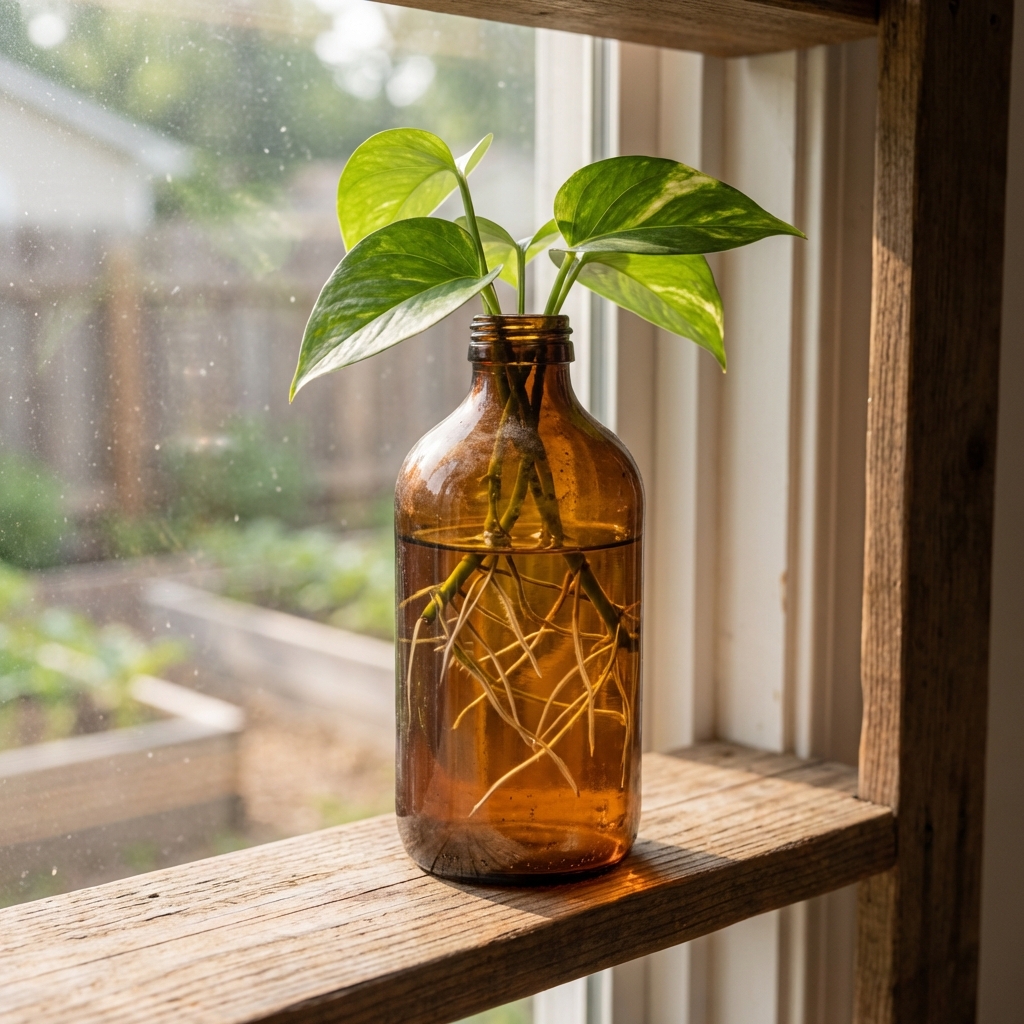
Add nutrients for long-term growth
Cuttings can live on stored energy for a while, but long-term water growing usually needs nutrients.
- Best option: A gentle hydroponic fertilizer at a low dose.
- How often: About once a month for many houseplants, or follow the product directions at half-strength to start.
- Watch for signs: Pale leaves and stalled growth often mean it is time for more light or nutrients.
Avoid the temptation: More fertilizer is not better in water. Overfeeding can burn roots and cause funky water fast.
Water quality basics
- Tap water is usually fine: If your water is heavily chlorinated, letting it sit out overnight can help with chlorine (not chloramine). Filtered water can also help if you see mineral crust on the container.
- Keep it clean: Every few water changes, give the container a quick scrub to remove slippery biofilm. That alone prevents a lot of “why does this smell weird?” moments.
Keep an eye on water level
Top off as it evaporates, but do not let the node or main root zone dry out. For lucky bamboo, keep roots covered but avoid submerging the whole cane.
Temperature matters
Most water-grown houseplants do best around 65 to 80°F. Keep jars away from cold drafts, hot radiators, and blasting HVAC vents. Sudden temperature swings are a common reason roots stall.
Keep in water or pot up?
Some plants can live for a long time in water with regular nutrients and water changes. Others do better once they have a solid root system and can move into soil or a semi-hydro setup (like LECA).
- Keep in water: If you like the look, have decent light, and you are willing to add gentle nutrients occasionally.
- Pot up: If growth stalls, leaves stay small, or you want a fuller, faster-growing plant with less frequent water maintenance.
Common problems and easy fixes
Cloudy water
- Cause: Rotting leaf bits, bacteria buildup, or too much fertilizer.
- Fix: Dump water, rinse container, trim any mushy roots, refill with clean water.
Stem rot at the water line
- Cause: Leaves submerged, weak cutting, or stagnant water.
- Fix: Cut above the rot into healthy tissue and restart in a clean container.
No roots after 2 to 3 weeks
- Cause: Not enough light, cutting without a node, water too cold, or a plant that is simply slower to root.
- Fix: Move to brighter indirect light, confirm a node is submerged, use room-temperature water, and give it a little more time.
Algae growth
- Cause: Too much light, especially direct sun, plus nutrients.
- Fix: Use an opaque container or shade the jar, and change water more often.
Eco-friendly habits that help
- Reuse containers: Pasta sauce jars, glass drink bottles, and old vases work great.
- Propagate from what you have: Swap cuttings with friends or neighbors instead of buying new plants.
- Choose peat-free potting mix when you do use soil: If you move water plants to pots later, consider peat-free blends.
- Use what you already own for support: Smooth, cleaned stones from your yard can work if they do not crumble and are well rinsed.
Quick cheat sheet
- Easiest water plants: Pothos, heartleaf philodendron, tradescantia, spider plant babies.
- Best light: Bright, indirect light for most.
- Water change: Every 7 to 14 days, adjust as needed.
- Leaves: Keep them out of the water.
- Long-term growth: Add gentle nutrients occasionally and keep containers clean.
If you want the simplest place to start, grab a pothos cutting, drop one node in a clean jar, and set it near a bright window. Once you see roots, you are in business.

Jose Brito
I’m Jose Britto, the writer behind The Country Store Farm Website. I share practical, down-to-earth gardening advice for home growers—whether you’re starting your first raised bed, troubleshooting pests, improving soil, or figuring out what to plant next. My focus is simple: clear tips you can actually use, realistic expectations, and methods that work in real backyards (not just in perfect conditions). If you like straightforward guidance and learning as you go, you’re in the right place.