Sugar ants are not picky. One sticky drip under the toaster, a fruit bowl that is a little too ripe, or a recycling bin that needs rinsing can turn your kitchen into an all-you-can-eat buffet. The good news is you do not need harsh sprays to fix it. You need a plan that targets trails, food sources, and the nest.
This approach is eco-friendly, realistic for busy households, and often a lower-tox option than spraying pesticides indoors. (You will still use care with baits, especially around kids, pets, and food.)
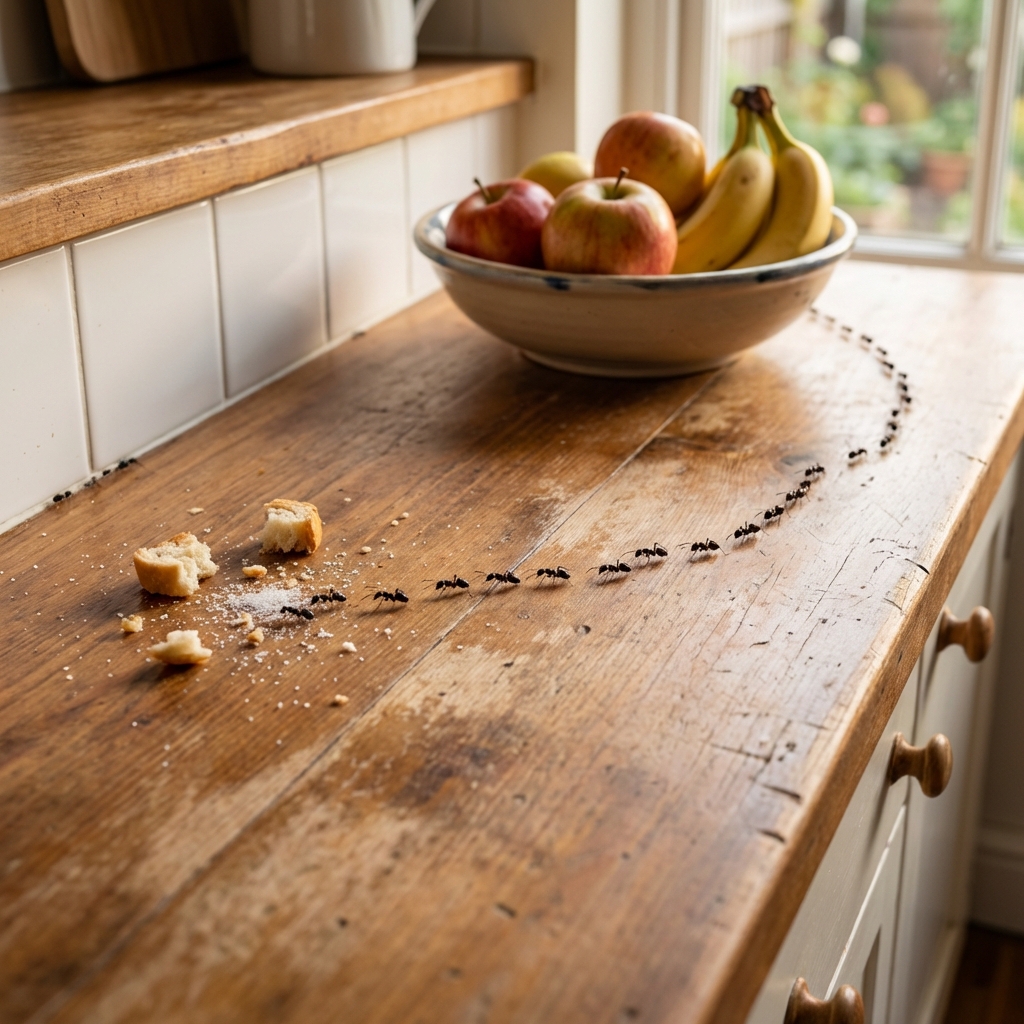
First, make sure they are sugar ants
“Sugar ants” is a catch-all name for several small ants that show up in kitchens. The exact species varies by region, but the game plan is similar. Also, even “sugar” ants may switch to protein or grease depending on what the colony needs.
- They follow a clear trail along a counter edge, grout line, or baseboard.
- They focus on food spots like fruit, syrup, honey, soda spills, crumbs, and sometimes pet food.
- They show up in waves, especially after rain, heat swings, or a pantry spill.
If you see large carpenter ants (bigger bodies, often in damp wood areas), the steps below still help, but you may also need to address moisture and damaged wood.
What not to do
- Do not rely on repellent sprays alone. Many sprays kill foragers but do not solve the nest. You often end up with a new trail tomorrow.
- Do not rely on water alone. Water can clean up visible ants, but it often does not remove the trail residue well. Use soap or vinegar to cut grime and disrupt the route.
- Do not place bait where pets and kids can reach it. Even lower-tox baits need smart placement.
Step 1: Set bait on the active trail
If you want the infestation to end, you need the foragers to carry food back to the colony. This is why baits beat sprays for sugar ants.
Key timing: Place bait while the trail is active, then do your deeper trail cleaning later. You want ants to use their current “map” long enough to find the bait and carry it home.
DIY borax bait
The most common eco-minded bait uses borax or boric acid in a sweet base.
Mix:
- 1/2 cup warm water
- 2 tablespoons sugar
- 1/2 teaspoon borax
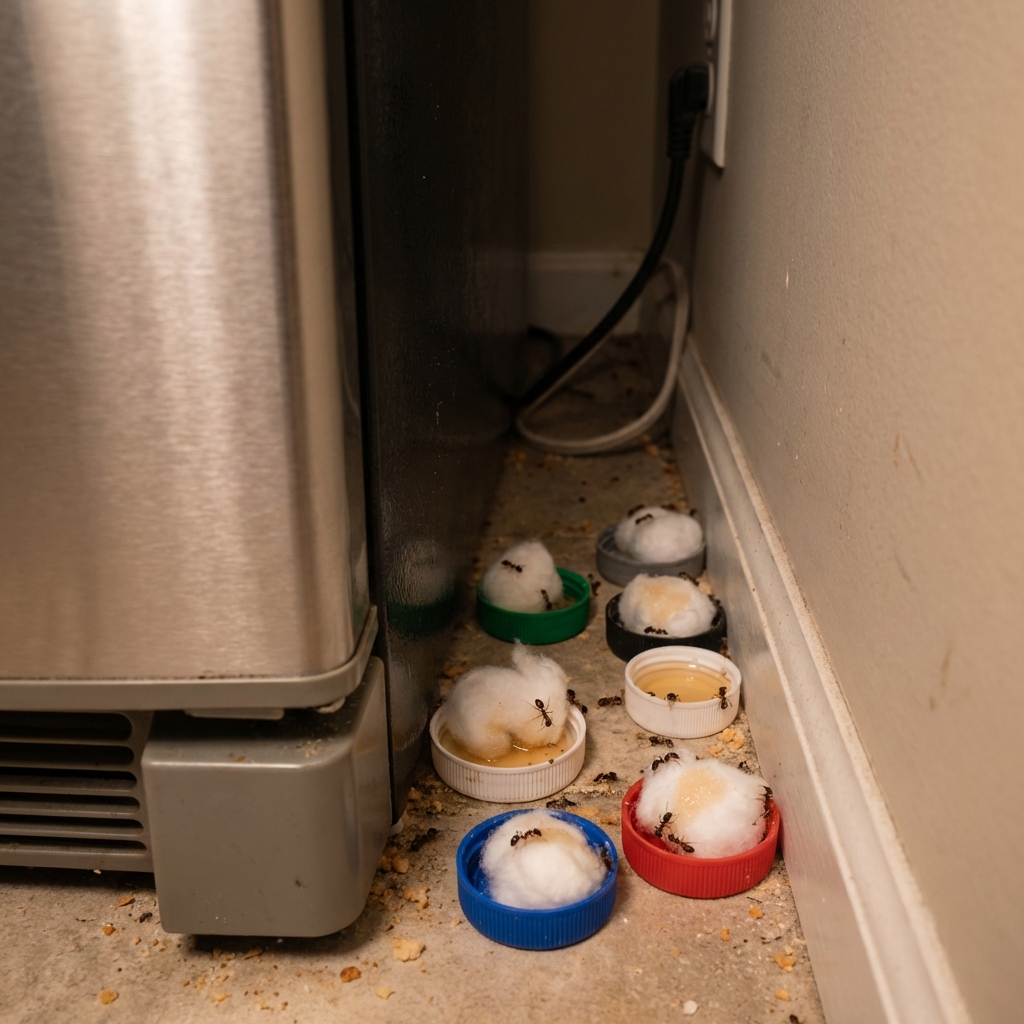
Stir until dissolved. Soak cotton balls or add the liquid to shallow bottle caps. Place along trails where ants travel, not in the middle of your prep space.
Note: Stronger is not always better. If the borax concentration is too high for your ants, it can kill too fast or cause them to avoid the bait, which reduces how much gets shared back at the nest.
Placement that works
- Put bait right beside the trail, within a few inches.
- Use multiple stations: near sink, dishwasher gap, pantry corner, pet bowl area.
- Leave it alone. Ant activity often increases for a day or two.
Safety notes
- Keep borax bait away from children and pets. Place stations behind appliances, inside a ventilated container with small entry holes, or in cabinets that stay closed.
- Keep bait contained and off food-contact surfaces. Do not put bait where it can drip into drawers, onto dishes, or near areas where you harvest edible herbs.
- Wash hands after handling borax and bait containers.
- If using commercial baits, follow label directions.
How long it takes: You may see results in 2 to 5 days, with tougher infestations taking up to 2 weeks. Refresh bait if it dries out or gets contaminated with crumbs or grease.
Step 2: Clean up competing food
This is the boring part, but it is the difference between “ants are gone” and “ants are back.” You are trying to make your home a bad foraging site so the bait becomes the best option.
Focus on these hotspots
- Under small appliances: toaster, coffee maker, air fryer
- Fruit and onions: rinse fruit, wipe the bowl area daily during outbreaks
- Pantry shelves: syrup drips, spilled sugar, cereal dust
- Pet feeding zone: crumbs and wet food residue
- Trash and recycling: rinse cans and bottles, wipe the lid rim
Quick win: Store sweets and baking goods in sealed containers for 2 weeks. Even if you are tidy, packaging seams leak scent.
Step 3: Break the ant highway
Ants navigate by scent. Once bait stations are down and ants are feeding, you can start erasing the trail so the steady stream slows down.
Best practice: If ants have not found your bait yet, skip heavy trail-cleaning for the first 12 to 24 hours. After they are feeding reliably, clean the trail and keep bait in place.
Simple trail-cleaning spray
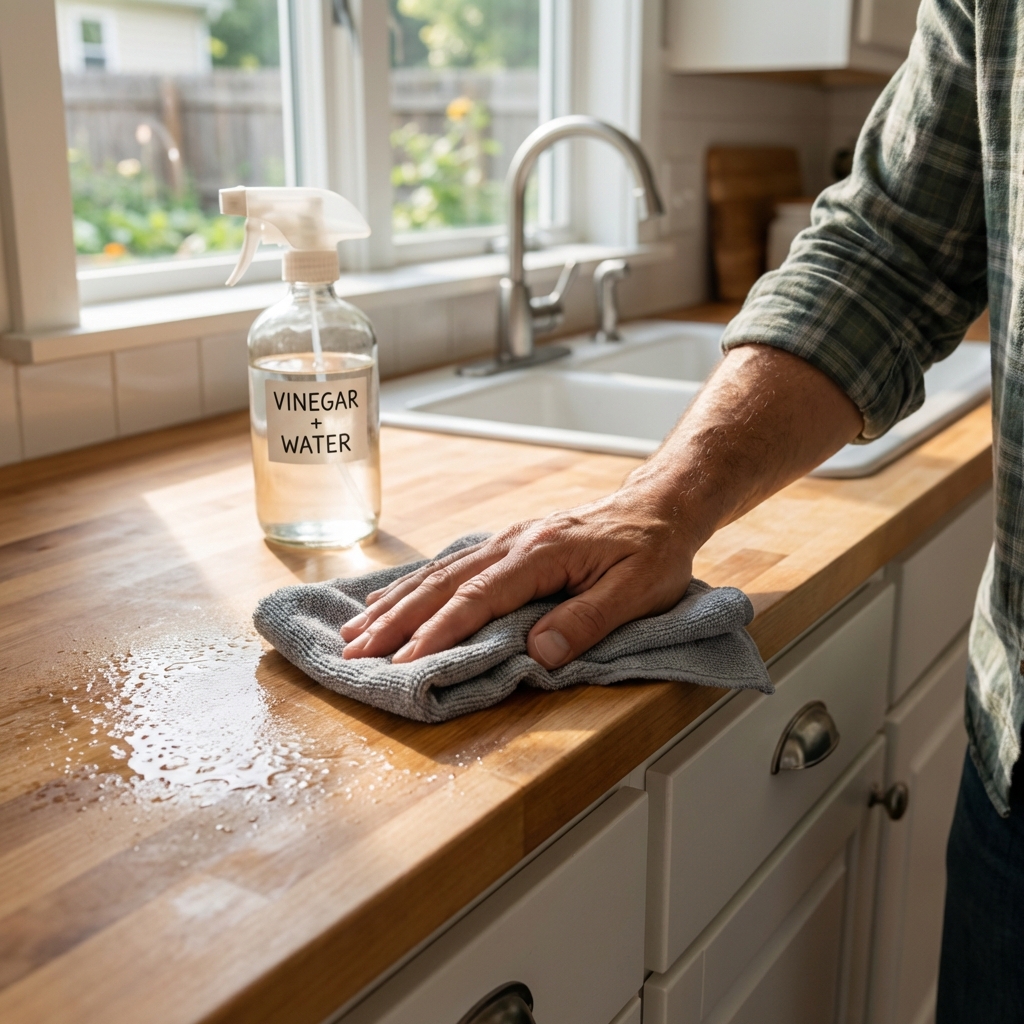
- Option A: 1:1 white vinegar and water in a spray bottle
- Option B: Unscented dish soap + warm water (a few drops per cup)
Spray the trail, let it sit for 1 minute, then wipe thoroughly. Follow up by cleaning the edges: counter seams, backsplash line, cabinet toe-kick, and any spot where you saw ants “turn the corner.”
Reality check: Vinegar and soap can disrupt trails for many ants, but no cleaner is guaranteed to erase every pheromone for every species. What matters is consistency, and keeping the bait as the most attractive option.
Step 4: Find entry points and seal
Once you have bait running and competing food cleaned up, start looking for entry points. You will usually find them at edges and plumbing gaps.
Common entry points
- Gaps around sink pipes under the cabinet
- Cracks where backsplash meets counter
- Baseboard gaps near exterior walls
- Window sill corners and door thresholds
- Where wires or gas lines enter the wall
Eco-friendly sealing options
- Silicone caulk for seams and cracks in kitchens and bathrooms
- Removable caulk for rental-friendly gaps
- Steel wool + caulk for larger voids (also helps with other pests)
Timing tip: Do not seal the main entry crack on day one if ants are actively feeding on bait there. Let them carry bait home for a few days first, then seal.
How to find the nest
You do not have to find the nest to win, but it helps with faster prevention.
- Follow trails at peak activity (often early morning or evening).
- Check outside the kitchen wall: foundation line, mulch, pavers, and gaps around pipes or vents.
- Inspect potted plants (indoors and out), especially if ants are clustering under rims or saucers.
- If the trail disappears into a wall void, keep bait stations at that entry point and focus on sealing once activity drops.
Plant-safe prevention tips
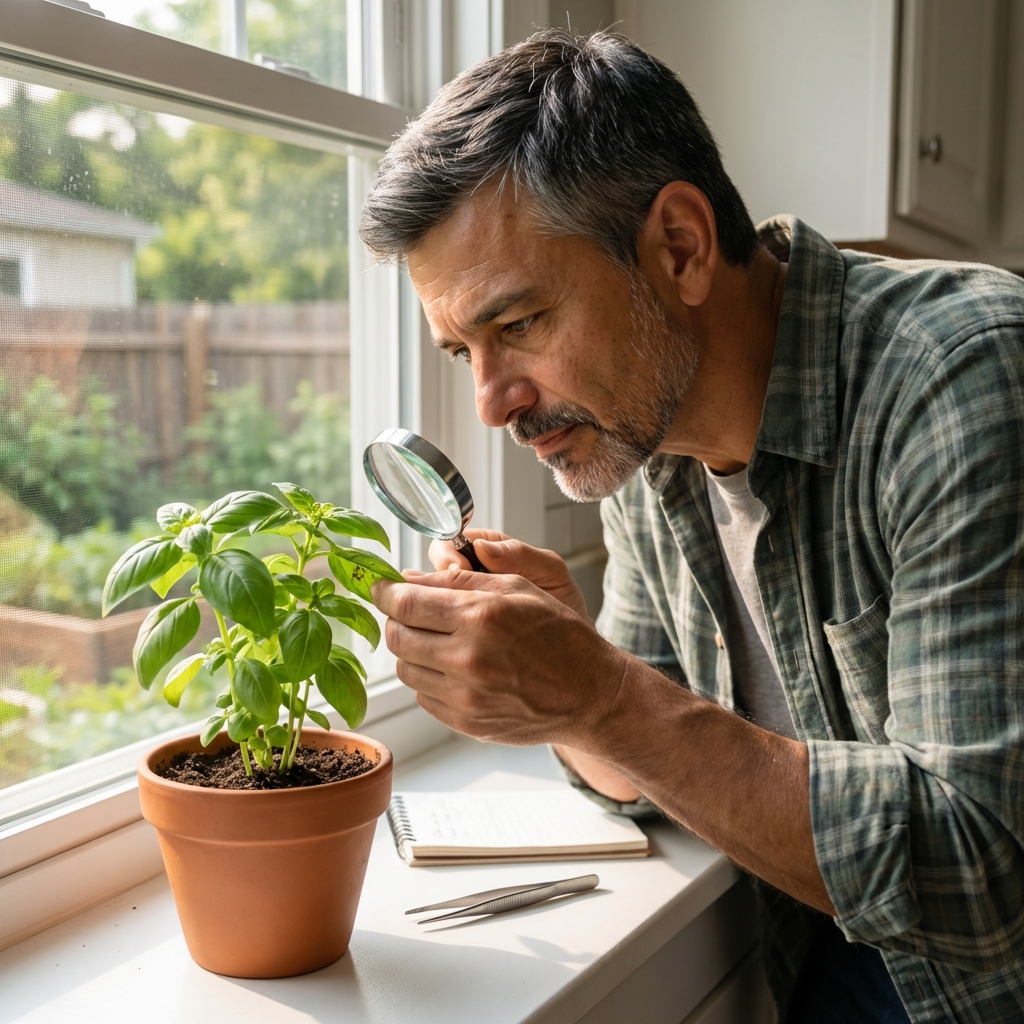
If you keep herbs on a windowsill or have houseplants in the kitchen, ants may be there for more than sugar. Sometimes they are farming aphids, scale, or mealybugs for honeydew. If ants keep showing up near plants, check leaves and stems closely.
What to do for plants near ant activity
- Inspect for sticky residue on leaves and the rim of the pot. That can be honeydew.
- Rinse pests off with a firm stream of water in the sink or shower.
- Use insecticidal soap on affected plants, following label directions. It is often a low-impact option for herbs, but always read the label for edible use and wait times.
- Bottom-water when possible to avoid constantly damp topsoil that can attract foragers in some homes.
Skip these near plants and prep areas
- Essential oils as a cure-all. They may disrupt trails short-term, but they rarely eliminate a colony and can irritate pets.
- Unsafe diatomaceous earth. Avoid pool-grade DE. If you use food-grade DE, apply a very light dusting only in dry cracks and voids where it will not become airborne near food or lungs.
Eco-friendly deterrents
Once the colony is under control, deterrents help reduce new trails. Think of these as “keep them from scouting” tools, not the main solution.
- Vinegar or soapy wipe-downs on counter edges and window sills during warm months
- Door sweep and weatherstripping to block common entry routes
- Fix drips under sinks and around fridge water lines, since ants need moisture
- Store fruit smart: refrigerate very ripe fruit during outbreaks
What if ants ignore the bait?
This is common. Ants switch food preferences depending on what the colony needs.
Troubleshooting
- Try a different sweet base: swap sugar for honey or a dab of jam mixed into the bait liquid.
- Offer a protein option: some ants want protein or grease. Use a commercial ant bait formulated for multiple food types, or place a tiny amount of peanut butter near (not mixed into) a separate bait station.
- Move the bait closer: place it right at the trail edge or near the entry crack.
- Pause strong trail-cleaning for 24 hours: let ants find the bait, then resume wiping once they are feeding reliably.
- Adjust the borax strength: if ants avoid the bait, reduce the borax slightly. If they swarm but you see no decline after a week, try a commercial bait with a different formula.
When to call for help
If you have ants coming from inside walls, multiple rooms, or you cannot find any entry points after two weeks of baiting and sealing, it may be time to bring in a pest professional. Ask for integrated pest management (IPM) focused service and lower-tox options, especially if you have pets, kids, or edible plants indoors.
Quick eco-friendly action plan
- Today: place bait beside the active trail, clean up spills and crumbs, rinse recycling
- Tonight: add more bait stations near sink, pantry, and any entry gaps you spot
- Next 3 to 7 days: refresh bait as needed, keep counters dry, store sweets sealed
- After activity drops: clean trails more thoroughly, caulk cracks, seal pipe gaps, add weatherstripping if needed
- Ongoing: check kitchen plants for sap-sucking pests and manage ripe fruit
If you want, tell me where you are seeing the strongest trail (sink, stove, pantry, window) and whether you have pets. I can suggest safer bait placement spots and the most likely entry points to check first.

Jose Brito
I’m Jose Britto, the writer behind The Country Store Farm Website. I share practical, down-to-earth gardening advice for home growers—whether you’re starting your first raised bed, troubleshooting pests, improving soil, or figuring out what to plant next. My focus is simple: clear tips you can actually use, realistic expectations, and methods that work in real backyards (not just in perfect conditions). If you like straightforward guidance and learning as you go, you’re in the right place.