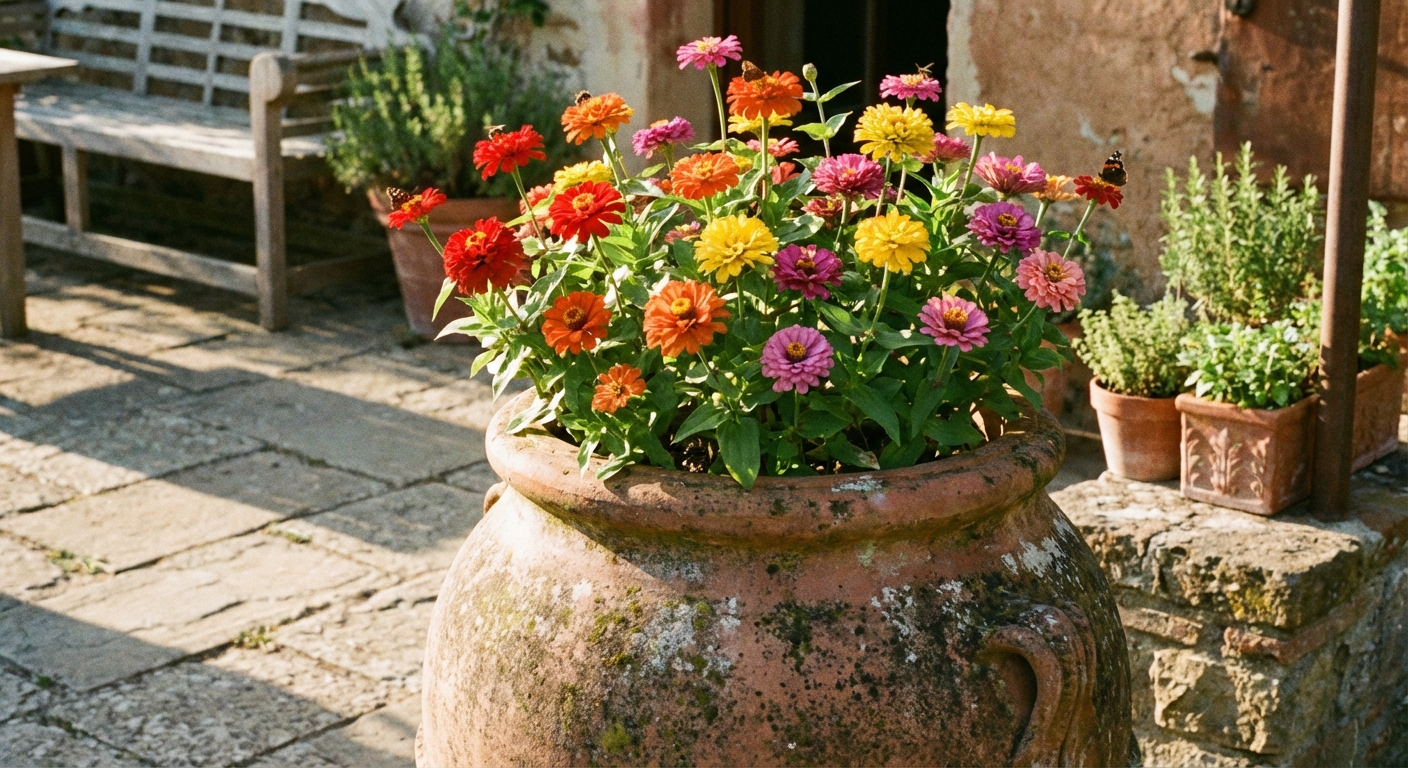
Zinnias are one of those flowers that reward you fast. Give them sun, decent drainage, and a little routine care, and they will keep blooming until frost. Growing in containers makes it easier to control soil quality and keep plants close to where you actually see them.
Below is my no-fuss, organic approach for zinnias in pots. It is built for real patios and porches, not perfect greenhouse conditions.
Pick the right zinnia for pots
Many zinnias can live in a container, but the variety you choose determines how easy the season will be. Tall, cut-flower types can be frustrating in pots unless you use a very large container and add support. Compact types stay tidy and bloom heavily with less fuss.
Best types for containers
- Compact or dwarf zinnias (often 10 to 18 inches tall) for small to medium pots.
- Medium zinnias (18 to 30 inches) for big patio pots where you want height.
- Mildew-resistant varieties when possible, especially in humid areas.
If you are growing from seed, look for mixes labeled compact, patio, dwarf, or profusion-style growth. If you want named options that usually perform well in containers, look for series like Profusion, Zahara, or Magellan (availability varies). If you already have a tall variety, plan for a larger pot and a simple stake.
Container size matters more than you think
Zinnias are not delicate, but they hate sitting in soggy soil. A container that is large enough and drains well is the easiest organic win you can give them, because it prevents a lot of problems before they start.
Quick pot sizing guide
- 1 plant: 8 to 10-inch pot (best for dwarf types)
- 3 plants: 12 to 14-inch pot (best for compact varieties). Roomier option: 14 to 16 inches for better airflow.
- 5 plants: 16 to 18-inch pot (works for compact varieties). Roomier option: 18 to 20 inches, especially in humid climates.
Non-negotiable: make sure there are drainage holes. If your decorative pot has no holes, use it as a cachepot and keep the zinnias in a nursery pot inside it. Empty any standing water after watering.
Next up is soil. The right mix keeps containers from swinging between soggy and bone-dry.
An easy organic potting mix that actually works
Zinnias bloom best when the soil drains well and still holds enough moisture to get through a hot afternoon. Straight compost can stay too wet in pots, and cheap potting soil can collapse and turn dense.
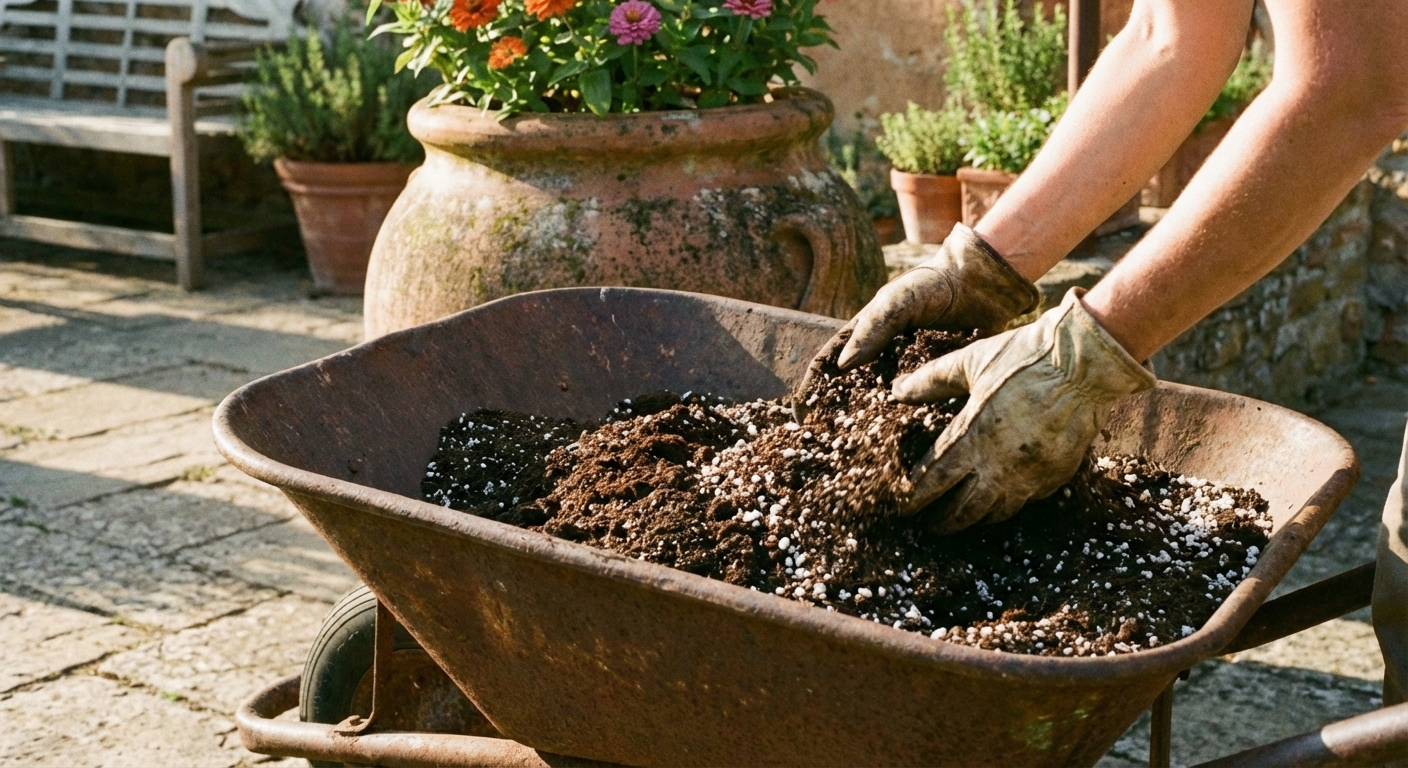
Simple organic mix (by volume)
- 2 parts quality potting mix (look for one with composted bark or coir)
- 1 part finished compost (for biology and steady nutrition)
- 1 part perlite or pumice (for air and drainage)
If you have it, mix in a small handful of worm castings per gallon of soil. Not required, but it gives seedlings a gentle start.
Planting: seeds are easiest, starts are faster
Zinnias can be transplanted, but they do best with minimal root disturbance. Direct sowing into the final container is the simplest method. Starts from a nursery work too, just handle the root ball gently.
Direct sowing in the pot
- Wait until after your last frost and nights are reliably warm. Zinnias stall in cold soil.
- Sow seeds about 1/4 inch deep.
- Keep soil lightly moist until germination, usually 5 to 10 days depending on temperature.
- Thin seedlings so plants have airflow. Crowding is a common reason for mildew.
Planting nursery starts
- Water the start first so the root ball slides out cleanly.
- Plant at the same depth it was in the nursery pot.
- Water in well, then let the top inch dry slightly before watering again.
Sun and spacing: the effortless secret
If you want steady blooms and fewer disease issues, give zinnias as much sun and airflow as you can.
- Sun: aim for 6 to 8 hours or more of direct sun.
- Airflow: do not press pots against a wall with no breeze if you can avoid it.
- Spacing: in a mixed planting, keep zinnias from being swallowed by trailing plants.
In very hot climates, a little afternoon shade can help containers stay evenly moist, but too much shade leads to legginess and fewer flowers.
Watering without babying them
Container zinnias fail in two common ways: the soil stays wet too long, or it swings from bone-dry to flooded. A simple routine fixes both.
The reliable watering check
- Stick a finger 1 to 2 inches into the soil.
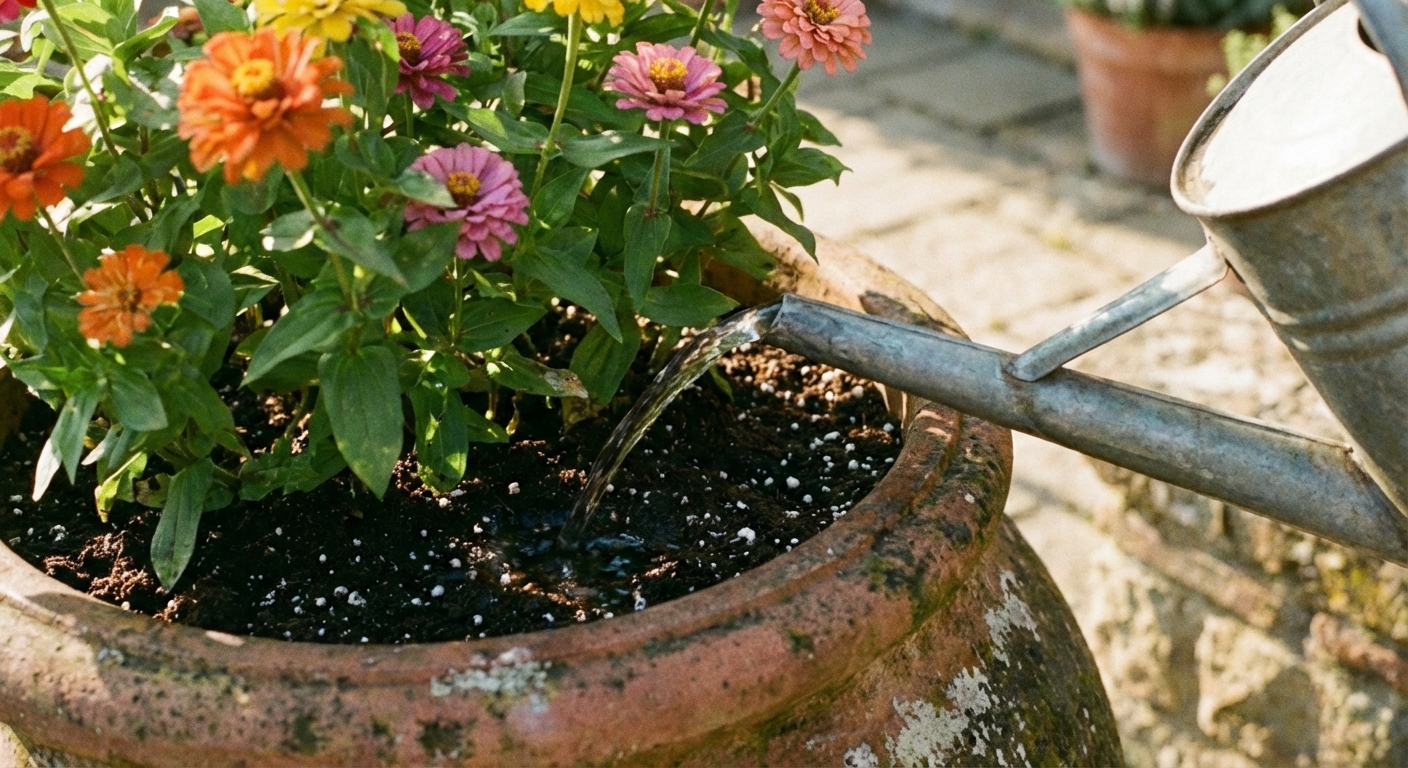
- If it feels dry at that depth, water thoroughly until water drains out the bottom.
- If it still feels cool and damp, wait.
Organic disease tip: water the soil, not the leaves. This helps reduce conditions that favor disease and also avoids splashing soil onto foliage (which can trigger other leaf spot issues).
Organic feeding for nonstop blooms
Zinnias are not heavy feeders, but pots run out of nutrients faster than garden beds. Light, steady feeding keeps blooms coming without pushing weak, floppy growth.
Easy organic schedule
- At planting: mix in a small amount of balanced organic granular fertilizer (follow label rate).
- After the first big flush of blooms: top-dress with compost or worm castings.
- Every 3 to 4 weeks (optional): a diluted liquid feed like fish emulsion or seaweed, especially if leaves look pale.
If your plants have lots of leaves but few flowers, ease up on nitrogen-heavy feeds and make sure they are getting enough sun.
Deadheading and pruning that takes 2 minutes
If you do only one maintenance task, make it this. Deadheading tells the plant to keep producing flowers instead of going to seed.
How to deadhead zinnias
- Cut the flower stem back to a set of healthy leaves or a branching point.
- Take a little stem, not just the spent petals.
- Do it once or twice a week when you are already outside watering.
Bonus: cutting zinnias for bouquets is basically aggressive deadheading. It also encourages branching, which means more blooms.
Organic pest control that does not overcomplicate things
Zinnias are usually easy, but a few common pests show up in containers. The trick is catching them early and using the mildest fix that works.
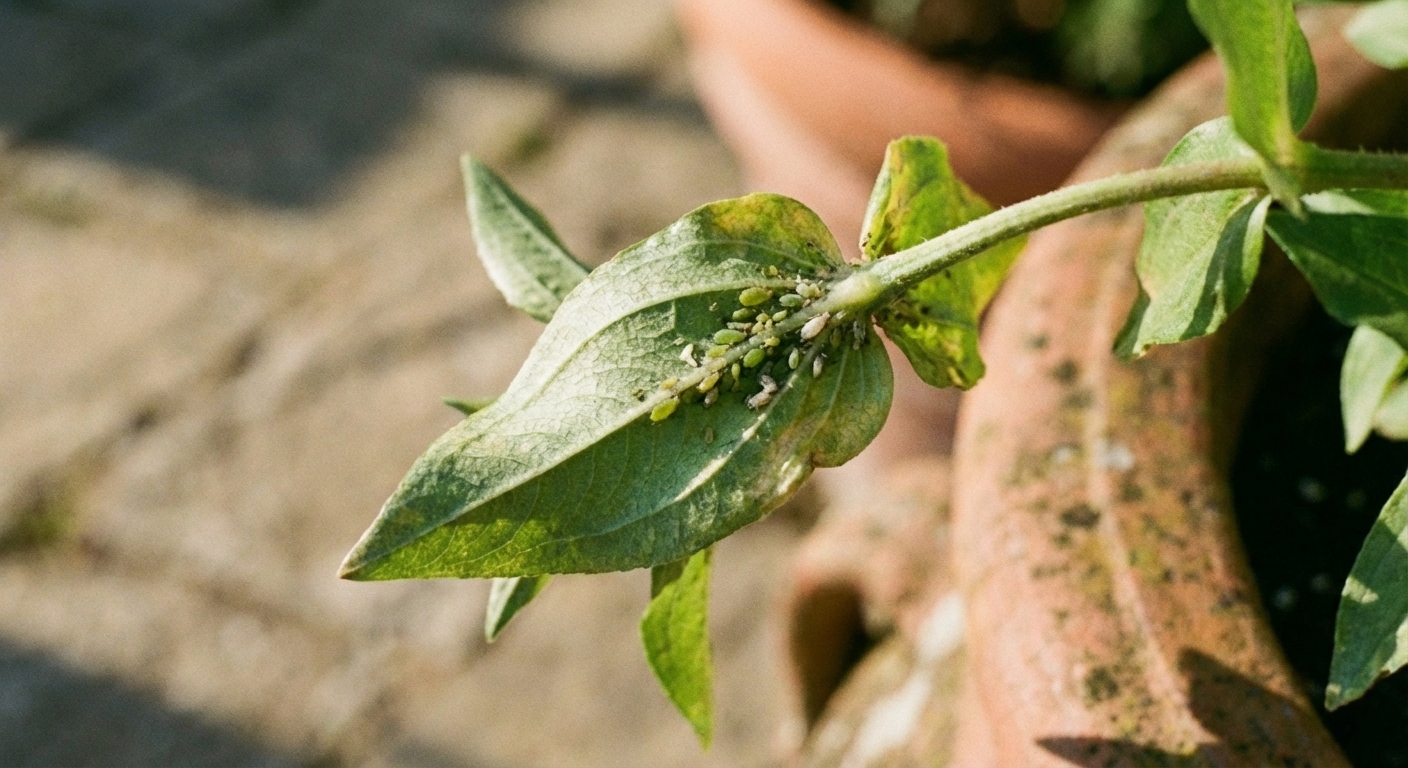
Aphids
- First step: blast them off with a strong spray of water.
- If they return: insecticidal soap in the evening, covering both sides of leaves.
- Prevention: do not overfeed with nitrogen.
Spider mites (hot, dry weather)
- Look for fine webbing and stippled, dusty-looking leaves.
- Rinse the plant well, especially leaf undersides, every few days.
- If needed, use insecticidal soap or horticultural oil, following label directions and avoiding midday heat.
Thrips
- Flowers may look distorted or faded.
- Remove the worst blooms and dispose of them.
- Sticky traps can help monitor, and spinosad can be effective if the problem is persistent and severe.
Powdery mildew: the common zinnia headache
If zinnias struggle in containers, powdery mildew is often the reason. You will see a white, dusty coating on leaves, usually starting low on the plant. It is common in humid weather and when airflow is poor.
What works best organically
- Increase airflow: thin crowded plants and space pots apart.
- Water at soil level: keep foliage drier to reduce stress and avoid other leaf problems.
- Morning sun: helps dry dew faster.
- Remove badly infected leaves: do not compost them if mildew is heavy.
- Preventive sprays (if needed): sulfur products or potassium bicarbonate can help when used early and consistently, following the label.
Home recipes get shared a lot online, but they are inconsistent and can burn leaves. If you spray, stick with a product labeled for powdery mildew and use it as directed.
Heat, storms, and other container realities
When pots dry out too fast
- Move pots where they get morning sun and a little afternoon shade.
- Mulch the soil surface with a thin layer of compost or shredded leaves.
- Use a larger container next time. Bigger soil volume is more stable.
When plants get tall and floppy
- They likely need more sun or less nitrogen.
- Pinch young plants once at 6 to 8 inches tall to encourage branching.
- Use a simple bamboo stake for tall varieties in windy spots.
End-of-season and saving seed
Zinnias will bloom until frost. As the season winds down, you can either keep deadheading for flowers or let a few blooms mature for seed.
- To save seed, let a flower dry on the plant until it turns brown and papery.
- Harvest on a dry day and store seeds in a labeled paper envelope.
- What to expect: open-pollinated varieties tend to come truer than hybrids. Also, zinnias can cross-pollinate with nearby zinnias, so saved seed may not look exactly like the parent plant.
Quick troubleshooting
- Yellow leaves, slow growth: pot may be staying too wet or nutrients are low. Check drainage, then top-dress with compost.
- Big plant, few blooms: not enough sun or too much nitrogen. Move to more sun and switch to a bloom-friendly feed.
- Leaves look dusty with white coating: powdery mildew. Improve airflow and consider a labeled organic mildew control early.
- Chewed leaves: check at dusk for caterpillars or earwigs. Hand-pick first, then use BT for caterpillars if needed.
Cleanup and reset
A little end-of-season sanitation makes next year easier.
- Remove spent plants and fallen leaves, especially if you dealt with mildew.
- Dump old potting mix if disease was severe, or refresh it with compost and extra perlite if plants were healthy.
- Wash pots and snips with hot, soapy water. Let everything dry before storing.
The simplest setup for success
If you want the shortest path to great zinnias in pots, do this: choose a compact variety, use a 12 to 14-inch pot with drainage, fill it with a light organic mix, place it in full sun, water when the top 1 to 2 inches are dry, and deadhead weekly. That combo solves most problems before they start.
Bonus: zinnias are great pollinator plants, so keeping a pot or two blooming near your sitting area is never a bad idea.

Jose Brito
I’m Jose Britto, the writer behind The Country Store Farm Website. I share practical, down-to-earth gardening advice for home growers—whether you’re starting your first raised bed, troubleshooting pests, improving soil, or figuring out what to plant next. My focus is simple: clear tips you can actually use, realistic expectations, and methods that work in real backyards (not just in perfect conditions). If you like straightforward guidance and learning as you go, you’re in the right place.