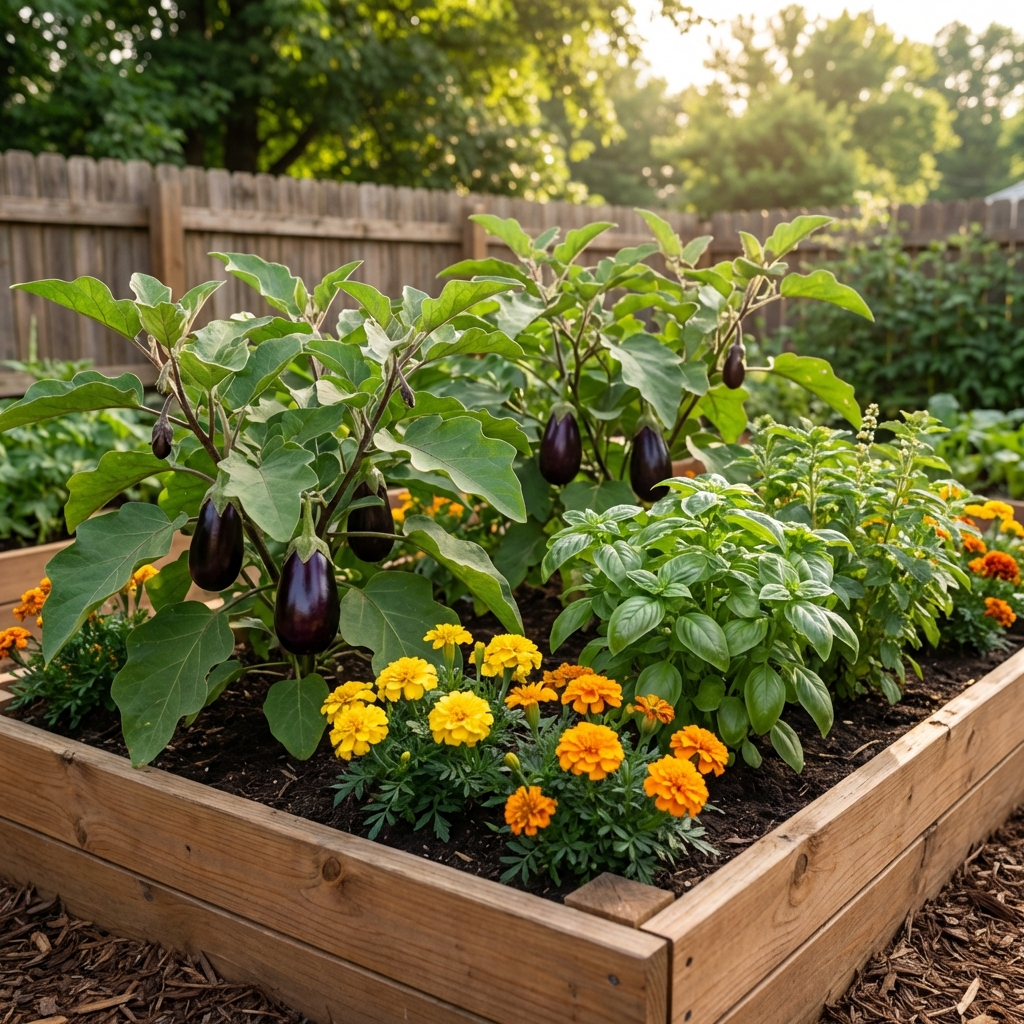
Eggplant is one of those crops that can be ridiculously productive when it is happy, and stubborn when it is not. Companion planting will not fix every issue, but it can stack the odds in your favor by attracting beneficial insects, making it harder for pests to find their host plants, shading the soil, and using space better. The goal here is simple: choose neighbors that make eggplants easier to grow in a normal backyard garden.
What eggplant needs from its neighbors
Before picking companions, it helps to know what stresses eggplant most. When you match companions to the plant’s real needs, the results are more consistent.
- Warm soil and steady moisture: Eggplants sulk in cold soil and struggle during droughty swings. Living mulch and low-growing companions can help hold moisture.
- Fewer chewing and sap-sucking pests: Flea beetles, aphids, spider mites, hornworms, and Colorado potato beetles can all show up depending on your region.
- Pollinator traffic: Eggplant flowers are self-fertile, but good pollinator visits can improve fruit set. Poor fruit shape is often from stress (heat swings, uneven watering) and can also happen when flowers are not fully pollinated.
- Room and airflow: Crowding increases humidity and disease pressure. Good companions support the plant without boxing it in.
One practical note that makes companions work better: eggplant loves heat. Wait to transplant until nights are reliably warm and the soil has warmed up, and plan to stake or cage plants so air can move through the bed.
Best companion plants for eggplant
These are reliable choices for most home gardens. Mix and match based on what you actually like to grow and eat.
Basil
Basil is one of the easiest wins next to eggplant. It stays relatively compact, smells strong, and brings in pollinators when it flowers. It may also help disrupt pest host-finding in a mixed planting. Plant basil on the sunny side of eggplant, leaving enough space so air can move.
- Why it helps: attracts beneficial insects and may make it harder for some pests to zero in on eggplant.
- How to plant it: 1 basil plant every 12 to 18 inches along the eggplant row, or one basil near each eggplant if you have the space.
Marigolds
Marigolds are a classic companion for a reason. They pull in beneficial insects and add bright color in the bed. You will also see marigolds mentioned for nematodes, but that benefit is cultivar and method dependent, and it is most effective when specific marigolds are grown densely as a cover crop and then incorporated, not just from a few border plants.
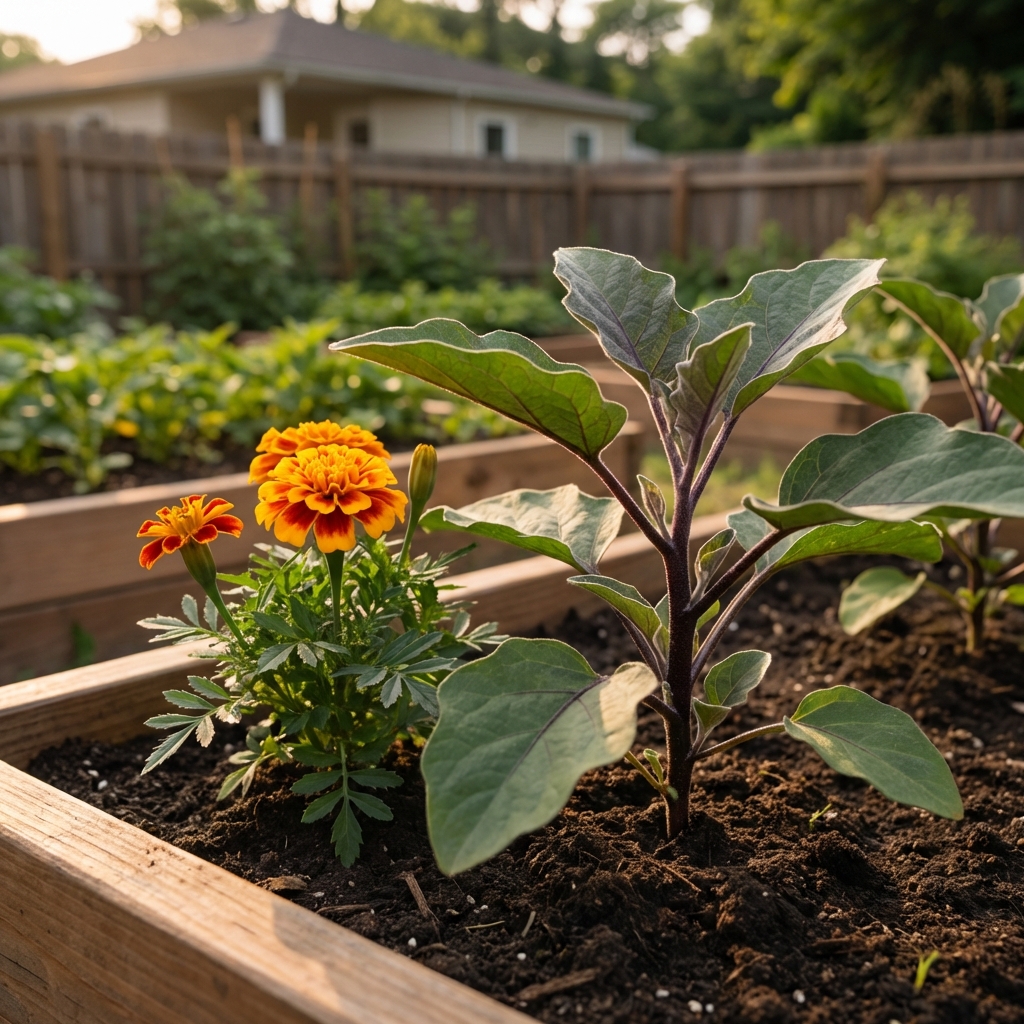
- Best types: French marigolds (Tagetes patula) are the usual recommendation in vegetable beds.
- Placement: tuck them at bed corners or every few plants, not packed tightly around stems.
Nasturtiums
Nasturtiums often act like a distraction plant, especially for aphids and some beetles, but it is not guaranteed. Think of them as a tool you still monitor, not a force field. They also cover soil nicely, which helps keep the root zone evenly moist during hot stretches.
- Why it helps: ground cover plus potential trap-crop behavior in some gardens.
- Watch-out: keep it trimmed so it does not climb and shade young eggplants.
Alliums: garlic, onions, chives
Alliums earn their keep in almost any vegetable bed. Their strong scent is often used as part of an IPM approach and may help with pest pressure in mixed plantings, depending on the pest and the garden. Chives are especially handy because they flower early and bring in beneficial insects.
- Why it helps: pollinator support, and scent that may help reduce pest success in a diverse bed.
- How to use them: plant as a border or tuck between eggplants if spacing allows.
Legumes: bush beans and peas (with timing)
Beans can be helpful companions because they do not compete heavily for the same space and can support overall soil health. Stick with bush beans near eggplants. Pole beans can shade and tangle.
- Why it helps: efficient use of space and a good fit in mixed summer beds.
- Timing tip: peas are cool-season, eggplants are warm-season. Use peas early, then replace with eggplant after peas finish.
Low growers: lettuce, spinach, and radishes (early season)
Eggplants take time to size up. While they are small, you can grow quick crops in the gaps. This is companion planting that actually pays off in food, not just theory.
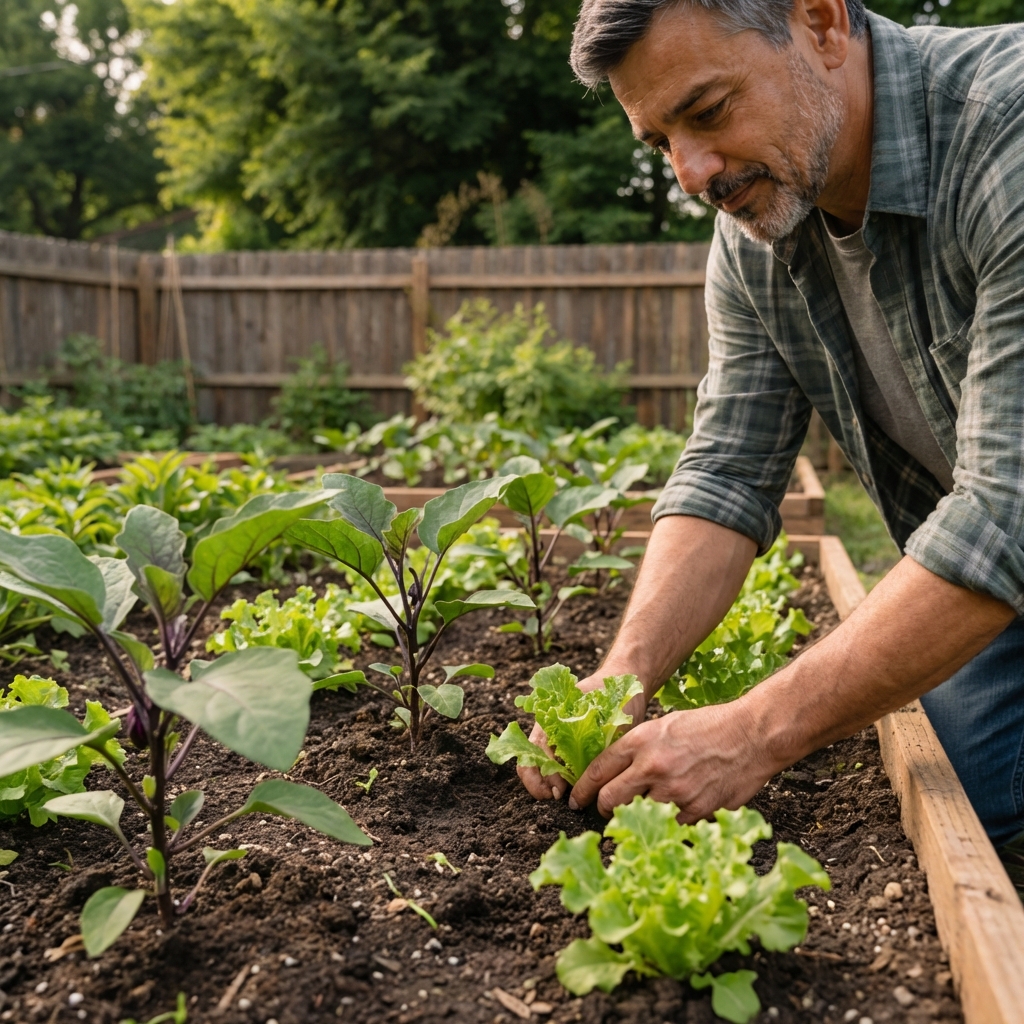
- Why it helps: living mulch effect, fewer weeds, better use of bed space.
- Best approach: harvest greens before eggplants need the room.
Flowers that bring helpers: borage, calendula, sweet alyssum
If you have room for a few flowers, these are practical picks. They attract hoverflies, parasitic wasps, and native bees. That can mean fewer aphids and better pollination across the bed.
- Best for small spaces: sweet alyssum as a border.
- Best for pollinators: borage if you have the space.
Plants to avoid near eggplant
Avoiding the wrong neighbors is just as important as picking the right ones. Most problems come down to shared pests, disease risk, or aggressive competition.
Other nightshades: tomatoes, peppers, potatoes
Eggplant is in the nightshade family, so it shares many of the same pests and diseases. Plenty of gardeners grow these together successfully, especially in larger gardens, but clustering them can make outbreaks faster when you have recurring pest pressure or a history of solanaceous diseases.
- Main concern: Colorado potato beetle, flea beetles, and soilborne disease buildup in repeatedly planted beds.
- Simple rule: if you have had repeated problems, spread nightshades out and prioritize rotation (do not plant eggplant or its relatives in the same spot year after year).
Fennel
Fennel is famous for not playing nicely with many vegetables. It can slow growth and reduce vigor in nearby plants.
Big, thirsty, shading plants too close
Corn, sunflowers, and sprawling squash are not automatically “bad,” but they can shade eggplant and steal moisture if planted tightly. Eggplant wants heat and sun on the leaves for strong growth.
Simple layout ideas that work
You do not need a complicated companion planting map. Pick one pest helper, one pollinator helper, and one space saver, then keep airflow in mind.
Option 1: The easy raised bed
- Eggplants in the center, spaced 18 to 24 inches apart (closer for compact varieties, wider for large types).
- Basil planted between every other eggplant.
- Marigolds or alyssum as a bed border.
Option 2: Pest pressure plan
- Eggplant row.
- Chives or green onions along the row edge.
- Nasturtiums at the ends and corners as a ground cover and possible distraction plant.
Option 3: Maximum use of space (early season)
- Transplant eggplant after nights warm up.
- Direct sow radishes and lettuce between young eggplants.
- Harvest greens and radishes before eggplants branch out.
Option 4: A simple 4x8 bed example
- Plant 4 eggplants in two rows (2 plants per row), spacing each plant 24 inches apart.
- Add 4 to 6 basil plants nearby (one near each eggplant plus a couple extras in gaps).
- Edge the bed with sweet alyssum, and tuck 2 to 4 marigolds in the corners.
Companion planting for common eggplant pests
Companions help most when you combine them with simple habits like checking leaves weekly, keeping plants unstressed, and using physical barriers when needed.
Flea beetles
- Helpful companions: basil, marigolds, nasturtiums.
- Simple solution: use lightweight row cover for the first 2 to 3 weeks after transplanting, then remove when plants start flowering. Seal the edges well so beetles cannot sneak in.
Aphids
- Helpful companions: sweet alyssum, calendula, dill (if you grow it), chives.
- Simple solution: spray a strong stream of water on the undersides of leaves, then recheck in 2 days.
Spider mites (hot, dry weather)
- Helpful companions: low ground covers that shade soil like nasturtium.
- Simple solution: keep soil evenly moist and rinse dusty leaves. Dry stress makes mite problems worse.
Colorado potato beetles
- Helpful companions: flowers that bring parasitic wasps and predatory insects like alyssum and borage.
- Simple solution: hand-pick adults and orange egg clusters early. Drop into soapy water.
Disease and rotation basics
Companion planting helps most with pests and pollinators. Disease control is usually about prevention: clean starts, airflow, and rotation. Eggplant can be affected by soilborne problems like verticillium wilt, so it matters where you plant it each year.
- Rotate when you can: avoid planting eggplant (and other nightshades) in the same bed repeatedly.
- Start clean: buy healthy transplants or use clean seed-starting mix and pots.
- Airflow helps: stake or cage plants, prune only as needed, and avoid crowding companions right against stems.
Soil and feeding: the companion planting you cannot skip
If eggplants are struggling, it is often a soil issue first and a companion issue second. Strong plants handle pests better and set fruit more reliably.
- Mulch matters: straw, shredded leaves, or untreated grass clippings help keep moisture steady.
- Fertility: mix compost into the planting area, then side-dress with compost again when the first flowers appear.
- Calcium and consistency: uneven watering can lead to blossom-end rot. Deep, regular watering beats frequent light splashes.
What companion planting cannot do
Companions are helpers, not replacements for the basics. If pests are heavy or disease pressure is high, you will still get the best results from rotation, sanitation, and tools like row cover or insect netting.
Quick companion planting checklist
- Pick 1 to 2 companions you will actually maintain (basil and marigolds is plenty).
- Keep eggplants 18 to 24 inches apart for airflow (wider for vigorous varieties).
- Add a border flower like alyssum to bring in beneficial insects.
- Avoid clustering eggplant with tomatoes, peppers, and potatoes if pests or disease are a recurring problem. Otherwise, focus on rotation and scouting.
- Use quick crops (lettuce, radish) early, then harvest them before crowding starts.
If you want one simple setup that works in most backyards: plant eggplant with basil nearby, add a few marigolds or alyssum for beneficial insects, and keep the soil evenly moist with mulch. That combination solves more real-world problems than most complicated companion charts.

Jose Brito
I’m Jose Britto, the writer behind The Country Store Farm Website. I share practical, down-to-earth gardening advice for home growers—whether you’re starting your first raised bed, troubleshooting pests, improving soil, or figuring out what to plant next. My focus is simple: clear tips you can actually use, realistic expectations, and methods that work in real backyards (not just in perfect conditions). If you like straightforward guidance and learning as you go, you’re in the right place.