Wrapped English cucumbers (sometimes labeled hothouse, seedless, or European cucumbers) are one of those grocery store upgrades that actually matter at home. If you have ever bought a cucumber that looked great in the bin and turned soft two days later, you know the frustration. These long, plastic-wrapped cucumbers are sold as longer-lasting, and when you store them the right way, they really can hold their crunch.
This page breaks down what English cucumbers are, how to pick the best ones, the storage routine that works in real kitchens, and simple solutions when things go wrong.
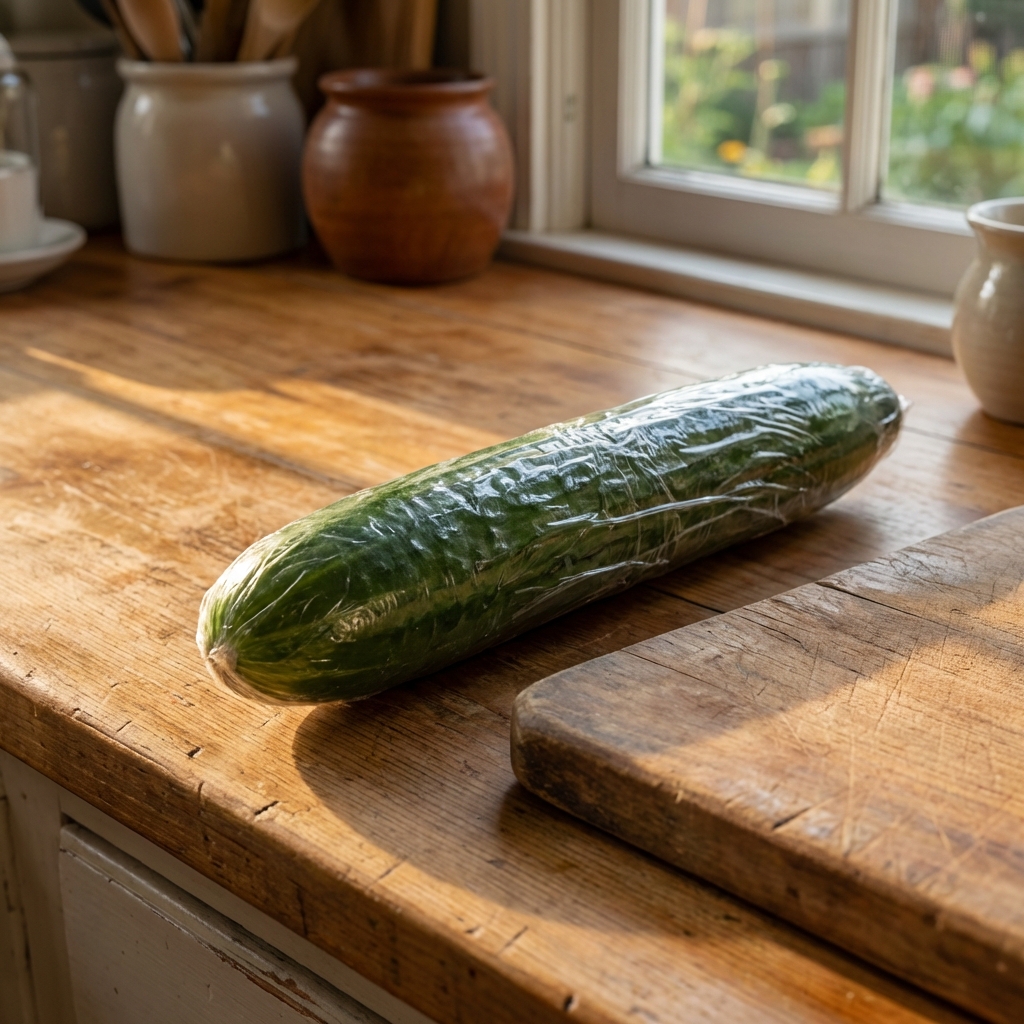
What English cucumbers are
Most of the long, slender cucumbers you see at supermarkets are English cucumbers. They are usually individually wrapped in plastic. That wrap is not just for looks. It helps slow moisture loss and reduces surface damage, which is a big reason they stay firm longer than unwrapped cucumbers.
Why they last longer than regular cucumbers
- Less dehydration: Cucumbers are mostly water. Once they start losing moisture, they get rubbery fast.
- Less bruising: Wrap provides a little protection from bumps during shipping and in your fridge drawer.
- Cleaner surface: A protected skin tends to pick up fewer microbes from handling and produce bins.
Realistic expectation: English cucumbers still will not last forever. You are usually looking at 7 to 14 days of decent quality, depending on how fresh they were when you bought them and how your fridge runs.
How to choose the best ones
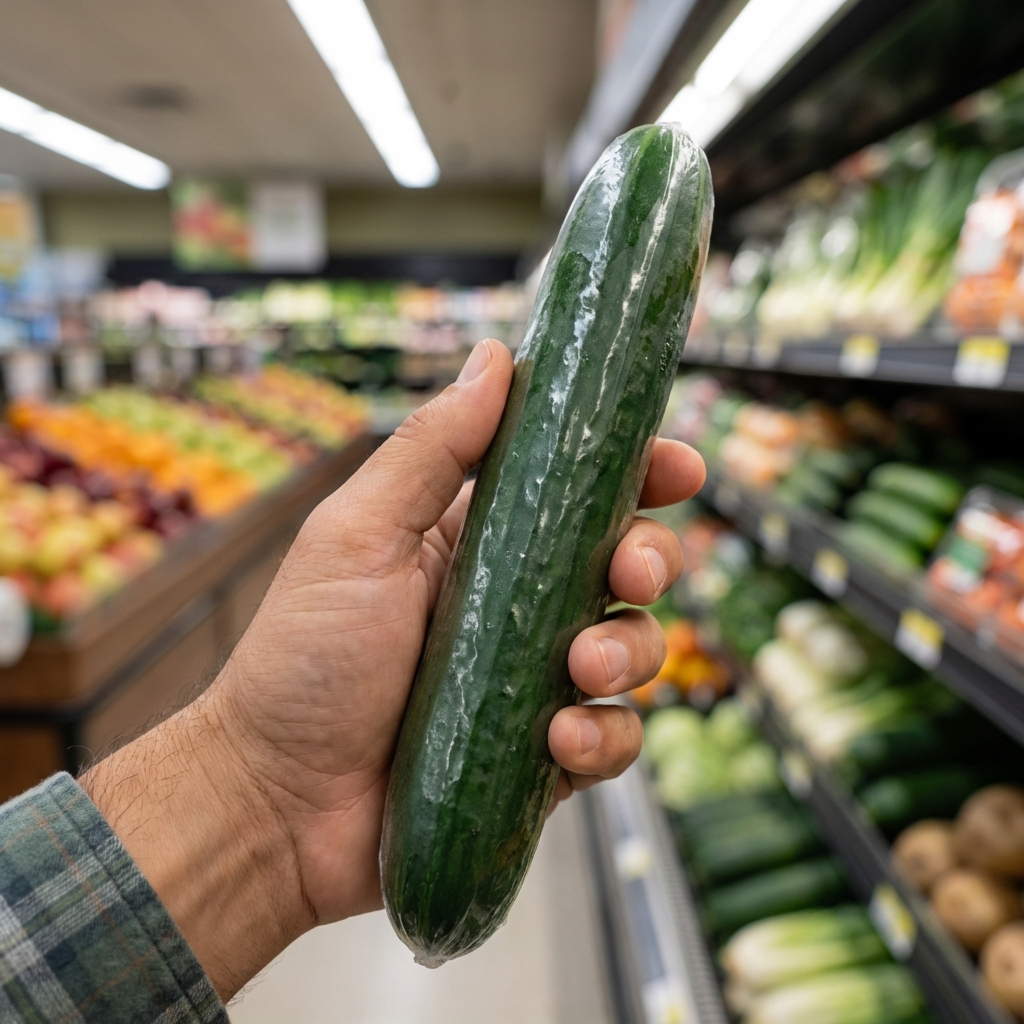
Storage starts with choosing a cucumber that is already in good shape. Even the wrapped ones will fail quickly if they are stressed or bruised.
Quick checklist
- Firm from end to end: Avoid any bendy spots, especially near the tips.
- Even color: Deep green is good. Yellowing usually means age.
- Minimal soft dents: A dent often turns into a watery breakdown spot.
- Wrap intact: If it is wrapped, pick one without a torn or loose wrap.
Best way to store them
If you do one thing, do this: keep them cold, keep them dry, and keep them away from ethylene (ripening gas from certain fruits).
Fridge setup that works
- Temperature: Cucumbers keep best around 40 to 45°F (4 to 7°C). Many home fridges are colder (often 35 to 38°F), which is great for food safety but can be rough on cucumbers over time.
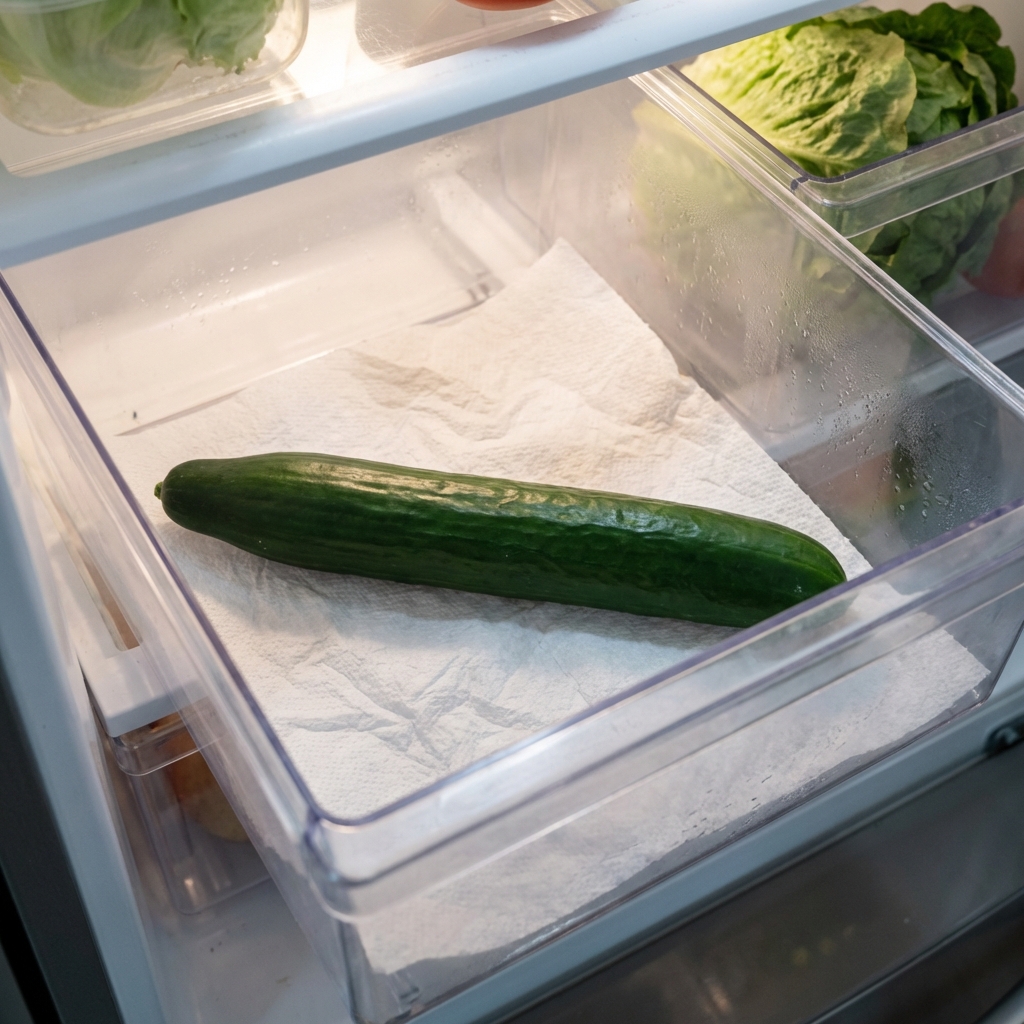
- Warmest spot: To reduce chilling damage, store cucumbers in the warmest part of your fridge, often the door or the very front of a middle shelf. If your crisper runs a little warmer and steadier, it can also work well. Avoid the back wall where items can partially freeze.
- Moisture control: Cucumbers hate sitting in condensation. If you see moisture inside the wrap, dry it off.
Should you keep the plastic wrap on?
Usually, yes. The factory wrap helps reduce moisture loss. But if you open the wrap or it is torn, you can still store it well.
- If wrapped and intact: Leave it on and keep it dry.
- If unwrapped or opened: Wrap it loosely in a dry paper towel, then place in a partially open produce bag or container.
Keep away from these (ethylene producers)
Ethylene speeds up yellowing and softening.
- Apples
- Bananas
- Avocados
- Tomatoes
- Melons
In a typical fridge, that means: do not store cucumbers right next to the fruit drawer if you can help it.
Common problems and easy fixes
Even with good storage, you might run into bitterness, slime, soft spots, or watery texture. Here is how to troubleshoot quickly.
Problem: Bitter cucumber
Why it happens: Bitterness usually comes from natural compounds called cucurbitacins. Stress during growing (heat, inconsistent watering) can increase bitterness. Sometimes the bitter taste is concentrated near the stem end.
Solutions:
- Peel and taste again: The skin can hold more bitterness.
- Trim the stem end: Cut off 1 to 2 inches from the stem end and re-taste.
- Salt and rest (for flavor and less watery salads): Slice, salt lightly, and let sit 15 to 30 minutes. Rinse and pat dry. This helps pull out excess water so your salad does not get diluted, and it can mellow harsh flavor.
Note: If a cucumber tastes extremely bitter and unpleasant, do not force it into a recipe. Discard it.
Problem: Slimy surface
Why it happens: Too much moisture and time. Once bacteria get going, the surface can turn slick.
Solutions:
- If only slightly slippery and no off smell: Wash under cool water, gently scrub, then dry thoroughly and use the same day.
- If slimy with a sour smell or mushy spots: Toss it. It is not worth it.
Problem: Soft or rubbery cucumber
Why it happens: Dehydration, chilling injury, or just age.
Solutions:
- Ice water crisping (best for limp cucumbers): Trim the ends and soak the whole cucumber or thick slices in ice water for 20 to 30 minutes. Dry well before using. This can bring back some snap if it is not too far gone.
- Use for quick pickles: Soft cucumbers can still be decent in a vinegar brine if they are not rotten.
- Turn into tzatziki: Grate, salt, squeeze out water, and mix with yogurt, garlic, and herbs. Texture matters less.
- Check your fridge placement: If cucumbers are stored against the back wall or in a cold spot, they can get cold-damaged and go limp faster.
Problem: Watery slices and no crunch
Why it happens: Over-mature cucumbers, temperature swings, or prolonged storage.
Solutions:
- Salt and drain (for watery texture): Slice, salt, rest 20 minutes, then drain and dry. Great for cucumber salads when you want less liquid.
- Ice water soak (for extra crispness): After slicing, soak in ice water for 10 to 15 minutes, then drain and dry. This helps the texture feel snappier.
- Seed and scoop: If the center is especially wet, cut lengthwise and scoop the seedy middle before slicing.
How long do they last?
Here is the honest range most home kitchens see.
- Whole, wrapped, properly refrigerated: about 7 to 14 days
- Whole, unwrapped: about 4 to 7 days
- Cut or sliced: about 1 to 3 days in an airtight container
Signs it is time to toss it
- Strong sour or fermented smell
- Widespread slime
- Mushy collapse anywhere along the cucumber
- Visible mold
Best ways to use them
If you bought a few and want to stay ahead of waste, these are reliable, low-effort options.
Fast uses
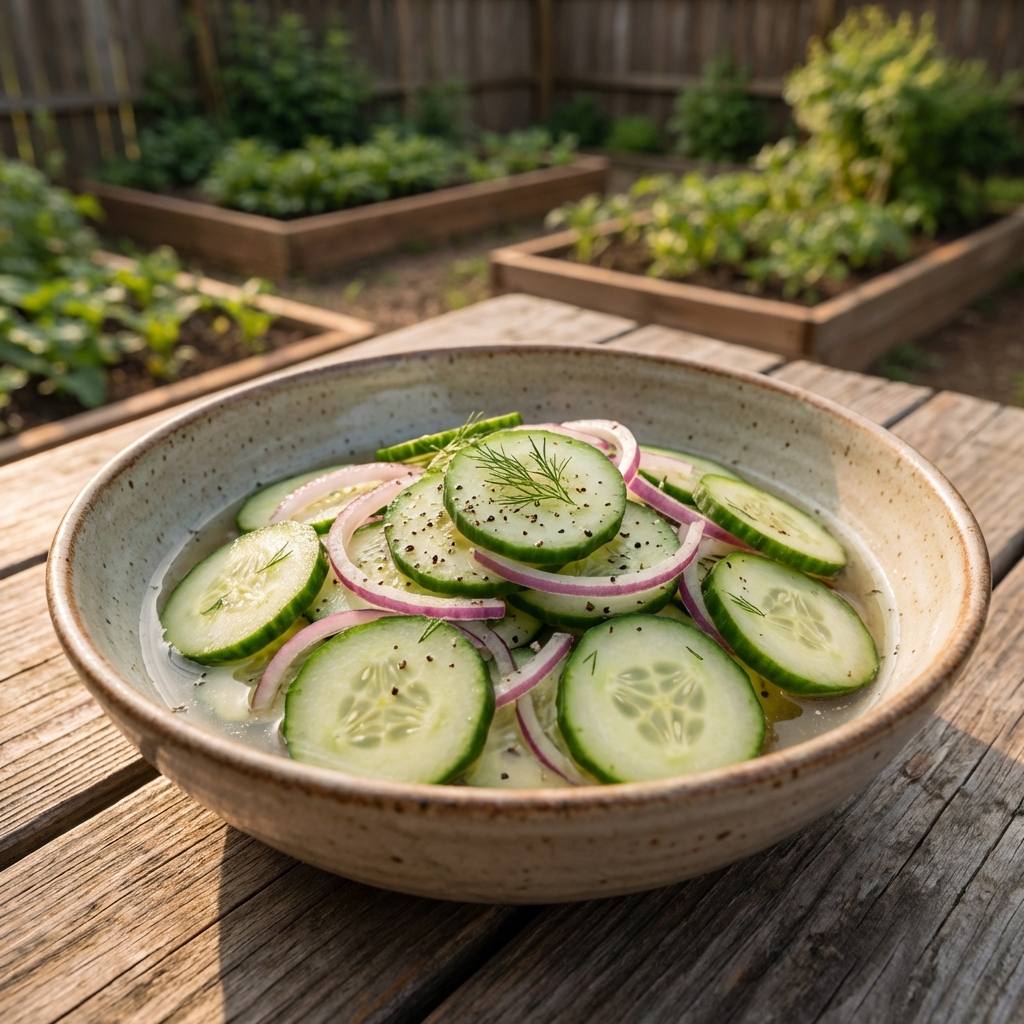
- Everyday salad: cucumber, red onion, dill, vinegar, salt, pepper
- Quick pickles: vinegar, water, salt, sugar, garlic, peppercorns, and a few hours in the fridge
- Tzatziki: grated cucumber, salted and squeezed dry, mixed into yogurt
- Sandwich crunch: thin slices with a little salt and lemon
Garden note
If you grow cucumbers, you might notice store cucumbers behave differently. Homegrown cucumbers usually have no protective wrap, often thinner skin, and they dehydrate quickly on the counter.
If your garden cucumbers go soft fast, borrow the same idea: keep them cold and humid but not wet. A warmer fridge spot, a crisper drawer, and a dry paper towel go a long way.
Quick checklist
- Choose cucumbers that are firm, evenly green, and not dented.
- Store in the warmest part of the fridge, not against the back wall.
- Keep wrapped cucumbers wrapped, but keep them dry.
- Keep cucumbers away from apples, bananas, tomatoes, and other ethylene producers.
- Fix watery texture with salting and draining.
- Crisp up a limp cucumber with a short ice water soak.
- Do not gamble on sour-smelling or heavily slimy cucumbers.

Jose Brito
I’m Jose Britto, the writer behind The Country Store Farm Website. I share practical, down-to-earth gardening advice for home growers—whether you’re starting your first raised bed, troubleshooting pests, improving soil, or figuring out what to plant next. My focus is simple: clear tips you can actually use, realistic expectations, and methods that work in real backyards (not just in perfect conditions). If you like straightforward guidance and learning as you go, you’re in the right place.