Garlic is one of those crops that looks easy until you want big bulbs. The difference usually comes down to two things: soil health and timing. Garlic is a heavy feeder early on, then it shifts gears and focuses on bulbing. If you keep dumping nitrogen too late, you can end up with gorgeous tops and disappointing heads.
This page breaks down natural fertilizing options that work in real gardens, plus a simple schedule you can follow whether you grow hardneck or softneck.
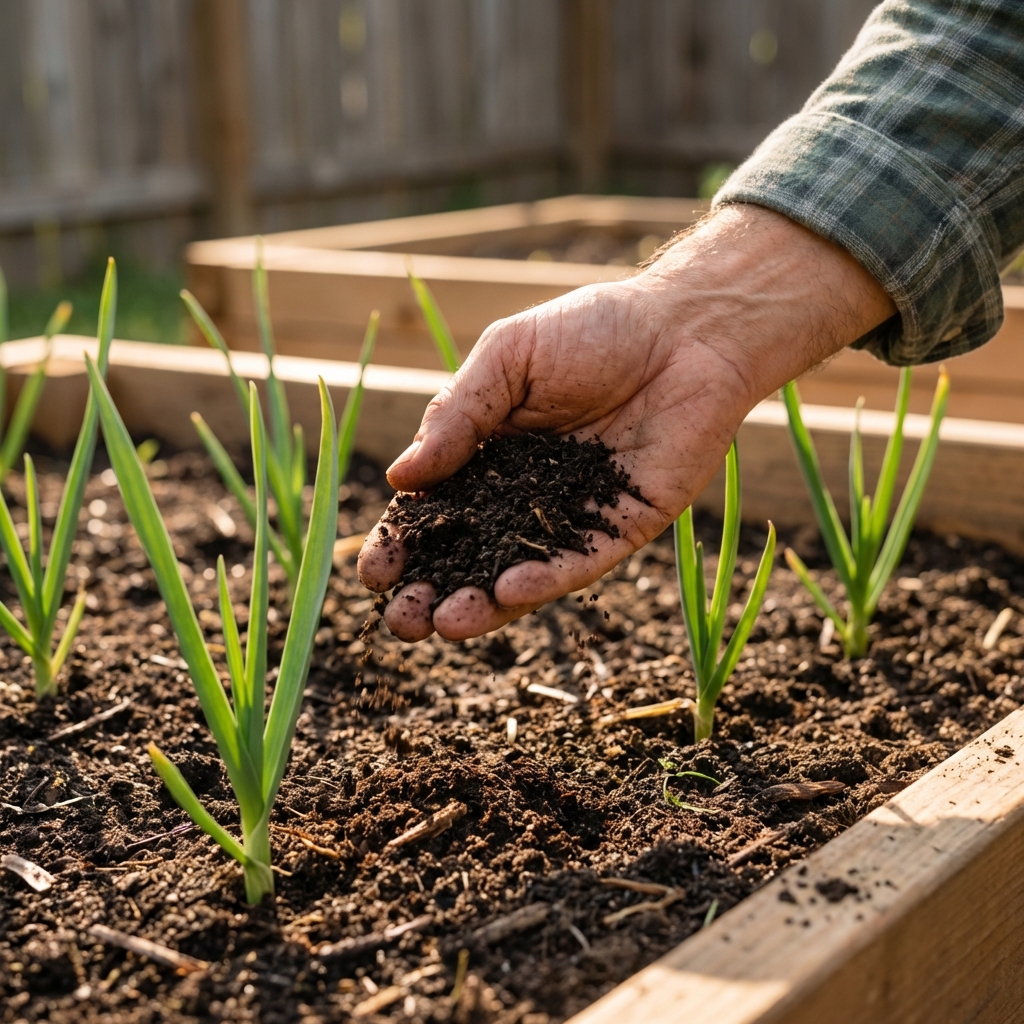
What garlic needs (and when)
Think of garlic in two main phases:
- Leaf-building phase (from fall rooting through early to mid-spring): garlic wants steady nutrients, especially nitrogen, to build a strong leaf canopy.
- Bulb-building phase (late spring into early summer): garlic needs less nitrogen and more balance. Too much nitrogen here can delay bulbing and reduce storage quality.
Why do leaves matter? More healthy leaves usually correlates with more wrapper layers and more energy for bulb growth, which often means bigger cloves. It is not perfectly 1:1 across every variety and season, but it is a very useful rule of thumb.
Start with soil
If you only do one thing, do this: build fertile, well-drained soil before planting. Garlic hates sitting wet, and it struggles in compacted ground.
Targets to aim for
- Texture: loose, crumbly soil with plenty of organic matter
- Drainage: no puddles after rain, raised beds help a lot
- pH: aim around 6.5 to 7.0; garlic often tolerates roughly 6.0 if everything else is good
Natural pre-plant soil builders
- Finished compost: improves fertility and moisture balance without pushing too hard.
- Worm castings: gentle nutrition and microbial support, great for smaller beds.
- Leaf mold or well-rotted manure: excellent organic matter. Use well-aged or fully composted manure to avoid burning and uneven nitrogen spikes.
Simple pre-plant approach: mix 1 to 2 inches of finished compost into the top 6 inches of soil. If your soil is sandy, compost helps it hold water. If it is clay-heavy, compost helps it drain and breathe.
Natural fertilizers that work
Garlic responds best to steady, moderate feeding. You are trying to avoid big swings that cause lush growth one week and stress the next.
Compost (the backbone)
Compost is slow-release, balanced, and hard to mess up. It supports soil life, which helps make nutrients available over time.
- How to use: top-dress about 1/2 inch around plants in early spring, then water in.
- Best for: nearly all gardens, especially if you want a low-maintenance method.
Alfalfa meal (gentle nitrogen)
Alfalfa meal is a nice natural nitrogen source for spring growth and tends to be less “spiky” than quick options.
- How to use: scratch lightly into the soil surface in early spring, then water.
- Rough rate: follow the product label. As a general home-garden range, many gardeners use about 1/2 to 1 cup per 10 sq ft as a light feeding.
- Good to know: a little goes a long way. Overdoing nitrogen is one of the most common garlic mistakes.
Fish emulsion (quick help)
Fish emulsion is a fast-acting organic fertilizer. It is useful when garlic comes out of winter looking yellow and slow, especially in cold springs.
- How to use: dilute per label and apply as a soil drench in early spring.
- Best for: quick correction, not constant feeding.
Blood meal (strong nitrogen)
Blood meal can push a lot of nitrogen. It is effective, but it is easy to over-apply.
- How to use: only if your soil is truly low in nitrogen and you are early in the season. Use label rates and err on the light side.
- Skip it if: your garlic is already deep green and growing well.
Bone meal (phosphorus)
Phosphorus supports root development. Many soils already have enough, so this is most useful when a soil test indicates low phosphorus.
- How to use: mix into the planting row or bed in fall, not as a late-season fix.
- Rate: follow label directions. Phosphorus does not move quickly through soil, so placement matters more than repeated applications.
Kelp meal (micronutrients)
Kelp is not a high-nitrogen fertilizer. It shines as a broad micronutrient source and can support overall vigor.
- How to use: a small amount mixed into soil or as a light top-dress.
- Rough rate: follow label directions. As a general range, a light sprinkle is usually plenty (often around 1/4 to 1/2 cup per 10 sq ft).
- Best for: rounding out fertility when you mainly use compost.
Wood ash (potassium and pH)
Wood ash can add potassium, but it also raises pH and can add salts. Nutrient levels vary by source, so it is a tool, not a default.
- Only use if: a soil test shows acidic soil and you want a small pH lift, or you have a confirmed potassium need.
- Avoid if: your pH is already near neutral or alkaline.
- Safety tip: apply lightly, mix in well, and avoid heavy applications near small seedlings or in containers where salts can build up.
Sulfur (worth a mention)
Alliums use sulfur to build flavor compounds, and it also supports overall growth. Most compost and manure-based gardens supply enough over time, but if your soil test shows low sulfur, follow the recommended amendment and rate.
A simple schedule
The exact dates depend on your climate, but the growth stages are the same.
Fall planting
- Mix in compost before planting.
- If using bone meal or kelp meal, fall is a good time to incorporate it lightly into the planting zone.
- Avoid heavy nitrogen in fall if your garlic will put on a lot of top growth before winter. You want roots, not tall floppy leaves going into freezes.
- Manure note: use only well-composted manure. If you grow garlic as a food crop, do not use fresh manure close to harvest.
Late winter to early spring
- As soon as plants are actively growing, top-dress compost.
- If growth is weak or pale, add a gentle nitrogen source like alfalfa meal, or do one fish emulsion drench.
Mid-spring
- This is typically the last period when extra nitrogen pays off.
- Apply a second light feeding if needed. Keep it moderate and watch leaf color.
Late spring
- When garlic begins shifting toward bulbing, stop high-nitrogen fertilizers.
- Timing cues: for hardnecks, this is often around when scapes start to form. In many climates, it is also roughly 4 to 6 weeks before harvest, but use your plants as the guide.
- At this point, focus on consistent watering and keeping weeds down so garlic is not competing.
Mulch and watering
You can have perfect amendments and still end up with small bulbs if garlic is stressed by weeds or inconsistent moisture.
Mulch
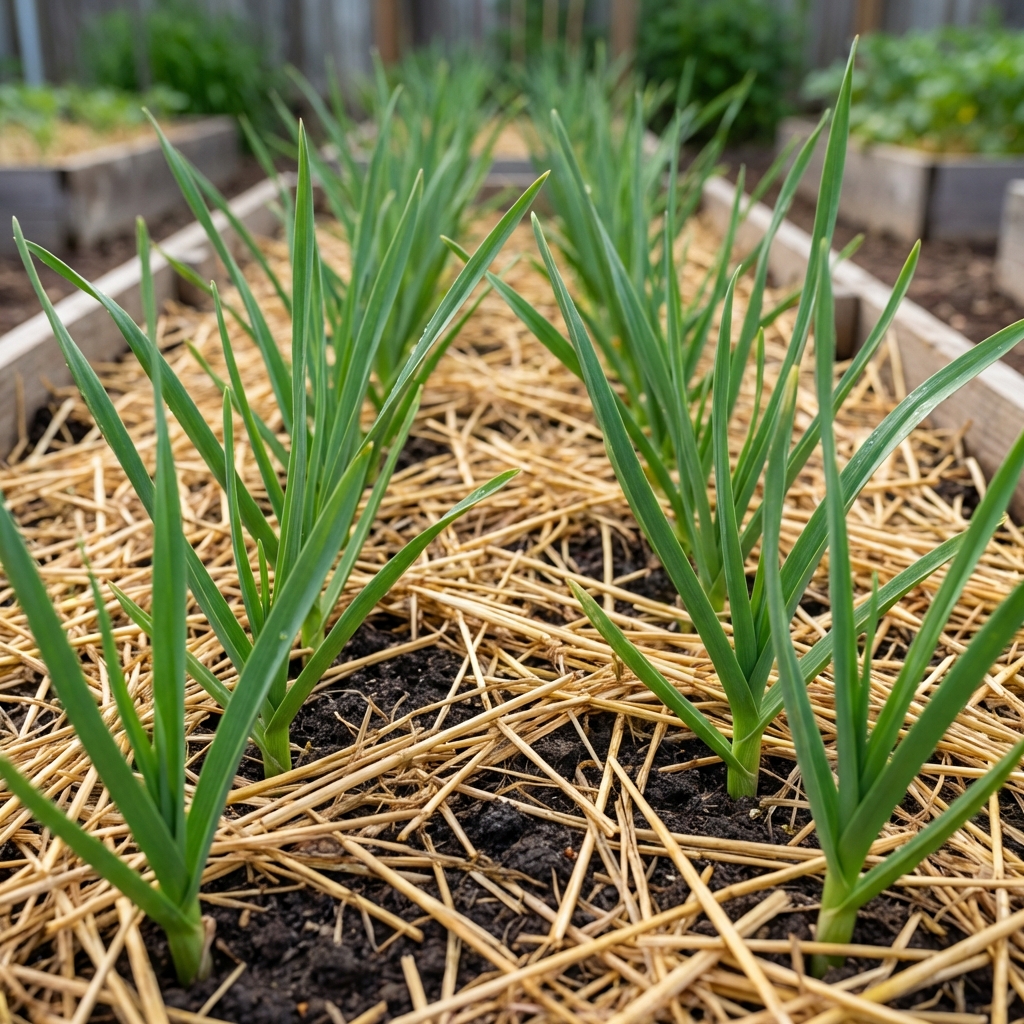
- Straw, shredded leaves, or untreated grass clippings help moderate soil temperature and reduce weeds.
- As mulch breaks down, it feeds soil life and slowly adds organic matter.
Watering
- Garlic generally likes even moisture during active growth.
- As harvest approaches, many gardeners water a bit less to reduce the risk of rot and to make harvesting easier, especially in wet climates. The real curing happens after harvest, in a dry, airy spot.
Does it need fertilizer?
Garlic is pretty honest. If something is off, the leaves usually tell you.
Signs it may need nitrogen (early season)
- Pale green leaves
- Slow growth after temperatures warm
- Thin plants compared to prior seasons in the same bed
Signs you are overdoing nitrogen
- Very dark green, overly lush tops
- Plants that keep pushing leaf growth late into spring
- Soft growth that flops or is more disease-prone
Best reality check: a basic soil test every couple of years. It prevents guesswork and saves money on amendments you do not need.
Hardneck vs softneck
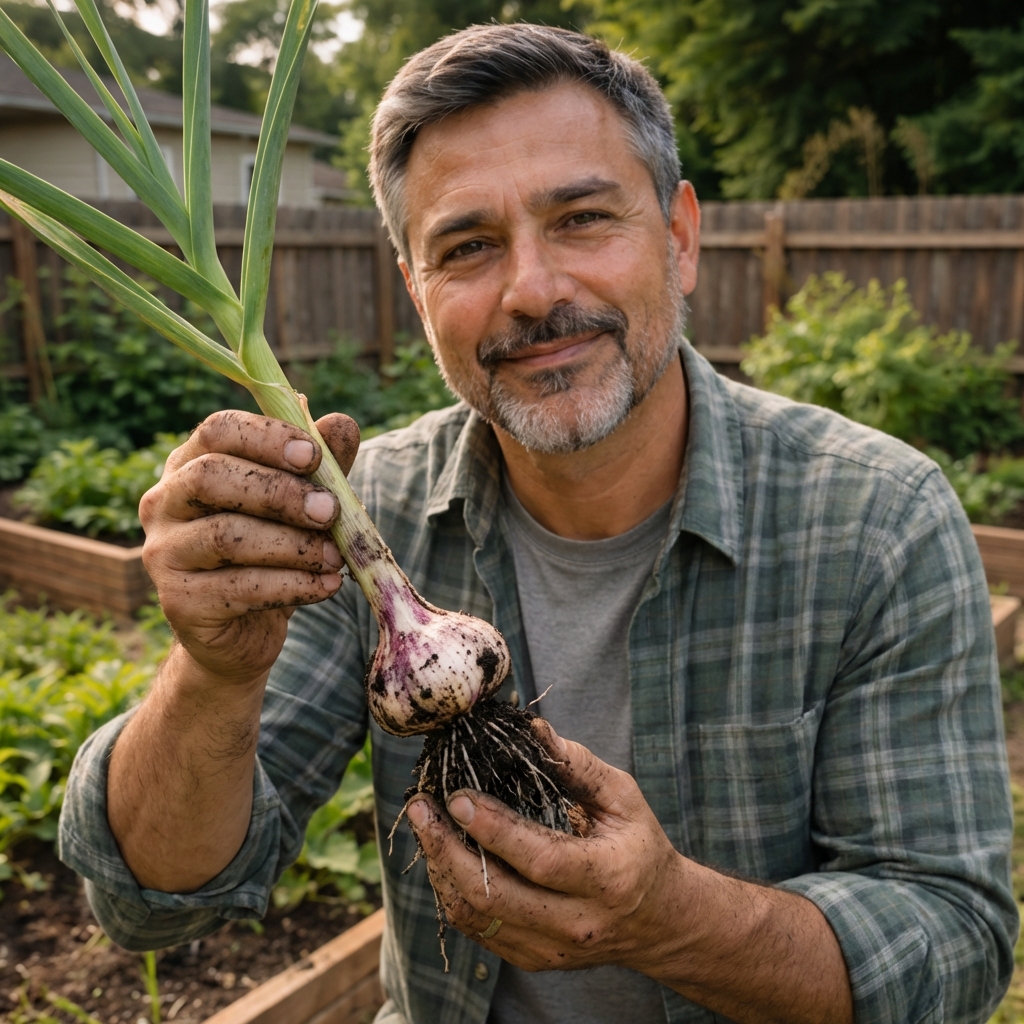
The feeding approach is similar, but hardneck garlic has one extra “event” in the season: scapes.
Hardneck garlic
- When scapes curl, most gardeners cut them off so the plant puts energy into the bulb.
- Do not “make up for scape removal” with late nitrogen. It usually backfires.
Softneck garlic
- Often benefits from the same early nitrogen support, especially in raised beds with fast-draining soil.
- Because softneck does not produce scapes, your focus is consistent growth and moisture control.
Containers and raised beds
Garlic can do well in containers, but pots and very fast-draining raised beds can leach nutrients quickly.
- Use compost-rich potting mix and feed lightly, more often, rather than doing one heavy feeding.
- Watch color and growth. Containers can swing from “hungry” to “overfed” faster than in-ground beds.
Common mistakes
- Feeding heavy nitrogen too late: great leaves, smaller bulbs, poorer storage.
- Using “hot” manure: can burn roots and create uneven growth.
- Ignoring drainage: fertility does not matter if roots sit in wet soil.
- Skipping weed control: garlic does not like competition, especially early.
- Trying to fix everything with fertilizer: sometimes the issue is pH, compaction, or inconsistent watering.
Quick plan
If you want a simple natural program that works for most backyard beds, here it is:
- Before planting (fall): mix in 1 to 2 inches of finished compost (and only well-composted manure if you use it).
- Early spring: top-dress with compost; add a light nitrogen boost only if plants look pale.
- Mid-spring: one more light feeding if needed, then stop nitrogen.
- Late spring: focus on watering consistency, mulch, and weeding.
That is it. Garlic does not need constant products. It needs steady, living soil and good timing.
FAQ
Can I fertilize garlic with coffee grounds?
Used coffee grounds are best treated as a small compost ingredient or a light mulch component, not a primary fertilizer. They do not provide a reliable nitrogen boost on their own, and thick layers can mat and reduce airflow. If you use them, mix into compost or apply very lightly and keep it fluffy.
Is Epsom salt good for garlic?
Only if you actually have a magnesium deficiency, which is uncommon in many gardens. Epsom salt is magnesium sulfate, not a general-purpose fertilizer. If you suspect deficiency, a soil test is the cleanest way to confirm before adding anything.
What is the best natural fertilizer for bigger bulbs?
For most home growers, it is a combination: compost for baseline fertility, plus a modest nitrogen boost in early spring if needed. Bigger bulbs also come from good drainage, weed control, and stopping nitrogen as the plant shifts into bulbing.

Jose Brito
I’m Jose Britto, the writer behind The Country Store Farm Website. I share practical, down-to-earth gardening advice for home growers—whether you’re starting your first raised bed, troubleshooting pests, improving soil, or figuring out what to plant next. My focus is simple: clear tips you can actually use, realistic expectations, and methods that work in real backyards (not just in perfect conditions). If you like straightforward guidance and learning as you go, you’re in the right place.