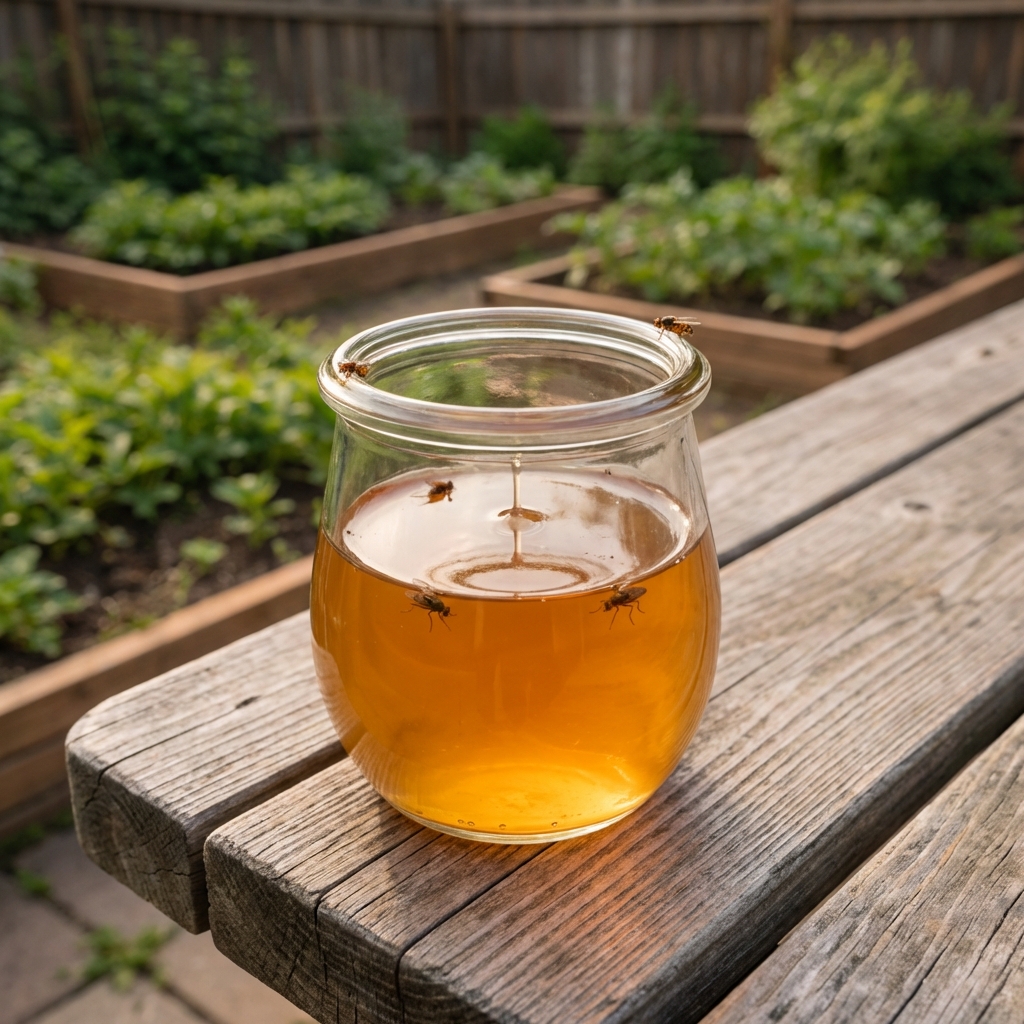
Fruit flies in the garden are most often a sign of one thing: something sweet and wet is breaking down nearby, usually with a bit of fermentation involved. That could be a forgotten tomato under a plant, a juicy fruit drop in the grass, a compost bucket that is a little too wet, a sticky recycling bin, or even a harvest basket that sat on the porch overnight. The good news is you can knock down the adult population fast with a vinegar trap, then keep them from rebuilding by removing the breeding spots.
First, know what you are dealing with
Most gardeners call them fruit flies, but you may be seeing one of a few small fly types. A quick ID helps you pick the right fix.
- Fruit flies (Drosophila), also known as vinegar flies: tiny, tan to brown flies that swarm around overripe fruit, fallen berries, and fermenting plant scraps. They often have a slow, fluttery flight and may show reddish eyes up close.
- Fungus gnats: darker, mosquito-like flies with long legs that hover near damp potting soil and seed-starting trays. You often notice them emerging from pots or hanging out right at soil level.
A vinegar trap works best on true fruit flies. If your flies are hovering at soil level and your pots stay wet, you may need fungus gnat tactics too, like drying the top inch of soil and using sticky traps.
The vinegar trap recipe that catches the most flies
Here is the version I recommend because it is simple and consistently effective.
Apple cider vinegar trap (best all-around)
- Container: a small jar, cup, or glass
- Bait: 2 to 3 tablespoons apple cider vinegar
- Boost: 1 small drop of dish soap
- Optional: a pinch of sugar if your vinegar is old and weak
Why the dish soap matters: it breaks the surface tension so flies sink instead of landing and escaping.
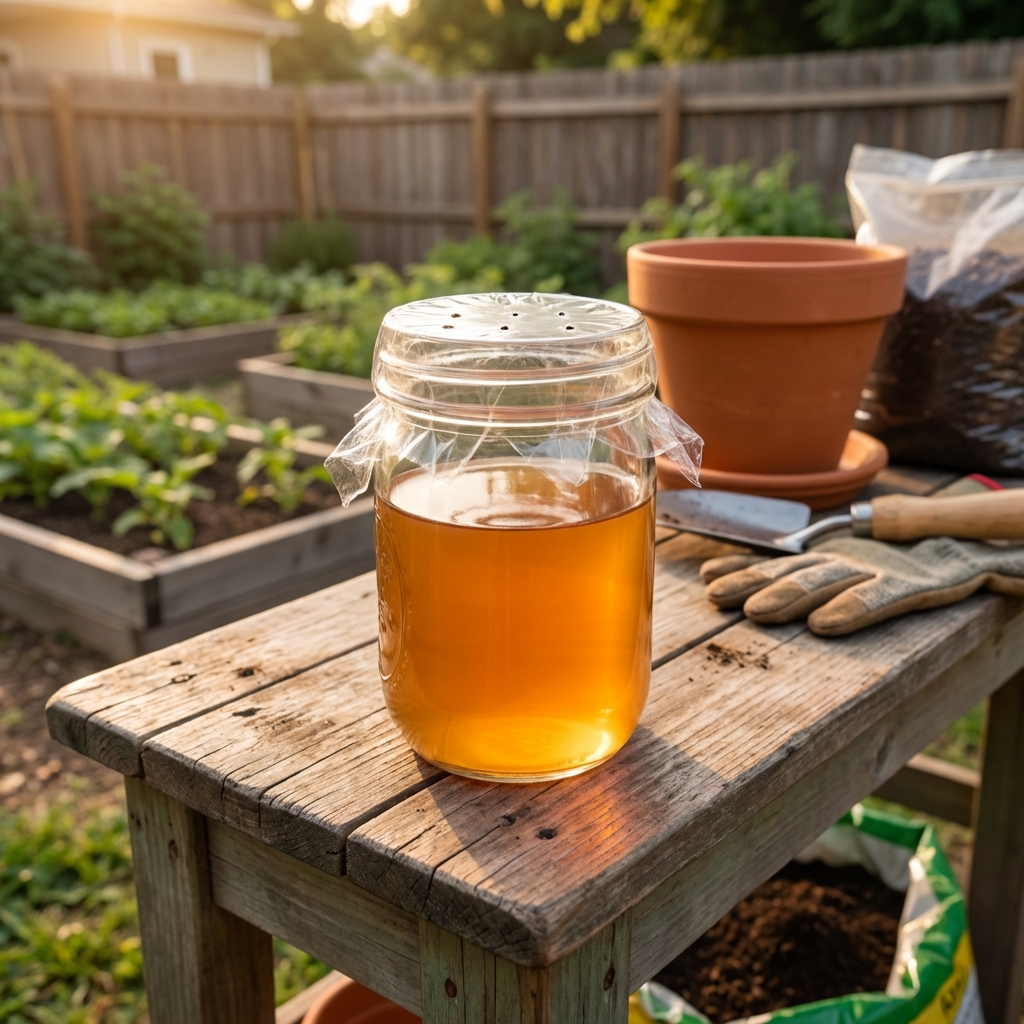
Covered trap (better if you have pets, kids, or rain)
If your traps keep getting knocked over, use a covered version.
- Put vinegar and a drop of soap in a jar.
- Cover the top with plastic wrap.
- Poke 6 to 10 small holes using a toothpick.
This slows evaporation and helps prevent accidental spills.
Where to place vinegar traps in a garden setting
Placement is the difference between catching a few flies and catching dozens. Put traps close to the source, not where the flies simply end up, like around porch lights, doors, or a sunny window.
- Near harvest and prep areas: porch table, potting bench, outdoor sink, or where you sort produce.
- Next to compost inputs: countertop scrap bucket, compost tumbler, or compost bin lid area.
- By problem plants: strawberries, tomatoes, figs, melons, or anywhere fruit is cracking or dropping.
- Near trash and recycling: especially if you rinse cans or store bottles, or if anything gets sugary and sticky.
Quick rule: use multiple small traps instead of one big trap. In a typical backyard, 3 to 6 traps placed strategically works better than one “super trap” in the middle.
How long traps take to work and when to replace them
If you placed the trap near the breeding source, you will typically see catches within a few hours. For a heavy swarm, the first 48 hours often brings the biggest drop in activity.
- Replace every 2 to 3 days in warm weather or if it is full of bugs.
- Top off sooner if it evaporates fast in sun or wind.
- Move it if you catch nothing after 24 hours. You are probably not close enough to the source, or a stronger smell nearby is competing.
Traps reduce adults, but eggs and larvae in rotting fruit, wet scraps, or sticky residues can keep hatching. That is why the next section is the real fix.
Stop the next wave: remove the breeding spots
Fruit flies do not appear out of nowhere. They breed in moist, sugary, breaking-down material. In gardens, that is usually fallen fruit, cracked produce, exposed scraps, and sticky containers.
Garden cleanup that makes the biggest difference
- Pick up fallen fruit daily during peak season. One mushy peach can support a surprising number of larvae.
- Harvest a little earlier if fruit is splitting or getting pecked. Bring it inside and finish ripening on the counter.
- Remove “hidden rot”: check under leaves for dropped cherry tomatoes, berries, and damaged peppers.
- Bag it if needed: if you cannot compost immediately, seal rotten fruit in a bag and discard it.
Compost and scraps: do this, not that
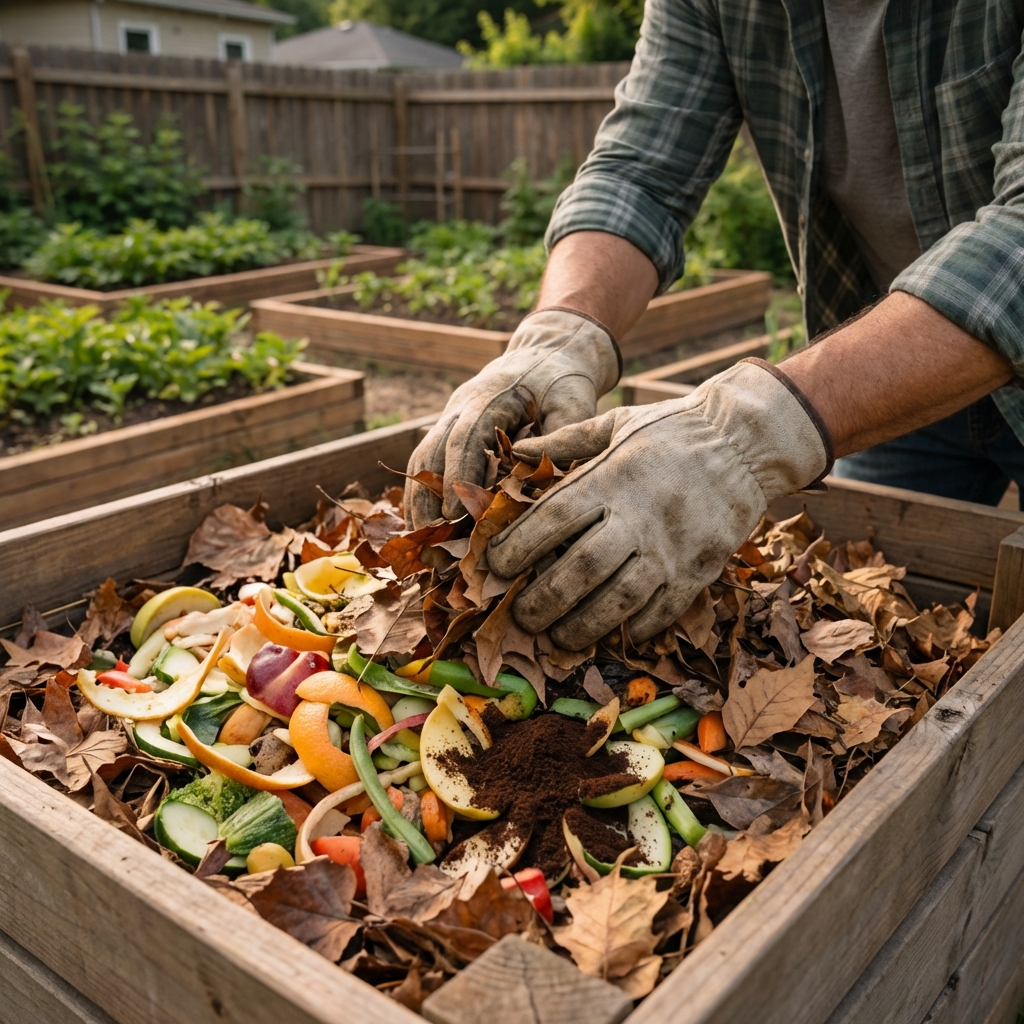
- Do: bury fresh scraps several inches deep in the compost pile, or fully cover them with browns (dry leaves, shredded cardboard, straw). The key is fully covered, even in small bins and tumblers.
- Do: keep a tight lid on kitchen scrap buckets and rinse them often.
- Do: keep compost moist like a wrung-out sponge, not dripping wet.
- Do not: leave fruit scraps exposed on top of the pile.
- Do not: toss overripe fruit into an open bucket and let it sit for days.
Vinegar trap upgrades for stubborn infestations
If regular apple cider vinegar traps are not cutting it, try one of these tweaks.
Use a better bait
- Old wine or beer: often attracts just as well as vinegar.
- Banana slice: add a small piece, but replace the trap more often because it molds fast.
- Yeast bait: mix 1/2 cup warm water + 1 teaspoon sugar + 1/4 teaspoon active dry yeast + 1 drop soap. This mimics fermentation strongly.
Switch to a funnel-top jar
Roll a piece of paper into a cone and set it in the jar opening with a small hole at the tip. Flies enter easily and struggle to find their way out.
Night placement for porch and kitchen garden areas
Fruit flies are active throughout the day, but putting fresh traps out in the evening can help because you catch them near the breeding source before they spread out again the next morning.
Are vinegar traps safe for plants, pollinators, and pets?
Vinegar traps are generally plant-safe because you are not spraying anything on leaves or soil. You are using a contained lure.
- Pollinators: place traps low and near the ground, not up in flowers. Avoid using strong sweet baits near blooms where bees forage.
- Pets and kids: use covered traps (plastic wrap holes or a lidded trap) and keep them out of traffic areas.
- Wildlife: do not leave open cups in the garden where small animals could drink them.
Important: undiluted household vinegar is not a good foliar spray for fruit fly control and can damage plant tissue. Keep it in traps.
Common mistakes that make vinegar traps fail
- No soap: without it, many flies land, drink, and leave.
- Trap too far from the source: they will keep breeding where the rot or sticky residue is.
- Competing smells nearby: open compost, exposed fruit, sticky bins, or a recycling can will outcompete your trap.
- Too much airflow: strong wind or a fan on a covered porch can reduce how well the scent pulls them in.
- Expecting traps to solve the root problem: they are a tool, not a full plan.
A simple 3-day reset plan
If you want a straightforward way to get control fast, do this:
- Day 1: Set 4 to 6 vinegar traps. Then do a 15-minute cleanup: pick up fallen fruit, empty harvest baskets, wipe up any sticky spills, and rinse scrap buckets.
- Day 2: Check traps and replace any that are full or dry. Turn compost and cover any exposed scraps under browns.
- Day 3: Replace all traps with fresh bait. Walk the garden again for hidden drops, especially under dense plants.
After that, you can usually maintain control with 1 to 2 traps near the hot spots plus regular cleanup. If fruit is actively dropping or cracking daily, expect to keep trapping until that slows down.
When it is not fruit flies
If your traps catch nothing and the flies keep hovering around pots and seedlings, you may be dealing with fungus gnats. In that case, focus on drying the soil surface, reducing overwatering, and using yellow sticky cards near pots. Vinegar traps can still catch a few, but they are not the main solution.
Bottom line
Vinegar traps are a great fast fix for adult fruit flies, especially around harvest areas, compost inputs, and fallen fruit zones. But the lasting win comes from removing the breaking-down stuff they breed in, rinsing sticky bins, and tightening up compost habits. If garden traps are not making a dent, check nearby indoor sources too, especially kitchen compost, recycling, and any place sugary residue builds up. Do both for a week and most backyard infestations drop to almost nothing.

Jose Brito
I’m Jose Britto, the writer behind The Country Store Farm Website. I share practical, down-to-earth gardening advice for home growers—whether you’re starting your first raised bed, troubleshooting pests, improving soil, or figuring out what to plant next. My focus is simple: clear tips you can actually use, realistic expectations, and methods that work in real backyards (not just in perfect conditions). If you like straightforward guidance and learning as you go, you’re in the right place.