When flies suddenly show up in your house, it is rarely random. In most cases, something indoors is feeding them, or worse, something is letting them breed. The good news is that you do not need heavy pesticides to get control. You need the right ID, a quick source check, and a few targeted fixes.
This guide walks you through the most common indoor fly scenarios, including ones tied to houseplants, compost, and garden harvests.
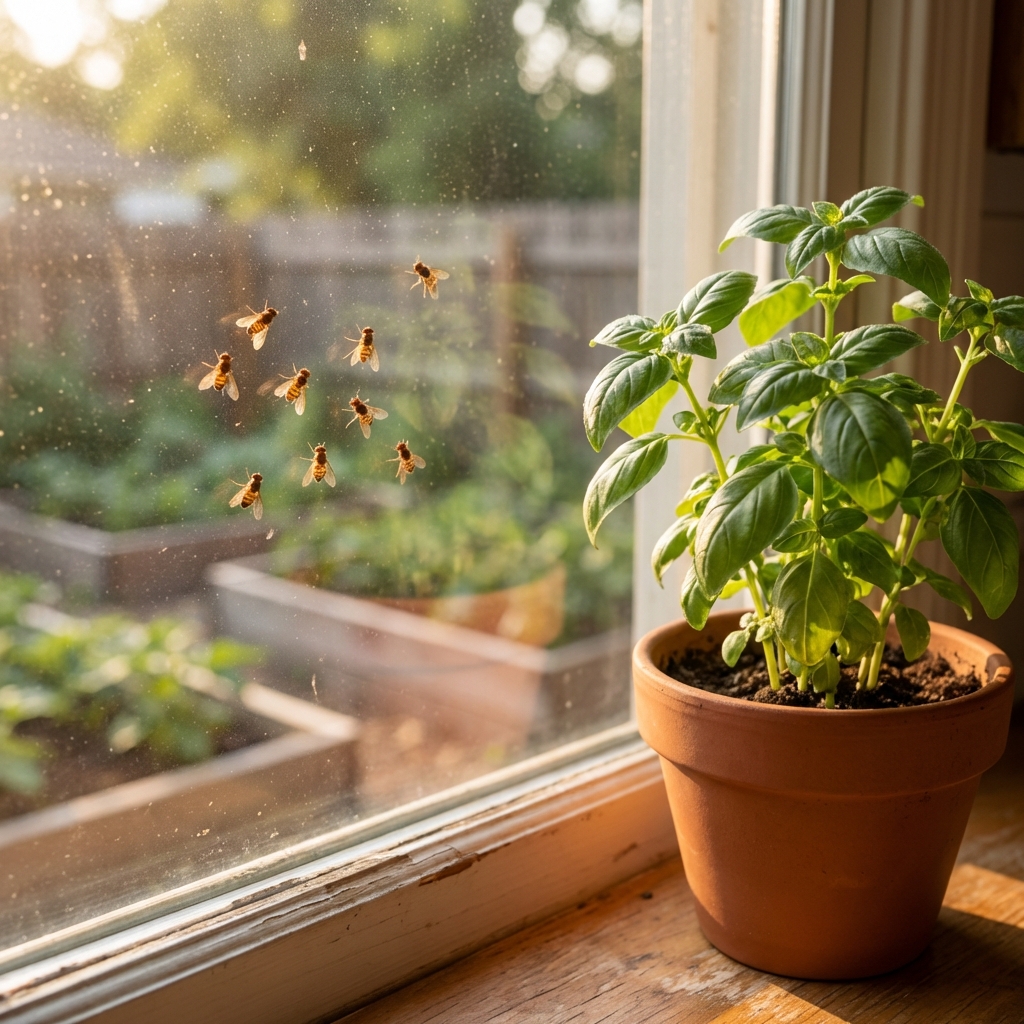
First: identify the fly (it changes the solution)
Different flies point to different sources. If you skip this step, you can clean all day and still miss the real breeding spot.
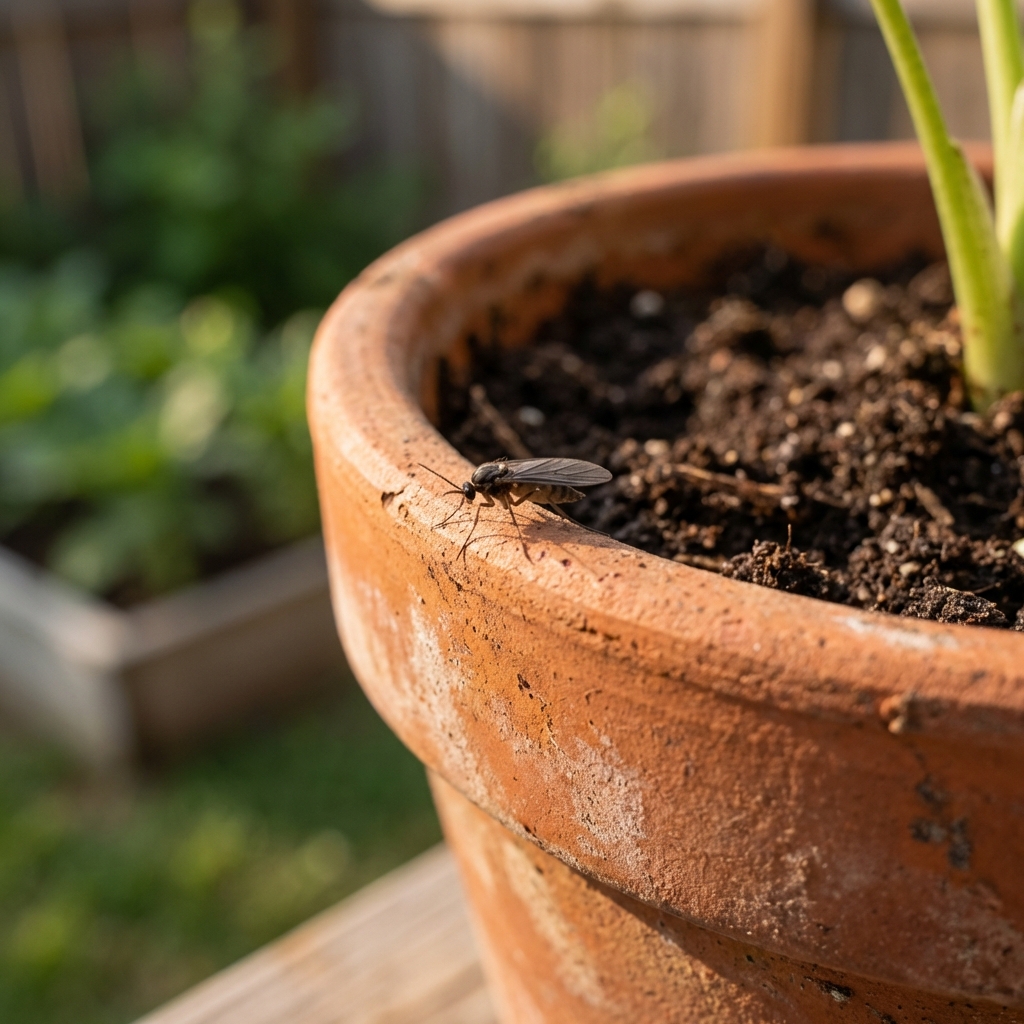
Fungus gnats
- What they look like: tiny, dark, mosquito-like flies that hover around houseplants and soil.
- Where they come from: consistently damp potting mix, saucers with standing water, or overwatered seed-starting trays.
- Clue: you see them pop up when you water or move a pot.
Fruit flies
- What they look like: small tan flies, often around bananas, tomatoes, compost, recycling, and drains.
- Where they come from: ripening produce, compost caddies, sticky residue in bottles and cans, and gunky sink drains.
- Clue: strongest activity around the kitchen and trash area (especially near anything overripe, cracked, or fermenting).
Phorid flies (humpback flies)
- What they look like: tiny flies that run fast on counters before flying, with a slightly hunched profile.
- Where they come from: drain buildup, garbage juice under liners, leaky plumbing, or hidden organic messes.
- Clue: lots near sinks, but they do not act like typical fruit flies.
Drain flies (moth flies)
- What they look like: tiny, fuzzy, moth-like flies with triangular wings. They are weak fliers and often rest on walls near sinks or tubs.
- Where they come from: slime and biofilm inside drains, overflows, floor drains, or rarely a damp, leaky area that stays wet.
- Clue: you see them in bathrooms or near a specific drain, especially in the evening.
House flies
- What they look like: larger gray flies, strong fliers.
- Where they come from: trash, pet waste, forgotten food scraps, or a dead rodent in rare cases.
- Clue: they cluster at windows and are more noticeable during warm spells.
Blow flies
- What they look like: larger, metallic blue or green flies.
- Where they come from: decaying meat or a dead animal (attic, wall void, crawl space), sometimes a very dirty trash bin.
- Clue: sudden appearance of big shiny flies, often near one room or one window.
Find the source fast: a 10-minute walkthrough
If you want the infestation to stop, you need to interrupt the breeding cycle. Many common indoor flies develop fast in warm conditions, often in about 7 to 14 days, but it varies by species and temperature. Every day you delay keeps the problem rolling.
Step 1: check the obvious food spots
- Fruit bowl, potatoes, and any ripening garden harvest on the counter (especially anything cracked, bruised, or starting to soften)
- Recycling: bottles, cans, jars, and wine or kombucha bottles with residue
- Trash: under the bag, under the bin, and around the lid
- Pet food area: wet food plates, crumb zones, and storage bins
Step 2: inspect drains and the garbage disposal
Drains can breed flies even when the kitchen looks spotless. If you see tiny flies hovering near the sink, assume the drain needs attention.
Step 3: look at houseplants like a detective
- Touch the top inch of soil. If it is constantly damp, fungus gnats are likely.
- Check drip trays and decorative outer pots for standing water.
- Smell the potting mix. A sour smell can mean poor drainage or rot.
Step 4: rule out hidden sources
- A bag of potatoes (or other produce) in a dark cabinet with one rotten piece
- Compost bucket that is not being emptied often enough
- Soiled rags, mop heads, or sponges left damp
- Rare but real: a dead mouse in a wall or attic (common with blow flies)
Garden-friendly fixes that actually work
There are two goals: reduce the adult flies you see, and stop new adults from being produced. Do both at the same time for the fastest results.
1) Remove the breeding material first
- Trash and recycling: take it out, then rinse sticky containers.
- Produce: refrigerate ripe fruit, or move it to a sealed container.
- Compost: switch to a lidded container and empty it more often.
2) Use simple traps for adults (low-tox)
Traps help you get relief while you fix the source. They will not solve the problem alone.
- Fruit fly trap: a small bowl with apple cider vinegar plus a drop of dish soap. Place near where you see activity.
- Sticky traps: yellow sticky cards near houseplants catch fungus gnats and tell you which pots are the issue.
- Window vacuum method: a handheld vacuum can quickly reduce numbers at sunny windows. Empty outside.
3) Fix fungus gnats at the root (literally)
If your flies are coming from houseplants, you can stay garden-friendly and still be very effective.
- Dry the top layer: let the top 1 to 2 inches of soil dry before watering again.
- Bottom water when possible: reduces constantly wet topsoil where gnats lay eggs.
- Confirm the pot: press a raw potato slice onto the soil surface for 24 hours. If you see tiny, clear larvae with black heads underneath, you have fungus gnat larvae.
- Physical barrier (optional): a dry 1 to 2 cm layer of horticultural sand can help in some setups, or use a purpose-made top cover (like GnatNix). Results vary, so treat this as a helper, not the main fix.
- Biological options: use BTI (Mosquito Bits or Dunks) as a soil drench to target larvae, or beneficial nematodes (Steinernema feltiae) if you want a living control. Follow label directions.
- Repot if needed: if soil stays soggy or smells sour, repot into a fresh, well-draining mix and check roots for rot.
4) Clean drains the fly-safe way
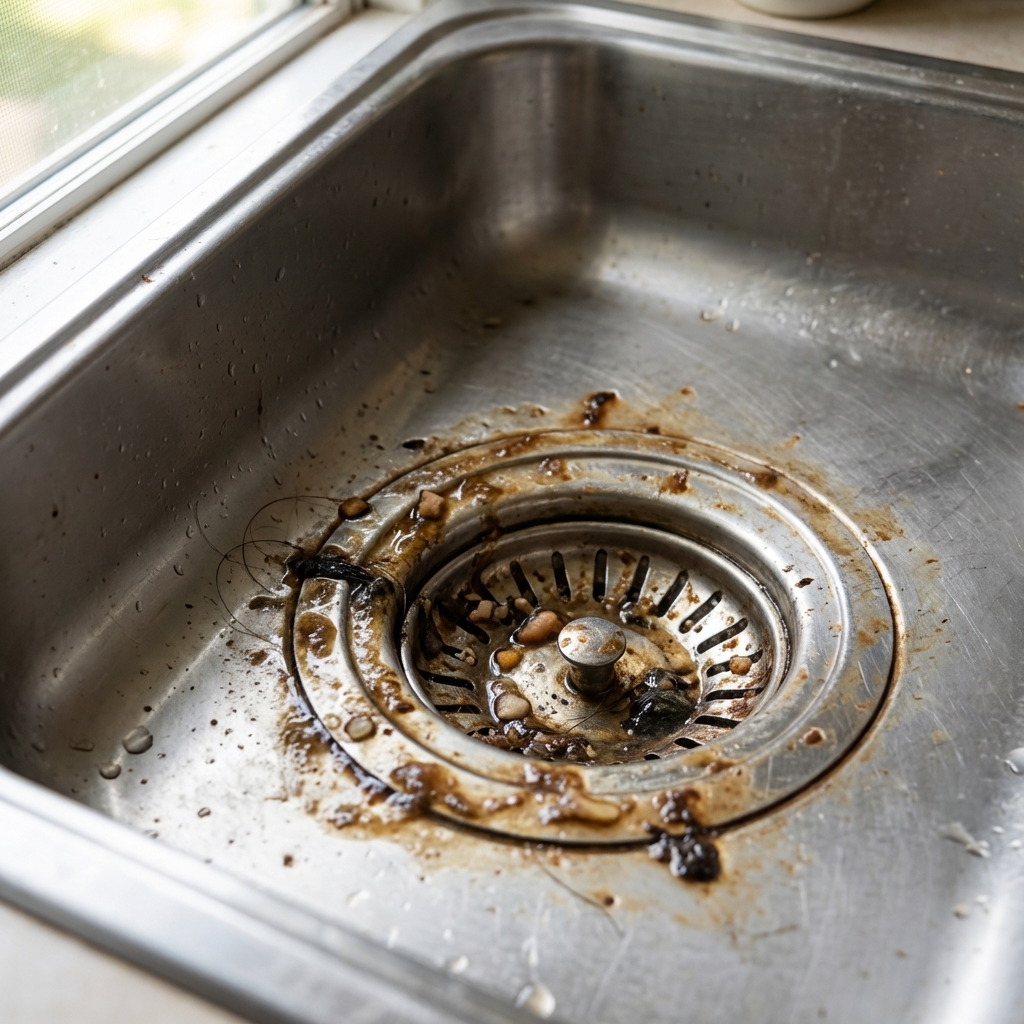
For fruit flies, phorid flies, and drain flies, drain biofilm is often the nursery.
- Scrub first: use a drain brush to physically remove slime inside the drain and overflow openings.
- Flush: run very hot (not boiling) water after scrubbing. Repeat over a few days.
- Use an enzyme cleaner: enzyme drain gels are effective for organic buildup and are generally lower-impact than harsh chemicals. Use at night so it sits longer.

Keep them out
If you are killing flies but they keep reappearing, you may also have an entry problem. This matters most for house flies and blow flies.
- Screens: repair torn window screens and make sure they fit tight.
- Gaps: seal obvious gaps around doors, and use a door sweep if you can see daylight.
- Habits: do not leave doors propped open during warm months.
- Outdoor sources: move outdoor trash cans away from doors if possible, keep lids closed, and pick up pet waste regularly. Keep compost piles well managed and not right by an entry door.
When flies are coming from your garden harvest
Homegrown produce is a magnet for flies because it is often picked ripe and set on the counter. A few easy habits prevent the kitchen from turning into a fly station.
- Bring produce in dry: wet produce plus warmth speeds up spoilage.
- Sort immediately: one cracked tomato can kick off a fruit fly cycle fast.
- Store smarter: refrigerate ripe tomatoes once they are fully colored if flies are active. Flavor loss is better than an infestation.
- Rinse bins: harvest baskets, colanders, and storage bowls build up sugary residue.
What not to do (common mistakes)
- Do not rely only on traps. If the breeding source stays, the flies will keep replacing themselves.
- Do not overwater houseplants “to help them recover”. Overwatering is one of the fastest ways to keep fungus gnats going.
- Do not spray random insect killer indoors. It can create unnecessary exposure for kids and pets and it rarely touches larvae in drains or soil.
- Do not ignore one bad piece of produce. A single rotting item can fuel a big fruit fly population.
Prevention that fits real life
Once you clear the infestation, prevention is mostly about cutting off easy breeding spots.
Weekly habits
- Wipe sticky spots in recycling storage and rinse bottles and cans.
- Do a quick “produce audit” and remove anything overripe.
- Scrub one drain per week (kitchen, then bathroom) if you have repeat issues.
Houseplant habits
- Water based on soil feel, not the calendar.
- Empty saucers after watering.
- Quarantine new plants for a week and add a sticky trap to catch gnats early.
When to worry and who to call
Most indoor fly issues are simple to fix, but a few situations deserve extra attention.
- Blow flies that keep returning: consider the possibility of a dead animal in a wall, attic, or crawl space. A pest professional or handyman may need to locate and remove it.
- Drain flies or phorid flies that persist after cleaning: you may have a plumbing issue like a leak under a slab, a loose seal, a dry trap, or a problem with a vent. A plumber can confirm.
- Large numbers plus odors: look for hidden spoiled food, trash residue, or moisture problems.
Quick cheat sheet
- Flies near plants: dry the soil surface, use sticky traps, consider BTI (or nematodes) for larvae.
- Flies near fruit and trash: remove overripe produce, clean recycling, set vinegar traps.
- Flies near sinks or tubs: scrub drains, flush with very hot (not boiling) water, use an enzyme cleaner overnight.
- Big shiny flies: check for a hidden decay source and escalate if needed.
If you want a faster diagnosis, note two details: what the fly looks like (fuzzy moth-like, mosquito-like, humpback runner, or larger gray) and where you see it most (houseplants, fruit bowl, trash, or a specific drain). Those two clues usually pin the source in one round.

Jose Brito
I’m Jose Britto, the writer behind The Country Store Farm Website. I share practical, down-to-earth gardening advice for home growers—whether you’re starting your first raised bed, troubleshooting pests, improving soil, or figuring out what to plant next. My focus is simple: clear tips you can actually use, realistic expectations, and methods that work in real backyards (not just in perfect conditions). If you like straightforward guidance and learning as you go, you’re in the right place.