Fleas are not just a pet problem. If your yard has shade, organic debris, and animals moving through, fleas can set up shop outdoors and keep reinfesting the house. The good news is you can knock them back with methods that are friendlier to gardens than blanket chemical spraying. The key is to treat the whole flea life cycle, not just the jumping adults you can see.
This guide walks through what actually works in real backyards: simple habitat changes, targeted natural treatments, and a routine that keeps pressure on fleas without wrecking beneficial insects.
Before you treat: make sure it is fleas
Yard bites are not always fleas. Chiggers, biting midges, and mosquitoes can feel similar. Before you treat the whole yard, do a quick check.
Quick flea check
- White sock test: pull on tall white socks, walk slowly through shady pet areas and along fence lines. Fleas show up as tiny dark specks that jump onto the fabric.
- Hotspot scan: focus on where pets rest, under decks, under shrubs, and along wildlife paths.
- Indoor clue: if pets are scratching and you are seeing bites around ankles indoors, odds are high you have fleas in the mix.
What makes fleas thrive in a yard
Outdoor flea hotspots usually share the same conditions:
- Shade and moisture: under decks, shrubs, doghouses, hedges, and thick groundcovers.
- Organic debris: leaf litter, matted grass, piles of mulch, and overgrown edges.
- Hosts: pets, feral cats, squirrels, raccoons, opossums, and neighborhood wildlife.
Adult fleas are only part of the story. In an active infestation, the majority of fleas are typically in the off-host stages (eggs, larvae, and pupae) hiding in soil, thatch, and debris. That is why one spray often seems to work briefly, then everything bounces back.
Start with cleanup
If you do only one thing, do this. Fleas hate dry, sunny, open conditions. Cleanup reduces humidity and shelter, which is where eggs and larvae survive best. The more you take away their comfortable habitat, the less you have to rely on any product.
Quick yard checklist
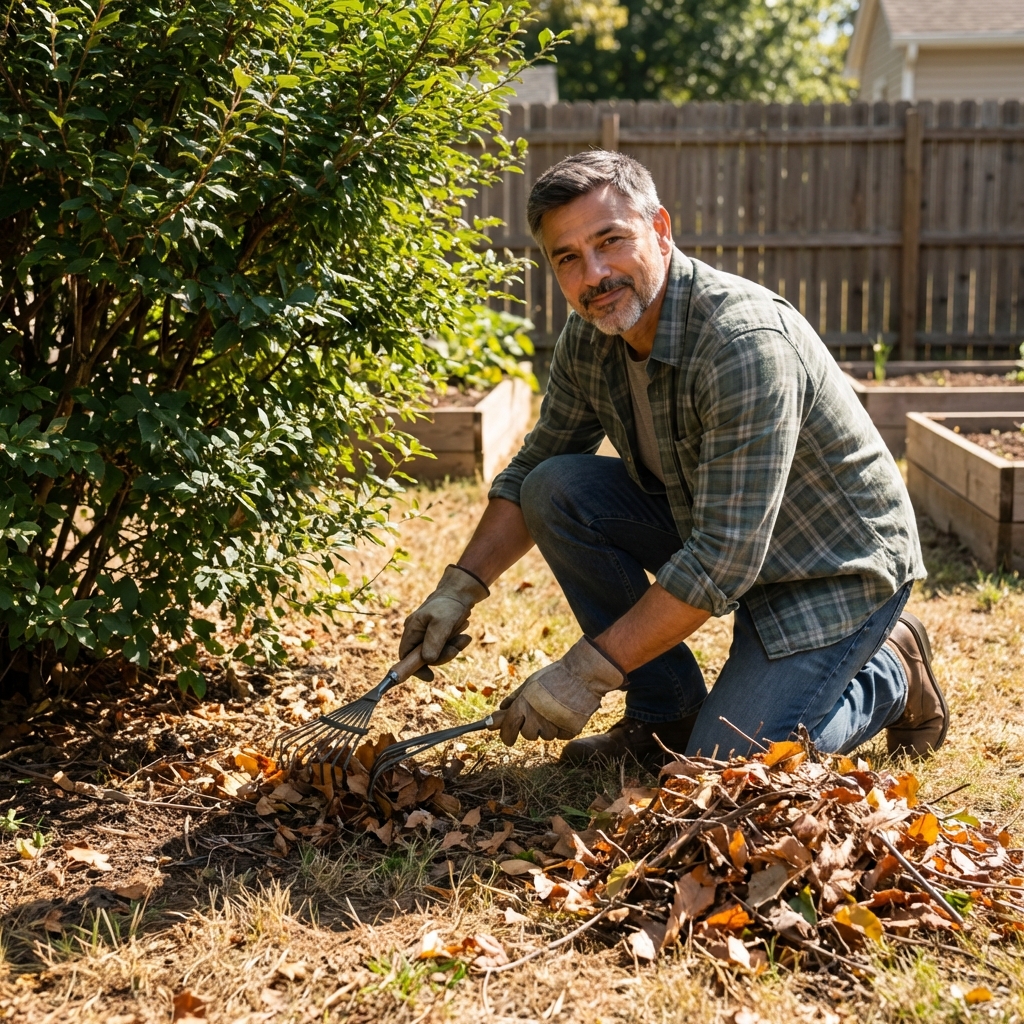
- Rake and remove leaf litter under shrubs and along fences.
- Mow regularly and bag clippings if fleas are active (at least temporarily).
- Break up matted grass and thatch (the layer of dead grass and roots sitting on top of the soil).
- Thin dense groundcovers near the house where pets hang out.
- Keep mulch pulled back a few inches from walkways and pet resting spots.
- Wash pet bedding and outdoor cushion covers weekly during peak season.
Think of this as lowering the “flea shelter.” Then your treatments can actually reach the problem areas.
Natural options that actually work
There is no single perfect natural flea killer for every yard. The best results usually come from combining one biological tool with one contact treatment, plus the cleanup steps above.
1) Beneficial nematodes
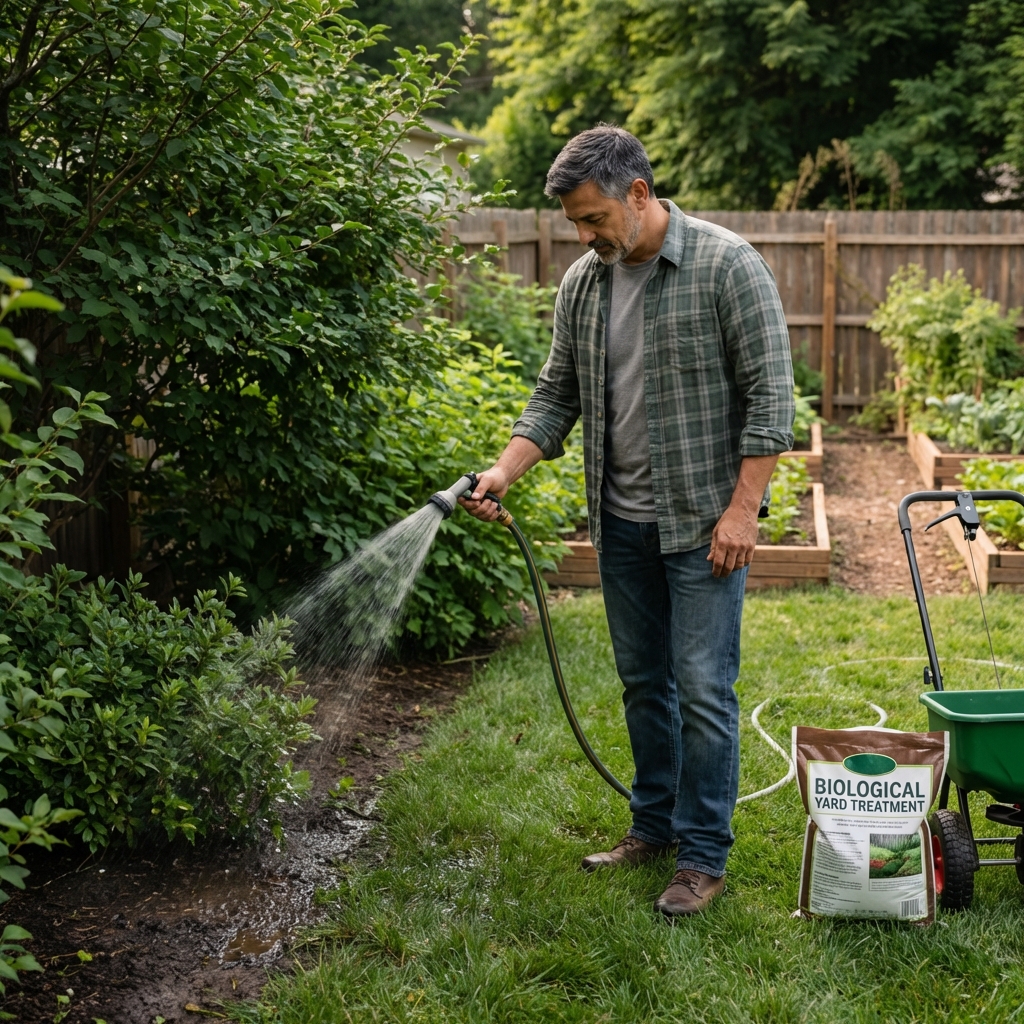
Beneficial nematodes are microscopic organisms that hunt soil-dwelling pests, including flea larvae. For fleas, look for products labeled for flea or lawn pest control that contain species such as Steinernema carpocapsae or Steinernema feltiae (availability varies by supplier and climate). They are popular with gardeners because they work in soil and do not leave residues that impact pollinators the way broad-spectrum insecticides can.
- Best for: shady, damp areas where fleas breed and where larvae live near the soil surface.
- Timing: apply when temperatures are mild and within the product’s recommended range. Dusk, early morning, or an overcast day is ideal.
- Moisture matters: water before and after application and keep soil lightly moist for several days.
- Handle with care: nematodes are living. Use before the expiration date, store as directed, and avoid leaving the mix in a hot sprayer.
- Compatibility: avoid applying right before or after harsh chemical insecticides, which can reduce nematode survival. Follow the supplier’s guidance.
2) Diatomaceous earth (food grade)
Food-grade diatomaceous earth can help in cracks, under steps, or in dry soil pockets where you can keep it dry. It works by damaging the waxy coating on insects, leading to dehydration.
- Best for: protected areas that stay dry, like under a porch edge or along foundation gaps.
- Big limitation: it stops working when wet and can be messy in gardens if overused.
- Use carefully: avoid applying where beneficial ground insects and pollinators will contact it.
- Safety note: avoid creating dust clouds and keep it out of eyes and lungs for people and pets.
3) Plant-based sprays (spot treat only)
Some natural yard sprays use plant-derived actives like cedar oil or clove or peppermint blends. These can help knock down adult fleas on contact, especially in pet hangout zones, but they typically have short residual activity outdoors.
- Best for: patios, dog runs, under-deck edges, and specific shady corners.
- How to win with them: reapply based on label directions and combine with cleanup and nematodes.
- Be cautious: essential oils can be irritating or toxic to pets, especially cats. Follow product directions and keep pets off until the area is fully dry.
4) Soap-and-water contact spray (tiny areas only)
For very small, exposed hotspots, a mild soap-and-water mix may kill fleas on contact. Outdoors, effectiveness is limited because fleas are usually protected in debris and soil. Treat this as a quick knockdown tool, not a yard-wide solution.
- Best for: a small patch you can see and reach, like a shady corner right before you rake out debris.
- Use sparingly: avoid runoff into beds and waterways.
- Garden note: soap can stress plants if overapplied. Keep it off foliage and do not drench garden soil.
Least-disruptive conventional option
If you need to escalate, an insect growth regulator (IGR) can be a more targeted way to break the cycle because it focuses on eggs and larvae rather than broadly killing insects. Products may use ingredients like methoprene or pyriproxyfen.
- Best for: stubborn infestations where reinfestation keeps happening despite cleanup and biological controls.
- How to use responsibly: treat only flea habitat zones, follow the label closely, and avoid flowering areas where pollinators forage.
What to avoid
Some “natural” ideas get repeated online but cause more trouble than they are worth.
- Garlic sprays and heavy essential oil DIY mixes: can burn plants and may be unsafe for pets.
- Broadcasting diatomaceous earth over the whole yard: hard on beneficial insects and impractical once moisture hits.
- Overusing broad-spectrum insecticides: can reduce beneficial predator insects and disrupt your yard ecology.
If you are gardening for pollinators, keep any flea treatment focused on flea habitat zones, not flowering beds.
A realistic 2-week plan
Consistency is what makes natural methods work. Here is a simple routine you can follow.
Days 1 to 3: hit the habitat
- Rake out leaf litter and thatch in shady edges.
- Trim back dense plants where pets rest.
- Wash pet bedding and vacuum inside (flea eggs drop indoors too).
Days 3 to 5: apply your main yard treatment
- Apply beneficial nematodes to shaded, moist flea zones (dusk, early morning, or overcast is best).
- Water as directed to keep the top layer of soil lightly moist for several days.
Days 7 to 10: spot treat adults
- Use a plant-based yard spray in pet zones if you are still seeing adults.
- Reapply per label directions, especially after rain.
Days 10 to 14: reset and maintain
- Mow and edge again.
- Recheck shady corners and under-deck areas.
- Continue weekly bedding washes during the season.
Expectation setting: you may see noticeable improvement in about 1 to 3 weeks, but stubborn infestations can take 4 to 8 weeks, especially if wildlife or untreated pets keep reintroducing fleas. Pupae can also “wait it out” and emerge later, so staying consistent matters.
Do not skip indoor steps
Yard control works best when you also reduce fleas inside. Otherwise, fleas can keep cycling between house and yard.
- Vacuum carpets and rugs frequently during outbreaks, and empty the canister or bag right away.
- Wash pet bedding, throw blankets, and slipcovers weekly in hot water when possible.
- Treat pets with vet-recommended flea prevention. If pets are not protected, they become the delivery system that keeps reseeding your yard.
Protecting pets and beneficial insects
Garden-friendly does not automatically mean pet-safe. A few practical guardrails help you avoid problems:
- Keep treatments out of flowering beds whenever possible, especially when bees are active.
- Read labels even on natural products, particularly around cats and small dogs.
- Let sprays dry fully before allowing pets back into treated areas.
- Focus on edges: fleas usually build up where pets rest and where shade and debris collect.
FAQs
Do natural flea killers work in the yard?
Yes, but they work best as a system: habitat cleanup plus a soil-stage treatment (like nematodes) plus targeted adult knockdown if needed. If you only do one spray, expect short-lived results.
How long does it take to see results?
Contact sprays can reduce adult fleas quickly in the exact spots you treat. Outdoors, you may see a noticeable reduction in 1 to 3 weeks, but full control often takes longer (commonly 4 weeks or more) because pupae can persist and weather and host pressure vary.
Will rain ruin my efforts?
Heavy rain can reduce the effectiveness of dusts and may require reapplication of some sprays. Nematodes can actually benefit from moisture, as long as the area does not flood or dry out immediately after.
Bottom line
If you want a garden-friendly natural flea killer approach, think less like a single product and more like yard management. Open up sunny, dry conditions, treat the soil stage with beneficial nematodes, and use spot sprays only where fleas actually live. Pair that with indoor cleanup and vet-approved pet prevention, and you will get results that last without nuking your backyard ecosystem.

Jose Brito
I’m Jose Britto, the writer behind The Country Store Farm Website. I share practical, down-to-earth gardening advice for home growers—whether you’re starting your first raised bed, troubleshooting pests, improving soil, or figuring out what to plant next. My focus is simple: clear tips you can actually use, realistic expectations, and methods that work in real backyards (not just in perfect conditions). If you like straightforward guidance and learning as you go, you’re in the right place.