Bedbugs are not a “dirty house” problem. They are a hitchhiker problem. They most often ride in on luggage, used furniture, and shared seating. Less commonly, they can tag along via boxes, packages, or items that were stored or handled in an infested space. The good news is you can catch an issue early by knowing what to look for and checking the right places.
This guide keeps it straightforward and garden-friendly, meaning lower-tox, targeted methods: practical signs, quick confirmation steps, and safer ways to respond so you do not accidentally spread them or reach for the harshest option first.

What bedbugs usually look like
Adult bedbugs are about the size of an apple seed, flat, and oval. They are reddish-brown, and after feeding they look more swollen and darker. Young bedbugs, called nymphs, are smaller and lighter, sometimes almost translucent.
- Adults: about 5 to 7 mm, visible to the naked eye.
- Nymphs: tiny, pale to yellowish, harder to spot.
- Eggs: about 1 mm, pearly white, usually glued into cracks and seams.
If you only see one suspicious bug, do not panic. Confirm it before you treat anything.
Physical signs to look for
1) Speckled black dots in seams and corners
One of the most consistent signs is bedbug fecal spotting. It looks like tiny black ink dots, often clustered along mattress seams, box spring edges, headboards, and the corners of upholstered furniture. If you dab a dot with a damp cotton swab, it may smear like a marker.
2) Rusty or reddish stains on sheets
Small blood smears can happen when a bug is crushed after feeding. This can show up as tiny rusty spots on sheets, pillowcases, or pajamas.
3) Shed skins that look like pale shells
As they grow, bedbugs shed their skins. These look like light tan, empty “bug shapes” and are often found where they hide: mattress piping, bed frame joints, behind the headboard, and along baseboards.
4) Eggs in cracks that look like tiny rice or salt grains
Eggs are very small and sticky, and they are usually cemented to protected spots. You might spot them in screw holes, wood joints, fabric folds, or behind loose wallpaper edges.
5) A sweet, musty odor in heavier infestations
Some people describe a sweet, musty smell when populations get large. This is not a reliable early clue, but if you notice it along with other signs, take it seriously.
6) Bites that do not follow a simple pattern
Bites can be itchy welts, sometimes in lines or clusters, but bite reactions vary a lot. Some people do not react at all. Because bites alone are not proof, always pair this clue with a physical inspection.
Where to look: a quick inspection map
Bedbugs like tight, protected spaces close to where people rest. Start with the bed and work outward.
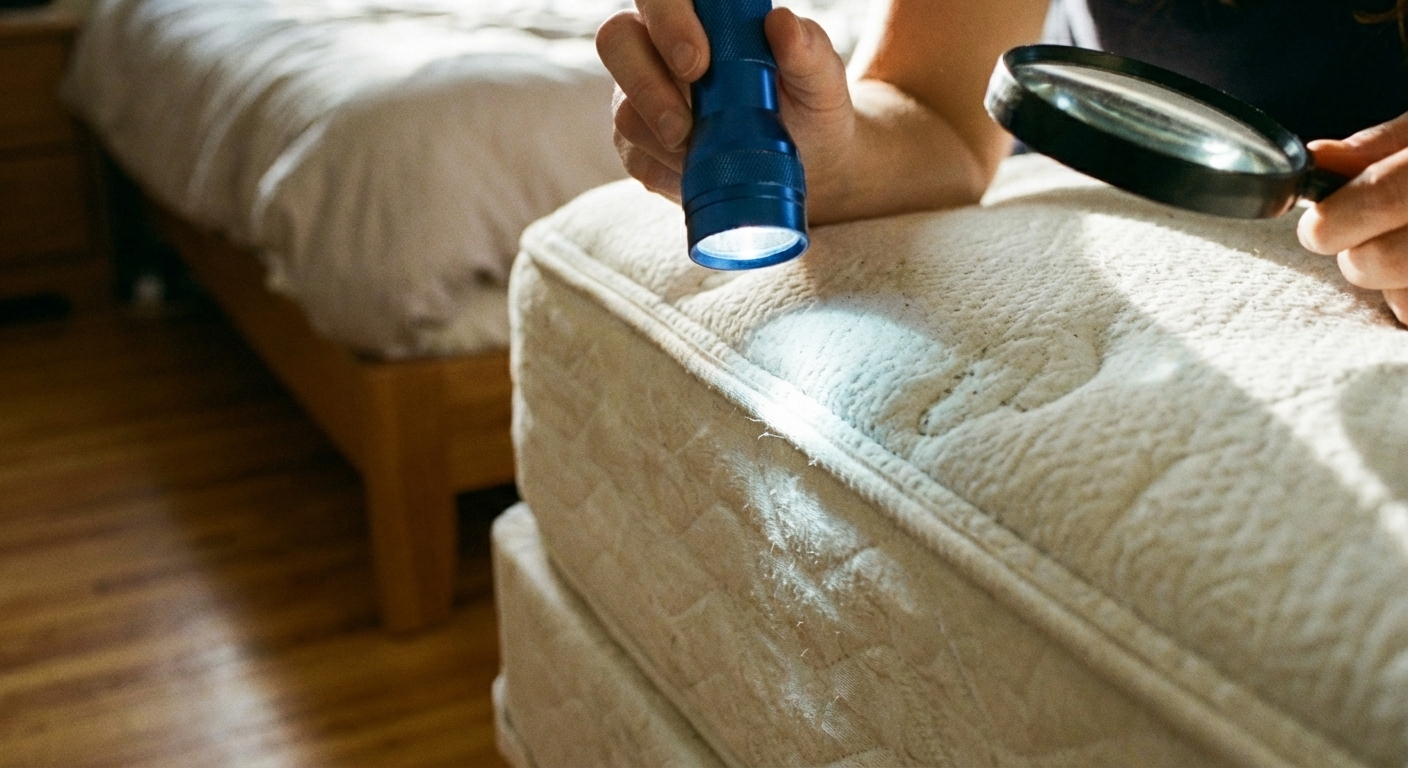
- Mattress: seams, piping, tags, and near the corners.
- Box spring: fabric underside, staple lines, wood frame edges.
- Bed frame and headboard: joints, screw holes, cracks, behind wall-mounted headboards.
- Nightstands and dressers: drawer joints, underside, back panels.
- Upholstered furniture: seams, zippers, under cushions, skirt folds.
- Walls and trim: baseboards, outlets, picture frames, curtain hems.
Helpful tools: a bright flashlight, a thin plastic card for gently running along seams to dislodge evidence (do not scrape aggressively), and a clear zip bag or tape to capture a specimen.
Bedbugs vs. common look-alikes
If you garden, you are more likely to run into small insects that can confuse the picture. Here are the most common mix-ups and how to tell them apart.
Carpet beetles
Adult carpet beetles are small, rounded, and beetle-shaped, not flat like a bedbug. Their larvae are fuzzy and often found near natural fibers, pet hair, or stored items. They can cause skin irritation, but they do not feed on blood.
Ticks
Ticks have eight legs and a more compact body. Bedbugs have six legs and visible antennae. If you have pets that go outdoors, ticks are a realistic possibility.
Fleas
Fleas are narrow, dark, and jump. Bedbugs do not jump. Fleas often focus bites around ankles and lower legs, especially if pets are involved.
Bat bugs
Bat bugs look extremely similar to bedbugs and can occur in homes with bats. A close inspection under magnification is often needed. If you suspect bats in an attic or chimney, treat that as a separate issue and consider professional help.
Tip: If you can safely capture the insect in a sealed bag, many local extension offices or pest ID resources can help confirm what it is.
Confirm before you treat
- Find a physical sign: a bug, shed skin, eggs, or fecal spots in typical hiding places.
- Check multiple nearby spots: mattress seam plus bed frame joint, for example.
- Capture evidence: clear tape on a bug or skin, or a zip bag specimen.
- Take a clear photo: place the bug next to a coin for scale, and avoid crushing it if possible.
- Do not move items room to room: that is how bedbugs spread through a house.
If you only have bites but no physical signs, keep looking. Focus on the bed structure and nearby furniture. Bedbugs hide well, but they leave clues where they live.
Garden-friendly response steps
Here is the approach I recommend for most households: contain, clean with heat, and monitor. You can do a lot without foggers or heavy sprays.
1) Contain laundry and soft items
- Put bedding, pajamas, and nearby clothing into sealed bags before moving them.
- Wash and dry on high heat. Drying is often the stronger step. When the items can tolerate it, aim for at least 30 minutes on high heat after the dryer is fully hot. Follow fabric care labels and use the hottest safe setting.
- After drying, store clean items in a fresh sealed bag or bin until you are confident the issue is resolved.
2) Vacuum thoughtfully
Vacuum mattress seams, bed frame joints, baseboards, and carpet edges. Immediately empty the vacuum into a sealed bag and take it outside. Clean the canister or replace the bag right away.
3) Use steam for cracks and seams
A steamer can kill bedbugs and eggs on contact if used correctly. Use a steamer designed for surfaces (often called “dry” or low-vapor steam), keep the tip about 1 to 2 inches from the surface, and move slowly along seams and cracks so the heat penetrates. Avoid soaking fabrics or wood, since lingering moisture can lead to odors or mold. Also avoid blasting so hard that you push bugs deeper into walls.
4) Encase the mattress and box spring
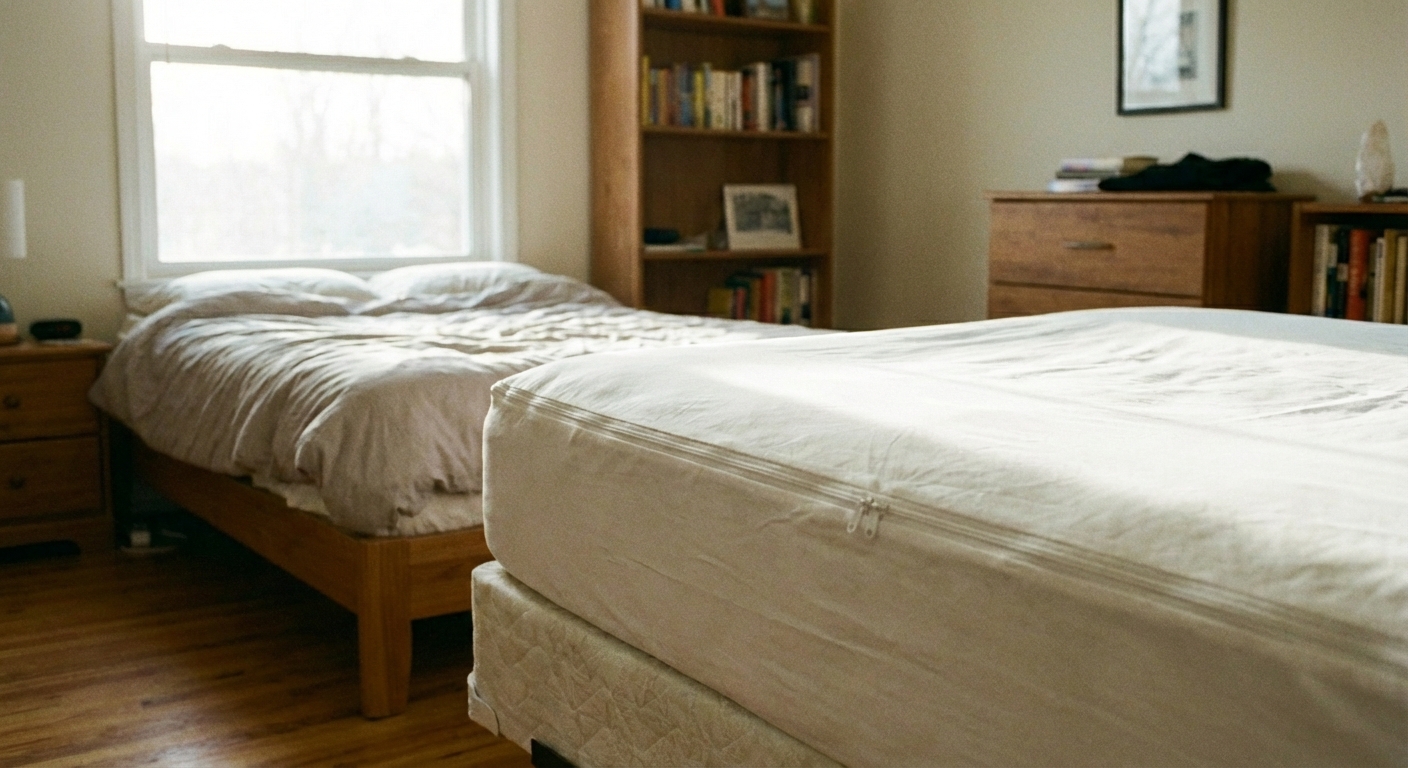
Bedbug-proof encasements trap any bugs inside and remove lots of hiding spots. Leave encasements on long term. Many experts recommend keeping them on for about 12 months, since bedbugs can survive a long time without feeding.
5) Isolate the bed and reduce easy access
- Pull the bed slightly away from the wall.
- Keep blankets and sheets from touching the floor.
- Make sure the bed does not touch curtains or nearby furniture.
- Reduce clutter around the bed so you can inspect and treat effectively.
6) Add monitors and interceptors
Place bed leg interceptors under the bed. This helps you track activity and reduces easy access.
7) Consider desiccant dusts carefully
Some lower-tox options like silica gel dust can be effective when applied lightly into cracks and voids. Diatomaceous earth is another desiccant, but any dust can irritate lungs. Never use pool-grade diatomaceous earth indoors. If you choose a product, use a labeled indoor pest product (often sold as “food-grade” DE), apply a very light layer, keep it away from kids and pets, and avoid breathing the dust. If you are not confident applying dust safely, skip it and focus on heat, encasements, and monitoring.
What to avoid: foggers or “bug bombs.” They do not reliably reach hiding spots, can push bedbugs deeper into walls and new rooms, and they can create fire or health hazards if misused.
Can bedbugs come from the garden?
In most cases, no. Bedbugs are indoor pests that prefer human resting areas. You are far more likely to bring them home from travel, shared seating, used furniture, or visitors than from soil, compost, or plants.
For gardeners, the more realistic “crossover” scenarios are human ones: bringing home a used bench or cushion, setting a travel bag on a potting bench, or storing items in a shared laundry or mudroom area. If you only notice bites after working outside and you have no indoor signs, consider mosquitoes, chiggers, or other outdoor pests. The deciding factor is still the physical evidence inside the home.
If you suspect bedbugs on a used item
Secondhand finds are great, but this is one area where caution pays off.
- Inspect outside or in a garage: seams, joints, screw holes, and underneath.
- Avoid bringing upholstered items inside unless you are confident they are clean.
- Heat treat what you can: clothing and some fabrics can go straight into the dryer on high (at least 30 minutes once fully hot, if fabric allows).
- Seal and isolate: if you are unsure, keep the item bagged or wrapped until you decide.
When to call a professional
Some situations are hard to DIY, even with careful, lower-tox steps.
- You find bedbugs in multiple rooms.
- You have repeated signs despite heat, encasements, and monitoring.
- You live in multi-unit housing where spread between units is possible.
- Someone in the home is sensitive to bites or has health concerns that make a drawn-out process risky.
If you live in an apartment, condo, or other multi-unit building, notify property management early. Bedbugs can move between units, and faster coordination usually means a faster resolution.
If you hire help, ask about their plan: inspection method, treatment type (heat, targeted applications, or a combination), number of visits, and what you need to do before and after. A solid plan is usually more important than a single “magic” product.
Quick takeaways
- Do not rely on bites alone. Look for fecal spots, shed skins, eggs, and live bugs in seams and cracks.
- Start your inspection at the bed and work outward.
- Garden-friendly control focuses on heat, vacuuming, encasements, isolation, and monitoring, not foggers.
- Bedbugs rarely come from the garden. They usually hitchhike in from human places.
If you want the simplest next step: grab a flashlight tonight and check the mattress seams and the headboard area. Those two spots tell the story more often than not.
Health note: If bites are causing a strong reaction, signs of infection (increasing redness, warmth, pus), or you feel unwell, consider checking in with a clinician. Try to avoid scratching, since broken skin is what usually turns an itchy bite into a bigger problem.

Jose Brito
I’m Jose Britto, the writer behind The Country Store Farm Website. I share practical, down-to-earth gardening advice for home growers—whether you’re starting your first raised bed, troubleshooting pests, improving soil, or figuring out what to plant next. My focus is simple: clear tips you can actually use, realistic expectations, and methods that work in real backyards (not just in perfect conditions). If you like straightforward guidance and learning as you go, you’re in the right place.