Fleas are a stubborn problem because much of the infestation lives in your house and yard, not on your dog. Eggs, larvae, and pupae can hide in carpets, cracks, bedding, and shaded outdoor areas. The good news is you can handle a lot of this with eco-friendly steps that are safe, practical, and effective when you do them in the right order.
This page focuses on what you can do today to get fleas off your dog, plus what to do over the next few weeks to stop the cycle.
Quick reality check: In many infestations, only a small share of fleas are the adult fleas you see on your pet. A commonly cited estimate is about 5 percent on the pet and 95 percent in the environment (eggs, larvae, pupae). The exact split varies, but the takeaway is the same: treat the dog and the environment together.
First, confirm it is fleas
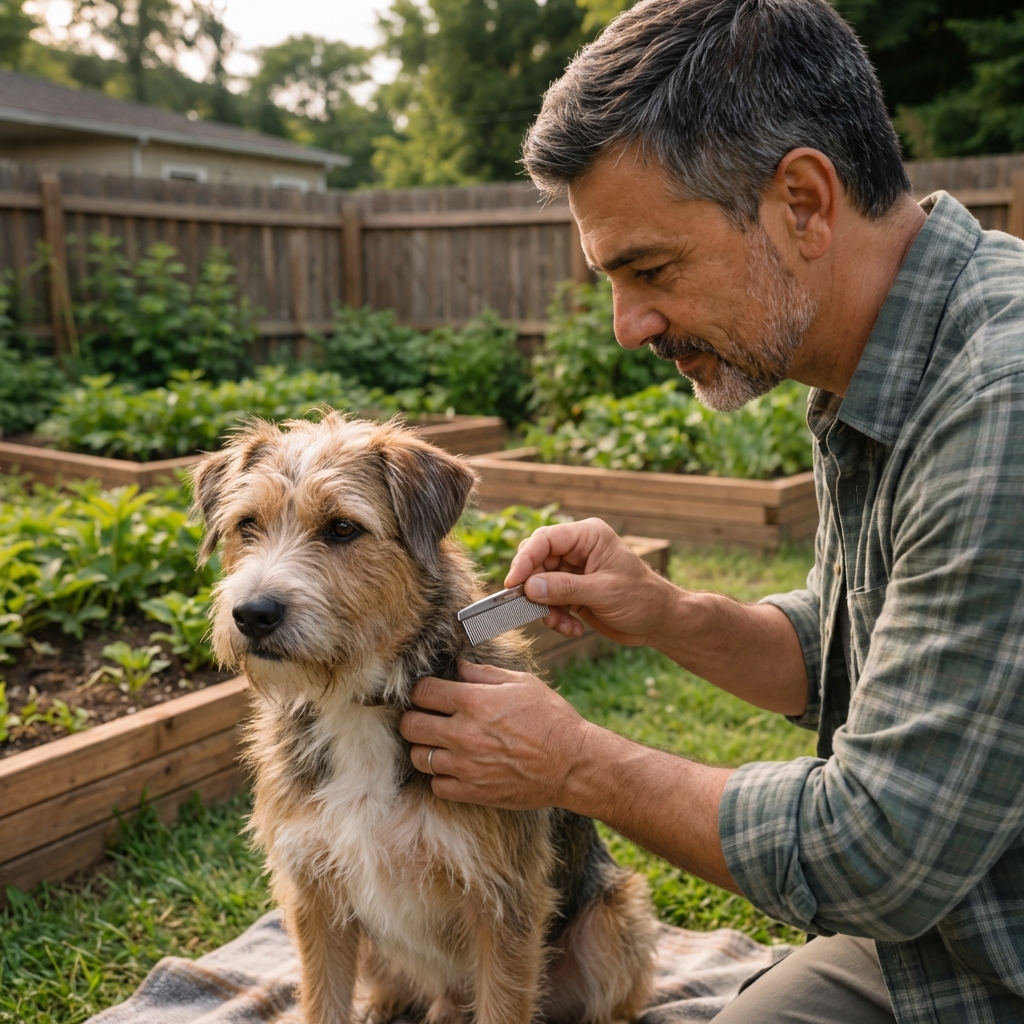
If your dog is scratching, chewing at the tail base, or has pepper-like specks in the coat, fleas are likely. Do a quick check:
- Flea comb test: Comb the neck, along the back, and around the tail base over a white paper towel.
- Flea dirt test: If you see black specks, add a few drops of water. If it turns reddish-brown, that is flea dirt (digested blood).
Even if you only find a couple, treat it like an active infestation. Fleas reproduce quickly.
Afterward: Rinse and dry the comb, and toss the paper towel (or wash it hot if it is cloth) so you do not accidentally spread eggs or flea dirt.
Do this today: remove fleas from your dog
1) Start with thorough flea combing
This is the most eco-friendly and immediate step. Use a real metal flea comb. Keep a bowl of warm water with a little dish soap nearby and dip the comb often to trap and drown fleas.
- Work in good light, section by section.
- Focus on the neck, armpits, groin area, and tail base.
- Go slow. A 10 to 15 minute combing can pull off a surprising number.
2) Bathe using a gentle approach
A bath helps remove fleas and flea dirt and makes combing more effective afterward.
- Best option: A mild pet shampoo followed by careful combing.
- Dish soap note: Some people use a small amount of dish soap to help break surface tension and trap fleas. It can dry out skin, so do not make it your regular plan and avoid it if your dog has sensitive skin.
- Start at the neck: To help prevent fleas from running up to the ears and face, lather a ring of shampoo around the neck before wetting the rest of the body. This may help, but be careful around the eyes and ears.
Dry your dog well and comb again when the coat is just slightly damp. You may catch more fleas at that point.
3) Skip essential oils on your dog
Eco-friendly does not automatically mean safe for pets. Many essential oils can irritate skin or cause toxicity if absorbed or licked. Tea tree oil is a common example that can be dangerous for dogs at certain concentrations.
4) Treat all pets in the home
If you have more than one pet, plan to address fleas on every animal in the household, including cats. Otherwise, fleas often bounce between pets and the problem drags on.
Important: Never use dog flea products on cats. Ask your vet for cat-safe options.
The part most people miss: treat the home
If you only treat your dog, fleas can keep emerging from carpets, cracks, and bedding for weeks. Your goal indoors is simple: remove eggs and larvae, and vacuum consistently to reduce the population over time. Vacuuming can also stimulate pupae to emerge, which helps bring hidden fleas into the “treatable” stage.
1) Wash and heat-dry bedding
- Wash your dog’s bedding, blankets, and any slipcovers your dog uses.
- Use the hottest dryer setting the fabric allows. Heat is what does the real work.
- Repeat weekly during an active infestation.
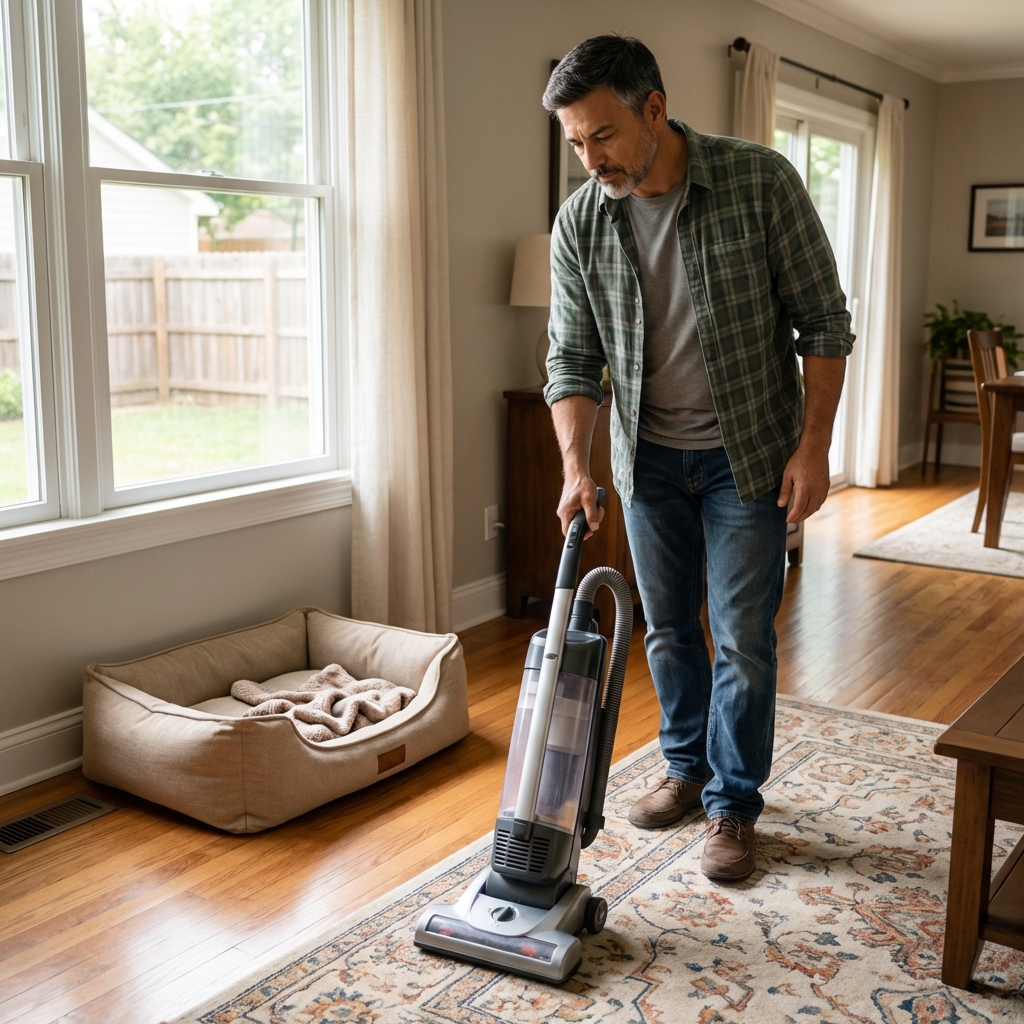
2) Vacuum hard for 2 weeks
Vacuuming is one of the most effective low-toxicity flea tools.
- Vacuum carpets, rugs, baseboards, under furniture, and pet hangout spots.
- Do it daily for 7 to 14 days, then every few days for another couple of weeks.
- During an active infestation: Empty the canister after each session outdoors, or seal the vacuum bag in a trash bag and take it out right away.
3) Consider a targeted IGR indoors (optional)
If you want a lower-spray option that still has strong evidence behind it, consider an insect growth regulator (IGR) such as methoprene or pyriproxyfen. IGRs do not kill adult fleas on contact, but they help stop eggs and larvae from developing, which can shorten the overall battle when used alongside cleaning and pet treatment.
Use only as directed and focus on pet areas and flooring, not a whole-house fogging approach. If you have questions about what is appropriate for your home and pets, ask your vet.
4) Use food-grade diatomaceous earth carefully (optional)
Food-grade diatomaceous earth (DE) can help in very dry areas by damaging the waxy coating of insects. It is not a magic fix, and real-world results can be mixed. It must be used with care because the dust can irritate lungs.
- Only use food-grade, not pool-grade.
- Wear a well-fitting mask (and consider eye protection) during application, and avoid creating airborne dust.
- Apply a very light dusting to cracks, along baseboards, and under furniture, then vacuum later.
- Keep pets and kids away during application.
- DE is less effective when damp or humid.
- Do not put DE directly on your dog’s coat as a routine flea strategy.
Do not forget the yard: eco-friendly outdoor control
If your dog goes outside, the yard can re-seed the problem. Fleas love shaded, humid spots like under decks, along fence lines, and in leaf litter.
1) Make the yard less flea-friendly
- Mow regularly and trim overgrown edges.
- Rake and remove leaf piles and damp debris.
- Limit wildlife attractants (fallen fruit, accessible trash), since wildlife can carry fleas.
2) Target shady hangouts, not the whole yard
Spot-treat the areas where your dog rests or where you find flea activity. This saves money and reduces environmental impact.
3) Consider beneficial nematodes (pet-safe, garden-friendly)
Beneficial nematodes are microscopic organisms that can reduce flea larvae in soil. Species commonly sold for fleas include Steinernema carpocapsae and sometimes Steinernema feltiae. They work best in shaded, moist conditions and within the temperature range listed on the product label.
- Apply in the evening or on a cloudy day.
- Water the area before and after application as directed.
- Expect gradual improvement, not an overnight kill.

A realistic timeline: how long until fleas are gone?
Even with great effort, it often takes 3 to 8 weeks to fully break the flea life cycle. A best-case situation may improve faster, but pupae can “wait” and hatch later when they sense vibration, warmth, and carbon dioxide.
- Day 1: Comb, bathe, wash bedding, vacuum.
- Week 1: Daily vacuuming, repeat combing every day or two.
- Weeks 2 to 4: Keep up with washing and vacuuming. Yard steps continue.
- Weeks 5 to 8: Most homes see the last of the “hatch-out” by now if you stay consistent and all pets are treated.
If you see a few fleas after the first week, that does not always mean failure. Some hatch-out can be normal. What you want is a steady drop over time.
Eco-friendly prevention that helps long-term
Stay consistent with grooming
A quick flea-comb session once or twice a week can catch problems early, especially during warm months.
Keep pet areas easy to clean
Washable covers on dog beds, a throw blanket on the couch, and fewer cluttered floor zones make a big difference when you need to clean fast.
Support your dog’s skin health
Healthy skin is not flea-proof, but it can reduce irritation and secondary skin issues. If your dog is itchy, talk with your vet about diet, allergies, and safe supplements.
When to call the vet (important)
Eco-friendly home steps are great, but some situations need medical help. Contact your vet if:
- Your dog is a puppy, senior, pregnant, or has health conditions.
- You see pale gums, weakness, or signs of anemia.
- Your dog has hot spots, open sores, or severe skin inflammation.
- You have tried consistent cleaning and combing for 2 to 3 weeks and the infestation is not improving.
- Your dog has intense itching, scabs, or hair loss that may suggest flea allergy dermatitis.
- You notice rice-like segments in stool or around the rear, which can be a sign of a tapeworm infection (fleas can transmit tapeworms).
Some veterinary flea preventatives are very effective and can fit into a lower-tox plan because they reduce the need for repeated spraying in your home and yard. Your vet can help you choose an option that is appropriate for your dog and any cats in the household.
Quick checklist
- Confirm fleas with a comb test and flea dirt test
- Flea comb with soapy water nearby
- Bathe gently, then comb again (avoid eyes and ears)
- Treat all pets in the household with species-appropriate products
- Wash and hot-dry bedding weekly
- Vacuum daily for 1 to 2 weeks, then every few days
- Empty vacuum contents after each session during an active infestation
- Declutter pet hangout zones
- Yard cleanup and spot treatment in shade
- Consider beneficial nematodes for outdoor larvae
- Consider an indoor IGR if you want targeted help breaking the cycle
- Call the vet if symptoms are severe or not improving

Jose Brito
I’m Jose Britto, the writer behind The Country Store Farm Website. I share practical, down-to-earth gardening advice for home growers—whether you’re starting your first raised bed, troubleshooting pests, improving soil, or figuring out what to plant next. My focus is simple: clear tips you can actually use, realistic expectations, and methods that work in real backyards (not just in perfect conditions). If you like straightforward guidance and learning as you go, you’re in the right place.