Bed bug bites are one of those problems that feel small until you are living with the itch. The good news is you can usually calm the reaction fast with a few low-waste basics, some smart skin care, and a little patience. This page focuses on relief for the bites. If you are still getting new bites, you will also need to deal with the bugs themselves.
Not sure it is bed bugs? Bites often show up in clusters or lines, and you may also notice tiny dark spots on sheets, shed skins, or live bugs hiding in mattress seams and bed frame joints.
First, a quick reality check
Bed bug bites are your skin reacting to proteins in bed bug saliva. That means two people in the same home can react very differently. For many folks, bites improve in a few days. For others, itching can hang around for 1 to 2 weeks (and sometimes longer), especially if the skin gets irritated or scratched.
What you can do right now is reduce inflammation, stop the itch cycle, and protect the skin barrier so the bites heal cleanly.
Do this in the first 10 minutes
1) Wash gently
Rinse the area with cool water and a mild, fragrance-free soap. Pat dry. Avoid hot water at first, since heat can make itching flare.
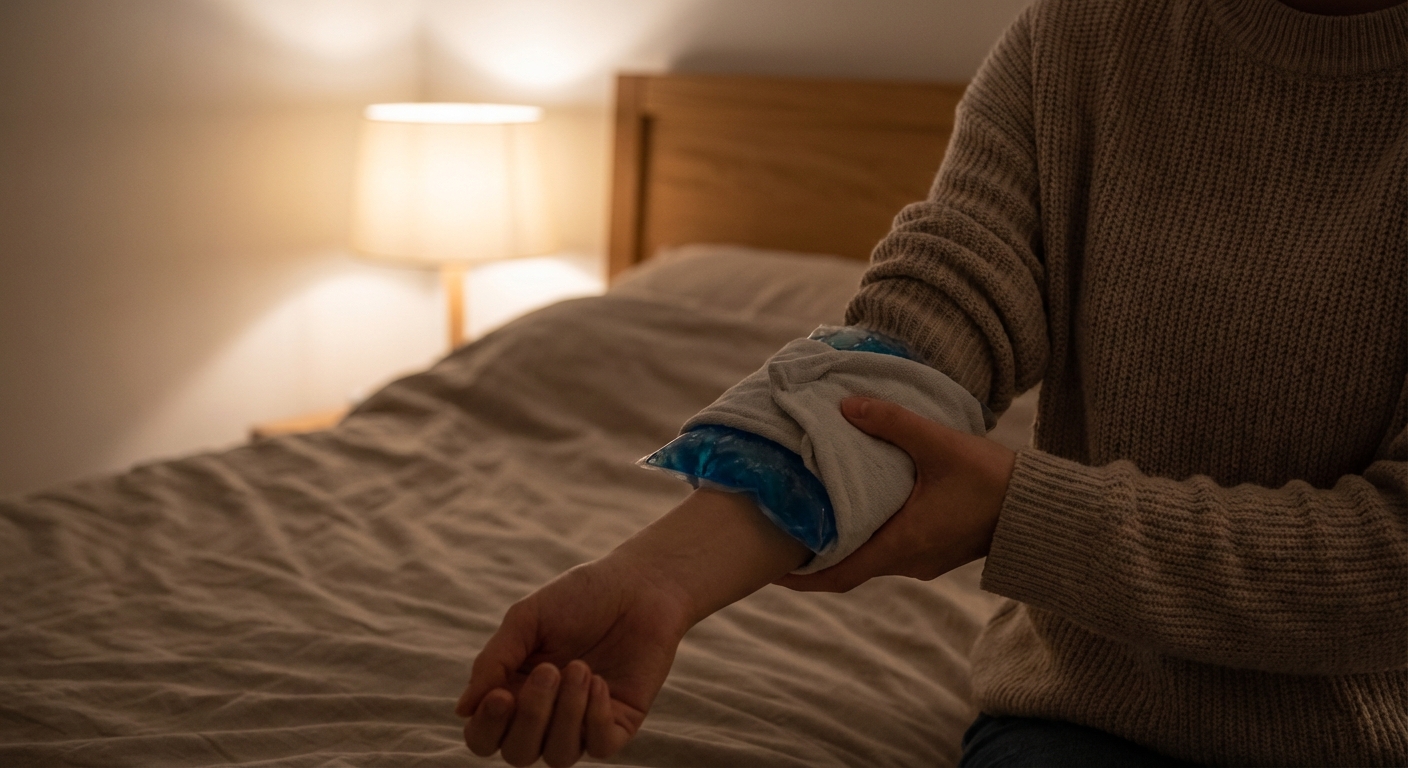
2) Cold compress for fast relief
Cold is one of the quickest tools because it reduces swelling and numbs itching.
- Wrap ice or a cold pack in a clean cloth (do not put ice directly on skin).
- Hold it on the bites for 10 to 15 minutes.
- Repeat 2 to 3 times over the next hour if needed.
Tip: If you do not have an ice pack, a chilled spoon or a bag of frozen peas wrapped in cloth works.
Remedies that actually help
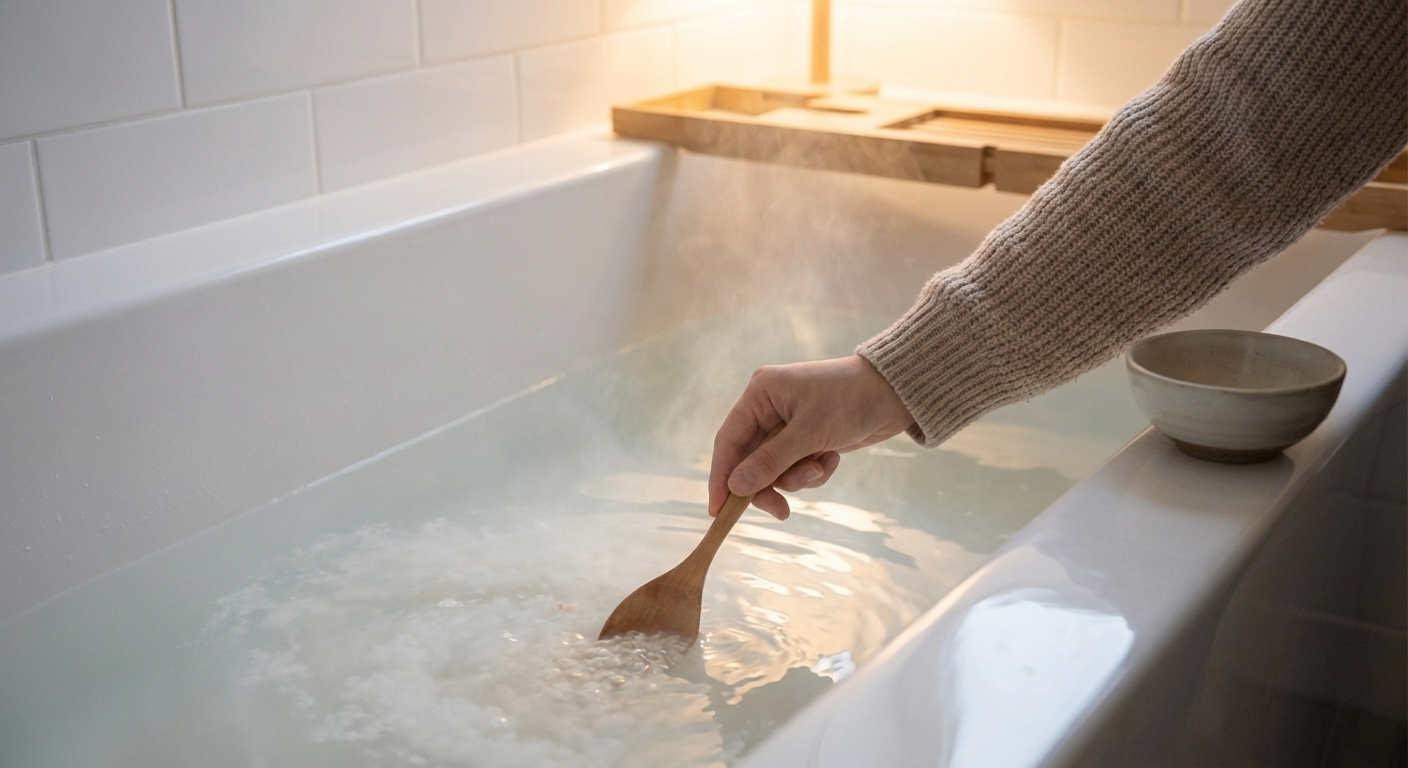
Colloidal oatmeal (best for widespread itching)
Oatmeal is a classic for itchy skin because it supports the skin barrier and calms irritation.
- Soak: Add colloidal oatmeal to a lukewarm bath and soak 10 to 15 minutes.
- Paste: Mix a little with water into a paste and apply to bites for 10 minutes, then rinse.
After you rinse, pat dry and apply a bland moisturizer (or a thin layer of plain petrolatum) to help seal in moisture.
Aloe vera gel (simple cooling)
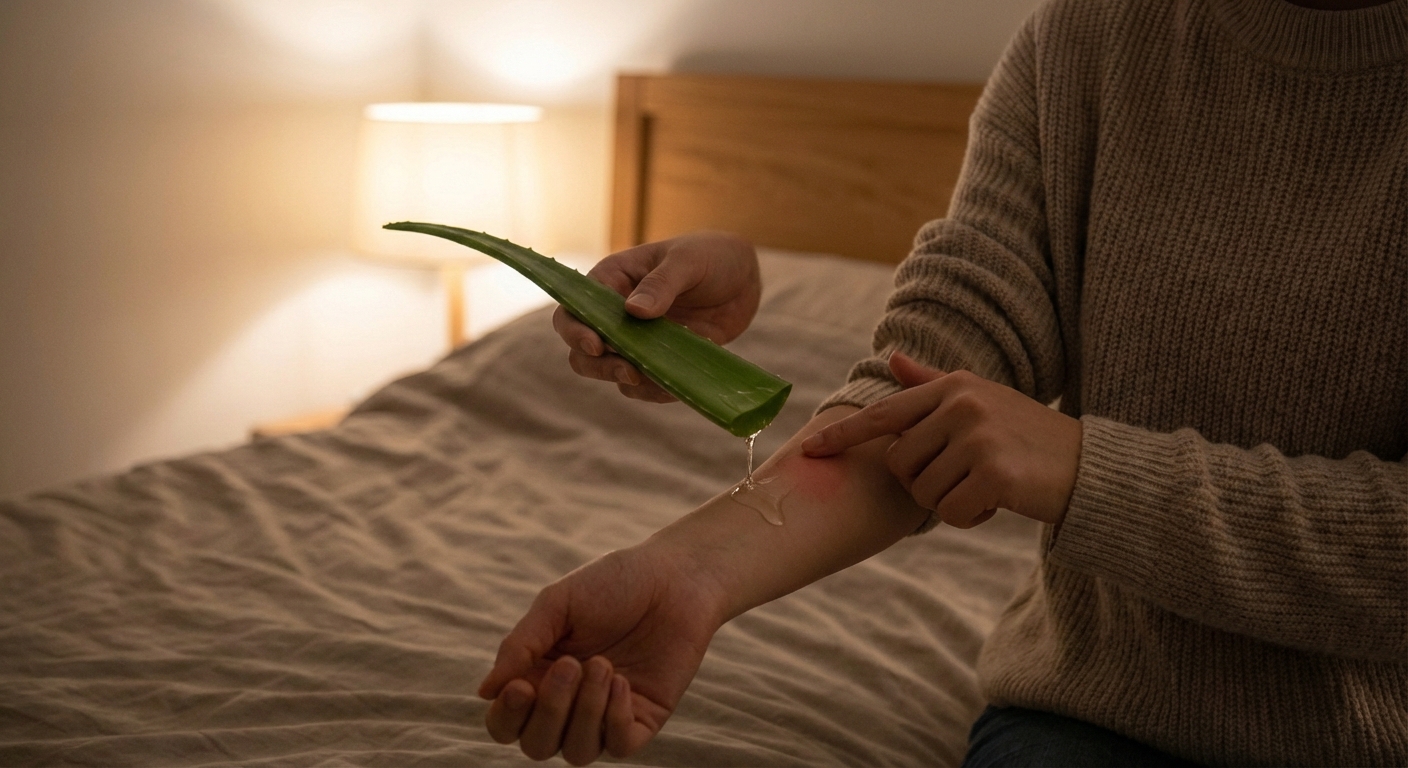
Use pure aloe gel, ideally fragrance-free. Apply a thin layer and let it dry. Reapply 2 to 3 times a day.
If you grow aloe: A small piece of fresh leaf gel can work, but patch test first. Some people react to plant compounds.
Baking soda paste (short contact time)
For some people, a baking soda paste helps reduce itch, but evidence is limited and it can be drying. Mix 1 tablespoon baking soda with just enough water to make a spreadable paste. Leave on 5 to 10 minutes, then rinse off and moisturize.
Skip this if your skin is cracked or very dry.
Witch hazel (choose alcohol-free if possible)
Witch hazel can feel soothing for some people, but evidence is mixed and many products contain alcohol, which can sting and dry skin. If you try it, use an alcohol-free version on a cotton pad and dab lightly. Stop if it burns.
Over-the-counter help (used thoughtfully)
If you want the fastest results, OTC options can be a big help. Use the smallest amount that works for you.
Hydrocortisone 1% cream
This reduces inflammation and itching. Apply a thin layer 1 to 2 times daily for a few days.
- Avoid using on broken skin.
- Avoid long use on the face, groin, or large areas unless a clinician advises it.
- Do not use for more than 7 days without medical guidance.
- For children (especially under age 2), follow the label and consider checking with a pediatrician first.
Oral antihistamines for itching
If itching is keeping you awake, an antihistamine can reduce the reaction. Some are sedating and may help at night. Non-drowsy options may work better for daytime. Follow the label and consider asking a pharmacist if you take other medications.
Safety note: Do not combine sedating antihistamines with alcohol, sleep aids, or other sedatives unless a clinician says it is safe.
What to avoid
- Scratching. This is how bites turn into scabs, stains, and sometimes infections. If you are scratching in your sleep, trim nails short and consider a light bandage.
- Essential oils directly on bites. Tea tree, peppermint, eucalyptus, and similar oils can irritate already inflamed skin and trigger contact dermatitis.
- Vinegar, rubbing alcohol, or bleach. These are harsh, drying, and can cause chemical irritation. They do not disinfect a bite into healing faster.
- Hot showers right after you notice bites. Heat often ramps up itching for an hour or two.
A simple 24-hour plan
Morning
- Wash gently, pat dry.
- Apply aloe or a thin layer of fragrance-free moisturizer.
- If very itchy, apply hydrocortisone 1% thinly.
Afternoon
- Cold compress 10 minutes if swelling returns.
- Oatmeal paste spot treatment if itching spikes, then rinse and moisturize.
Evening
- Lukewarm oatmeal bath or quick oatmeal paste.
- Moisturize to protect skin barrier.
- If itching keeps you up, consider an oral antihistamine as directed.
When bites need medical care
Get medical help quickly if you notice:
- Signs of infection: increasing redness, warmth, swelling, worsening pain, pus, or red streaks.
- Fever or feeling unwell along with worsening skin.
- Severe allergic symptoms: facial swelling, trouble breathing, widespread hives, dizziness.
- Bites near the eyes that swell significantly.
- Large blisters, or blistering that is spreading (do not pop blisters, keep them clean and covered).
Prevention so you stop getting new bites
Fast bite relief is great, but the itch comes right back if bites keep happening. A few low-toxin steps can cut down exposure while you work on full removal. DIY eradication can be tough, so consider professional help if the problem persists.
- Heat treat bedding: Wash and dry on the hottest safe setting. Heat is one of the most effective tools.
- Vacuum carefully: Mattress seams, bed frame joints, baseboards. Empty the canister into a sealed bag immediately.
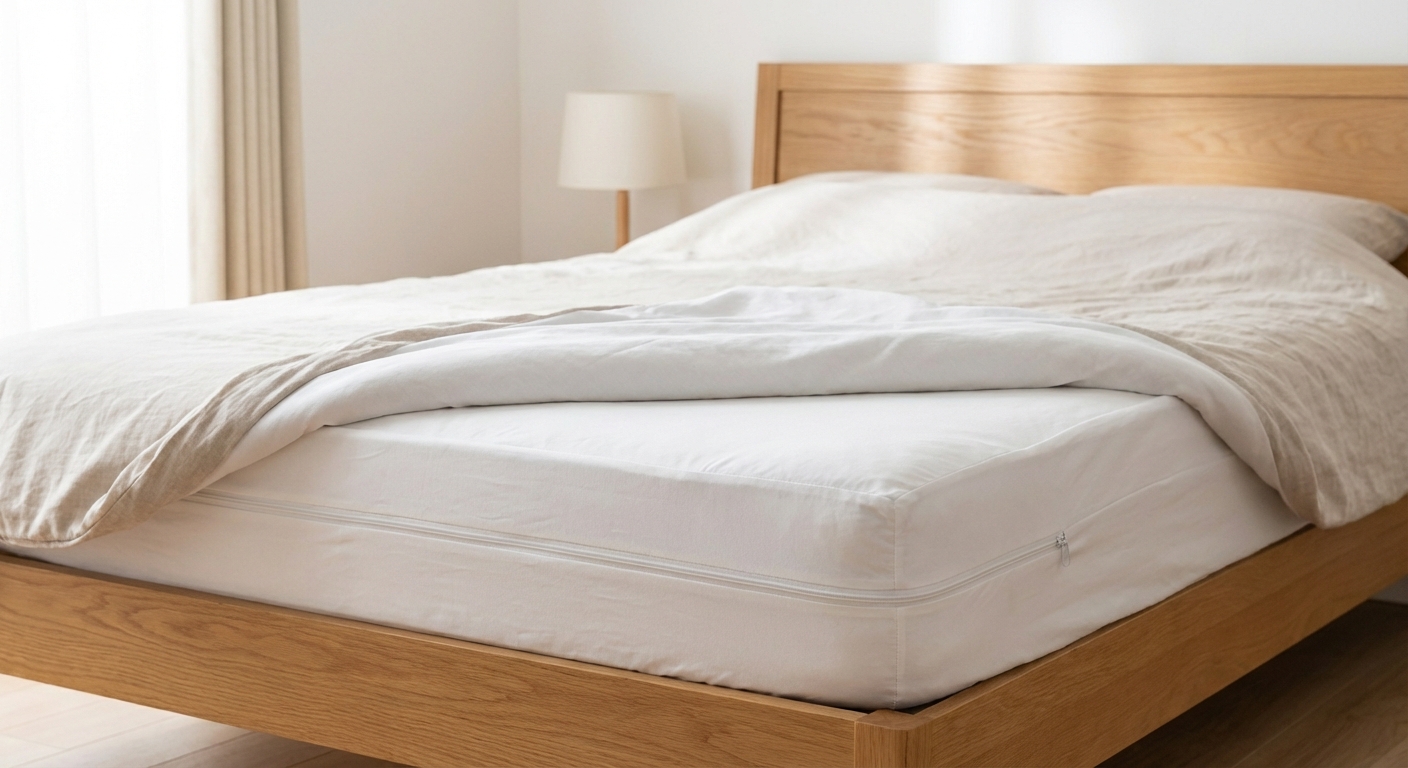
- Use mattress and box spring encasements: Bed bug rated encasements help trap bugs and simplify inspection.
- Reduce clutter near the bed: Fewer hiding places make treatment easier.
- Try interceptors: Bed bug interceptor traps under bed legs can help monitor activity and reduce bites.
- Skip foggers: Bug bombs can be ineffective for bed bugs and may drive them deeper into hiding, while adding unnecessary chemicals.
Quick FAQ
How long do bed bug bites last?
Often a few days, but it can be 1 to 2 weeks depending on your sensitivity and whether the skin gets scratched. In some cases, marks can linger longer.
Why do the bites itch more at night?
Your body notices itch more when you are still and warm in bed. Plus scratching is more likely when you are half asleep.
Can I put plant-based remedies on kids?
Stick to gentle options like cool compresses and colloidal oatmeal, and avoid essential oils. For young children, check with a pediatrician before using medicated creams or oral antihistamines.

Jose Brito
I’m Jose Britto, the writer behind The Country Store Farm Website. I share practical, down-to-earth gardening advice for home growers—whether you’re starting your first raised bed, troubleshooting pests, improving soil, or figuring out what to plant next. My focus is simple: clear tips you can actually use, realistic expectations, and methods that work in real backyards (not just in perfect conditions). If you like straightforward guidance and learning as you go, you’re in the right place.