When flies show up indoors, it usually means one of two things: something inside is feeding them or breeding them, or they are simply getting in from outside (open doors, torn screens, seasonal surges). The fastest natural fix is not a fancy spray. It is a simple 3-part approach: remove the source, trap the adults, and shut down entry points.
Below are the quickest remedies I have seen work in real homes, plus the prevention habits that keep you from fighting the same battle next week.
First: identify what kind of fly you have
You do not need to be an entomologist, but matching the remedy to the fly saves time.
- House flies: bigger, loud, and they love trash, pet waste, and food crumbs.
- Fruit flies: tiny, tan, often hovering around fruit bowls, recycling, sticky spills, and drains.
- Drain flies: tiny, fuzzy, moth-like flies hanging around sinks, tubs, and floor drains.
- Fungus gnats: tiny black flies around houseplants, especially overwatered soil.
- Blow flies or cluster flies: larger flies that can appear suddenly at windows. Blow flies often point to something decaying (sometimes a dead animal in an attic or wall void). Cluster flies often come from outdoors and gather in sunny windows.
If you are seeing dozens per day, focus on a hidden source: a trash can liner leak, a forgotten potato or onion, recycling residue, a dirty mop bucket, a slow drain, or an easy entry point like a torn screen.
The 10-minute quick reset (do this first)
This is the fastest way to cut fly activity today, even before you set a single trap.
1) Remove food and moisture attractants
- Wipe counters, stove edges, and under toaster ovens. Flies can feed on tiny grease films.
- Rinse cans and bottles in recycling, then bag or bin them with a lid.
- Take out trash and wash the can rim and lid with hot soapy water.
- Put ripe fruit in the fridge or into a sealed container.
- Pick up pet food bowls after meals and clean around them.
2) Knock down the adults you can see
- Vacuum flies off windows and walls. It sounds silly, but it is quick and chemical-free.
- Soapy water spray: in a spray bottle, mix water plus a small squirt of dish soap. Mist directly on flies. The soap helps disable them so you can wipe them up.
Now that the room is less attractive, your traps work much better.
Fast natural traps that work
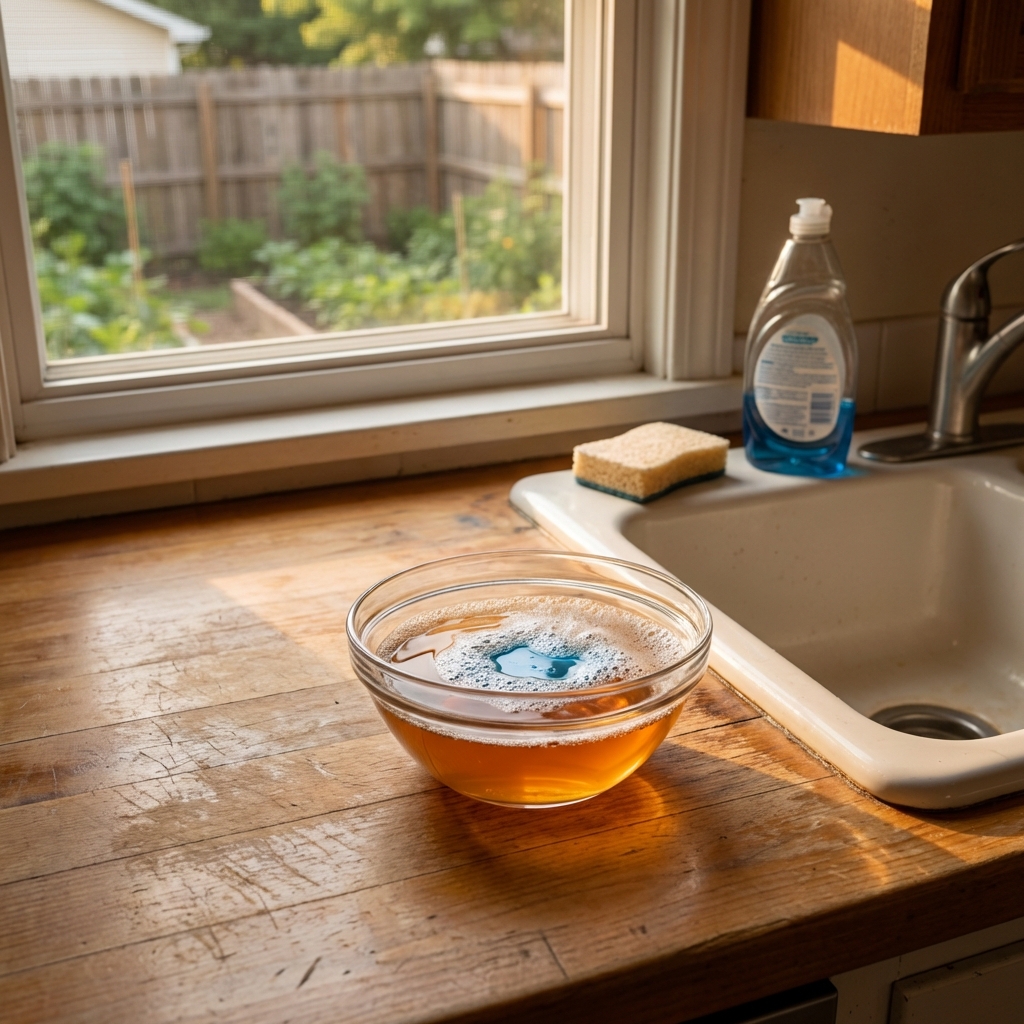
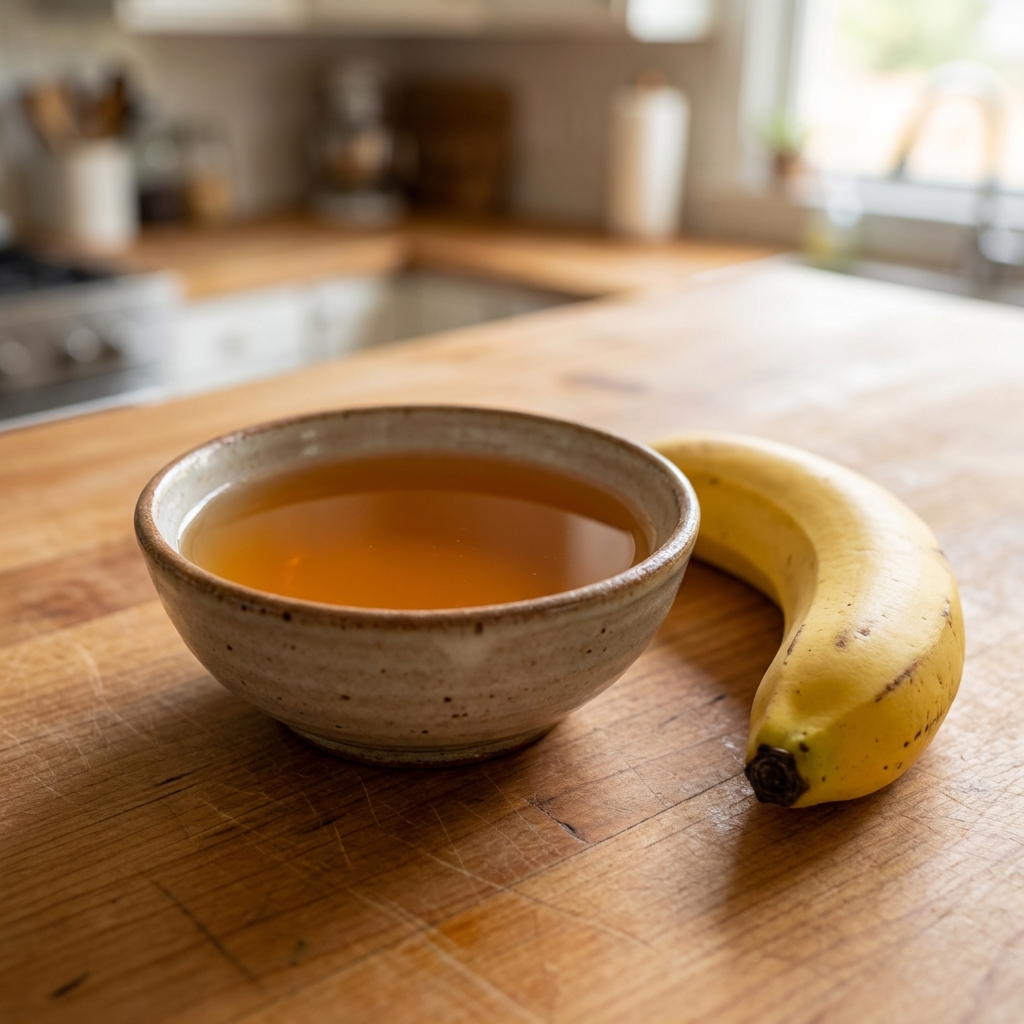
Vinegar and dish soap trap (best for fruit flies)
This is my go-to for fruit flies. It can occasionally catch other small flies, but it is not the most reliable option for full-size house flies.
- Use a small bowl or glass.
- Add 1/2 cup apple cider vinegar (white vinegar is often less attractive to fruit flies).
- Add 2 to 3 drops dish soap and swirl once.
- Place it near where flies gather: fruit bowl, trash, recycling, or sink.
The vinegar attracts them. The soap breaks surface tension so they sink.
Refresh tip: Replace the trap every 2 to 3 days, or sooner if it is full of flies or getting cloudy.
Plastic wrap jar trap (when you need more pull)
If flies are stubborn, this version reduces escape.
- Put vinegar or a bit of overripe fruit in a jar.
- Cover with plastic wrap and secure with a rubber band.
- Poke several small holes with a toothpick.
They go in, but they struggle to find their way back out.
Paper funnel trap (better for house flies)
House flies respond better to stronger bait than vinegar alone.
- Use a jar with a few tablespoons of bait: a splash of sweet juice, sugar water, or a small piece of fruit. If you suspect house flies are feeding on protein sources (trash, pet waste), try a tiny bit of cooked meat as bait and place it well away from food prep areas.
- Roll paper into a funnel and set it in the jar mouth, narrow end down, without touching the liquid.
Place it near a window where flies gather.
Extra no-chemical option: Sticky fly ribbons work very well for house flies, especially near sunny windows and trash areas.
UV plug-in trap (clean and low effort)
If you want something you can set and forget, a UV plug-in fly trap (with a glue card, not a zapper) can quietly reduce adults over time. Put it in a darker corner near the problem area, not right next to a bright window.
Natural sprays and scents that discourage flies
Sprays help in the moment, but they work best as a backup to cleanup and traps. If you only spray, you are treating symptoms.
Simple peppermint spray (spot use)
Mix: 1 cup water + 10 to 15 drops peppermint essential oil + 1 teaspoon mild liquid soap (as an emulsifier). Shake well.
- Lightly mist around window frames, door thresholds, trash area, and the outside of screens.
- Do not spray directly on food surfaces.
Safety note: Essential oils can irritate pets, especially cats and birds. If you have pets, skip oils or use them only in areas pets cannot access.
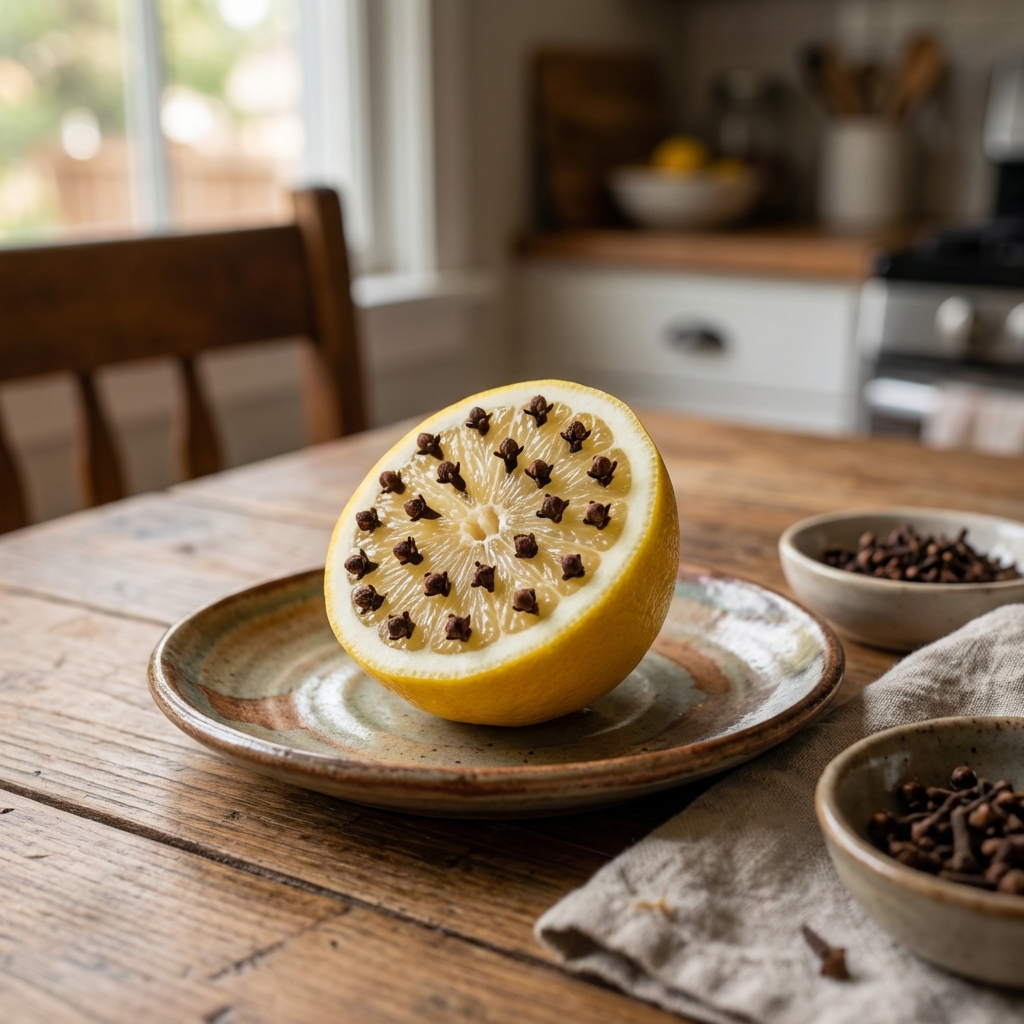
Lemon and clove (classic kitchen deterrent)
Cut a lemon in half and stick whole cloves into the flesh. Set it on a plate near the problem area. It is not a magic force field, but it can reduce hovering in small spaces.
Fix the most common indoor breeding spots
Kitchen drains (fruit flies and drain flies)
Flies love the slimy film inside drains. The goal is to remove the gunk, not just deodorize it.
- Scrub first: Use a drain brush (or an old bottle brush) to scrub the drain walls and disposal splash guard.
- Flush: Pour hot tap water down the drain slowly. Boiling water can be risky for PVC or older plumbing, so use caution.
- Optional support: Baking soda and vinegar can help loosen and rinse away some residue, but it is not a substitute for scrubbing. If you use it, pour 1/2 cup baking soda, then 1 cup vinegar, let fizz 10 minutes, then flush with hot water.
- Most consistent option: A bio-enzymatic drain gel used at night for several days can break down organic buildup in a way vinegar cannot.
Repeat nightly for 2 to 3 nights if you have drain flies. Also check rarely used floor drains and guest bathroom sinks.
Trash and recycling
- Rinse recycling and let it drain before it goes in the bin.
- Use a bin with a tight lid.
- Once a week, rinse the bin and wipe the lid rim. Residue around the rim attracts flies and can become a spot for eggs or larvae if it stays moist and dirty.
Houseplants (fungus gnats)
If flies are hovering over plant pots, you are likely dealing with fungus gnats.
- Let the top 1 to 2 inches of soil dry between waterings.
- Try bottom-watering to keep the soil surface drier.
- Use yellow sticky traps near the plant to catch adults.
- If they keep coming back, use BTI (often sold as Mosquito Bits or dunks) in your watering can. It is a low-tox option that targets larvae in the soil.
- Top-dressing with sand or fine gravel can help in some homes, but it is not always a complete fix on its own.
Keep flies from coming back
Once you are down to a few stragglers, prevention keeps the problem from resetting.
- Screens: repair tears and make sure the screen fits tight in the frame.
- Door discipline: flies follow airflow. If you have a busy back door, consider a magnetic screen curtain.
- Compost: keep kitchen scraps in a sealed container and empty frequently.
- Fruit storage: refrigerate ripe fruit or keep it covered, especially bananas and tomatoes.
- Pet areas: clean around bowls and keep litter boxes and pet waste picked up promptly.
- Outdoor attractants: keep garbage cans clean and closed, and do not let fallen fruit rot near the house.
What not to do
- Do not leave ripe produce out uncovered when you are actively fighting fruit flies.
- Do not rely on drain odors alone. Drain flies care about biofilm, not smell.
- Avoid pouring bleach down drains as a routine fly fix. It can be hard on plumbing and septic systems, and it still does not replace mechanical cleaning.
- Do not overuse essential oils indoors, especially around pets.
When natural remedies are not enough
If you have flies daily despite cleaning and traps, look for a hidden source:
- a bag of potatoes or onions with one rotting at the bottom
- recycling residue in a separate bin
- a leak under the sink
- a dead rodent in a wall or attic (rare, but it happens, and the smell may be subtle at first)
If you suspect a dead animal, blow flies, or you cannot find the breeding source, it is worth calling a local pest professional. Even the best natural trap cannot outwork an active breeding site.
Quick checklist: do this today
- Take out trash and rinse recycling.
- Wipe sticky spots and crumbs, especially under small appliances.
- Set 2 vinegar and dish soap traps where flies gather most (fruit fly hotspots: fruit bowl, sink, recycling).
- For house flies, hang a sticky ribbon near a sunny window or set a funnel jar trap with stronger bait.
- Scrub and flush the kitchen drain before bed.
- Vacuum adults off windows and refresh traps every 2 to 3 days.
Do those steps for 48 hours and most indoor fly problems drop fast. If you tell me what kind of flies you are seeing and where they gather, I can point you to the most likely source and the best trap setup.

Jose Brito
I’m Jose Britto, the writer behind The Country Store Farm Website. I share practical, down-to-earth gardening advice for home growers—whether you’re starting your first raised bed, troubleshooting pests, improving soil, or figuring out what to plant next. My focus is simple: clear tips you can actually use, realistic expectations, and methods that work in real backyards (not just in perfect conditions). If you like straightforward guidance and learning as you go, you’re in the right place.