Fungus gnats are one of those annoying little problems that feel bigger than they are. You water a plant, a cloud of tiny black flies pops up, and suddenly every windowsill plant feels infested.
Here is the good news: fungus gnats are very beatable when you focus on what actually matters, their larvae living in the top layer of damp potting mix. Adults are a nuisance, but larvae are the real problem. This guide walks you through garden-friendly fixes that work in real homes and backyards.
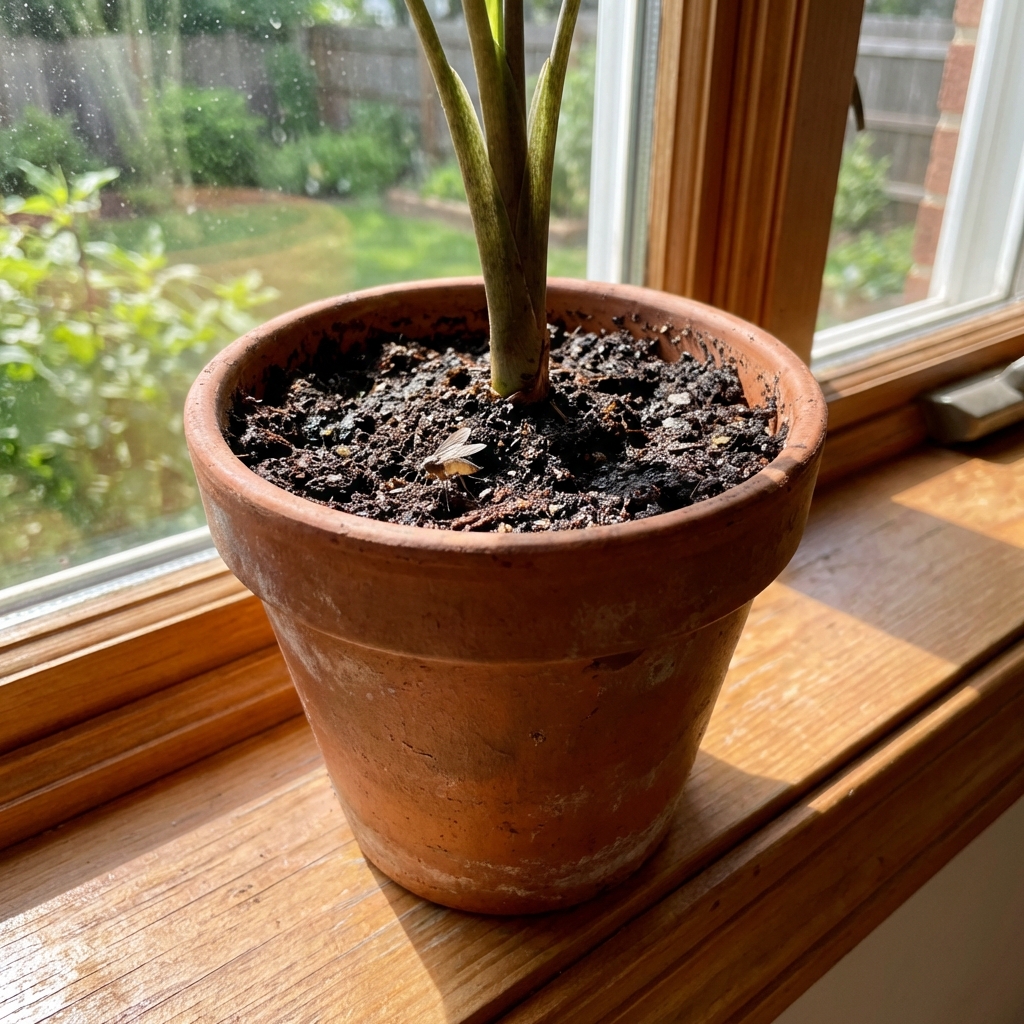
What fungus gnats are and why they show up
Adult fungus gnats look like tiny, delicate mosquitoes. They do not bite, but they do lay eggs in moist organic potting mix. Those eggs hatch into larvae that feed on fungi, decaying organic matter, and sometimes tender roots.
Common causes
- Constantly wet soil. The top 1 to 2 inches stay damp, which is perfect for eggs and larvae.
- Rich, organic potting mixes. Peat-based mixes, compost-heavy blends, and partially decomposed materials feed fungal growth.
- Indoor seed starting. Trays are kept evenly moist, and seedlings have fine roots that larvae can damage.
- Bringing home new plants. Nursery pots often stay wet, and gnats hitchhike easily.
If your plant looks mostly fine but you see gnats when you water or bump the pot, you likely have a moisture issue more than a plant health issue.
Confirm it is fungus gnats (not fruit flies or drain flies)
Before you treat, make sure you are targeting the right pest.
- Fungus gnats: hang around soil surface, fly in short weak bursts, show up when you water.
- Fruit flies: hover around fruit bowls, trash, recycling, and sweet spills. Not focused on potting soil.
- Drain flies: fuzzy, moth-like, often found near sinks and drains.
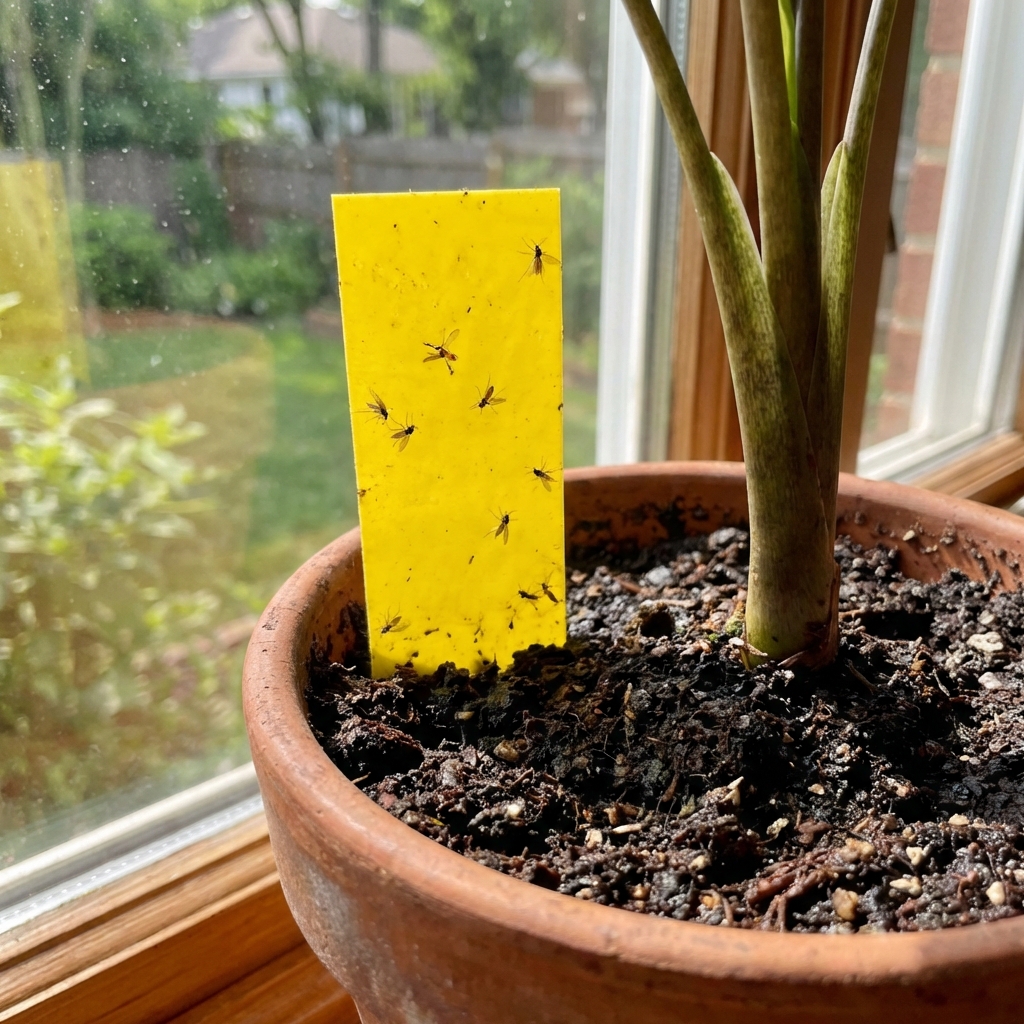
Quick check: place a yellow sticky card near the soil line for 24 to 48 hours. Fungus gnats are strongly attracted to yellow and will show up fast if they are present.
Know the life cycle so you can actually end the problem
Most fungus gnat battles fail because people only kill the adults. Adults are easy to catch, but more keep emerging from the soil.
- Eggs: laid in moist topsoil
- Larvae: live in the top couple inches, feeding and growing
- Pupae: in soil
- Adults: fly, mate, lay more eggs
In warm indoor conditions, the whole cycle can take about 3 to 4 weeks, sometimes faster. Your goal is to reduce adults now and wipe out larvae so no new adults appear.
Fast, garden-friendly plan (do these in order)
1) Let the top layer dry, on purpose
This is the single most important step. Larvae need consistent moisture near the surface.
- Let the top 1 to 2 inches of potting mix dry before watering again.
- Empty saucers after watering so pots do not wick water back up.
- If your plant hates drying out, water from the bottom for 10 to 15 minutes, then drain well. Keep the soil surface drier than the root zone.
2) Catch the adults with sticky traps
Sticky traps do not solve the problem alone, but they reduce the breeding population and help you track progress.
- Place traps right at soil level, not up in the air.
- Replace when covered with dust or insects.
- Use 1 to 2 traps per pot for heavy infestations.
3) Treat the larvae (choose one reliable option)
If you want results, you need a larval treatment. These options are commonly used by home gardeners and are considered garden-friendly when used as directed.
Option A: BTi (most dependable for indoor pots)
BTi is a naturally occurring soil bacterium that targets fungus gnat larvae and some mosquito larvae. It does not work on adults.
- Use a BTi product labeled for fungus gnats or mosquito larvae.
- Apply as a soil drench according to the label.
- Repeat weekly for 2 to 3 weeks to catch newly hatched larvae.
Option B: Beneficial nematodes (best for many pots at once)
Steinernema feltiae nematodes hunt larvae in moist soil. They can work very well, but you need correct handling.
- Apply to already moist soil and keep it slightly moist for about a week so nematodes can move.
- Use fresh product, store as directed, and apply quickly.
- They are great for seedling areas, grow tents, and plant rooms.
Option C: Hydrogen peroxide drench (quick knockdown, use carefully)
Some gardeners use a diluted hydrogen peroxide drench to reduce larvae. It can be effective, but it is less targeted than BTi and can stress sensitive roots if overused.
- Use only occasional treatments, not as a routine watering method.
- Test on one plant first if you have delicate seedlings or rare plants.
If you want the simplest route: dry the surface, add sticky traps, and use BTi for two to three rounds. That combination solves most infestations.
Soil top-dressings: what helps and what is overrated
Top-dressings can help because they make the soil surface less welcoming for egg-laying and can speed drying. They are not a full solution by themselves.
Better options
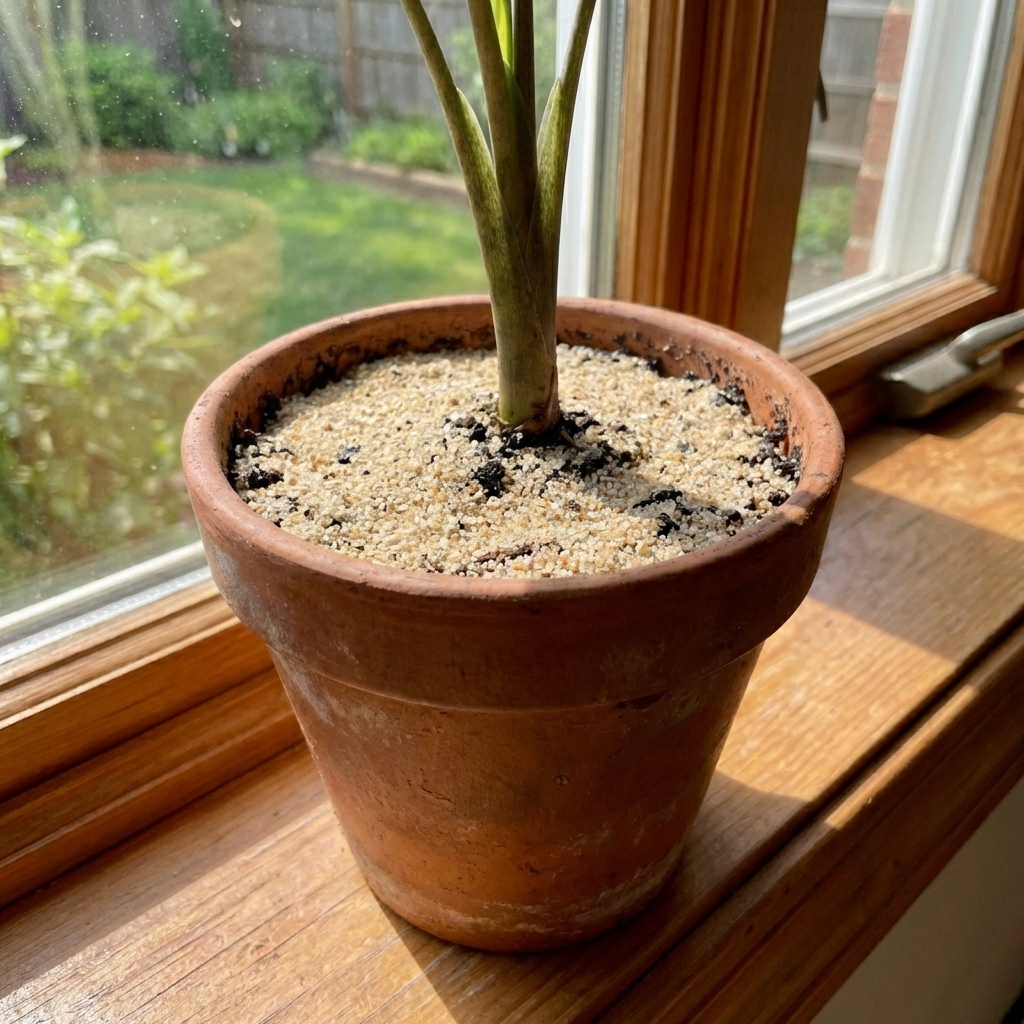
- Coarse sand: a thin layer can discourage egg-laying and dries quickly.
- Fine gravel: works similarly if it covers the soil evenly.
- Bottom watering plus an open surface: often more effective than thick layers of anything.
Use caution
- Diatomaceous earth: it only works when dry. Once it gets wet, it is much less effective, and soil surfaces are often damp.
- Thick mulch indoors: holds moisture in, which can make gnats worse.
When fungus gnats actually harm plants
In most established houseplants, fungus gnats are more annoying than dangerous. But larvae can cause real issues in a few situations.
- Seedlings: larvae can chew tiny roots and slow growth.
- Cuttings: fresh roots are tender and vulnerable.
- Overwatered plants already struggling: root stress plus larvae feeding can tip the plant over the edge.
If you see wilting even though the soil is moist, yellowing, or stunted seedlings alongside heavy gnat activity, treat the larvae promptly and check for overwatering or root rot.
Prevention that actually works
Watering habits
- Water based on plant needs, not on a calendar.
- Make sure pots have drainage holes.
- Dump standing water from saucers.
Potting mix and storage
- Use a quality potting mix that drains well.
- Store unused potting mix sealed so it does not stay damp and become a breeding site.
- Avoid reusing old, soggy soil from problem pots without treating it.
Quarantine new plants
- Keep new plants separate for 7 to 14 days.
- Add a sticky trap immediately so you can spot gnats early.
Do not over-fertilize organic teas indoors
Compost teas and organic drenches can increase microbial activity. Outdoors that is fine, indoors it can create the damp, fungus-rich conditions gnats love if the soil stays wet.
Troubleshooting: why they keep coming back
You are only killing adults
If you skip larval control, the cycle continues. Sticky traps are helpful, but not enough alone.
The soil never dries at the surface
Self-watering pots, thick top dressings, and frequent light watering keep the top layer constantly damp. Switch to deeper, less frequent watering, and consider bottom watering with good drainage.
There is another breeding spot
Check these sneaky sources:
- Drip trays with standing water
- Decorative cachepots holding water
- Open bags of potting mix
- Prop jars with algae buildup
- Damp floor drains nearby (less common, but possible)
You stopped treatment too soon
Even if adults disappear for a few days, eggs and pupae may still be in the soil. Keep your larval treatment schedule for at least 2 to 3 weeks.
Quick action checklist
- Let the top 1 to 2 inches of soil dry between waterings.
- Use yellow sticky traps at soil level.
- Apply BTi weekly for 2 to 3 weeks, or use beneficial nematodes.
- Empty saucers and remove standing water.
- Quarantine new plants and store potting mix sealed.
If you stick with those steps, you are not just reducing gnats. You are preventing the next wave from hatching, which is the part that finally makes the problem go away.

Jose Brito
I’m Jose Britto, the writer behind The Country Store Farm Website. I share practical, down-to-earth gardening advice for home growers—whether you’re starting your first raised bed, troubleshooting pests, improving soil, or figuring out what to plant next. My focus is simple: clear tips you can actually use, realistic expectations, and methods that work in real backyards (not just in perfect conditions). If you like straightforward guidance and learning as you go, you’re in the right place.