If you have tiny black “flies” hovering around your houseplants, odds are you are dealing with fungus gnats. The adults are annoying, but the real problem is the larvae living in the upper layer of damp potting mix. The good news is you can get rid of them without harsh chemicals by combining a few low-tox steps that hit the whole life cycle.
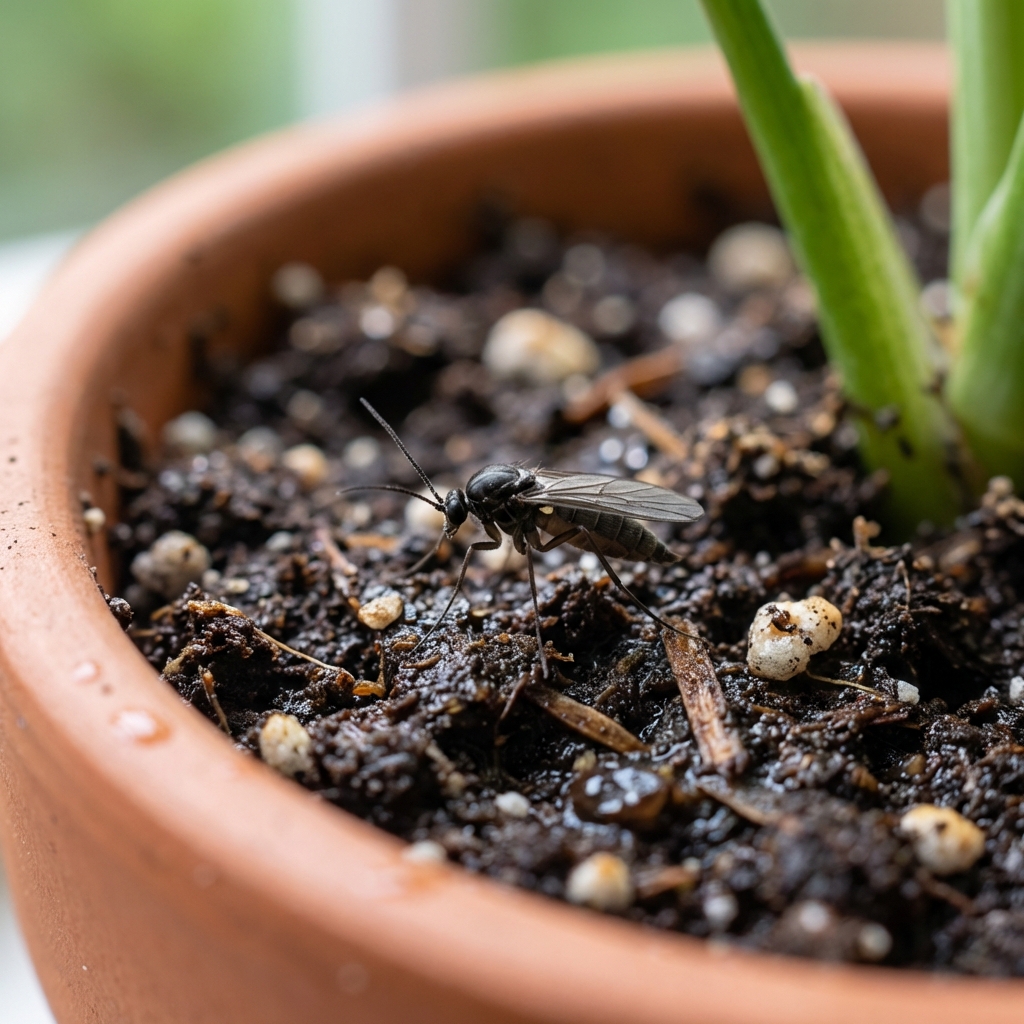
First: Make Sure It Is Fungus Gnats
Before you treat, do a quick check. Different pests need different fixes.
- Fungus gnats: tiny, dark, mosquito-like adults that run across the soil surface and fly in short bursts when disturbed.
- Fruit flies: hang around fruit, trash, drains, and sugary spills more than plant pots.
- Shore flies: look similar but are stronger fliers, often found in very wet setups, and are more common in greenhouses.
Simple test: tap the pot. If little gnats lift off from the soil, you are on the right track.
Why Gnats Show Up in Houseplants
Fungus gnats are not showing up because you are a bad plant parent. They show up because conditions are perfect for them:
- Constant moisture in the top layer of soil (and sometimes deeper in pots that stay wet)
- Decaying organic matter (peaty mixes, composty mixes, dead roots, fallen leaves)
- Warm indoor temps that speed up their life cycle
Most infestations start after bringing home a new plant, using a bag of potting soil that already had eggs, or watering a little too often.
The Game Plan (Do These in This Order)
You will get the fastest results if you combine moisture control, adult trapping, and larva treatment. Pick one tool per category and stay consistent for 2 to 3 weeks (sometimes longer in warm rooms).
Step 1: Dry the Top Layer (This Is Non-Negotiable)
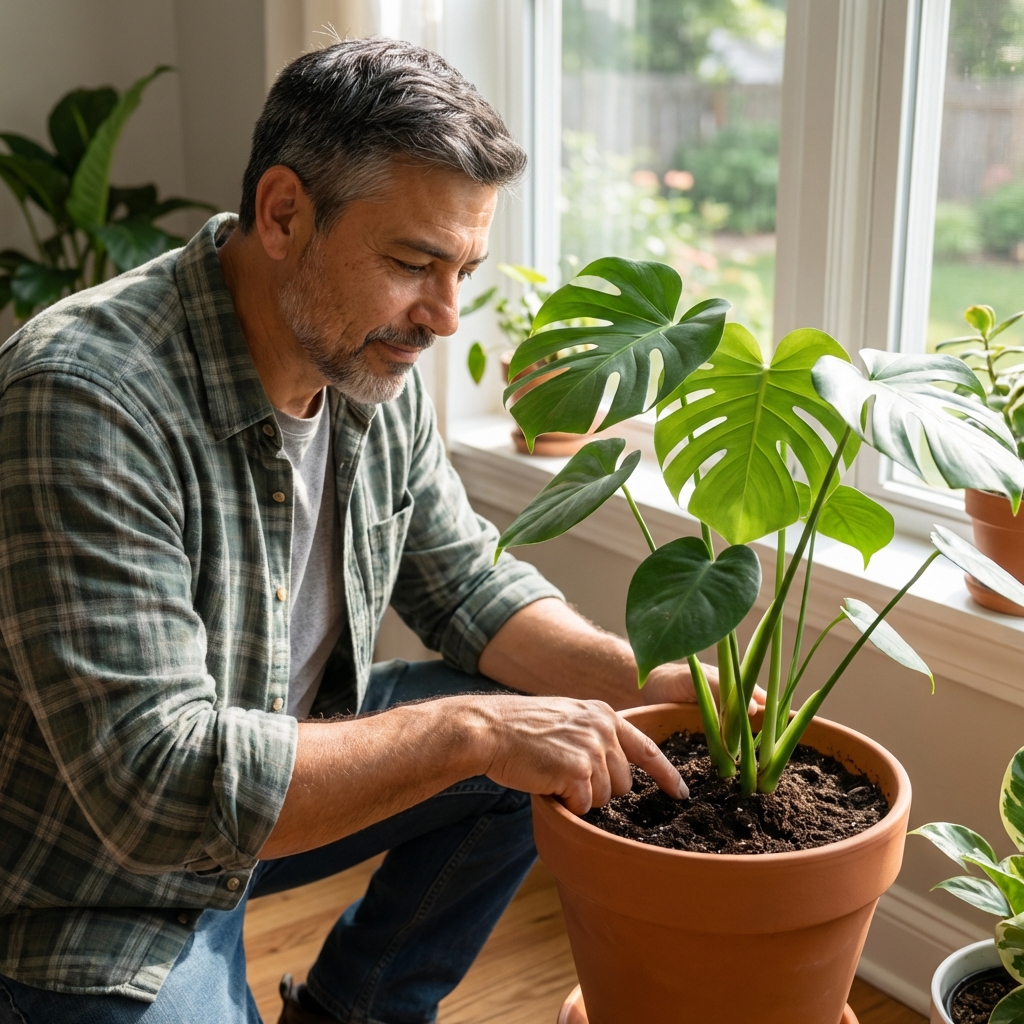
Larvae need moisture. Your goal is to let the top 1 to 2 inches of soil dry out between waterings, without stressing the plant.
- Water only when the pot feels noticeably lighter and the top soil is dry to the touch.
- Bottom-water when possible: set the pot in a tray of water until the top of the mix feels slightly damp, then drain well (timing can be 10 minutes or longer depending on pot size and soil).
- Dump standing water from saucers. Gnats love “wet feet.”
- If you find yourself watering constantly because the plant dries fast, check for rootbound conditions. Rootbound plants can dry quickly, which leads to frequent watering and consistently moist soil.
- If the pot stays wet in the middle for days, the bigger culprit is usually dense or water-retentive mix, poor drainage, or a perched water table in that pot and media combo.
Quick nuance: some plants (like ferns and peace lilies) hate drying too far. For those, lean harder on BTI or nematodes and improving aeration, instead of pushing the soil bone-dry.
Step 2: Trap the Adults You See
Adults do not do the damage, but they lay eggs. Trapping them reduces the next generation.
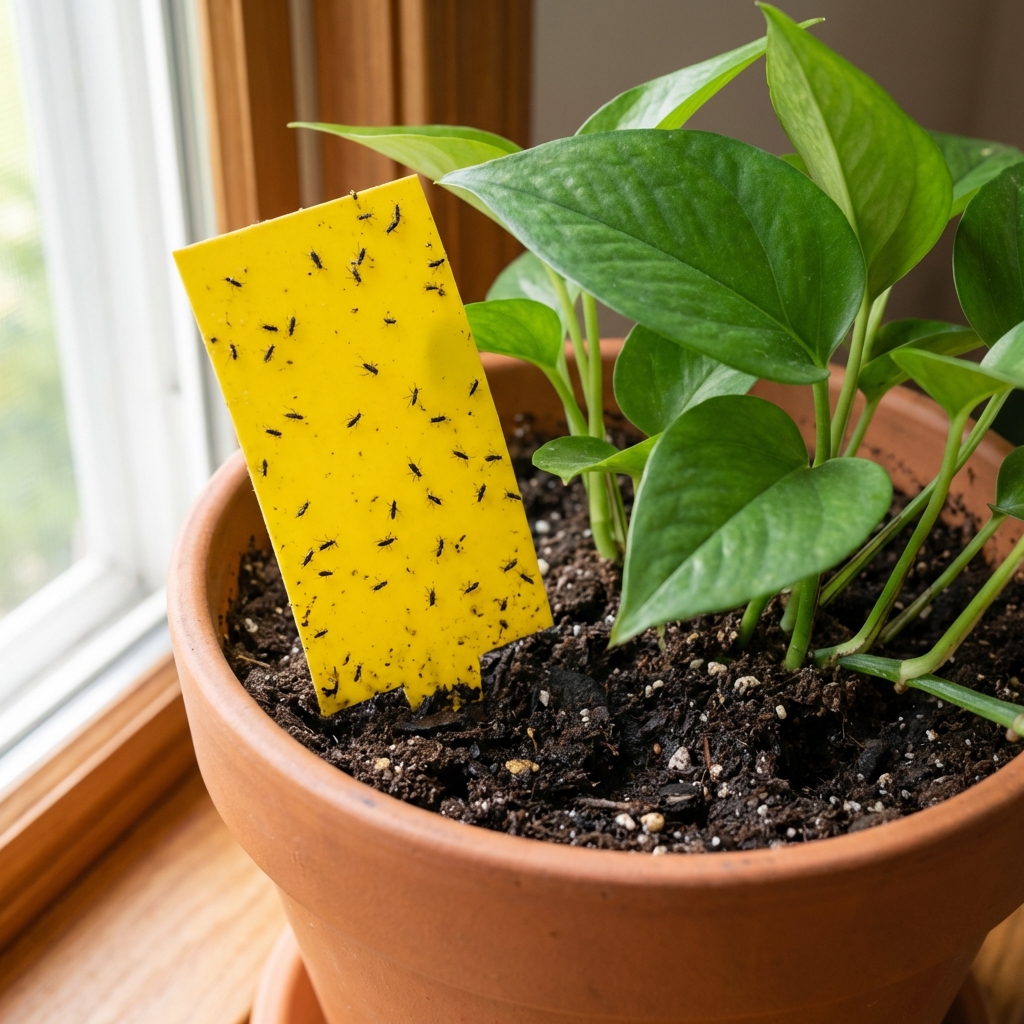
- Yellow sticky traps: place them right at soil level. Use 1 for small pots, and 2 to 3 for larger pots or heavier infestations. Replace when covered or dusty.
- DIY apple cider vinegar trap: a small cup with vinegar plus a drop of dish soap can catch some adults, but sticky traps work better for fungus gnats near pots.
Tip: do not stick traps deep into the root zone. Just anchor them in the top layer.
Step 3: Treat the Larvae (Pick One)
If you only trap adults, you will keep seeing gnats. You need to interrupt the larval stage in the soil.
Option A: BTI (Mosquito Bits or Dunks)
BTI is a naturally occurring bacteria used for mosquito larvae and fungus gnat larvae. It is targeted and generally considered low-risk when used as directed.
- Follow the label directions for your product.
- A common method is making a BTI infusion: soak mosquito bits in water (often about 30 minutes), strain if needed, then use that water to drench the pot.
- Repeat weekly for 3 to 4 weeks to break the life cycle. In warmer rooms, you may need to be extra consistent.
- Use fresh BTI infusion each time for best results.
Option B: Beneficial Nematodes (Steinernema feltiae)
These are microscopic beneficial organisms that hunt larvae in moist soil. They work well for stubborn infestations.
- Follow package directions exactly. They are living.
- Apply to pre-moistened soil, then keep the soil lightly moist (not soggy) for about a week so they can move.
- Best for bigger collections where you can treat many pots at once.
Option C: 1 to 2 Inch Top Dressing (Physical Barrier)
Adding a dry barrier makes it harder for adults to lay eggs and for new adults to emerge.
- Use coarse sand, pumice, or fine gravel as a 1 to 2 inch layer.
- Make sure it stays mostly dry on top. This works best combined with bottom-watering.
Note: top dressing alone may not stop an active infestation, but it helps as part of the plan.
Step 4: Clean Up the “Gnat Food”
- Remove dead leaves sitting on soil.
- Trim rotting stems and check for mushy roots if a plant never dries out.
- Wipe up spilled potting soil around pots. Gnats use it like a nursery.
Quick Safety Notes
- Keep sticky traps away from curious kids and pets.
- BTI and nematodes are typically low-risk when used as directed, but always follow label instructions and basic hygiene (wash hands after handling soil and treatments).
What About Hydrogen Peroxide, Neem, and Cinnamon?
These come up a lot. Here is the down-to-earth take.
- Hydrogen peroxide drenches: can kill some larvae on contact, but it is inconsistent and can stress roots if overused. If you try it, do it sparingly and do not make it your only strategy.
- Neem oil: better for leaf pests than soil-dwelling larvae. It can also smell strong indoors and can burn leaves if used incorrectly.
- Cinnamon on soil: may reduce some surface fungus, but it will not reliably end a gnat infestation by itself.
If you want the most reliable combo, stick with drying the soil + sticky traps + BTI or nematodes.
Fast Troubleshooting: Why Gnats Keep Coming Back
You are watering on a schedule
Plants do not drink on a calendar. Water based on soil dryness and pot weight, not the day of the week.
The potting mix stays wet too long
Many indoor mixes hold water like a sponge. Consider repotting into a better-draining blend (for many houseplants, adding perlite or pumice helps).
Drainage is not great
Make sure there is a drainage hole, and that the pot is not sitting in water after you water.
You have one “source pot”
One chronically wet plant can keep re-infesting the whole room. Treat all nearby pots at the same time.
Prevention That Works
- Quarantine new plants for 1 to 2 weeks and use a sticky trap as an early warning.
- Let soil breathe. Avoid decorative cachepots that trap water unless you remove the inner pot to drain.
- Top-water less often. Bottom-water when it fits the plant.
- Store potting soil sealed in a bin with a lid. Open bags are an open invitation.
- Optional for repeat issues: if you have chronic infestations, a periodic BTI drench can help, but follow label guidance and do not treat more often than recommended.
FAQ
How long does it take to get rid of fungus gnats?
Usually 2 to 3 weeks if you treat larvae and trap adults consistently. You may see fewer adults in a few days, but keep going long enough to break the life cycle. In warm rooms, it can take longer.
Are fungus gnats harmful to plants?
Adults are mostly a nuisance. Larvae can nibble fine roots, especially in seedlings, cuttings, and already-stressed plants. A heavy infestation can slow growth.
Are fungus gnats harmful to humans or pets?
Generally no. They do not bite and are mostly a nuisance, but nobody wants them in their face. If you have a lot of them, treat the soil so the population drops fast.
Do I need to throw out the soil?
Usually, no. Most cases resolve with moisture control plus BTI or nematodes and sticky traps. Consider replacing the mix if it is staying wet too long, smells sour, is breaking down into a heavy sludge, or you are dealing with root rot.
Should I repot?
Only if the mix is staying wet too long, there is root rot, or the plant is in dense, broken-down soil. Repotting can help, but you still need traps and a larva treatment if gnats are active.
Can gnats spread from plant to plant?
Yes. Adults fly and lay eggs in nearby pots, especially if multiple plants are kept consistently moist.
Can I use diatomaceous earth?
It can help as a dry, scratchy barrier, but it is much less effective once it gets wet. If your soil surface stays damp, BTI or nematodes usually work better.
Quick 3-Item Checklist
- Let the top 1 to 2 inches of soil dry out between waterings (within what your plant can handle).
- Use yellow sticky traps at soil level.
- Drench with BTI weekly for 3 to 4 weeks (follow label directions), or apply beneficial nematodes and follow package directions.
If you do those three things together, you will usually win the gnat battle without reaching for harsh sprays.

Jose Brito
I’m Jose Britto, the writer behind The Country Store Farm Website. I share practical, down-to-earth gardening advice for home growers—whether you’re starting your first raised bed, troubleshooting pests, improving soil, or figuring out what to plant next. My focus is simple: clear tips you can actually use, realistic expectations, and methods that work in real backyards (not just in perfect conditions). If you like straightforward guidance and learning as you go, you’re in the right place.