Mushrooms popping up in the lawn can look alarming, but in most cases they are doing their job: breaking down organic material in wet soil. The good news is that you can remove the visible mushrooms fast. The even better news is you can prevent most repeat outbreaks by adjusting moisture, thatch, shade, and buried wood. (The underground fungus can persist, so mushrooms may reappear until conditions change.)
This guide walks you through what to do today, what not to do, and the lawn changes that actually reduce mushrooms long term.
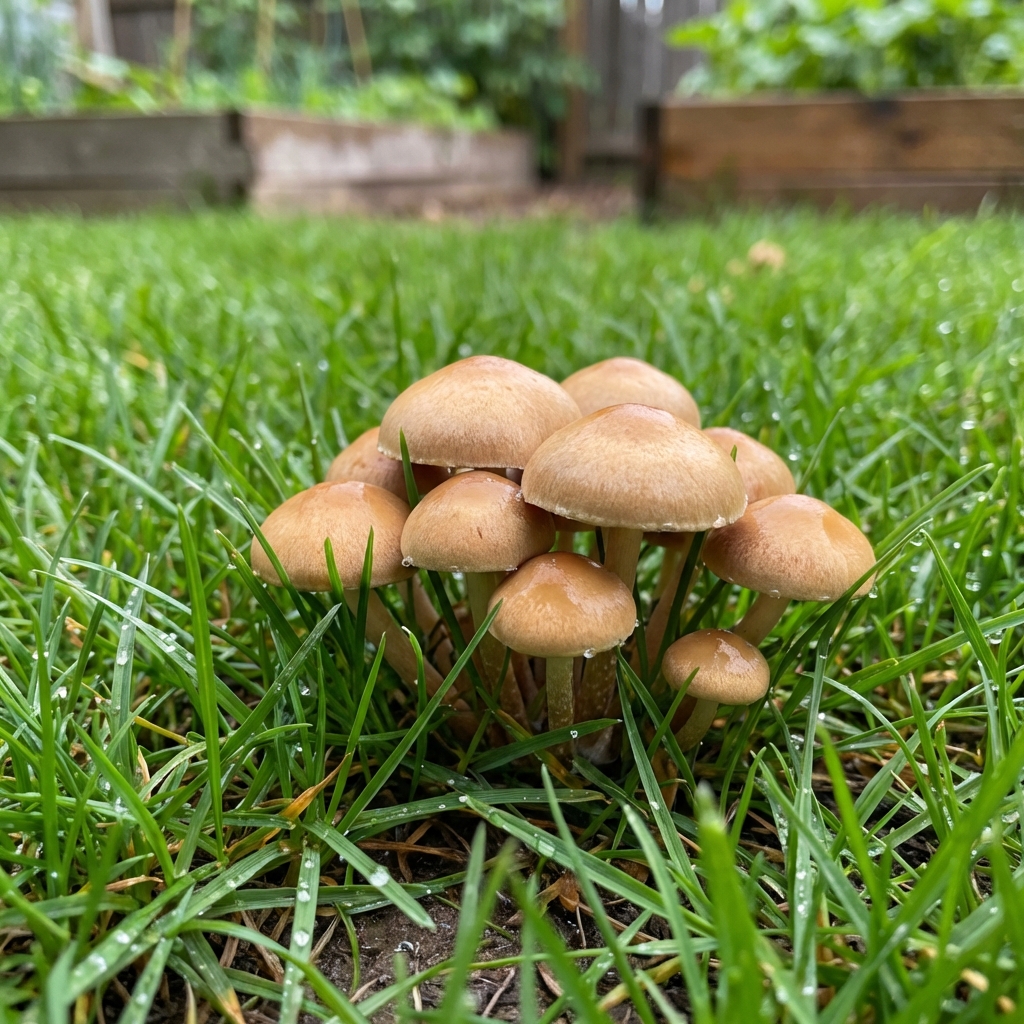
Are lawn mushrooms dangerous?
Most lawn mushrooms are not a direct threat to your grass. They are feeding on decaying roots, old mulch, buried wood, pet waste, or thick thatch. The biggest risk is to kids and pets, because some mushrooms are poisonous if eaten.
- If you have pets or small children: remove mushrooms promptly and consider blocking off the area until you have them under control.
- If you think someone ate one: save a sample (or take clear photos), and contact your vet or Poison Control right away. Do not wait for symptoms.
- If you see a fairy ring: the mushrooms are just the fruiting bodies. The fungus is already in the soil and you will need to address conditions, not just pick mushrooms.
- If you are unsure what it is: treat every mushroom as potentially toxic. Do not taste test and do not rely on apps for edibility.
What causes mushrooms in lawns?
Mushrooms show up when the underground fungus has enough moisture and food to produce fruiting bodies. The trigger is usually a stretch of wet weather (often in spring or fall) plus one or more of these lawn conditions:
- Overwatering or poor drainage that keeps soil wet for long periods
- Heavy shade where grass and soil stay cool and damp
- Excess thatch that traps moisture at the surface
- Buried wood such as old tree roots, stumps, construction lumber, or decomposing landscaping debris
- Lots of organic matter like thick mulch, leaf buildup, or a lawn with frequent clippings left in piles
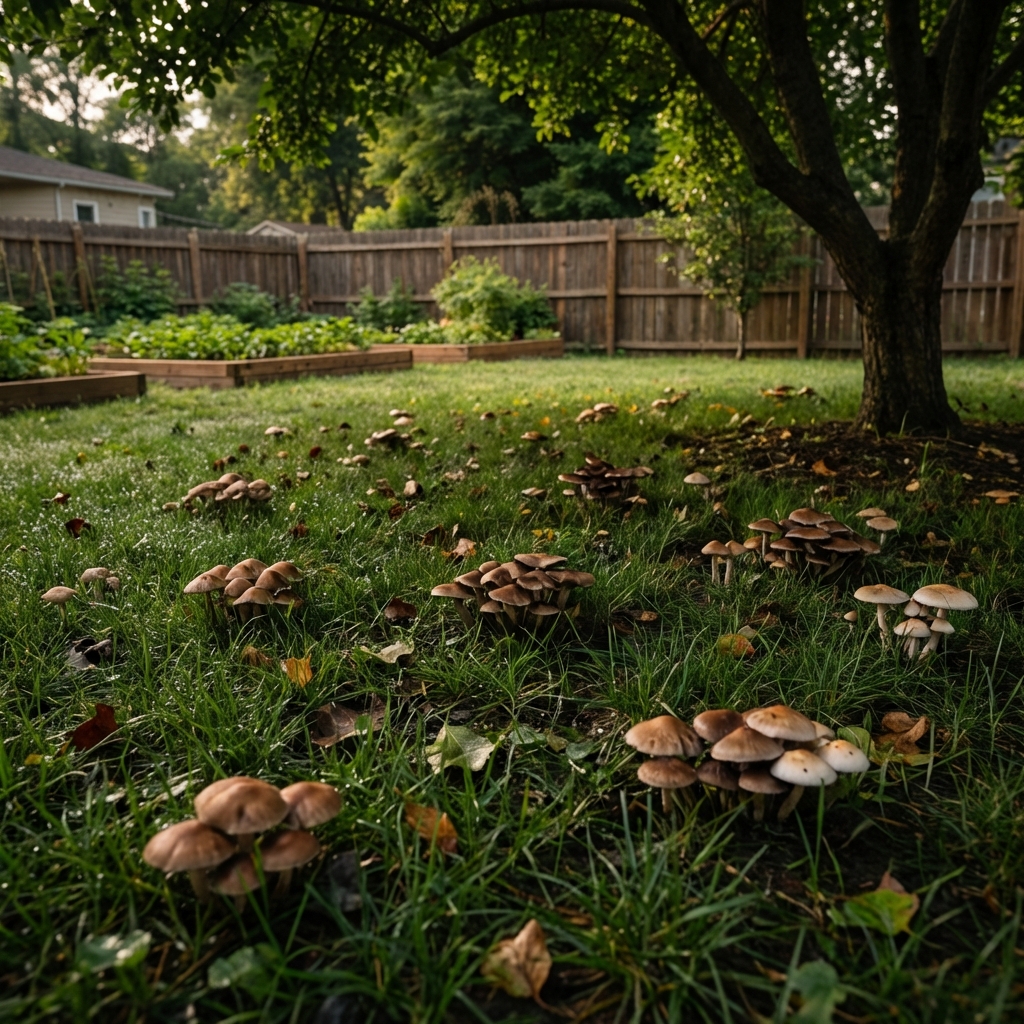
Quick safety checklist
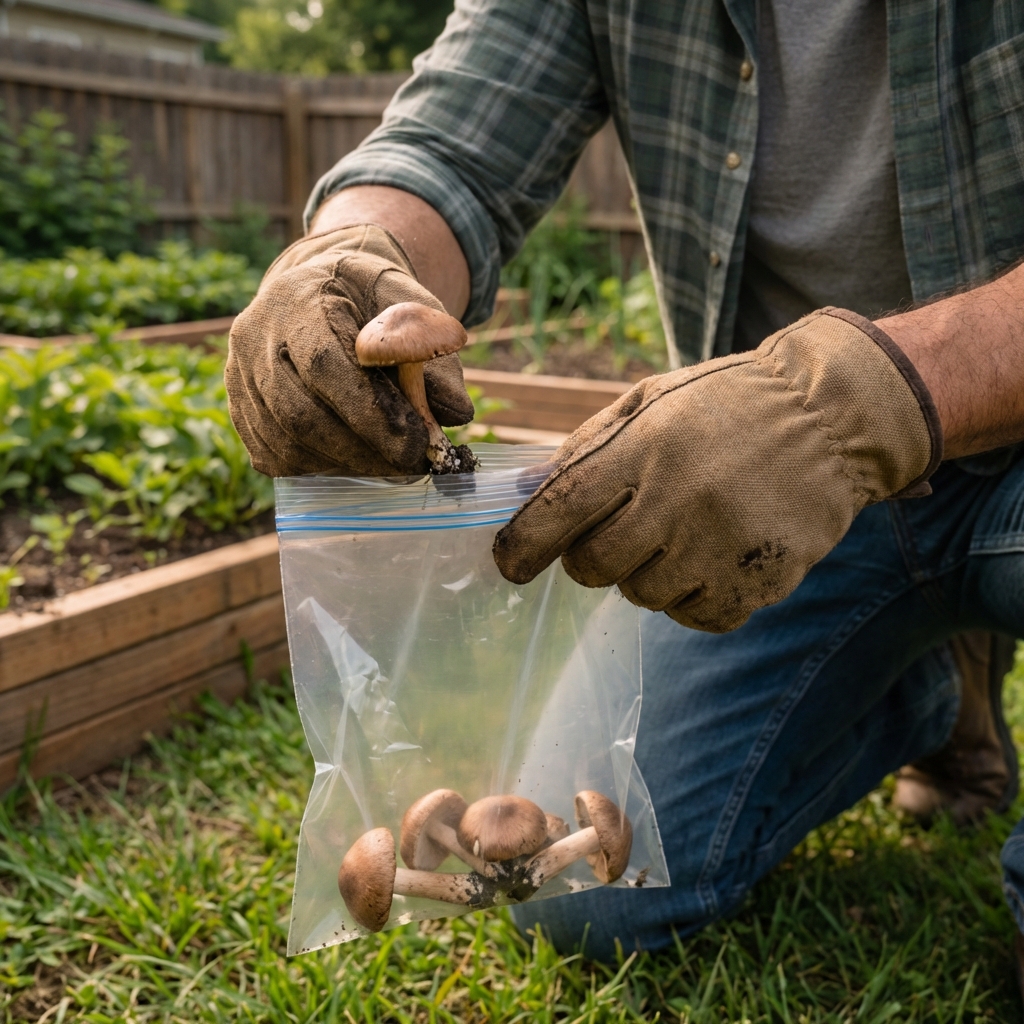
- Wear gloves or use a plastic bag as a hand cover.
- Keep pets and kids away while you work.
- Do not mow over mushrooms if you can avoid it. Mowing can scatter fragments and spores, and it smears them into the turf which makes cleanup harder.
- To be safe, bag what you collect and dispose of it, especially if pets and kids are around or you cannot ID the mushrooms. Avoid adding them to compost you plan to use in beds or the lawn.
How to get rid of mushrooms
Step 1: Pick or cut and bag
Grab the mushroom at the base and pull it out gently. Try to remove as much of the stem as you can. If they break easily, it is also fine to cut them at the base for quick removal. Place everything directly into a bag.
Tip: If the mushrooms are tiny and numerous, a small hand rake can help lift them without tearing up the turf.
Step 2: Remove decaying material you can see
Look closely at the spot where mushrooms are popping up:
- Rake out matted leaves, old mulch, or piles of grass clippings.
- If there is pet waste, remove it. If you need to clean residue, lightly hose to dilute and move it off the grass blades, then let the area dry. Avoid soaking the spot.
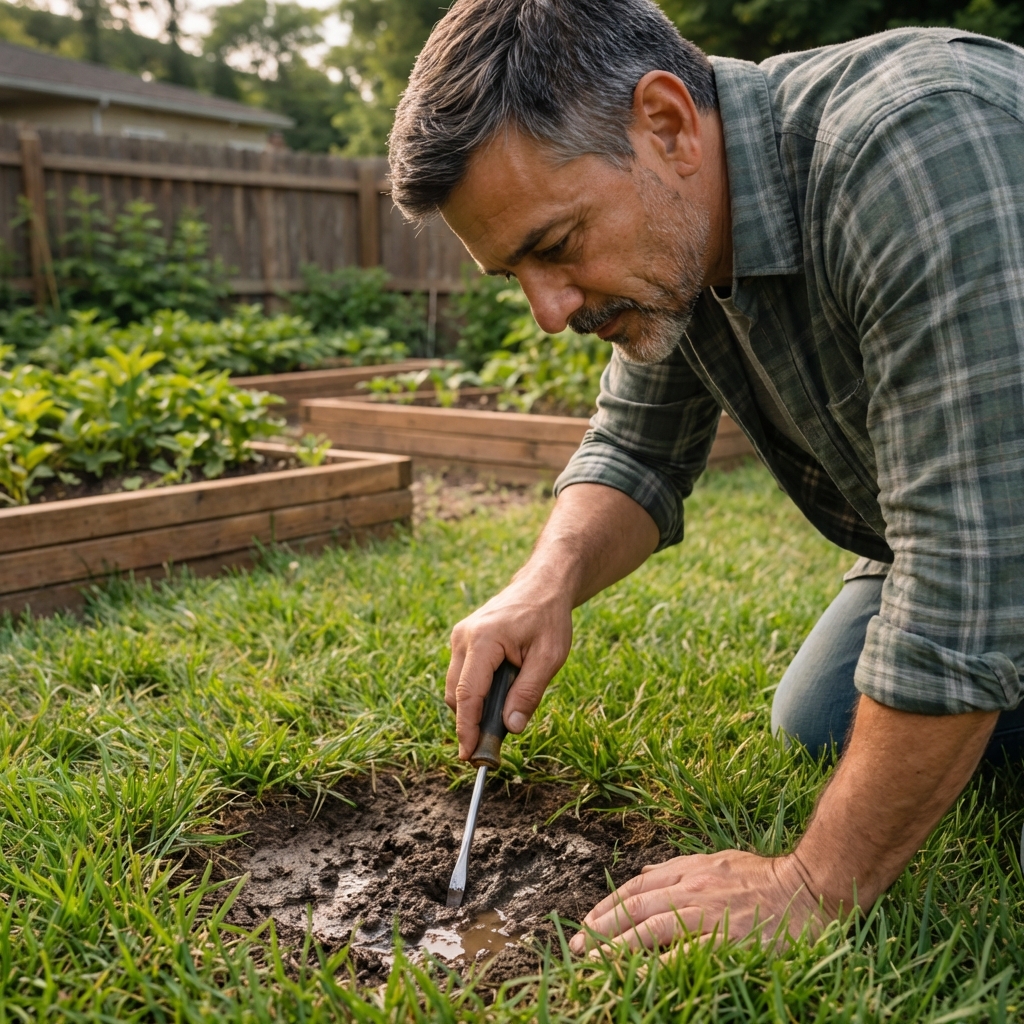
- If a mushroom cluster is always in the same spot, probe with a screwdriver. You may have buried wood or an old root right under the surface.
Step 3: Dry the surface with airflow
Mushrooms love still, damp conditions. Help the lawn dry faster:
- Trim back low tree branches and dense shrubs to let in more light and breeze.
- Rake the grass lightly to stand blades up and reduce matting.
- Avoid watering for a few days if weather allows.
Step 4: Adjust your watering schedule
If you are irrigating, the goal is to water less often but more deeply, and only when the lawn needs it.
- Water early morning so the lawn dries during the day.
- Avoid evening watering which keeps blades wet overnight.
- Use the "step test": if footprints stay visible and grass looks dull or bluish, it is time to water. If not, skip it.
- Another simple check: push a screwdriver or soil probe into the ground. If the soil is dry 2 to 3 inches down (or the tool will not go in easily), it is usually time to water.
- Rule of thumb: many lawns do well with about 1 inch of water per week including rain, adjusted for your soil and weather.
Step 5: Reduce thatch if it is thick
Thatch is the spongy layer between grass and soil. A little is normal. Too much holds moisture and feeds fungi.
- If thatch is around 1/2 inch or more, consider dethatching with a rake or power dethatcher.
- Core aeration also helps break up thatch over time while improving drainage.
Step 6: Fix drainage problems in the problem area
If mushrooms keep returning to the same soggy patch, drainage is usually the real issue.
- Core aerate compacted soil.
- Topdress lightly with compost to improve soil structure and help water move through the root zone. The goal is better drainage and faster drying, not feeding the mushrooms.
- For low spots that puddle, regrade or add soil to raise the area slightly and improve runoff.
- Downspouts that dump water onto the lawn should be extended.
Do you need fungicide?
Most of the time, no. Fungicides are often disappointing for mushrooms because the visible mushrooms are only a small part of the fungus. Spraying may reduce fruiting temporarily, but if the soil stays wet and full of decaying food, they often come right back.
Consider fungicide only if:
- You have a severe, persistent fairy ring that is damaging grass.
- You have addressed watering and drainage and still have repeated outbreaks.
- You are using a product specifically labeled for your lawn issue and following all label directions.
If you go this route, read the label carefully. The label is the law. Keep people and pets off treated areas until the stated re-entry time.
How to prevent mushrooms
Keep the lawn drier
- Water only when needed and in the morning.
- Improve sunlight and airflow where possible.
- Aerate compacted areas, especially where people walk or where soil feels hard.
Stay on top of organic debris
- Rake leaves before they mat down.
- Do not leave thick piles of clippings.
- Mulch mowing is fine, but avoid mowing wet, overgrown grass that clumps.
Deal with buried wood
If mushrooms keep emerging in a tight cluster, you may have a buried root or old stump rotting underground. You have two choices:
- Remove it: dig out the wood as much as practical, then backfill and reseed.
- Outwait it: keep the area drier and well maintained until the wood finishes decomposing. This can take a while.
Common situations
Mushrooms after rain
Very common. Remove what you see, then let the lawn dry. If they disappear once weather improves, you may not need major changes.
Mushrooms in mulch near the lawn
Mulch is basically food for fungi. Keep mulch pulled back a couple inches from grass edges and avoid piling it thickly. If you are using wood mulch, expect occasional mushrooms during wet spells.
Fairy rings
Fairy rings can show mushrooms in a circle, and sometimes a dark green ring of grass or dead patches. Management usually includes core aeration, deeper watering less often, and removing excess thatch. Many lawns also benefit from a wetting agent plus deep soaking to help water move through any water-repellent soil. In severe cases, targeted products may help, but results vary because the fungus can be deep.
What not to do
- Do not mow over mushrooms if you can avoid it. Pick first.
- Do not pour bleach or household cleaners on the lawn. You can burn grass and harm soil life.
- Do not over-fertilize trying to "grow out" the problem. Extra nitrogen can worsen lush growth and moisture retention.
- Do not assume mushrooms mean your soil is bad. They often show up in healthy, organic-rich soil that stays wet.
When to call a pro
Get local help if:
- You have repeated mushrooms plus large areas of thinning grass and standing water.
- You suspect a serious drainage or grading problem.
- You see a fairy ring that continues expanding and killing turf.
- You need help identifying a mushroom because of a pet ingestion concern. In that case, also call your vet right away and save a sample or photo if you can.
Fast recap
- Pick or cut and bag mushrooms right away for pet and kid safety.
- Do not mow over them and remove organic debris that feeds them.
- Fix the cause: too much moisture, too much shade, too much thatch, or buried wood.
- Fungicide is rarely the best first move.
If you tell me whether your mushrooms are scattered or clustered, and whether the area stays wet or shaded, I can help you narrow down the most likely cause and the best fix.

Jose Brito
I’m Jose Britto, the writer behind The Country Store Farm Website. I share practical, down-to-earth gardening advice for home growers—whether you’re starting your first raised bed, troubleshooting pests, improving soil, or figuring out what to plant next. My focus is simple: clear tips you can actually use, realistic expectations, and methods that work in real backyards (not just in perfect conditions). If you like straightforward guidance and learning as you go, you’re in the right place.