Mice are picky in a practical way. They choose what is easy, strong-smelling, and feels safe to grab. The bait matters, but the way you use it matters just as much. Below are the baits that consistently work, plus the small setup tricks that turn “no bites” into catches.
What makes a bait good
A good mouse bait does at least two of these things:
- Strong smell: Mice navigate with their nose, especially along walls and in low light.
- High calories: Fats and sugars are worth the risk.
- Sticky or grabby texture: Forces the mouse to work at it long enough to trigger the trap.
- Familiar food: Bait that matches what they are already eating in your home or garage often wins.
If you ever feel like mice are “ignoring” your bait, it is often because they have an easier food source nearby, the traps are slightly off their runway, or they are being cautious around anything new (neophobia).
Best bait for mice (ranked)
1) Peanut butter
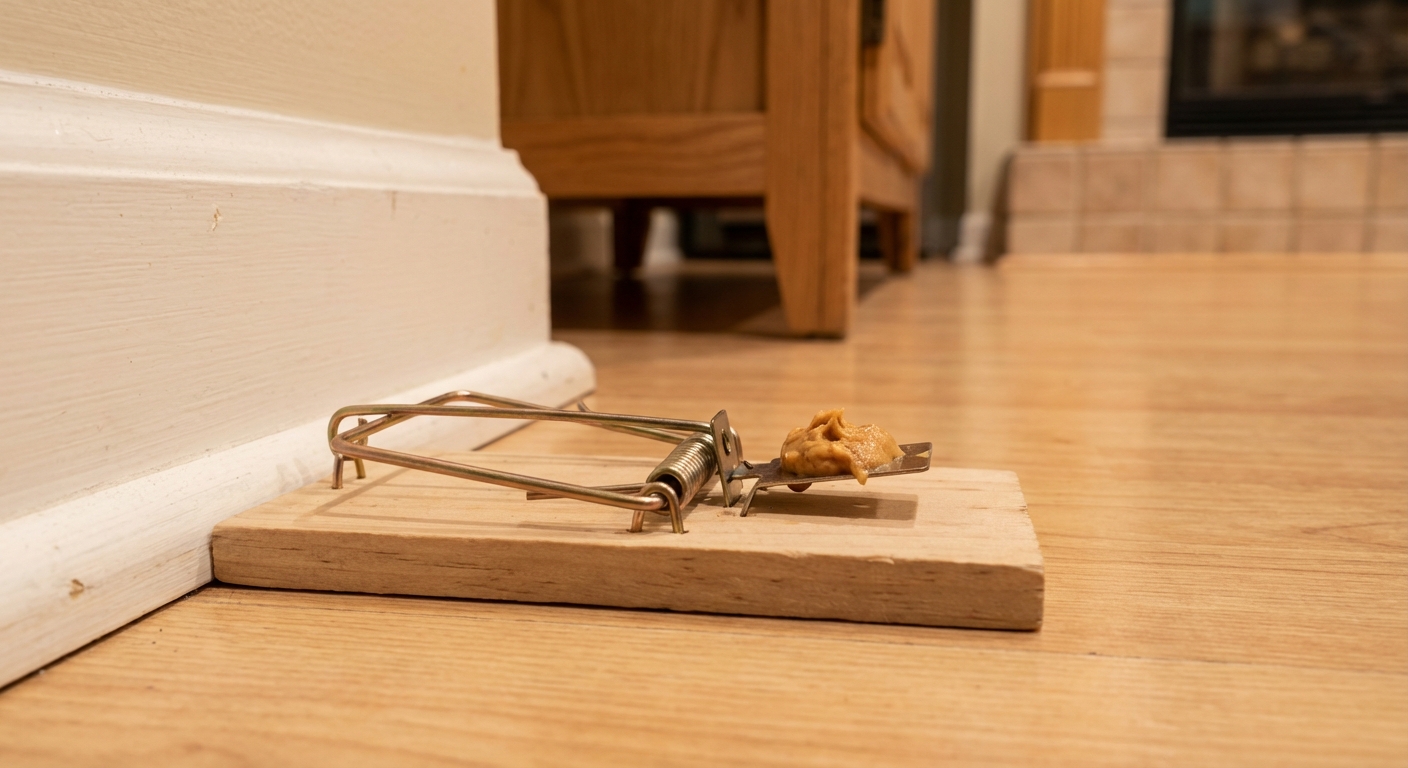
This is the go-to for a reason. Peanut butter is fatty, fragrant, and sticky. It also stays put better than many foods.
- Use a pea-sized dab, not a big blob.
- Press it into the bait cup or onto the trigger so the mouse has to tug.
2) Nuts and nut spreads (almond butter, hazelnut spread)
Great alternatives if peanut butter is not getting interest or if you want to rotate bait for trap-shy mice. Avoidance is usually tied to pressure, bad experiences, or a “new object” feeling more than a specific smell, but switching bait can still help.
- Nut spreads work better than whole nuts on snap traps because they stick.
- If using whole nuts, wedge a tiny piece so it cannot be carried off easily.
3) Chocolate
Chocolate has a strong aroma and sugar, and mice often go for it quickly.
- Use a small shaving or a tiny piece.
- Combine with a smear of peanut butter to help it stay on the trigger.
4) Seeds and grains (sunflower seeds, rolled oats)
These can be excellent if mice are feeding from bird seed, pet food, or stored grain.
- Best on traps with a bait cup. If you use glue boards, they are not very bait-dependent.
- Try mixing a few oats into peanut butter so it smells like pantry food but still sticks.
5) Bacon grease or a tiny bit of cooked bacon
Strong smell, high fat. Works well in garages, sheds, and near compost bins where food odors are already present.
- Use a thin smear. Too much grease can make the trigger slippery.
- Replace often because it can go rancid.
6) Dried fruit (raisins) or marshmallow
These can work when mice are targeting sweet pantry items.
- Use a very small piece and secure it well.
- They can dry out or get ignored if other foods are present.
Trap types and bait
Most of the bait tips below are written with snap traps in mind (classic wood or plastic). Enclosed snap traps and covered stations use the same baits, but you may need slightly more scent because the bait is tucked inside. Glue boards rely more on placement than bait, and in many places they are regulated or discouraged for humane reasons.
Bait mistakes that ruin results
Using too much bait
If the mouse can lick around the edges without stepping on the trigger, you get cleaned bait and no catch. Small is better.
Letting bait be easy to steal
Cheese and big chunks of food get dragged off. Sticky baits or tightly wedged pieces work better.
Not removing competing food
This one matters a lot. Before you set traps:
- Put pet food in sealed containers overnight.
- Clean crumbs around and under the toaster, along stove edges, and in pantry corners.
- Secure bird seed and grass seed in bins with tight lids.
Handling traps with bare hands
Mice can be cautious around anything that smells new. Wearing disposable gloves can help reduce scent transfer and keep traps cleaner, but placement and having enough traps usually matter more than “perfect” scent control.
Trap tips that matter as much as bait
Place traps where mice run
Mice tend to travel along edges. Put traps:
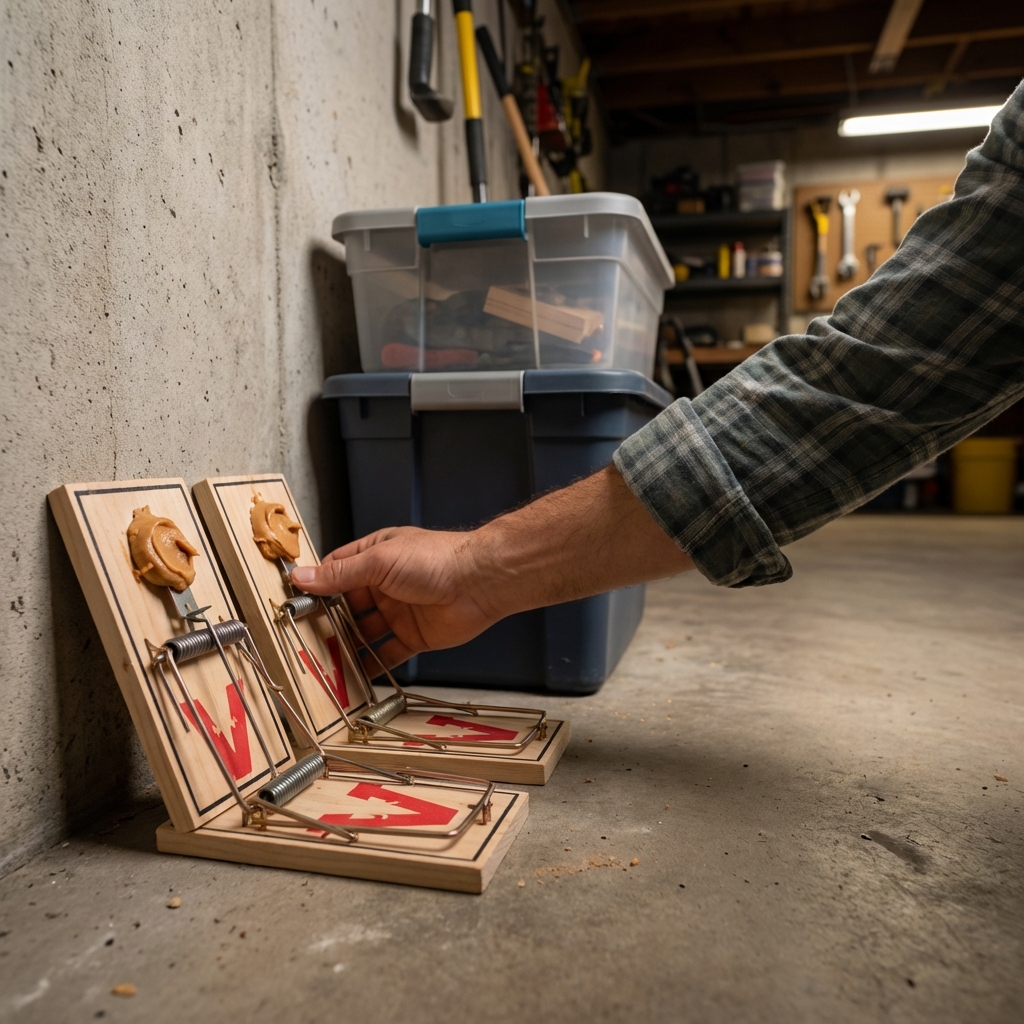
- Along walls and baseboards
- Behind the fridge and stove
- Inside cabinets near droppings or gnaw marks
- In garages along the perimeter wall, not out in the open
Set the trap so the trigger end is closest to the wall. That is where their nose will be.
Use more traps than you think
For active mouse signs, a single trap is slow. Use multiple traps spaced every 6 to 10 feet along problem walls.
Try a short no-set pre-bait
If you see bait disappearing without catches, do this:
- Put bait on the trap but do not set it for 1 to 2 nights.
- Once they feed confidently, set the trap with the same bait and placement.
Check daily and reset fast
Old bait dries out and dead mice can make other mice cautious. Fresh bait and quick resets keep momentum.
Quick troubleshooting
Bait is gone but the trap is untouched
- Use less bait and press it in so they have to pull.
- Move the trap tighter to the wall, or place two traps side-by-side to cover the runway.
- Switch to a stickier bait (nut spread, peanut butter with oats) so it cannot be lifted off.
Trap is sprung but no mouse
- Make sure the trigger is hair-trigger sensitive (follow the trap instructions).
- Reduce bait size so the mouse has to step onto the trigger, not reach from the side.
- Try a different trap style (quality snap trap or enclosed snap trap) if you keep getting misfires.
Best bait by situation
Kitchen and pantry
- Peanut butter
- Chocolate with a tiny smear of peanut butter
- Oats mixed into peanut butter
Garage, shed, crawlspace
- Bacon grease smear
- Peanut butter
- Sunflower seeds if you store bird seed
Near bird feeders or seed storage
- Sunflower seeds pressed into a small peanut butter dab
- Rolled oats mixed into nut spread
If you have lots of licking but no triggers
- Use a smaller dab of bait
- Press bait into the cup or onto the trigger firmly
- Switch from a big soft blob to a sticky smear with texture (oats, crushed nuts)
What not to use as bait
- Cheese (most of the time): It dries out, falls off, and is easy to steal. It can work, but it is not the most reliable.
- Wet fruit: Too watery, spoils quickly, and attracts insects.
- Rodenticide without a plan: Rodenticides can be dangerous to pets and wildlife, can create odor issues if a mouse dies in a wall, and some products are restricted in certain regions. Anticoagulant baits can also pose secondary poisoning risk to predators and scavengers. If you go this route, follow label directions and use tamper-resistant bait stations.
Safety, kids, pets, and cleanup
Mouse droppings and nesting material can carry germs. A few simple precautions go a long way:
- Wear gloves when handling traps or cleaning droppings.
- Ventilate the area if you are cleaning an enclosed space.
- Do not sweep or vacuum dry droppings. Lightly mist with disinfectant, wait a few minutes, then wipe up. If you must vacuum, use a HEPA-rated system designed for fine particles.
- If you have kids or pets, use covered snap traps, enclosed traps, or place traps inside a tamper-resistant box so curious noses and fingers cannot reach the trigger.

Do not skip exclusion
Traps and bait solve today’s mice. Sealing entry points helps stop the next wave. After activity slows, seal gaps around pipes, garage door corners, foundation cracks, and damaged weatherstripping.
Quick checklist
- Pick a sticky bait: peanut butter, nut spread, or chocolate plus peanut butter
- Use a pea-sized amount and press it in firmly
- Place traps tight to walls with the trigger facing the wall
- Set multiple traps in the same travel zone
- Remove competing food and check traps daily
If you are not getting results after 3 to 4 nights, reassess: confirm you are dealing with mice (not rats), add more traps, move them closer to droppings, and tighten up exclusion. Most bait problems are really placement and pressure problems.

Jose Brito
I’m Jose Britto, the writer behind The Country Store Farm Website. I share practical, down-to-earth gardening advice for home growers—whether you’re starting your first raised bed, troubleshooting pests, improving soil, or figuring out what to plant next. My focus is simple: clear tips you can actually use, realistic expectations, and methods that work in real backyards (not just in perfect conditions). If you like straightforward guidance and learning as you go, you’re in the right place.