Gnats are one of those small problems that can feel huge. One day your plants look fine, and the next you have little flies hovering over the soil or swarming a fruit bowl. The good news is you do not need harsh sprays to get control. You need two things: a trap that catches the adults and a plan that breaks the life cycle.
Below are the homemade gnat traps I lean on most, plus natural add-ons that target eggs and larvae. Use the sections that match where the gnats are coming from, because plant gnats and kitchen gnats often look similar but behave differently.
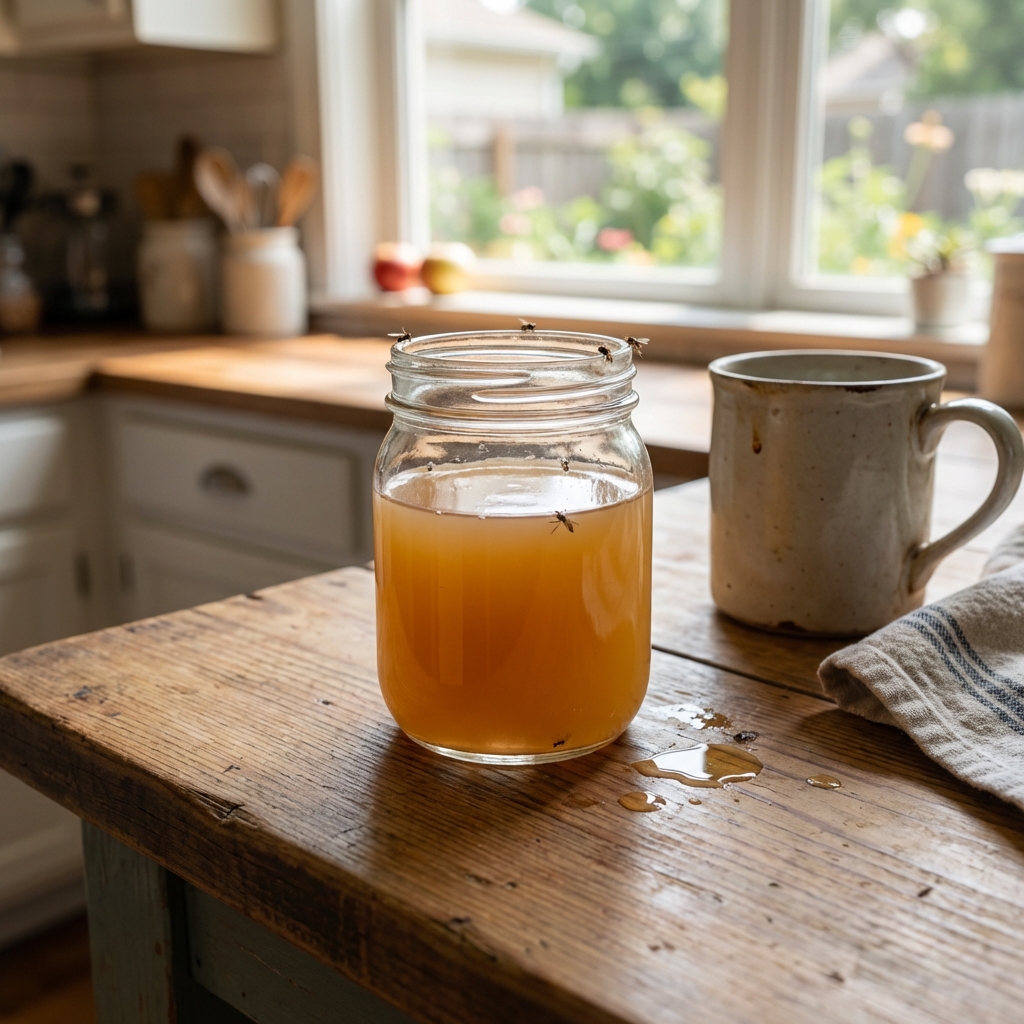
First, figure out what kind of gnat you have
Most household “gnats” fall into three common buckets:
- Fungus gnats (houseplants): tiny dark flies that hang around potting soil and drain holes. They tend to run or hop on the soil surface when you disturb the pot.
- Fruit flies (kitchen): tan or brownish flies that hover around fruit bowls, recycling, compost, and any sticky or fermenting spill.
- Drain flies (near sinks and drains): small gray or black flies with fuzzy bodies and moth-like, triangular wings. They often rest on walls close to drains and move in short, fluttery hops.
If you are not sure, do this quick check: place a sticky card near the plant and a small vinegar trap near the sink. Whichever fills up first is a good clue, but do not treat it like a perfect diagnosis. Trap placement, airflow, and competing smells can skew results.
Homemade gnat traps for houseplants (fungus gnats)
Fungus gnats lay eggs in consistently moist potting mix. The adults are annoying, but the larvae are the real reason the problem keeps repeating. Traps catch adults. Drying and soil treatments hit larvae.
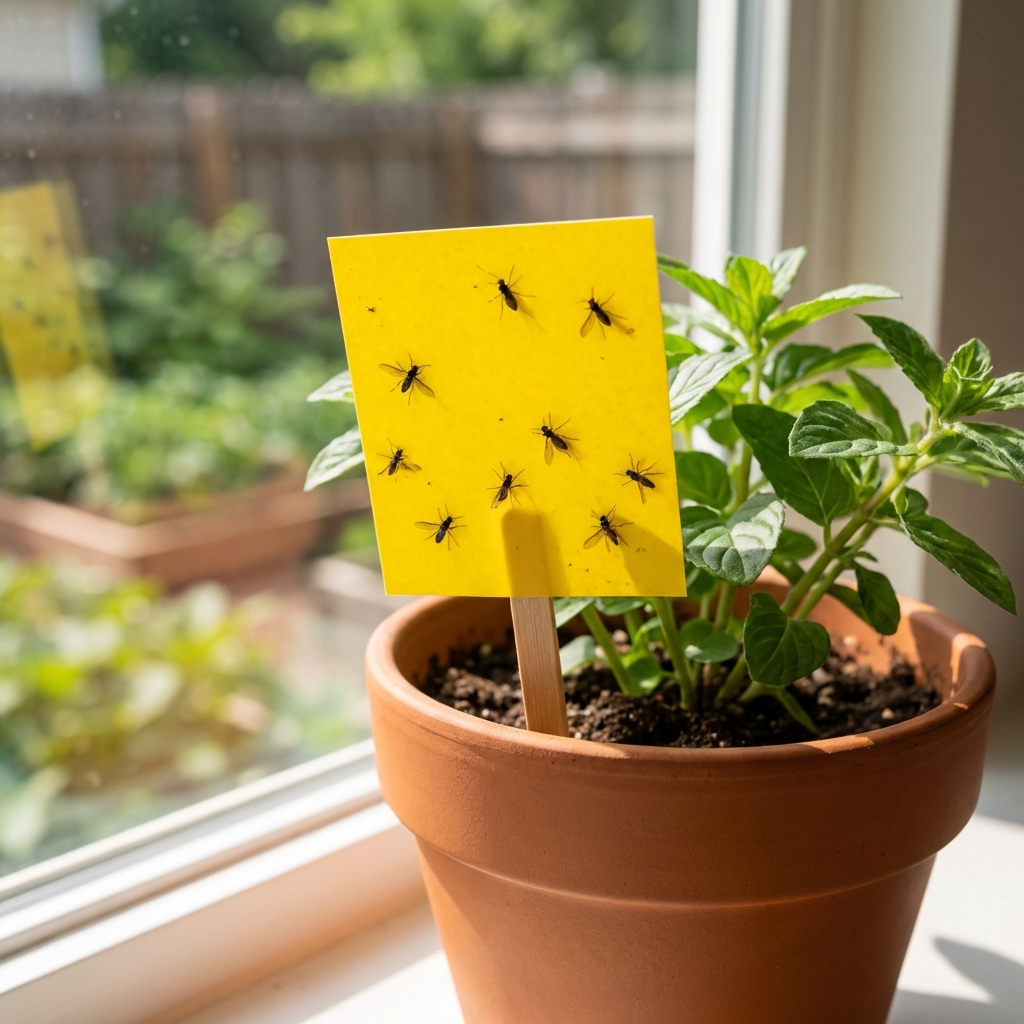
1) Yellow sticky card trap (fastest adult catcher)
This is not fancy, but it is effective. Adult fungus gnats are attracted to yellow and get stuck.
- What you need: yellow sticky cards on stakes (or any sticky trap you can place near soil level).
- How to use: place 1 card per small pot, 2 to 3 for larger planters. Position close to the soil surface, not up at leaf height, and try not to press it against leaves.
- Replace: when the surface is covered with gnats or dust, usually every 1 to 2 weeks.
Tip: Sticky cards are best as a “meter” too. If the trap count drops over 7 to 10 days, your plan is working.
2) Apple cider vinegar cup trap (helps, but place it right)
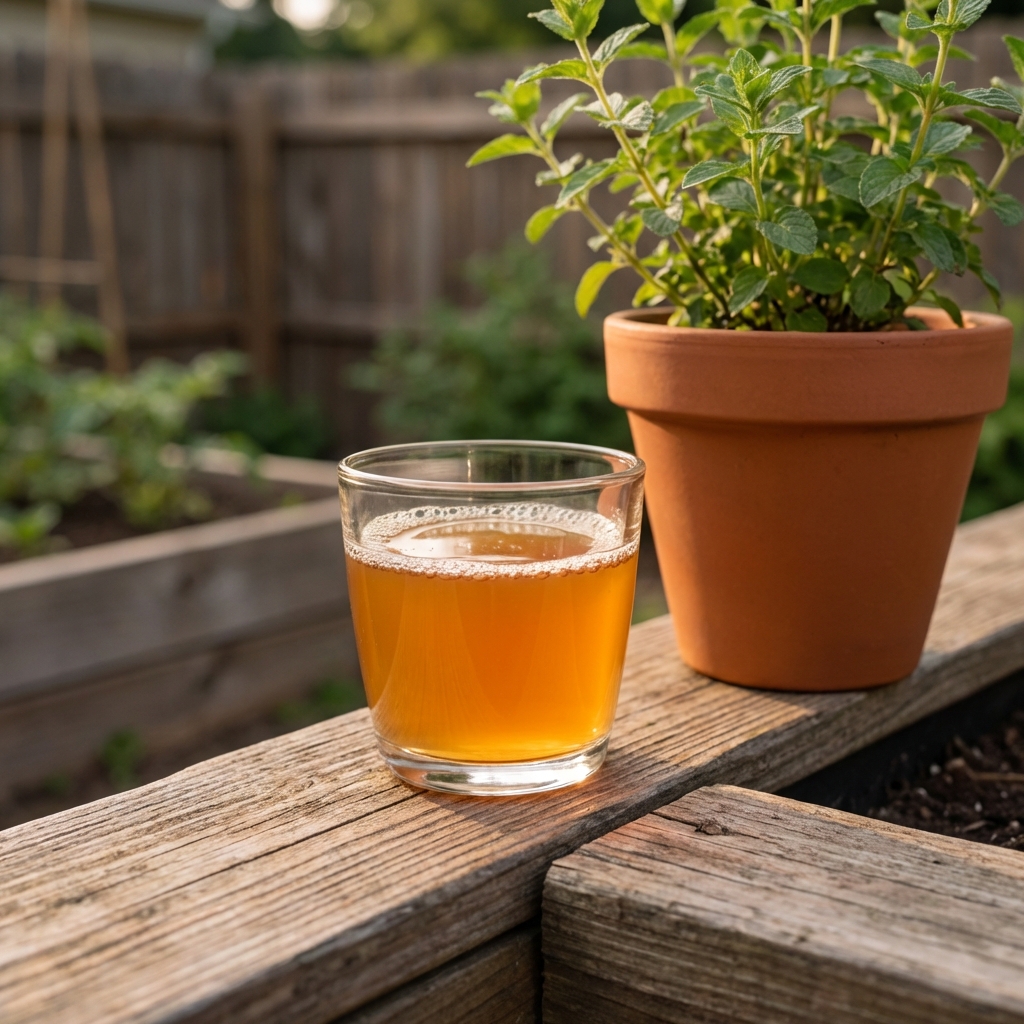
Vinegar traps are famous for fruit flies, but they can catch some fungus gnats too, especially when the infestation is heavy.
- Mix: 1 to 2 inches of room-temperature apple cider vinegar + 1 drop dish soap.
- Set: place the cup right beside the problem pot.
- Optional cover: plastic wrap with a few small holes poked in it. This reduces odor and helps guide flies in.
- Refresh: every 2 to 3 days, or sooner if it gets cloudy or full of debris.
Reality check: If you only use vinegar traps for fungus gnats, the issue often comes back. Use this alongside sticky cards and a soil step.
3) Potato slice test and trap (simple and surprisingly useful)
Potato slices are a quick way to confirm larvae are in the soil. Larvae feed near the surface and will gather under the potato.
- How: cut a raw potato into thin slices. Lay one flat on the soil surface.
- Check: after 12 to 24 hours, lift it and look for small clear or whitish larvae.
- Use as a trap: remove and discard the slice daily for a few days.
This does not solve an infestation by itself, but it tells you if you need to treat the soil, not just trap adults.
4) Hydrogen peroxide soil drench (a targeted reset)
If larvae are active, a dilute hydrogen peroxide drench can help knock them back. Hydrogen peroxide is a chemical, but it breaks down into water and oxygen. Results vary by plant and soil, and repeated drenches can stress sensitive roots or disrupt the soil microbiome.
- Mix: 1 part 3% hydrogen peroxide to 4 parts water.
- Apply: water the pot with the solution until it runs out of the drain holes.
- Repeat: once a week for 2 to 3 weeks if needed.
Notes: Always test on one plant first if you are nervous, especially with delicate plants. Avoid using this on very young seedlings, fresh cuttings, or plants with very sensitive roots. Do not use stronger concentrations than household 3% peroxide, and do not apply daily.
5) Sand or grit top dressing (a barrier, with mixed results)
A dry, gritty surface can discourage fungus gnats from laying eggs in the top inch of soil. In practice, this works best when the layer stays dry and is coarse enough to act like a real barrier.
- What works: coarse horticultural sand, aquarium gravel, or fine horticultural grit. Avoid very fine play sand that packs down.
- Depth: aim for about 1/2 inch. Some growers have better results closer to 3/4 inch with a very coarse material.
Heads up: This is most effective when you are also changing watering habits. If the pot stays wet, gnats can still breed below the surface and emerge around the edges.
6) BTI (Mosquito Bits or Dunks) tea (strong larva control)
If you want a natural option that targets larvae directly, BTI (Bacillus thuringiensis israelensis) is one of the most reliable. It is commonly sold as Mosquito Bits or Mosquito Dunks for standing water, and it can be used as a soil drench for fungus gnats.
- How: soak a small amount of Mosquito Bits in water (follow the label for making a “tea”), then water your plants with that solution.
- Repeat: weekly for 2 to 4 weeks to cover the life cycle.
Tip: Combine BTI with sticky cards for a faster drop in adults.
7) Beneficial nematodes (for persistent infestations)
For ongoing fungus gnat issues across multiple pots, beneficial nematodes (often Steinernema feltiae) can be a game-changer. They hunt larvae in the soil. This is a biological control, not a “trap,” but it is worth knowing about if you want a more complete plan.
- How: apply according to the package directions, then keep soil lightly moist for the recommended window so they can work.
Heads up: Nematodes are living, so storage and timing matter. Buy from a reputable source and use promptly.
Homemade gnat traps for the kitchen (fruit flies)
If gnats are hovering around fruit, trash, recycling, or the sink, treat it like a food source problem. Traps help, but cleanup is what ends it.
Quick checklist (do this first): toss overripe produce, wipe sticky spots, rinse recycling, take out trash, and clean your compost caddy. Check the sneaky stuff too: forgotten potatoes or onions, a drip tray under the fridge, mop buckets, wet rags, and the gunk around trash can rims.
1) Vinegar and soap jar (best all-around)
This is the best “set it and forget it” fruit fly trap.
- Use: room-temperature apple cider vinegar or red wine vinegar.
- Add: a single drop of dish soap to break surface tension.
- Place: near the fruit bowl, trash can, recycling, or wherever you see them most.
- Refresh: every 2 to 3 days.
If you want to reduce smell, cover the jar with plastic wrap and poke 3 to 6 small holes.
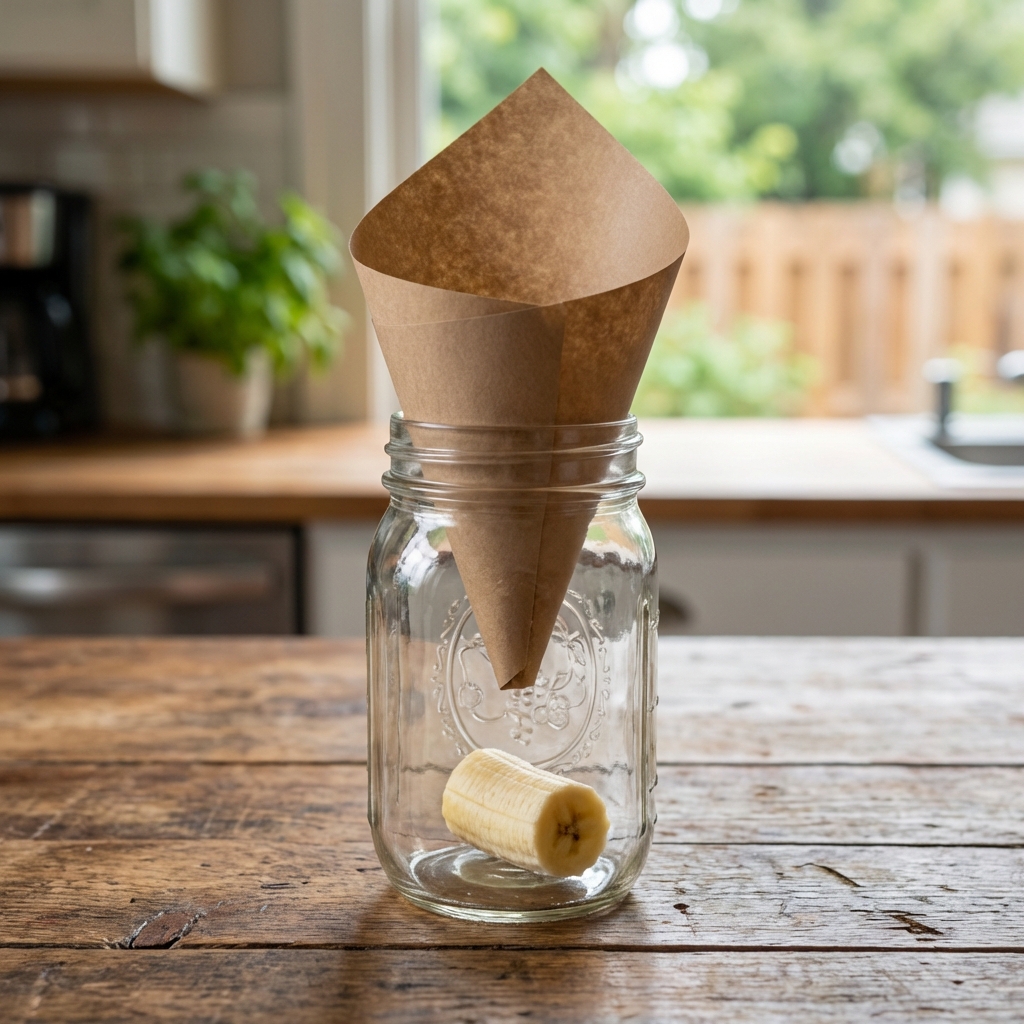
2) Overripe fruit funnel trap (for heavy swarms)
This trap uses a strong bait and a simple funnel so flies have trouble getting out.
- Put in a jar: a small piece of very ripe banana or peach peel.
- Add: a splash of vinegar or a bit of beer.
- Make a funnel: roll a sheet of paper into a cone with a small opening and set it in the jar (opening down).
Swap the bait every couple of days. Old bait can start to smell in a bad way.
3) Shallow dish trap (fast backup)
If you need something quick, a shallow dish can catch a surprising number overnight. This is basically the same idea as the jar, just faster to set up and easier to tuck next to problem spots.
- Fill: a shallow bowl with vinegar.
- Add: a drop of dish soap.
- Set: next to the fruit bowl, trash can, recycling bin, or compost pail.
This works best when you also wipe the area clean and remove damp rags or sponges nearby.
If they are coming from drains (drain flies)
If the flies are fuzzy and moth-like, traps alone will not solve it. Drain flies breed in the biofilm lining drains, overflow holes, garbage disposals, and sometimes floor drains.
What to do
- Scrub, do not just rinse: use a drain brush to scrub the inside walls of the drain and the underside of the drain cover. Clean the overflow opening in bathroom sinks too.
- Flush: after scrubbing, flush with hot water.
- Use an enzyme drain gel (optional): an enzyme cleaner can help break down leftover biofilm over several nights. Follow the product directions.
- Cover overnight: tape plastic wrap over the drain at night for 2 to 3 nights. If you see flies trapped underneath, you found a major source.
- Check floor drains: especially in basements, laundry rooms, and near HVAC drains.
Note: Vinegar traps may catch a few drain flies, but the real fix is removing the breeding film.
Natural prevention that stops the comeback
Traps reduce the adult population. Prevention is what breaks the cycle so you are not dealing with gnats again in two weeks.
For houseplants
- Let the top 1 to 2 inches dry: fungus gnats love constantly moist soil. Water when the plant actually needs it, not on a calendar.
- Bottom water when possible: this keeps the top layer drier. Dump any leftover water in saucers after 15 to 20 minutes.
- Improve drainage: make sure pots have drain holes. If soil stays soggy for days, consider repotting into a better draining mix.
- Quarantine new plants: keep new plants away from your collection for 1 to 2 weeks with a sticky card in the pot.
- Do not overdo organic top dressings indoors: thick layers of compost or worm castings can stay damp and attract gnats.
For kitchens
- Remove the food source: rinse recycling, take out trash, and store fruit in the fridge for a week if needed.
- Keep surfaces dry: wipe counters, wring out sponges, and do not leave damp rags balled up.
- Check hidden spots: under the toaster, around the compost bin lid, mop buckets, wet sponges, and the drip tray under the fridge if you have one.
How long does it take to get rid of gnats?
With consistent effort, most household gnat problems improve quickly, but timelines depend on temperature, severity, and how many breeding spots you have.
- Fruit flies: typically 3 to 7 days once you remove breeding sources and run traps.
- Fungus gnats: typically 2 to 4 weeks because you are working through a life cycle in the potting mix.
- Drain flies: often 1 to 3 weeks once you fully remove the biofilm (especially if there are multiple drains involved).
If you still see lots of gnats after two weeks, the most common reason is that the breeding source is still active. For plants, that usually means the soil is staying too wet. For kitchens, it is often trash, recycling, compost, or a hidden piece of produce. For drain flies, it is usually a drain that has not been scrubbed down to bare pipe walls.
Safety notes (pets, kids, and sensitive plants)
- Keep traps out of reach: vinegar and dish soap are low risk but still not something pets should drink.
- Avoid open cups near curious cats: use plastic wrap with holes or a jar with a narrow neck.
- Test treatments: if you use peroxide drenches, test one plant first and do not over-apply.
- Follow labels on BTI and nematodes: especially around edible plants and storage.
- Skip essential oil sprays: many essential oils can irritate pets and do not reliably solve a gnat problem anyway.
Quick troubleshooting
“My traps catch a lot, but they keep coming.”
That usually means you are only catching adults. Add a soil step for fungus gnats (dry down, bottom watering, BTI or peroxide drench) or remove breeding sources for fruit flies (trash, recycling, compost, hidden produce). If the flies are fuzzy and hanging around drains, switch to a drain-fly cleanup plan.
“I only see gnats when I water.”
Classic fungus gnat sign. Put sticky cards in every nearby pot and let the soil surface dry longer between waterings.
“They are mostly near the sink.”
Do a closer ID. Fruit flies may be after scraps or sticky residue nearby, but drain flies breed in drain biofilm. Scrub the drain walls with a brush and set a trap nearby to monitor what you are catching.
A simple plan that works
If you want a no guesswork approach, do this for 14 days:
- Day 1: put sticky cards in plant pots and set vinegar traps in the kitchen.
- Days 1 to 14: remove food sources, rinse recycling, and keep counters dry.
- For plants: let the top soil dry, bottom water when possible, and treat larvae (BTI weekly is a great option, or use one peroxide drench per week if appropriate for your plants).
- For drains: if you suspect drain flies, scrub drains and flush, then cover drains overnight for a couple nights to confirm activity.
- Day 7: replace or reposition traps where activity is highest and refresh vinegar bait.
By the end of two weeks you should see a noticeable drop. After that, one sticky card in your “problem plants” and smart watering habits usually keep things calm.

Jose Brito
I’m Jose Britto, the writer behind The Country Store Farm Website. I share practical, down-to-earth gardening advice for home growers—whether you’re starting your first raised bed, troubleshooting pests, improving soil, or figuring out what to plant next. My focus is simple: clear tips you can actually use, realistic expectations, and methods that work in real backyards (not just in perfect conditions). If you like straightforward guidance and learning as you go, you’re in the right place.