Fleas are tiny, tough, and frustratingly good at showing up when you least expect them. One day your dog is fine; the next, they’re scratching like crazy and you’re wondering how this happened so fast.
The short version: dogs get fleas from other animals or from environments where fleas are already present. The longer version matters because stopping fleas is all about stopping the life cycle, not just killing what you see on your dog.
What fleas are really doing
The flea you spot on your dog is only a small piece of the problem. Fleas go through four stages: egg, larva, pupa, and adult. Adults live on animals, but the other stages mostly live in the environment.
- Adult fleas bite and feed on your dog.
- Eggs fall off into carpet, bedding, cracks in flooring, and soil. (They often hatch in about 1 to 10 days, depending on temperature and humidity.)
- Larvae hide in dark areas and feed on organic debris, especially flea dirt (adult flea feces), skin flakes, and other tiny bits of dander.
- Pupae sit protected in a cocoon. The adult flea develops inside and can wait weeks to months (sometimes longer) before emerging when it senses heat, vibration, and carbon dioxide.
This is why you can treat your dog and still see fleas later. You may have killed adults but left the next wave ready to emerge.
How dogs get fleas in the first place
1) From other animals
Dogs often pick up fleas from:
- Neighborhood cats (outdoor cats are common flea carriers)
- Wildlife like raccoons, opossums, foxes, squirrels, and rabbits
- Other dogs at daycare, parks, grooming, boarding, or playdates
Fleas do not fly, but they jump extremely well. If your dog brushes past an infested animal or shared resting spot, fleas can transfer quickly.
2) From the environment
Your dog can get fleas without direct contact with another pet. Common places dogs pick up fleas:
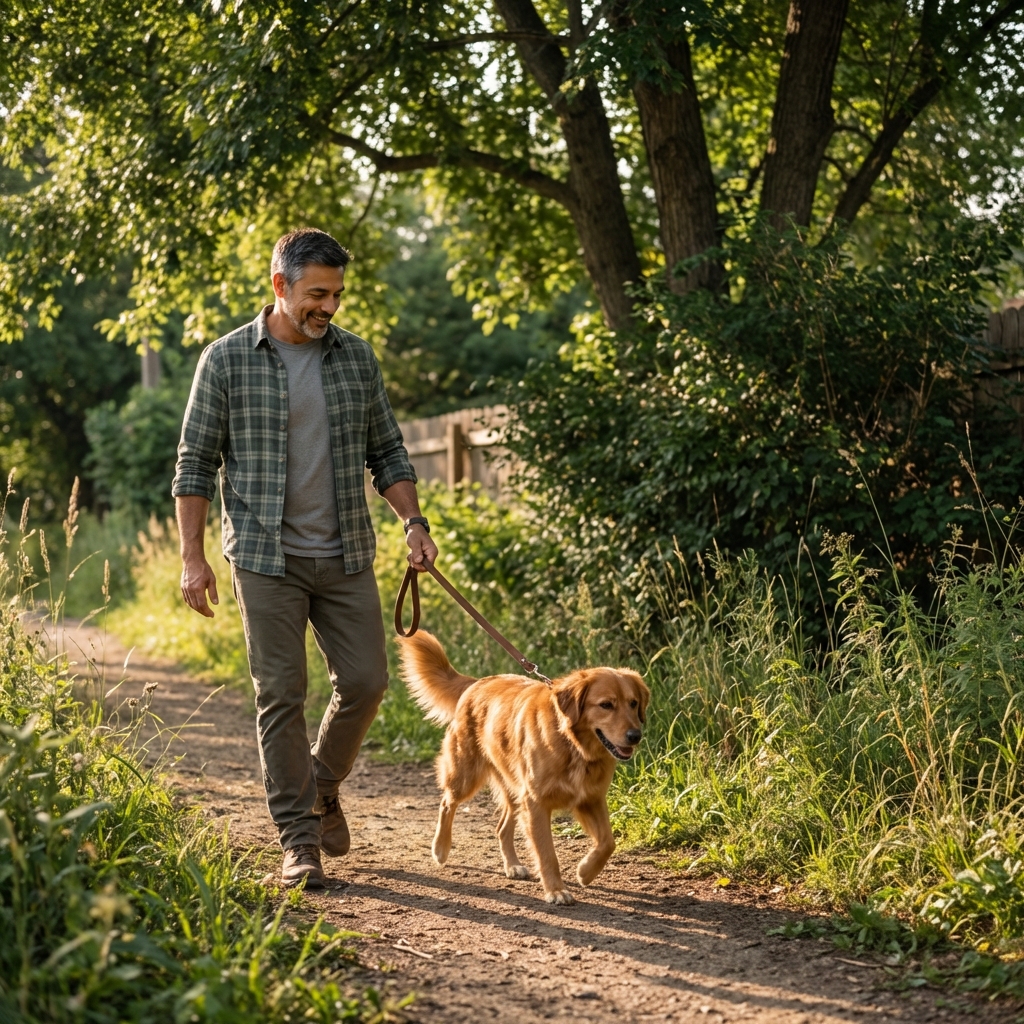
- Shady areas in the yard where pets or wildlife rest
- Under decks, porches, and shrubs
- Leaf litter, tall grass, and damp soil near fences
- Inside homes where fleas have been before, even weeks to months ago
3) From your home or car
If a flea issue already exists indoors, your dog can keep getting re-infested just by living in the space. Flea eggs and larvae can build up in:
- Dog beds and blankets
- Couches and rugs
- Cracks along baseboards and hardwood floor gaps
- Car upholstery if your dog rides often
In other words: your dog can be treated perfectly, and still pick up new adult fleas that recently emerged from pupae in the house.
How fast can fleas spread?
Fleas can multiply surprisingly fast. A single adult female flea can lay dozens of eggs per day. Under warm, humid conditions, eggs may hatch in as little as 1 to 10 days, larvae can develop over about 5 to 20 days, and the life cycle can move along quickly, turning “a few fleas” into a full infestation.
Also, pupae are stubborn. They can sit protected and then emerge when the timing feels right, which is why people often think treatment “did not work” when it actually did; it just did not catch every life stage.
Expectation check: breaking the flea life cycle typically takes at least 3 months of consistent prevention and cleaning. Seeing the occasional flea along the way does not always mean you are failing. It often means the last cocoons are still hatching.
Signs your dog has fleas (and what gets mistaken for fleas)
Common flea signs
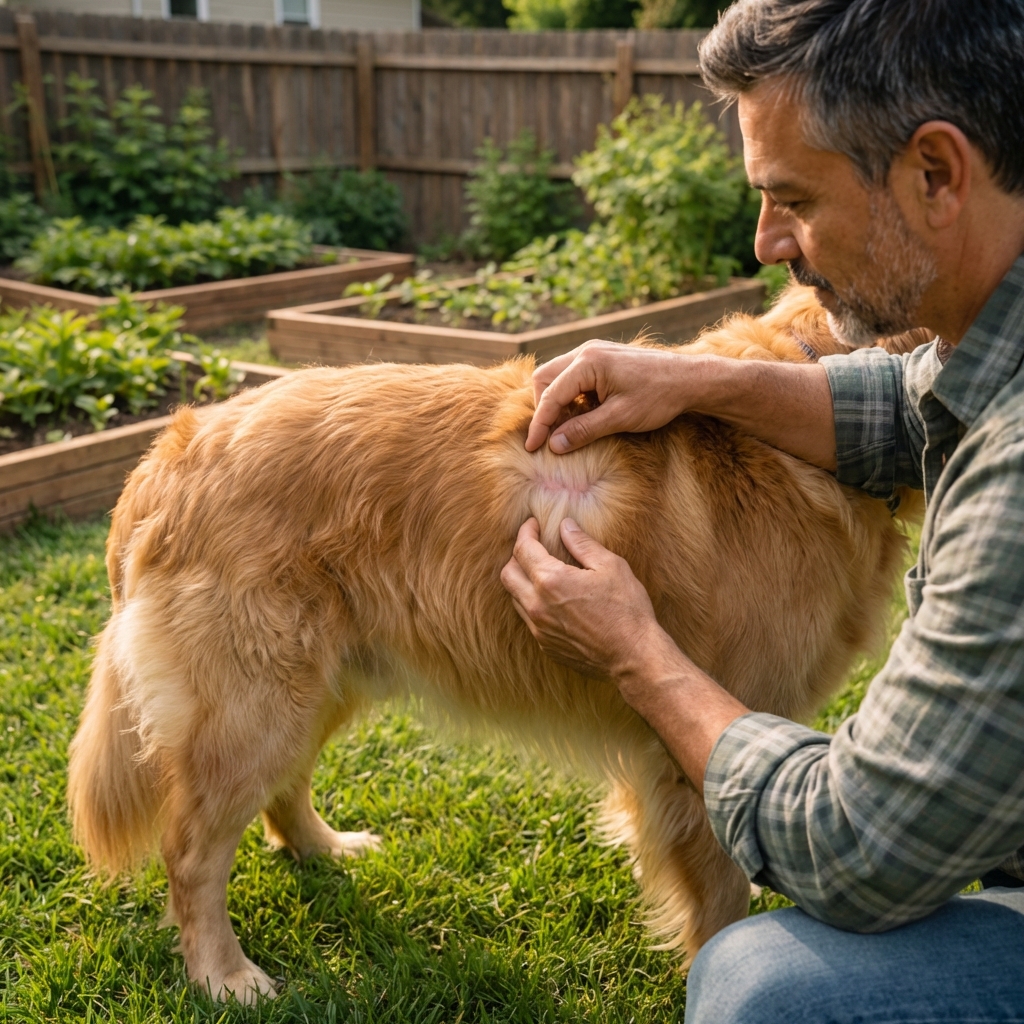
- Frequent scratching, especially near the tail base and hindquarters
- Biting or chewing at the skin
- Hair loss or scabs
- Red, irritated skin
- Restlessness, trouble settling down
Flea dirt vs regular dirt
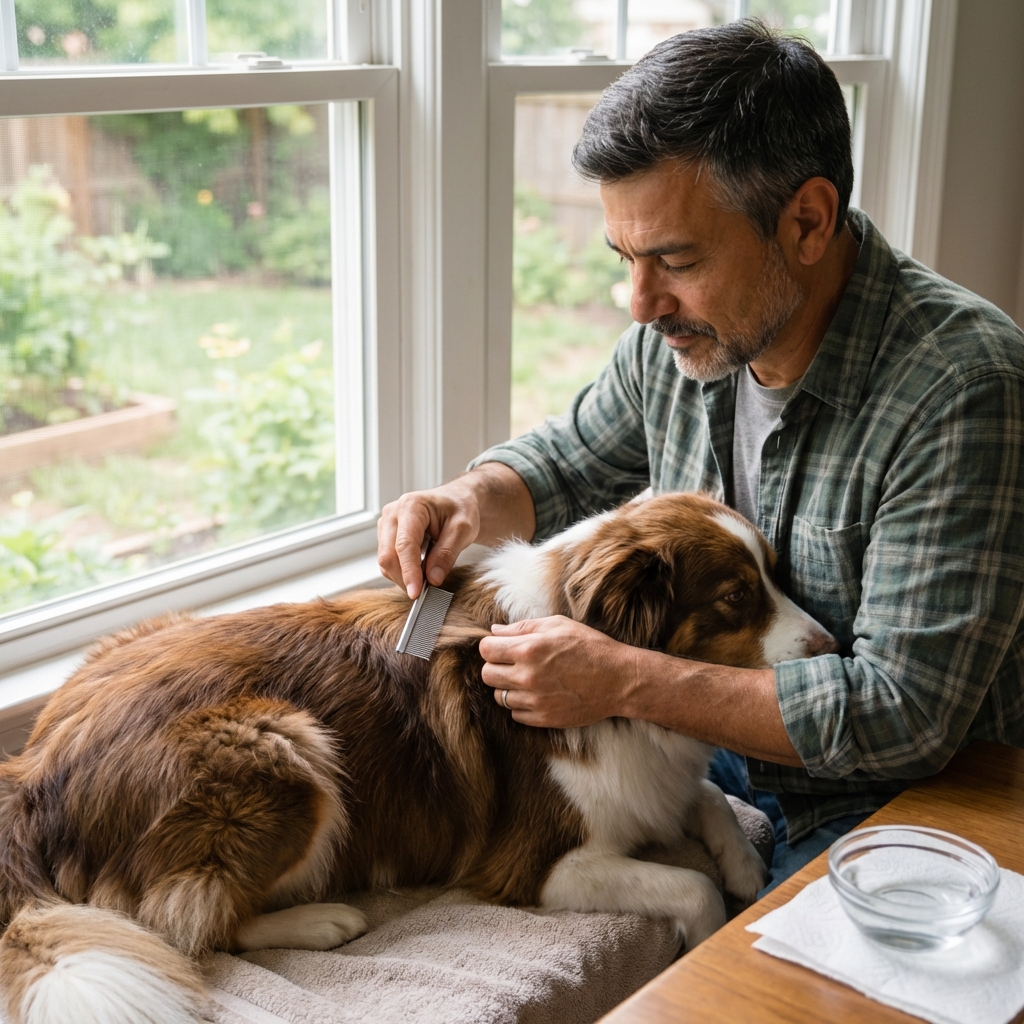
“Flea dirt” looks like black pepper in the fur. It is digested blood. A quick check:
- Put the specks on a damp white paper towel.
- If it turns reddish-brown, that strongly suggests flea dirt.
Things that can look similar
- Allergies (environmental or food)
- Mites or lice
- Dry skin and dandruff
- Hot spots from moisture and irritation
If your dog is very itchy but you cannot find fleas or flea dirt, your vet can help rule out other causes.
How to check your dog quickly
You do not need fancy tools to do a solid flea check.
Fast at-home flea check
- Use a fine-tooth flea comb if you have one.
- Focus on the neck, behind ears, armpits, belly, and near the tail.
- Comb onto a white paper towel to spot fleas or flea dirt.
- Check your dog’s bedding and favorite nap spots too.
Why fleas keep coming back
If you’re feeling like fleas are “impossible,” it is usually one of these issues:
- Only the dog was treated, but the home was not addressed.
- Not treating every pet in the household. Fleas will hop to the untreated animal.
- Stopping too soon. Pupae emerge later and restart the problem.
- Yard hot spots like shaded, damp areas where eggs and larvae survive better.
- Incorrect product use or mixing products unsafely.
What to do today: a practical flea plan
If your dog has fleas right now, focus on a three-part approach: pet, home, and yard.
1) Treat the dog (and all pets)
- Use a vet-recommended flea preventive or treatment appropriate for your pet’s age and weight.
- Treat every dog and cat in the house. One untreated pet can keep the cycle going.
- Follow label directions exactly. More is not better.
Safety note: never use a dog-only flea product on cats. Some ingredients can be dangerous to cats. When in doubt, ask your veterinarian.
2) Clean the home (this is where most of the work pays off)
- Wash pet bedding, blankets, and slipcovers in hot water, then dry on high heat if fabric allows.
- Vacuum carpets, rugs, and upholstered furniture thoroughly. Empty the vacuum outside right after.
- Vacuum along baseboards and under furniture where larvae hide.
- Repeat vacuuming regularly for a few weeks to help remove eggs and trigger pupae to emerge.
If the infestation is heavy or you keep finding fleas despite consistent pet treatment and cleaning, you may need to add a household flea spray or professional pest control. Choose products labeled for indoor flea control, follow directions closely, and keep pets (and kids) away until everything is fully dry and safe per the label.
One more caution: “natural” flea remedies are a common trap. Many are ineffective, and some (especially essential oils) can be irritating or even toxic to pets.
3) Reduce flea-friendly areas outdoors
- Mow and edge regularly, especially along fences and shaded borders.
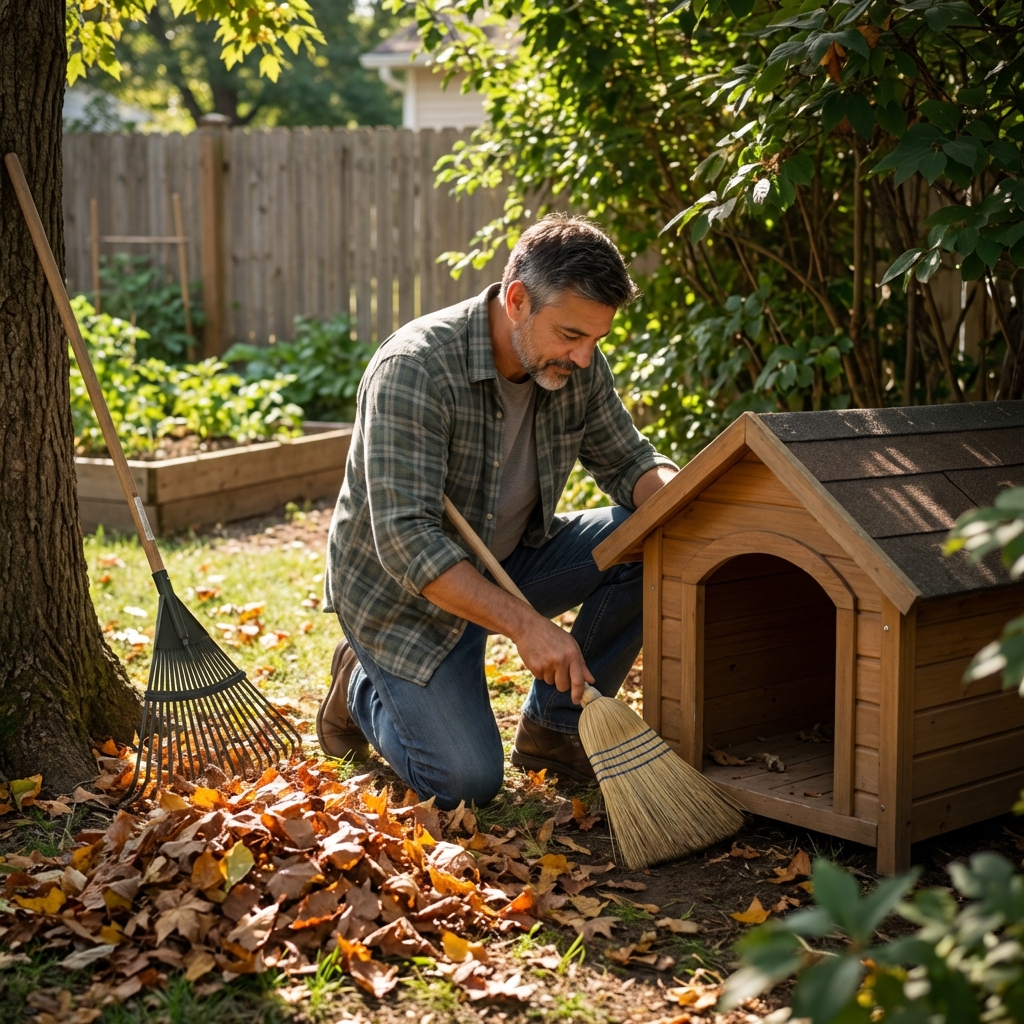
- Rake up leaf litter and debris where larvae can shelter.
- Limit wildlife attractants: secure trash, do not leave pet food outside.
- Focus efforts on shaded resting spots, not the sunny middle of the lawn.
When to call the vet
Get veterinary help if:
- Your dog has severe itching, open sores, or signs of infection
- You suspect flea allergy dermatitis (intense itchiness from just a few bites)
- Your puppy is very young, small, or seems weak (fleas can contribute to anemia)
- Over-the-counter efforts are not improving things after a couple of weeks of consistent work
- You want help choosing the safest, most effective products for your pet and household
Also ask your vet about tapeworm prevention or treatment if your dog has fleas. Fleas can transmit tapeworms when pets ingest them while grooming.
FAQ
Can my dog get fleas even if they do not go outside much?
Yes. Fleas can be brought in by other pets, or from wildlife visiting the yard. They can also be carried indoors occasionally on clothing, but that is less common than pet or wildlife exposure. Indoor pets are not immune, especially in multi-pet homes.
Do fleas live in grass?
Adult fleas prefer to live on animals, but eggs, larvae, and pupae can survive in outdoor areas that are shaded and humid, especially where pets or wildlife rest.
Can fleas live on humans?
Fleas may bite humans, but they generally prefer furry hosts and do not usually live long-term on people. If you are getting bitten, it is a sign there is a flea source in the home or yard.
Why do I see fleas after treatment?
Most often it is newly emerged adult fleas coming from pupae in the environment. Consistent pet treatment plus home cleaning over time is what breaks the cycle. For many households, that means sticking with the plan for at least 3 months.
Bottom line
Dogs get fleas from other animals and from flea-positive environments, and the reason they are so hard to eliminate is that most of the life cycle happens off the dog. Treat the pet, clean the home, and tidy up flea-friendly spots outdoors. Then give it time and stay consistent, since fully breaking the cycle often takes at least 3 months.

Jose Brito
I’m Jose Britto, the writer behind The Country Store Farm Website. I share practical, down-to-earth gardening advice for home growers—whether you’re starting your first raised bed, troubleshooting pests, improving soil, or figuring out what to plant next. My focus is simple: clear tips you can actually use, realistic expectations, and methods that work in real backyards (not just in perfect conditions). If you like straightforward guidance and learning as you go, you’re in the right place.