Christmas cactus (Schlumbergera) is one of those houseplants that people either baby too much or forget completely. The good news is it is not picky once you understand one key rule: water when the soil has dried a bit, not on a strict calendar. How fast that happens depends on the season, temperature, light, and your potting mix.
Quick note: you will also see similar plants sold as Thanksgiving cactus and Easter cactus. Their watering needs are basically the same.
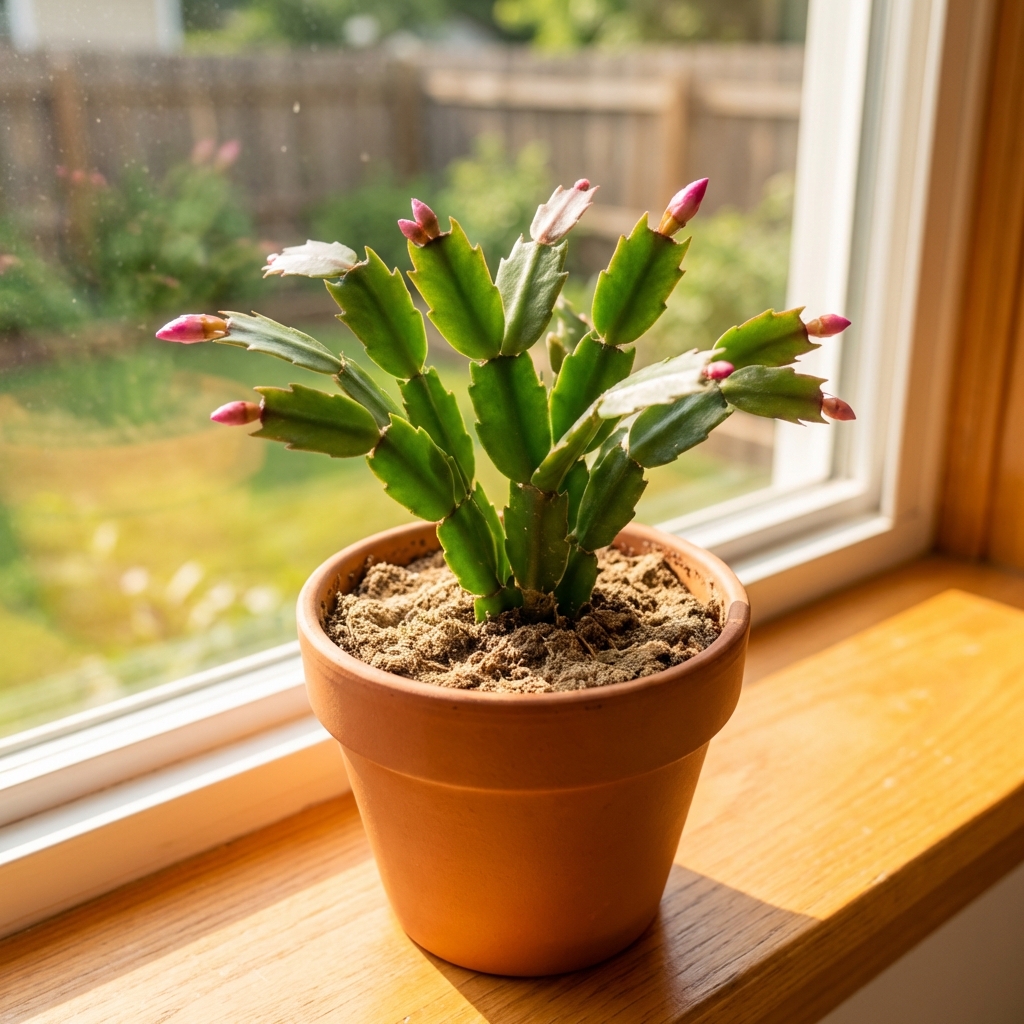
Ballpark watering frequency
Use these as typical ranges, then adjust using the moisture checks below.
- Spring and summer (active growth): usually every 7 to 14 days.
- Early fall (setting buds): usually every 10 to 18 days.
- Late fall and winter (bloom season indoors): usually every 10 to 21 days.
- Right after blooming: you can water a little less often for a few weeks if growth slows, then return to normal spring watering.
Reality check: a small pot in a warm, sunny room might need water weekly. A larger pot in a cool room can go 2 to 3 weeks.
How to tell when it actually needs water
Forget guessing. Use one of these quick tests so you do not overwater.
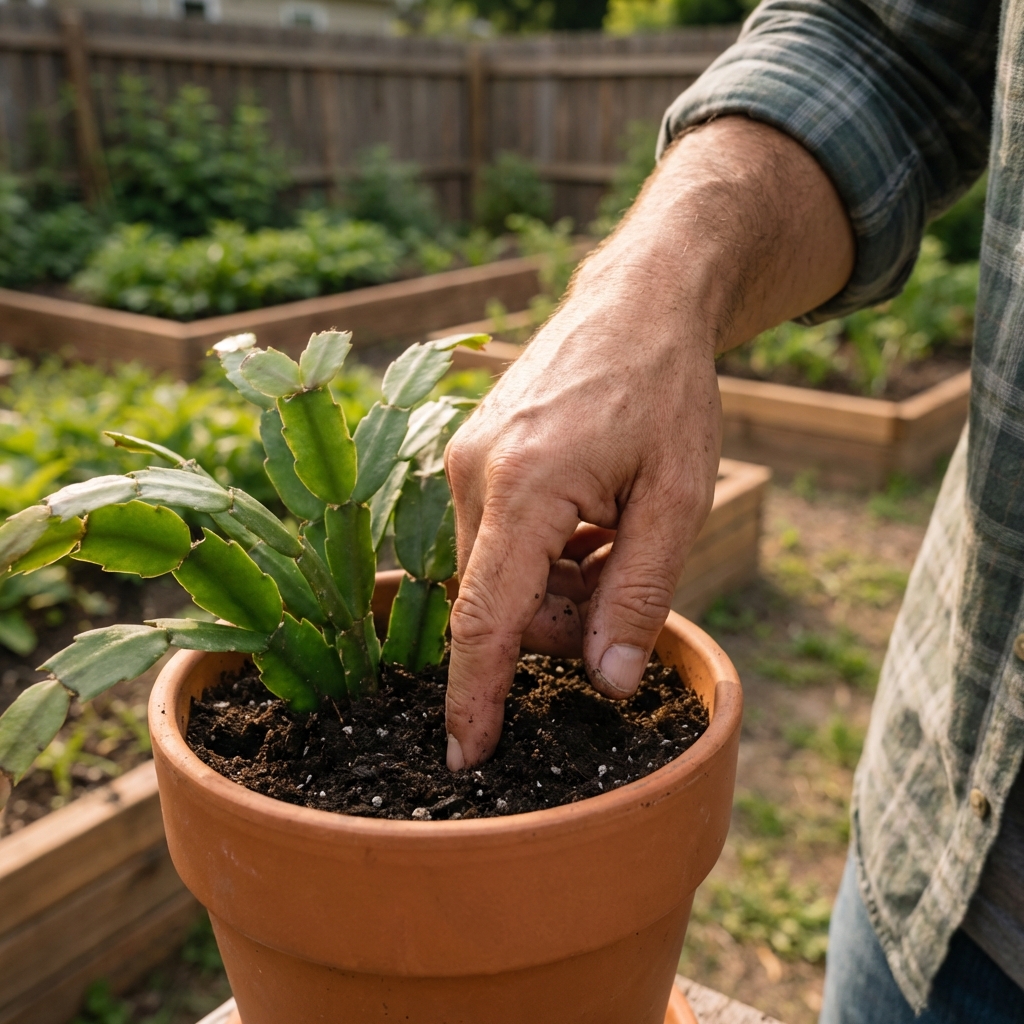
1) Finger test (fastest)
Stick your finger into the soil.
- If the top 1 inch feels dry (or roughly the top third of the pot feels on the dry side), it is time to water.
- If the surface is dry but it feels clearly damp just below, wait a few days and recheck.
Why not always “2 inches”? In small pots or very airy, chunky mixes, the root zone can dry out quickly even when the surface does not look that dry. The goal is “slightly dry,” not “dusty for days.”
2) Pot weight test (my favorite for beginners)
Lift the pot right after watering, then lift it again every few days. When it feels noticeably lighter, that is your cue.
3) Skewer test (great for deeper pots)
Push a wooden skewer into the soil near the edge of the pot and pull it out.
- Clean and dry: water.
- Dark, damp soil stuck to it: wait.
How to water it the right way
The goal is to fully wet the root zone, then let excess water drain away. No sips. No swamp.
- Water thoroughly until you see water run out of the drainage holes.
- Empty the saucer after 10 to 15 minutes so the pot is not sitting in water.
- Do not water again until the mix has dried slightly (use the tests above).
Use room-temperature water if you can. If your pot does not have drainage holes, it is much harder to keep this plant healthy. Consider repotting into a container that drains.
What changes your watering frequency
Potting mix
Christmas cactus likes an airy mix that drains well but does not turn bone-dry instantly. A dense mix stays wet too long and invites root rot.
A simple option: a quality potting mix or cactus mix amended with perlite and a little orchid bark for airflow.
Pot size and material
- Terracotta: dries faster, usually needs more frequent watering.
- Plastic or glazed ceramic: holds moisture longer, water less often.
- Large pots: dry slower than small pots.
Light and temperature
More light and warmth equals faster drying. Cool rooms slow everything down.
Humidity
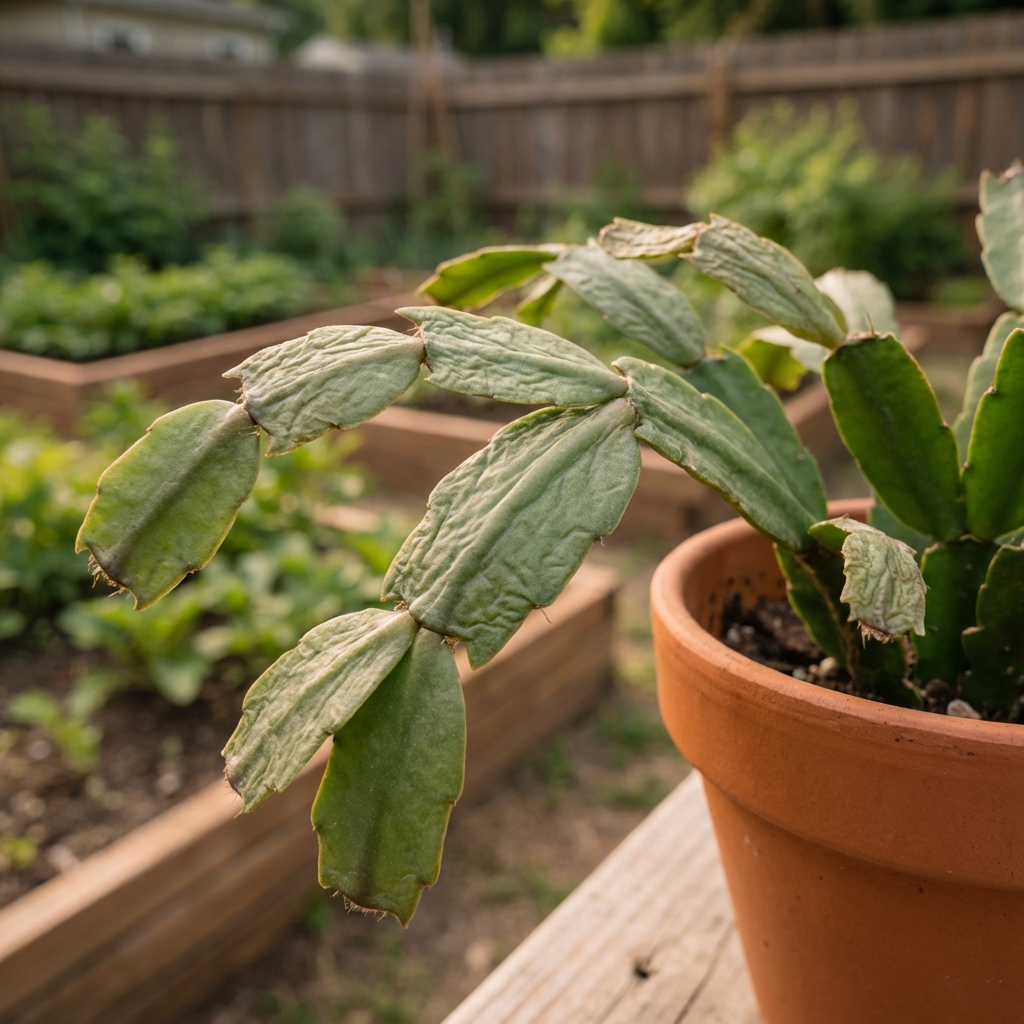
In a dry heated home, the mix dries faster and segments can wrinkle sooner. That does not always mean you need to soak it more often. It can also mean the air is dry.
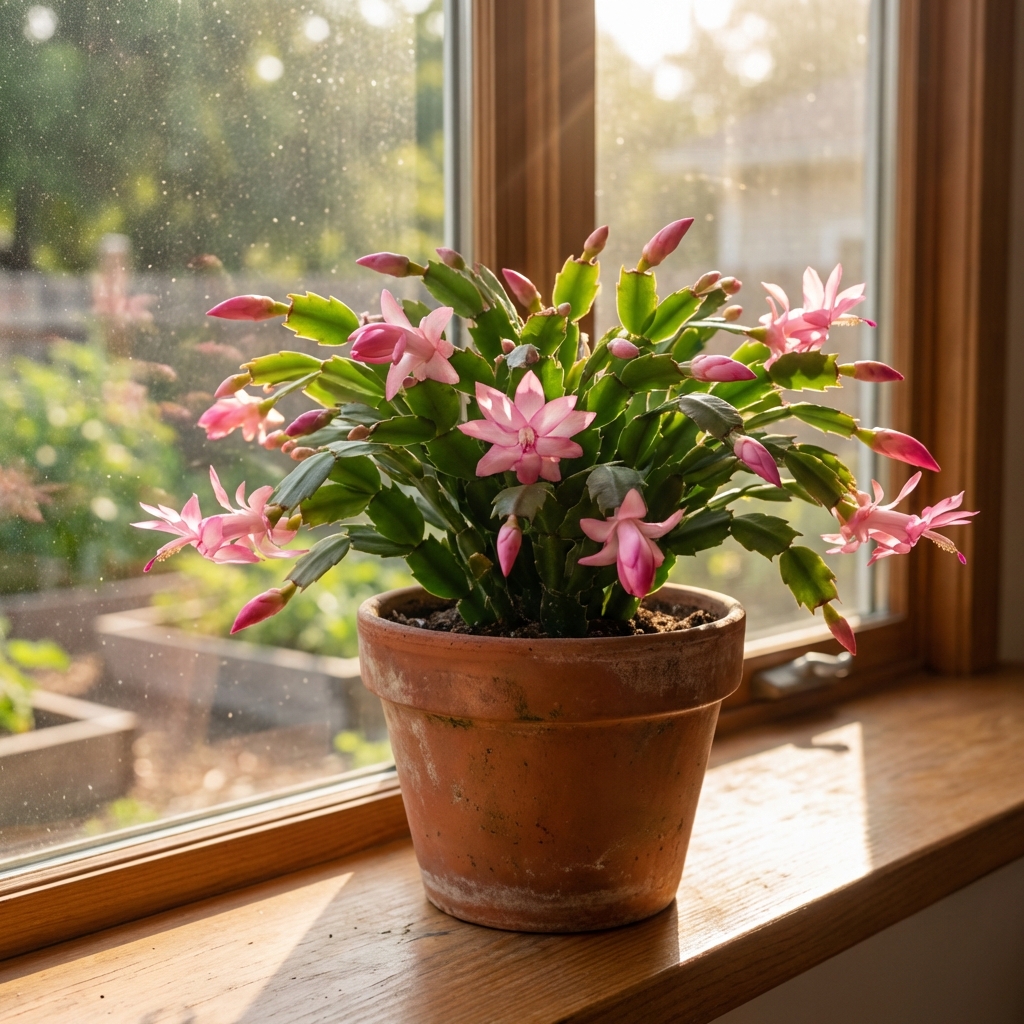
Season-by-season watering guide
Spring and summer
This is when the plant grows new segments. Water when the mix is dry to the touch on top and slightly dry below. For most homes, that lands around every 7 to 14 days.
- If it is outdoors in shade for summer, it may need more frequent checks.
- If growth looks weak, do not “fix” it with extra water. Check light and potting mix first.
Early fall (bud prep)
As days shorten and temperatures cool, the plant uses water more slowly. Keep the same “slightly dry” rule, but expect longer gaps between watering.
Late fall and winter (bloom time)
Indoors, it often dries slower in winter light. Water less often, but do not let it stay dry for long stretches if the plant starts to shrivel. Consistency helps, but also try to avoid cold drafts, heater blasts, and moving the plant once buds form, since those are common triggers for bud drop too.
After blooming
Once flowering slows, many plants appreciate a short rest. You can water a bit less for a few weeks, especially if it is in a cooler spot and growth pauses. If it is still pushing new growth, keep your normal routine.
Signs you are watering too much (and what to do)
- Soft, mushy segments
- Yellowing that does not improve
- Soil that stays wet for many days
- Musty smell or fungus gnats hanging around the pot
Fix: stop watering, let the mix dry more between waterings, and make sure the pot drains. If the soil is heavy or stays soggy, repot into a lighter, better-draining mix. If roots are brown and mushy, trim the rot and repot.
Signs you are underwatering (and what to do)
- Wrinkled or limp segments
- Dry, pulling-away soil that is hard to re-wet
- Bud drop combined with very dry soil
Fix: water thoroughly. If the soil has become hydrophobic and water runs down the sides, bottom-water the pot for 15 to 30 minutes, then let it drain completely.
Common watering mistakes
“I mist it every day instead of watering.”
Misting does not replace watering. It wets the surface and can encourage fungus if air flow is poor. Water the soil properly when it is time.
“I water on the same day every week.”
That works only if your home conditions never change. Use the soil tests instead.
“It is a cactus, so it must like drought.”
Christmas cactus is a tropical cactus that naturally grows in tree crotches and humid forests. It likes to dry slightly between waterings, not stay bone-dry for long periods.
FAQ
Do I water a Christmas cactus more when it is blooming?
Not automatically. Blooming plants still prefer the mix to dry slightly between waterings. What matters is keeping the routine steady so it does not swing from very dry to very wet.
Can I bottom-water a Christmas cactus?
Yes. Bottom-watering works well when the soil has dried too much and repels water. Just do not leave the pot sitting in water afterward.
What is the best water to use?
Most tap water is fine. If your water is very hard or your plant seems sensitive, filtered water can help. Letting tap water sit overnight can reduce chlorine, but it does not remove chloramine (used in some cities), so check your local water treatment if you are troubleshooting a fussy plant.
How do I know if it is root rot?
Persistent soggy soil, a sour smell, and limp segments that do not firm up after drying are big clues. Healthy roots are pale and firm. Rotting roots are dark and mushy.
Bottom line
If you remember nothing else, remember this: water your Christmas cactus when the mix has dried slightly, then drain the excess. Most watering problems come from watering on a schedule instead of paying attention to the soil.

Jose Brito
I’m Jose Britto, the writer behind The Country Store Farm Website. I share practical, down-to-earth gardening advice for home growers—whether you’re starting your first raised bed, troubleshooting pests, improving soil, or figuring out what to plant next. My focus is simple: clear tips you can actually use, realistic expectations, and methods that work in real backyards (not just in perfect conditions). If you like straightforward guidance and learning as you go, you’re in the right place.