Succulents are famous for being “low water,” but that is also why they get killed by kindness. Most beginner problems come down to one thing: watering on a schedule instead of watering when the plant is actually ready.
This guide will help you build a simple routine you can repeat with almost any succulent, whether it lives on a sunny windowsill or outside on a patio.
Quick note: “Succulent” covers a huge range of plants, from cacti to leafy rosettes. The soak-and-dry approach works for most common container succulents, but exact timing varies by species, pot size, and light.
The short answer
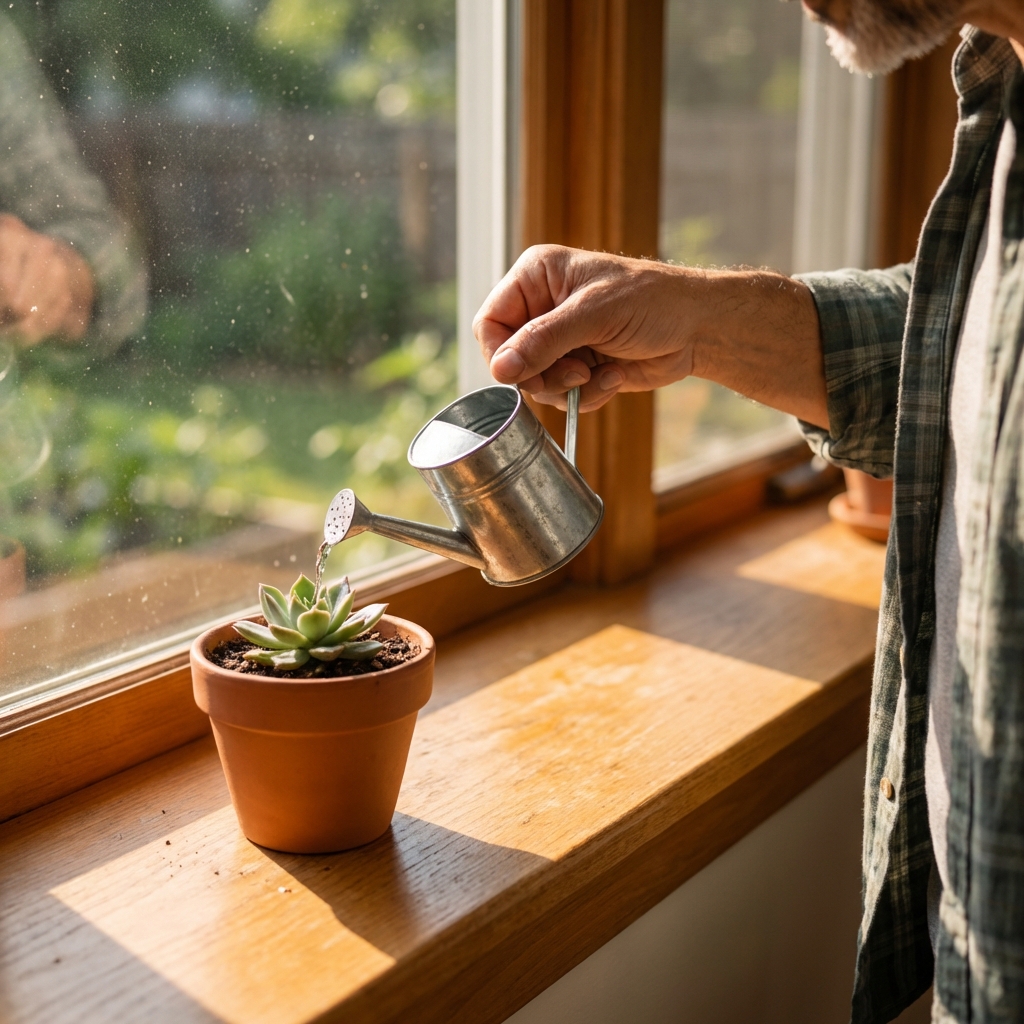
Most succulents do best when you water deeply, then let the soil dry out completely before watering again. That often works out to:
- Indoors: about every 2 to 4 weeks
- Outdoors in warm, bright weather: about every 7 to 14 days
- During winter or low light: about every 3 to 6+ weeks
Those numbers are starting points, not rules. Small pots in strong light, heat, or wind can need water sooner. Large pots, low light, cool rooms, and humidity can stretch the time much longer.
The method that works: soak and dry
If you only remember one thing, remember this: succulents want a real drink, then a real dry period.
How to do it in a pot
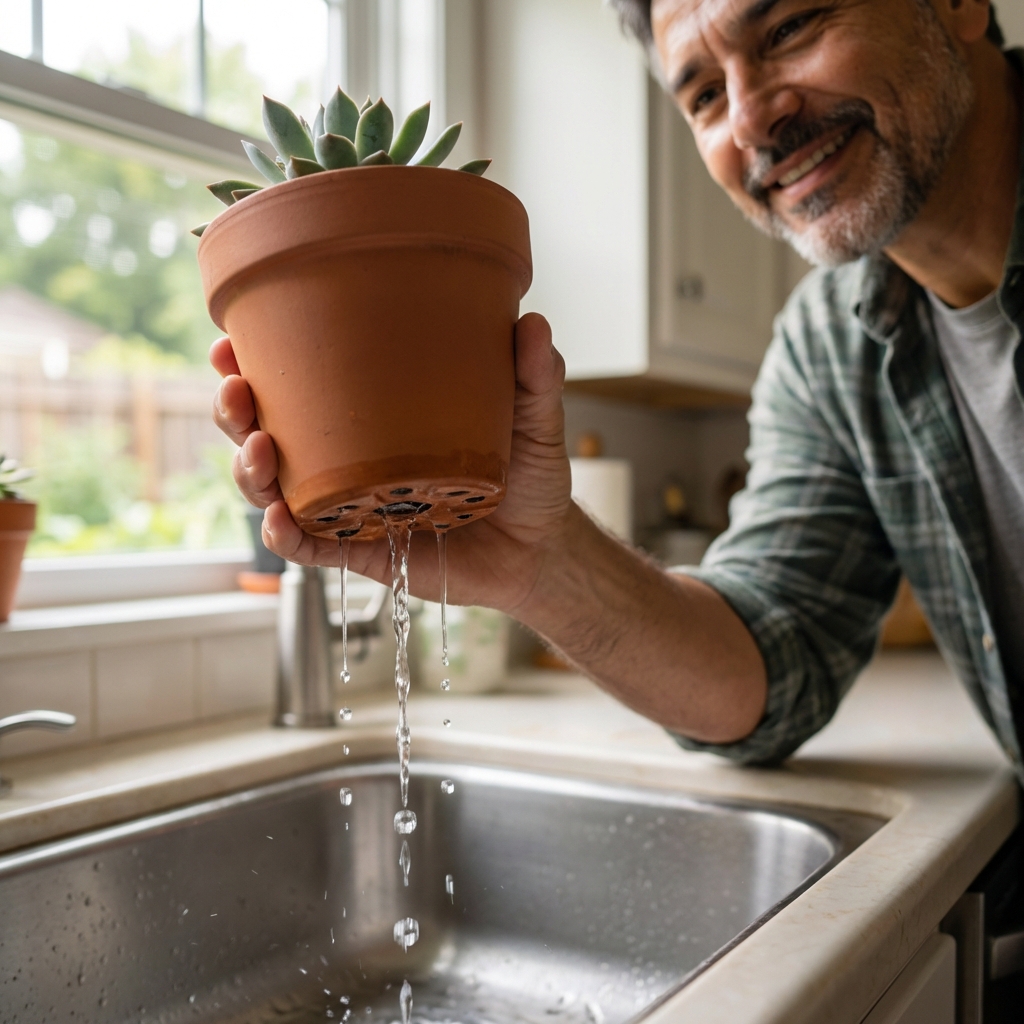
- Water until it runs out the drainage hole. This helps ensure the whole root ball gets moisture and can help flush excess salts over time (especially if you fertilize or have hard water).
- Let it drain completely. Do not leave the pot sitting in a saucer of water.
- Wait until the soil is fully dry all the way down before watering again.
Light sips every few days often keep the top inch damp while the lower soil stays wet and airless. In many indoor setups, that increases the risk of root rot.
One more nuance: if your mix is very gritty (lots of pumice or perlite), “fully dry” can happen fast, sometimes in just a few days. The rule still applies, you may just need to check more often.
How to tell when your succulent needs water
Use a couple of quick checks. After a week or two you will stop guessing.
1) The soil check (best for beginners)
- Stick a finger, chopstick, or wooden skewer 2 to 3 inches into the soil.
- If it comes out cool, dark, or with soil stuck to it, wait.
- If it comes out dry and clean, it is usually safe to water.
2) The pot weight check (surprisingly accurate)
Lift the pot right after watering and again when it is dry. A dry pot is noticeably lighter. This works great for small indoor succulents.
3) The leaf check (use as a backup signal)
- Thirsty signs: slightly wrinkled leaves, softer leaves, leaves that look thinner or less plump.
- Not-thirsty signs: firm, plump leaves and steady growth.
Some succulents naturally drop older leaves as they grow. Do not treat every dropped leaf like an emergency.
Overwatering vs underwatering
These two get confused all the time because both can end with limp leaves. The difference is how the leaves look and feel.
Overwatering (most common)
- Leaves look swollen, translucent, or mushy
- Leaves fall off with a gentle touch
- Stem feels soft near the soil line
- Soil stays wet for many days
- Musty smell or visible mold
If you suspect overwatering, stop watering, increase light gradually, and improve drainage and airflow. If the base is mushy, you may need to take cuttings and restart the plant.
Underwatering
- Leaves wrinkle and feel thinner
- Lower leaves dry up and crisp (not mushy)
- Plant looks dull or slightly shriveled
Underwatered succulents usually bounce back after one deep watering, as long as the roots are healthy.
Indoor watering
Indoors is usually lower light, steadier temperatures, and less airflow. All of that slows drying. That is why indoor succulents often need water less often than people expect.
A realistic indoor routine
- Check soil weekly.
- Water only when the pot is fully dry.
- Expect longer gaps in winter or in rooms that do not get strong sun.
Also watch for hidden “extra moisture” sources, like humidifiers, kitchens, bathrooms, or tightly grouped pots with no airflow.
Outdoor watering
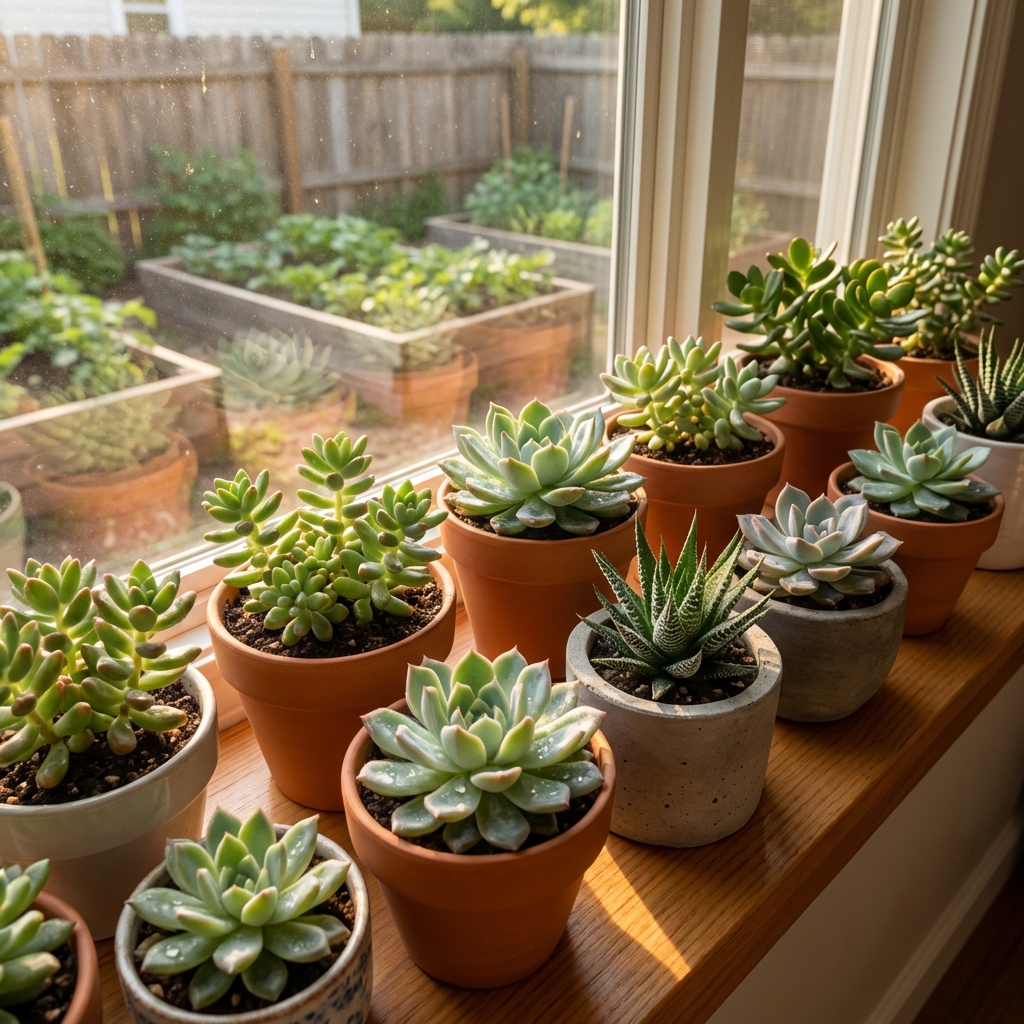
Outside, succulents can dry fast, especially in terracotta pots, windy patios, and summer heat. But outdoor soil can also hold moisture longer if you are in heavy clay or a shaded spot.
Outdoor tips that prevent problems
- Water in the morning so plants dry out through the day.
- Avoid frequent evening watering in cool weather.
- If you get regular rain, skip watering and let the soil dry between storms.
If your succulents are planted in the ground, they often need less water than container plants once established, as long as the soil drains well.
Seasonal watering
Many popular succulents slow down in winter due to shorter days and lower light. When growth slows, water use slows too.
What to do in winter
- Let pots dry fully and stay dry longer before watering again.
- Water earlier in the day and avoid cold, soggy soil overnight.
- If your plant is not actively growing, err on the dry side.
Cool-season growers and summer dormancy
Some genera and species (for example, many Haworthia and Haworthiopsis, and some other South African succulents) can grow more in cooler seasons. Others slow down or go semi-dormant in summer heat. Instead of guessing by name, watch your plant: if it is actively growing, it will usually use water faster. If it is stalled, keep it drier.
What changes “how often”
1) Pot and drainage
- Terracotta: dries faster, forgiving for beginners.
- Plastic or glazed ceramic: dries slower, easier to overwater.
- No drainage hole: not recommended. If you use one, treat it like a temporary display pot and be extremely cautious.
2) Soil mix
Succulents do best in a fast-draining mix. If your “cactus soil” still stays wet for a week, cut it with extra pumice, perlite, or coarse sand to increase airflow and drainage.
3) Light levels
More light generally means the plant uses water faster. Low light means slower drying and higher rot risk. If your succulent stretches (etiolates), it needs more light, not more water.
Beginner examples
Small succulent in a 3 to 4 inch terracotta pot indoors
Check weekly. Water roughly every 2 to 3 weeks in bright light, and closer to every 4+ weeks in winter.
Succulent arrangement in a wide ceramic bowl
These often dry unevenly and stay wet longer. Water less often, and consider bottom-watering carefully only if it has drainage. Better yet, keep succulents in individual pots until you have the timing down.
Outdoor succulent in summer heat
In a pot, it may need water every 7 to 10 days (or sooner in very small pots) if the soil drains well and the pot is drying fully between waterings.
How to water correctly
- Confirm the soil is dry. Do not water just because it has been “two weeks.”
- Water the soil, not the leaves. Getting leaves wet is usually not a big deal, but rot can happen if water sits in a tight rosette or crown in cool conditions with low airflow.
- Soak thoroughly. Water until it drains freely.
- Empty the saucer. Standing water is a root rot starter.
- Put it back in strong light. Bright light helps the pot dry at a healthy pace.
When not to water (even if dry)
- Right before a cold snap outdoors: cold, wet soil raises the risk of damage and rot. Wait until temperatures improve.
- Right after repotting with disturbed roots: many growers wait a few days before watering so any root damage can callus and the plant settles in.
- If the plant looks stressed for another reason: sunburn, pest issues, or rot can mimic thirst. Solve the underlying problem first.
Quick FAQ
Should I mist succulents?
Usually no. Misting raises surface moisture without actually watering the root zone. Most succulents prefer deep watering with full drying in between.
Is it better to underwater than overwater?
In general, yes. Most succulents recover from mild underwatering much more easily than from root rot.
What if my succulent leaves are wrinkled but the soil is wet?
That often means root trouble, not thirst. If roots are damaged from staying wet, the plant cannot drink. Let it dry out, check the roots if the problem continues, and repot into a faster-draining mix if needed.
A simple rule
Water only when the soil is fully dry, then water deeply. If you are torn between watering now or waiting a few more days, wait. Most healthy succulents handle a little extra dryness just fine.

Jose Brito
I’m Jose Britto, the writer behind The Country Store Farm Website. I share practical, down-to-earth gardening advice for home growers—whether you’re starting your first raised bed, troubleshooting pests, improving soil, or figuring out what to plant next. My focus is simple: clear tips you can actually use, realistic expectations, and methods that work in real backyards (not just in perfect conditions). If you like straightforward guidance and learning as you go, you’re in the right place.