Succulents are marketed as if they never need water. In real life, they absolutely do, just not on a strict calendar. The safest answer to “how often do you water succulent plants?” is: for most common potted succulents, water only when the potting mix is fully dry, then water thoroughly and let the excess drain.
A quick caveat that saves plants: not every plant sold as a “succulent” follows the same rhythm. Some (like holiday cactus, some Haworthia in low light, and living stones/mesembs) can prefer a slightly different approach. Use the checks on this page to adjust.
This guide gives you a realistic schedule you can start with, the quick checks that keep you from overwatering, and straightforward solutions when things go sideways.
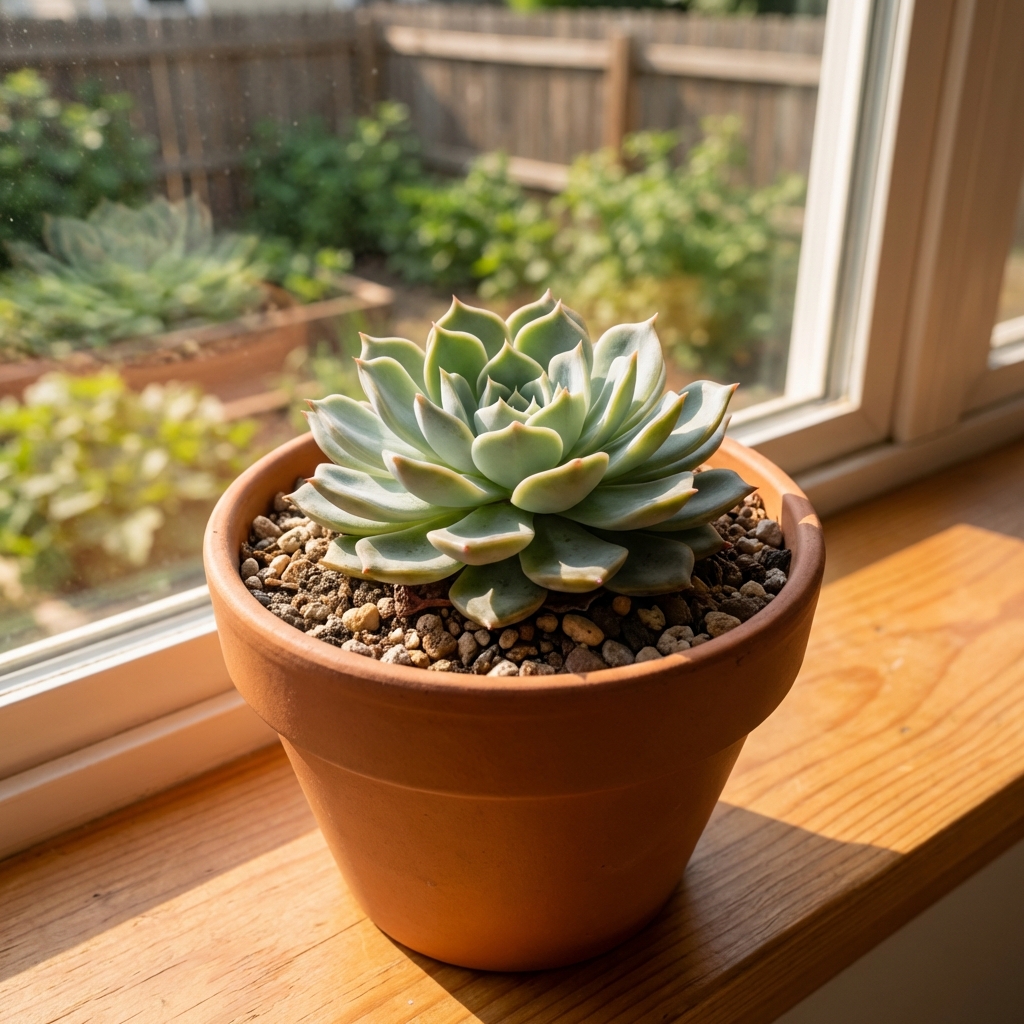
The safe rule: dry first, then drench
If you remember one thing, make it this: most succulents prefer a soak-and-dry cycle.
- Dry first: Wait until the potting mix is dry all the way down, not just crusty on top.
- Then drench: Water until it runs out of the drainage hole. This pushes water through the root zone and helps flush out salts (as long as the runoff drains away).
- Drain completely: Never let the pot sit in a saucer of water.
This approach works because most succulent roots hate staying damp. They can handle drought far better than soggy mix.
So how often is that?
Here are safe starting points. Treat these as training wheels, not a rule book. Your light, pot, mix, and season matter more than the number.
Indoor succulents (most homes)
- Spring and summer: about every 10 to 21 days
- Fall and winter: about every 3 to 6 weeks
Outdoor succulents (in pots)
- Warm, bright weather: about every 7 to 14 days
- Cooler weather: about every 2 to 4 weeks
Outdoor succulents (in the ground)
Once established, many landscape succulents only need occasional deep watering during long dry spells. In humid or rainy climates, they may need no supplemental water for stretches, especially if planted in gritty, fast-draining mix.
Newly planted or newly repotted succulents: This is where beginners accidentally rot plants. If roots were disturbed (common when repotting), plant into dry mix and wait 3 to 5 days before the first watering. Then water once and go back to the soak-and-dry routine. Outdoors in hot, dry conditions you may water sooner, but avoid keeping the mix “lightly moist.”
3 fast ways to know if it is time to water
1) The finger test
Stick a finger into the mix. For small pots, go down at least 1 to 2 inches. For larger pots, go deeper if you can. If you feel coolness or dampness, wait.
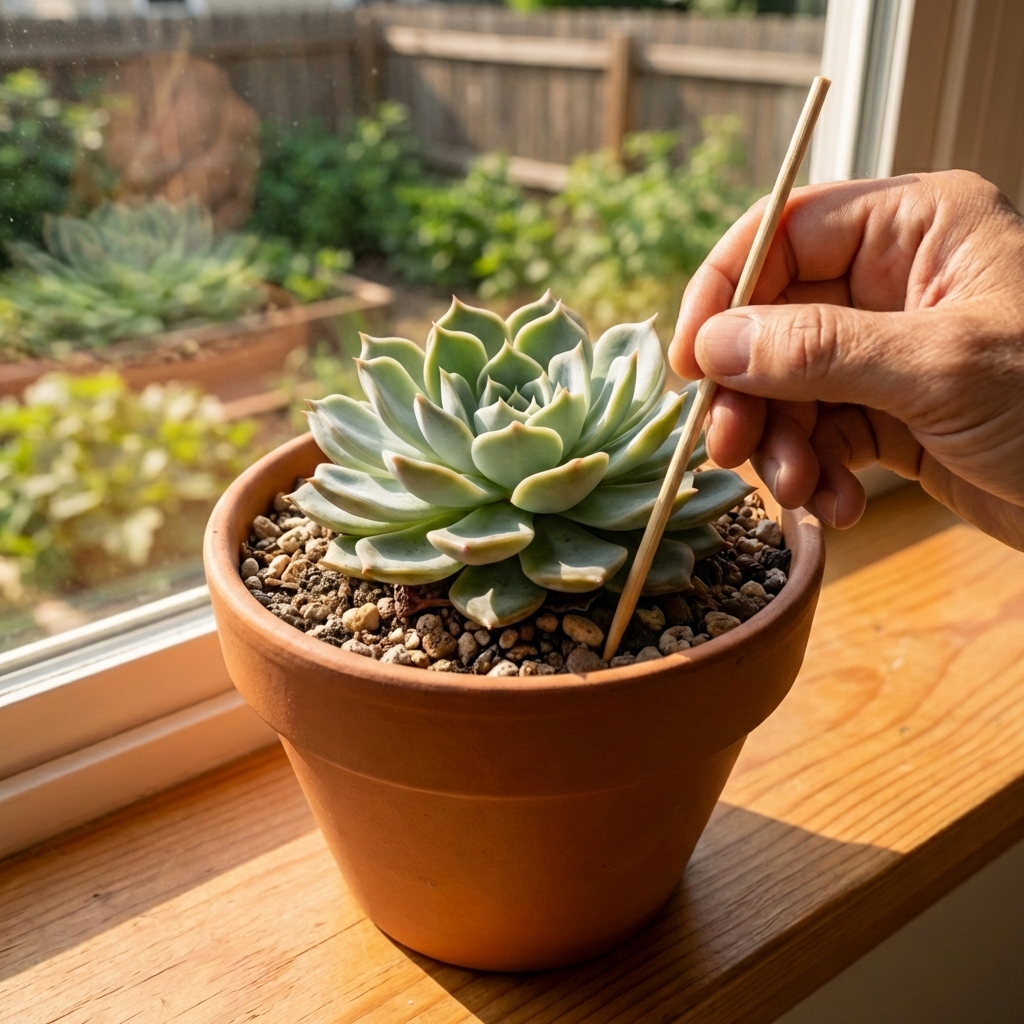
2) The skewer test
Push a wooden skewer or chopstick down near the edge of the pot. Pull it out. If it comes out dark or damp, the center is still wet.
3) Pot weight
Lift the pot right after watering. Lift again when it is dry. After a few cycles you will feel the difference instantly.
What changes watering frequency
Two people can own the same succulent and need totally different watering routines. Here is why.
- Light: More sun equals faster drying and more frequent watering. Low light equals slow drying and higher rot risk.
- Temperature: Heat speeds water use. Cool conditions slow everything down.
- Humidity: High humidity slows drying. If your home is humid, you water less often.
- Pot type: Terracotta breathes and dries faster than plastic or glazed ceramic.
- Pot size: Bigger pots hold moisture longer. Tiny pots can dry fast.
- Potting mix: A gritty cactus mix with extra perlite or pumice dries much faster than peat-heavy “succulent soil.”
- Plant type: Thin-leaved succulents (some sedums) dry faster than thick, chunky types.
- Season and growth: Many succulents slow down in winter. Less growth usually means less water. Some are the opposite, with winter growth and summer rest, so always follow the dry-checks.
- Indoor gear: Strong grow lights, heat mats, and very gritty mixes can shorten the interval. Very low light can stretch it out a lot.
How to water succulents
- Confirm the mix is fully dry.
- Water at the soil line. Try not to splash the rosette or leave water sitting in leaf cups.
- Soak until it drains. You want water to reach the deeper roots.
- Empty the saucer. After 10 to 15 minutes, dump any runoff.
- Put it back in bright light and good airflow. This helps the mix dry evenly.
If you are using a decorative cachepot (a pot with no drainage), keep the succulent in a nursery pot inside it. Take it out to water and let it drain fully before returning it.
Avoid planting directly into containers with no drainage holes. It is one of the most common causes of rot.
Overwatered vs underwatered
Most succulent problems come from watering too often, not too much in one sitting. Here is how to tell the difference.
Signs of overwatering
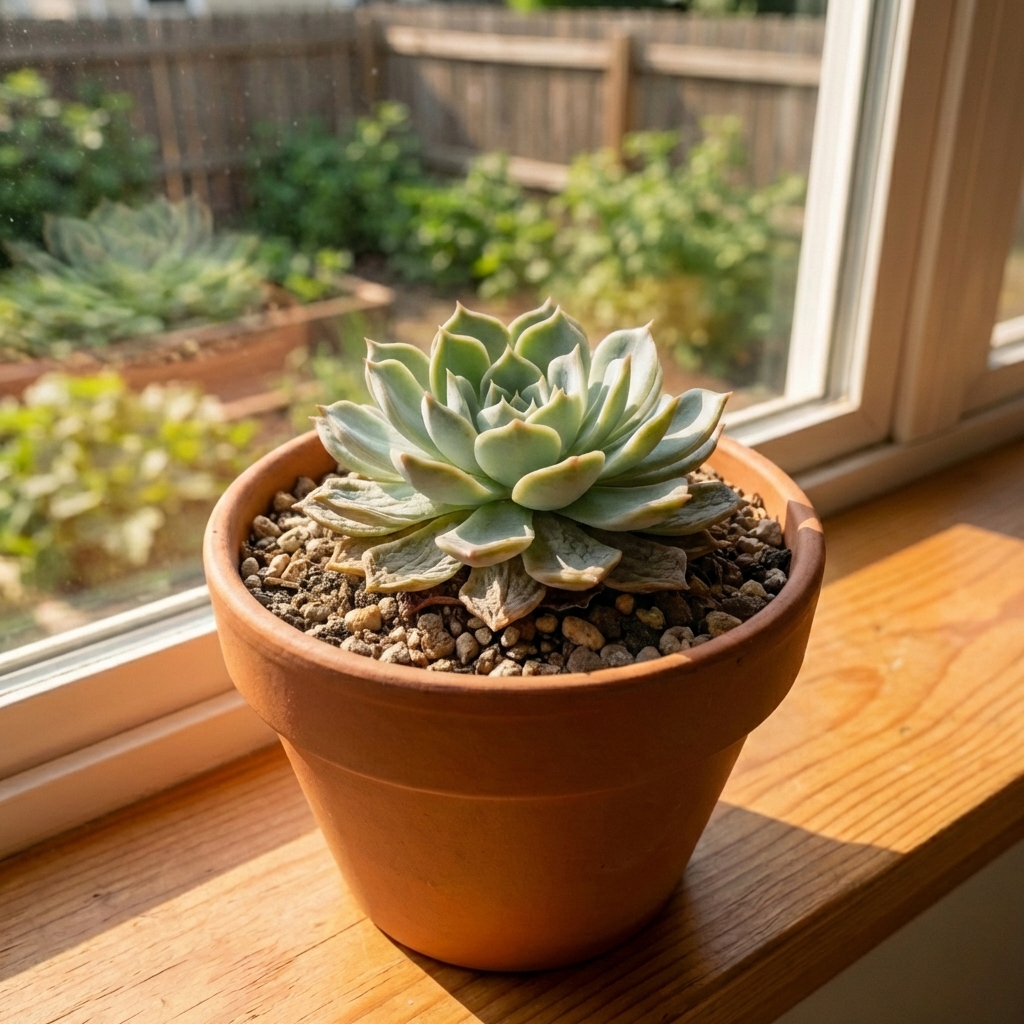
- Leaves look translucent, yellowing, or mushy
- Leaves fall off with a light touch
- Stem feels soft near the soil line
- Mix stays wet for days and smells sour
- Black spots at the base or signs of rot
Signs of underwatering
- Leaves look wrinkled or deflated
- Leaves feel thin and papery, not plump
- Growth slows and the plant looks dull
- Lower leaves dry up gradually (a little of this is normal)
Solutions when watering goes wrong
If you overwatered
Goal: stop rot and dry the root zone quickly without stressing the plant more.
If you smell rot or see black mush, act quickly. Rot can spread fast.
- Pause watering immediately. Do not “balance it out” with more water later.
- Increase airflow and light (not harsh sun). A bright spot with gentle airflow helps dry the mix.
- Check the pot and mix. If the mix is peat-heavy, it can stay wet too long. Consider repotting into a gritty mix.
- Inspect roots if symptoms are serious. If the plant is mushy at the base, unpot it. Trim black, slimy roots and let the plant air-dry for 24 hours before repotting.
- Hold off watering after repotting. Wait 3 to 7 days (depending on conditions) to let any cuts callus.
If rot has moved up the stem, your best option is often to take healthy cuttings above the rot and re-root them.
If you underwatered
Goal: rehydrate fully, not just wet the surface.
- Water deeply until it drains.
- If the mix is hydrophobic (water runs down the sides): bottom-water the pot for 15 to 30 minutes, then let it drain completely. Bottom watering works, but it can keep the mix wetter longer, so do not repeat it too often.
- Repeat after the mix dries again. A badly dehydrated plant may need a couple soak-and-dry cycles to plump back up.
Common watering mistakes
- Misting as “watering”: It rarely reaches roots and can encourage rot on leaves.
- Watering on a weekly schedule: Works for some houseplants, not most succulents.
- No drainage hole: This is one of the fastest ways to kill a succulent.
- Low light plus frequent watering: A classic rot combo indoors.
- Using a mix that stays wet: Many bagged succulent mixes still need extra perlite or pumice to drain fast.
Succulent watering FAQ
Do succulents need water in winter?
Usually yes, just less often. Many indoor succulents slow down in winter, so the mix takes longer to dry. Keep using the dry-first rule and expect longer gaps between waterings. If your succulent is a winter grower, it may need a bit more than your other plants, so watch the mix and the leaves.
Is it better to water from the top or bottom?
Top watering is great if your pot drains well. Bottom watering helps when mix has become water-repellent or you want to avoid wetting the leaves. Either way, let the pot drain fully and do not let it sit in runoff.
How much water does a succulent need?
Enough to soak the whole root ball, then none again until the mix is fully dry. A small sip every few days is usually worse than a full soak followed by drying time.
What if my succulent leaves are soft but the mix is wet?
That is often a sign of root issues from overwatering. Healthy roots take up water and keep leaves firm. If the mix is wet and leaves are still soft, pause watering and check for rot.
A simple routine you can stick with
If you want a practical plan that works in most homes, do this:
- Once a week: check dryness with a finger or skewer.
- Only water when fully dry: then soak until water drains out.
- In winter: expect to skip several weekly checks before it is time.
That routine keeps you consistent without forcing your succulent onto a schedule it did not agree to.

Jose Brito
I’m Jose Britto, the writer behind The Country Store Farm Website. I share practical, down-to-earth gardening advice for home growers—whether you’re starting your first raised bed, troubleshooting pests, improving soil, or figuring out what to plant next. My focus is simple: clear tips you can actually use, realistic expectations, and methods that work in real backyards (not just in perfect conditions). If you like straightforward guidance and learning as you go, you’re in the right place.