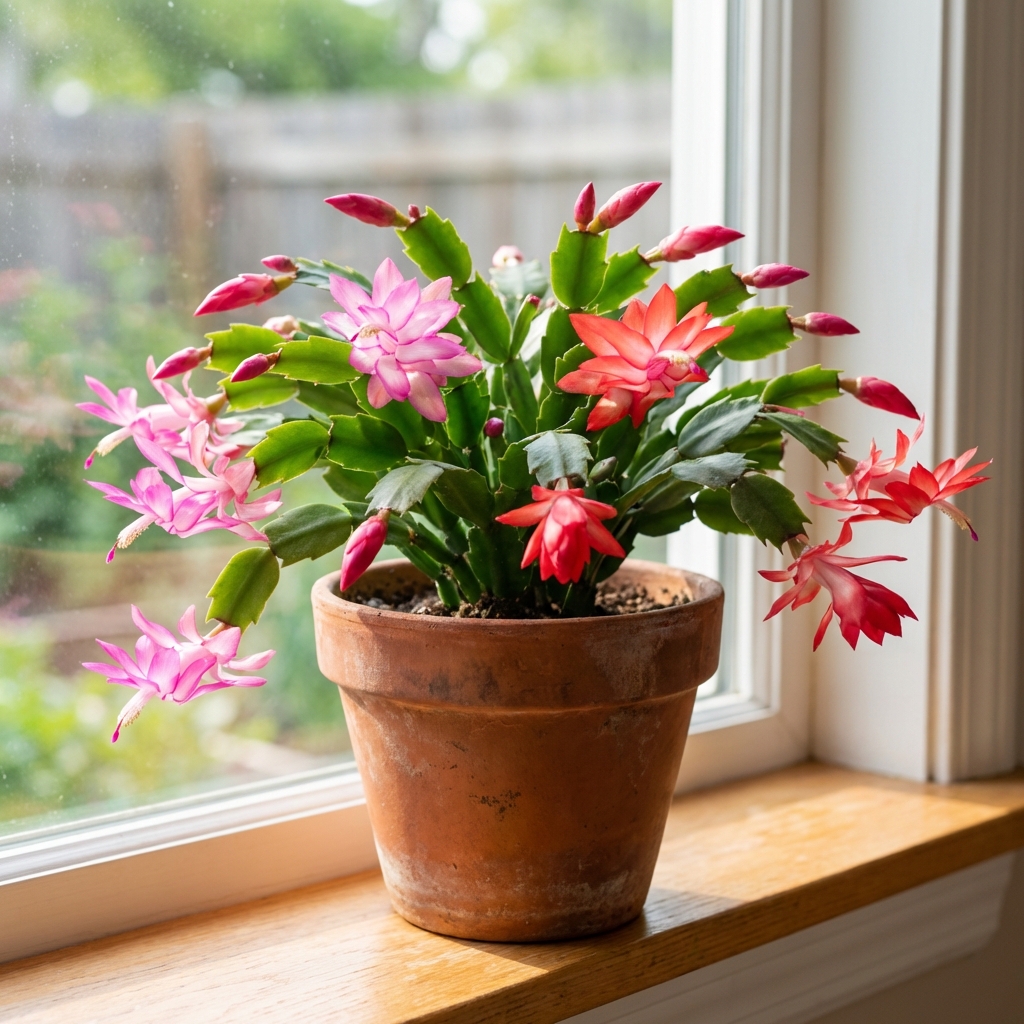
Christmas cactus is one of those houseplants that can live with you for years, even decades, if you get the basics right. It is not a desert cactus, so the care routine is closer to a tropical houseplant than a prickly cactus. The good news is it is forgiving once you understand what it wants: bright indirect light, a pot that drains well, and watering that matches the season.
Know what plant you have
Most indoor “Christmas cactus” plants are Schlumbergera types. In fact, many plants sold as “Christmas cactus” are actually Thanksgiving cactus (Schlumbergera truncata or truncata hybrids). You may also see:
- Thanksgiving cactus: tends to bloom earlier and has pointier, claw-like segment edges.
- Christmas cactus: often sold under the name Schlumbergera × buckleyi, with slightly rounder segment edges and blooms a bit later.
- Easter cactus: usually Hatiora (also sold as Rhipsalidopsis). Care is similar overall, but it can be fussier and may prefer a slightly different rest period before blooming.
Do not stress too much about the exact name. The indoor care below works well for all three, with bloom timing and bud triggers being the main differences.
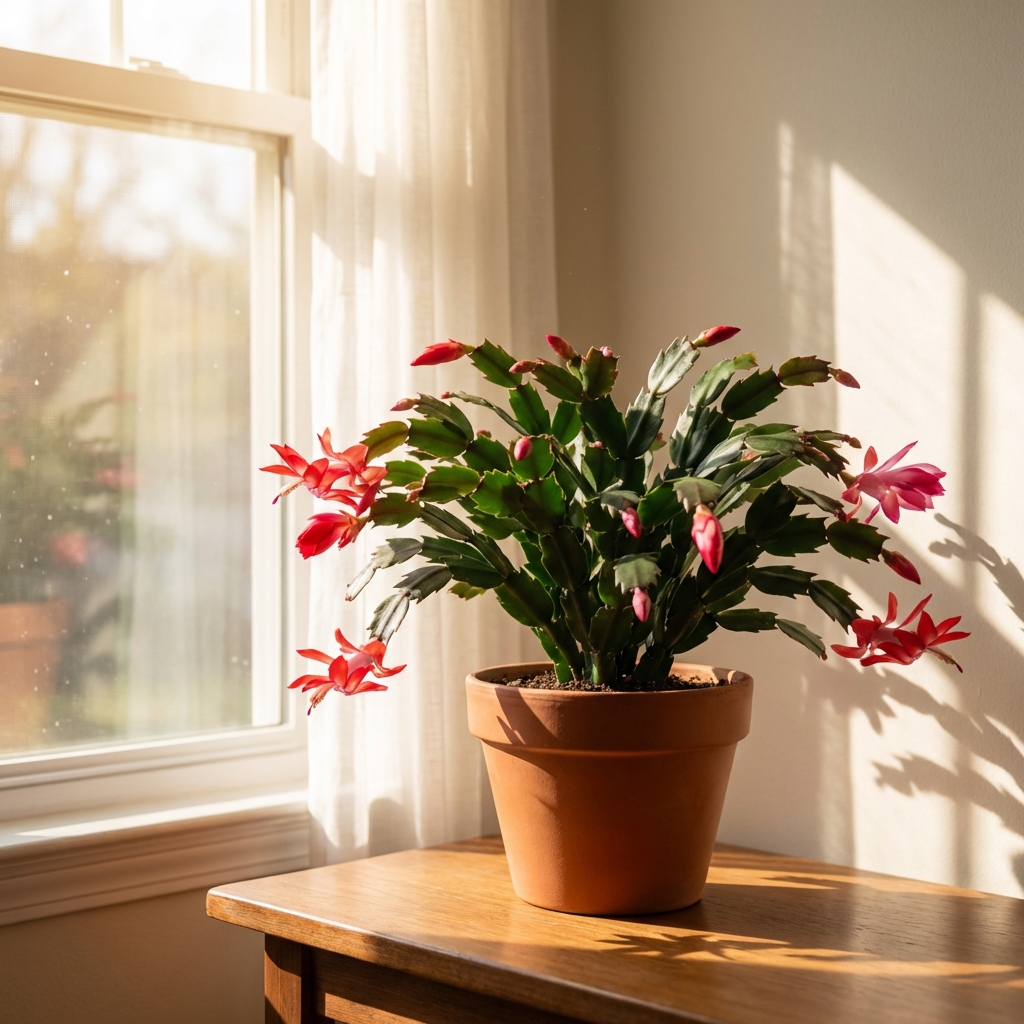
Light: bright, not harsh
Indoors, the most common reason a Christmas cactus looks tired is the light is either too low or too intense.
Best window placement
- East window: excellent. Gentle morning sun, bright rest of day.
- North window: often works if it is bright and unobstructed.
- South or west window: can work if you filter the light with a sheer curtain or pull the plant back from the glass.
If the plant is stretching with long, thin growth, it wants more light. If segments look washed out, reddish, or scorched, it is getting too much direct sun.
Tip: rotate the pot occasionally for even growth, but avoid rotating or moving it once buds form.
Watering: soak, drain, then wait
Think “evenly moist but never soggy.” The roots hate sitting in water, but the plant also does not like being bone-dry for long periods.
A simple watering routine
- Water until it runs out the drainage holes.
- Let the pot drain fully. Do not leave it sitting in a saucer of water.
- Wait to water again until the top 1 to 2 inches (2.5 to 5 cm) of mix feels dry.
Seasonal adjustments
- Spring and summer (active growth): usually needs water more often.
- Fall and winter: often needs a bit less, especially during bud set and blooming. Do not swing from very wet to very dry during this time.
Real-life tip: if you are not sure, wait one more day and then check again. Overwatering is harder to recover from than slight dryness.
Soil and pot: drainage matters more than brand
A Christmas cactus does best in a mix that holds some moisture but still drains quickly. Some “cactus mixes” can be too fast-draining and dry for this plant unless amended.
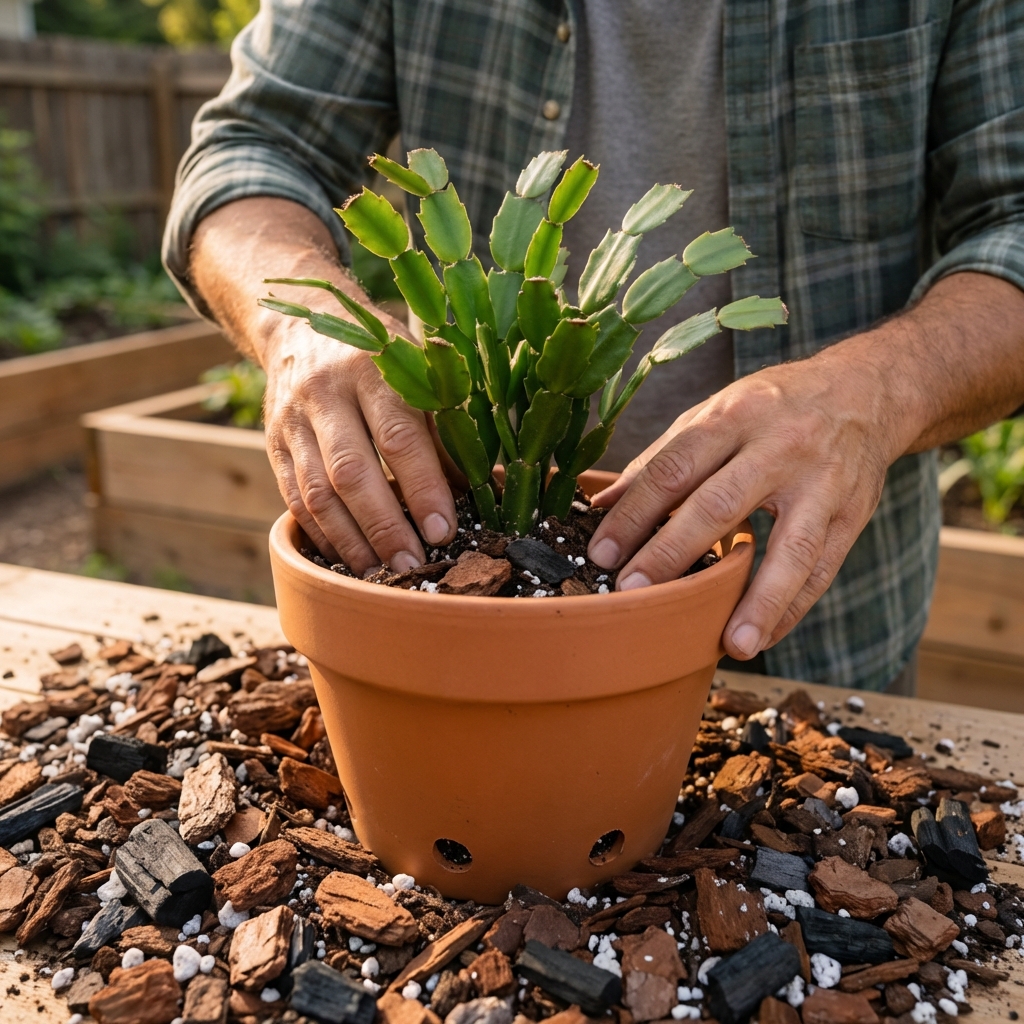
Good indoor potting mix options
- Easy mix: quality indoor potting soil + perlite (about 2:1).
- Chunky mix: potting soil + orchid bark + perlite (about 2:1:1).
Choose a pot with drainage holes. Terracotta can be helpful if you tend to water heavy, since it dries faster than plastic.
Temperature and humidity: keep it steady
This plant likes normal home temperatures, but it does not enjoy sudden swings. Drafts and heat blasts can cause dropped buds.
- Ideal range: roughly 60 to 75 F (16 to 24 C) for everyday growth.
- Avoid: vents blowing directly on the plant, cold window drafts at night, or being pressed against freezing glass.
Do you need extra humidity?
Not always, but it helps in very dry homes. If your heat is running nonstop and segments look a bit shriveled despite proper watering, try:
- placing the pot on a pebble tray with water (pot sits above the water line)
- grouping houseplants together
- running a small humidifier nearby
Misting is usually not necessary, and it is less reliable than a humidifier or pebble tray.
Fertilizer: light feeding, better timing
Christmas cactus is not a heavy feeder. Too much fertilizer can push weak growth and fewer blooms.
- When to feed: spring through late summer.
- What to use: a balanced houseplant fertilizer at half-strength, about every 4 weeks.
- When to stop: early fall, when you want the plant to shift toward bud formation.
How to get it to bloom again
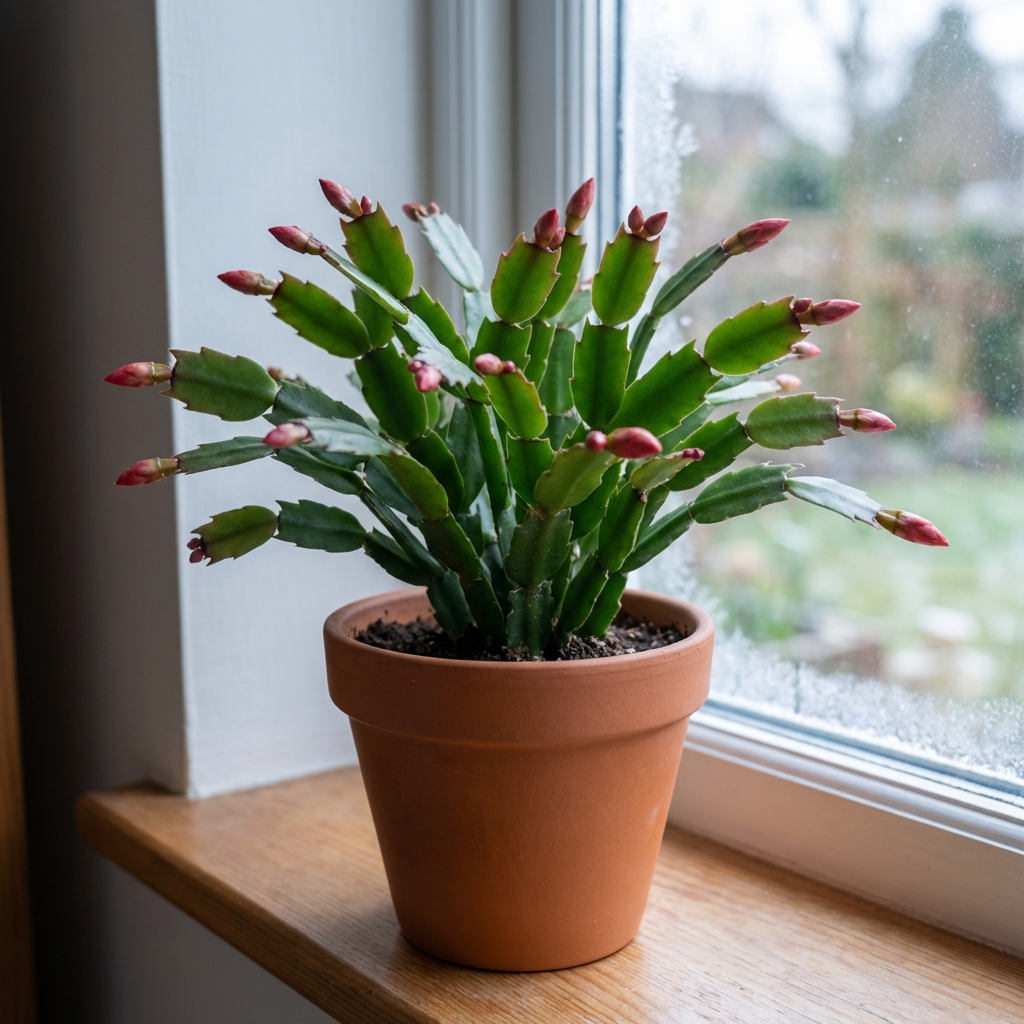
Blooming is usually about two triggers: cooler temperatures and long, uninterrupted nights. Depending on the variety and your home, one trigger can sometimes be enough, but aiming for both tends to work best. Indoors, the easiest approach is to control where it sits for 6 to 8 weeks.
Bloom routine that works in real homes
- Start in early fall (timing depends on whether it is Thanksgiving or Christmas cactus).
- Give 12 to 14 hours of darkness each night. Avoid lamp light in the room during that time.
- Aim for cool nights, around 55 to 65 F (13 to 18 C) if possible.
- Water a bit less, but do not let it fully dry out for long stretches.
Once buds form, stop moving the plant around. Sudden changes in light, temperature, or draft exposure can make buds drop. Underwatering during the budding stage can also cause buds to shrivel and fall.
Repotting: less often than you think
Christmas cactus likes being slightly snug in its pot. Repotting every 2 to 3 years is usually plenty, or sooner if the mix has broken down and stays soggy.
Best time to repot
Repot after flowering, typically late winter into spring. Move up only one pot size. A pot that is too large holds extra wet mix and increases root rot risk.
Pruning and shaping
If your plant is getting leggy or lopsided, pruning is simple. You can pinch off or gently twist off 1 to 2 segments at a joint. This encourages branching and a fuller look over time.
Best time to prune
Right after blooming is ideal. And yes, those pieces can become new plants.
Propagation: make a new plant from cuttings
Christmas cactus is one of the easiest houseplants to share.
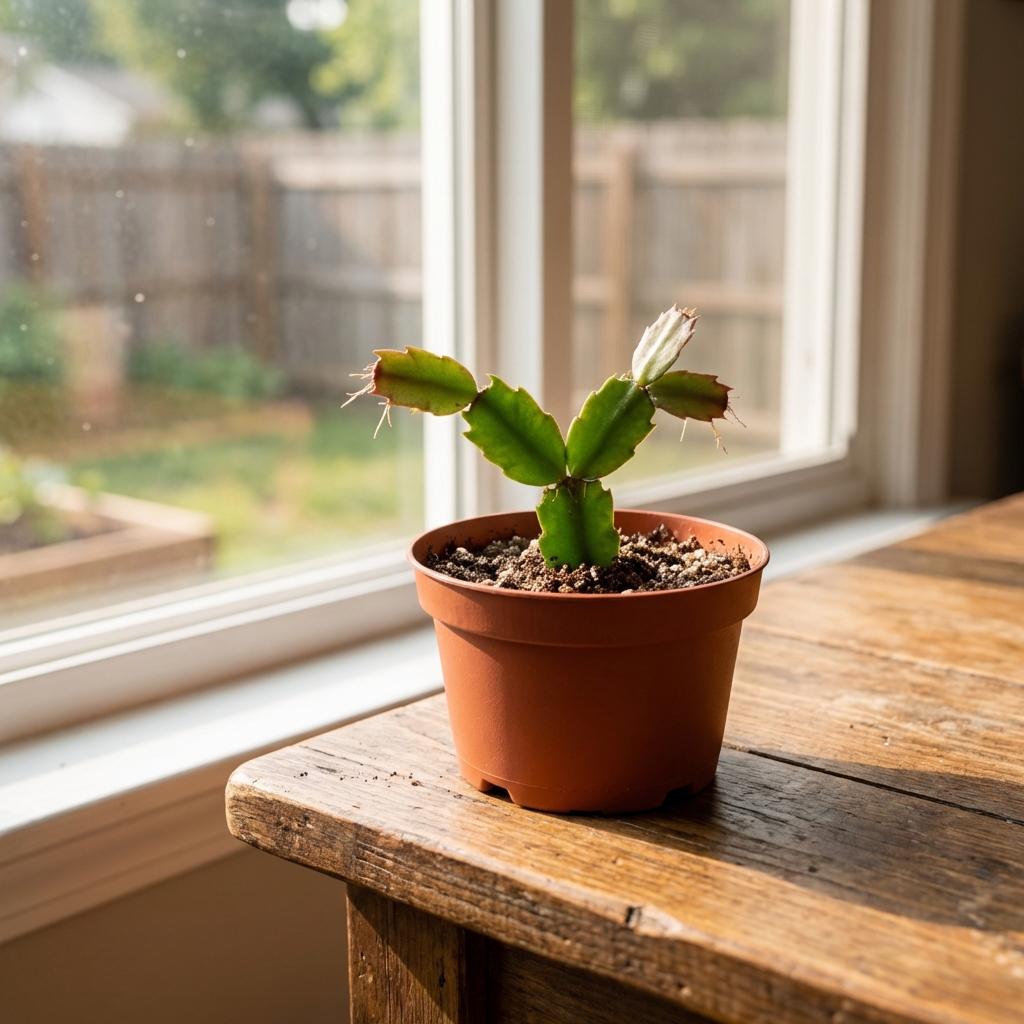
- Twist off a cutting with 2 to 4 segments.
- Let it dry for a day so the cut end calluses.
- Plant the bottom segment in slightly moist mix.
- Keep it in bright indirect light and water lightly until rooted.
Toxicity and pet safety
Schlumbergera (Christmas and Thanksgiving cactus) is considered non-toxic to cats and dogs. That said, chewing on any houseplant can still cause mild stomach upset in some pets, so it is best to keep it out of reach if your pet likes to snack on leaves.
Common problems and quick fixes
Wrinkled, limp segments
- Likely cause: underwatering, very dry air, or root problems.
- Fix: check the mix moisture, then inspect drainage. If the mix is wet and the plant is still limp, consider root rot and repot into fresh, airy mix.
Buds dropping before opening
- Likely cause: drafts, heat vents, low light, moving the plant after buds form, or letting it go too dry during budding.
- Fix: keep it stable. Avoid cold drafts and hot air. Maintain consistent watering.
Soft, mushy segments and soggy soil
- Likely cause: overwatering and poor drainage.
- Fix: stop watering, let it dry slightly, then repot if needed into a draining mix in a pot with holes.
White cottony spots
- Likely cause: mealybugs.
- Fix: dab pests with rubbing alcohol on a cotton swab and repeat weekly until gone. Isolate the plant while treating.
Fine webbing or speckled, dusty-looking segments
- Likely cause: spider mites, especially in dry indoor air.
- Fix: rinse the plant thoroughly (including undersides), then treat with insecticidal soap as needed. Improving humidity often helps prevent repeat issues.
Small bumps on stems
- Likely cause: scale insects.
- Fix: scrape off gently with a fingernail or swab with rubbing alcohol, then monitor weekly. Severe infestations may need horticultural oil or insecticidal soap.
My simple indoor care checklist
- Bright indirect light near an east, north, or filtered south window
- Water thoroughly, then wait until the top 1 to 2 inches (2.5 to 5 cm) dry
- Fast-draining mix and a pot with drainage holes
- Steady temperatures, away from drafts and vents
- Feed lightly in spring and summer, stop in early fall
- For blooms: aim for long nights and cooler temps for 6 to 8 weeks
If you follow those basics, your Christmas cactus should settle in, grow steadily, and reward you with blooms you can actually count on.

Jose Brito
I’m Jose Britto, the writer behind The Country Store Farm Website. I share practical, down-to-earth gardening advice for home growers—whether you’re starting your first raised bed, troubleshooting pests, improving soil, or figuring out what to plant next. My focus is simple: clear tips you can actually use, realistic expectations, and methods that work in real backyards (not just in perfect conditions). If you like straightforward guidance and learning as you go, you’re in the right place.