Phalaenopsis orchids, often called moth orchids, are among the easiest and most forgiving orchids to grow indoors when you match their care to what they naturally want: bright filtered light, airy roots, and a wet then dry rhythm. For beginners, the most common “orchid problems” trace back to two things: too little light and roots staying wet for too long.
This guide keeps it simple and practical so you can keep your plant healthy now and set it up to rebloom later.
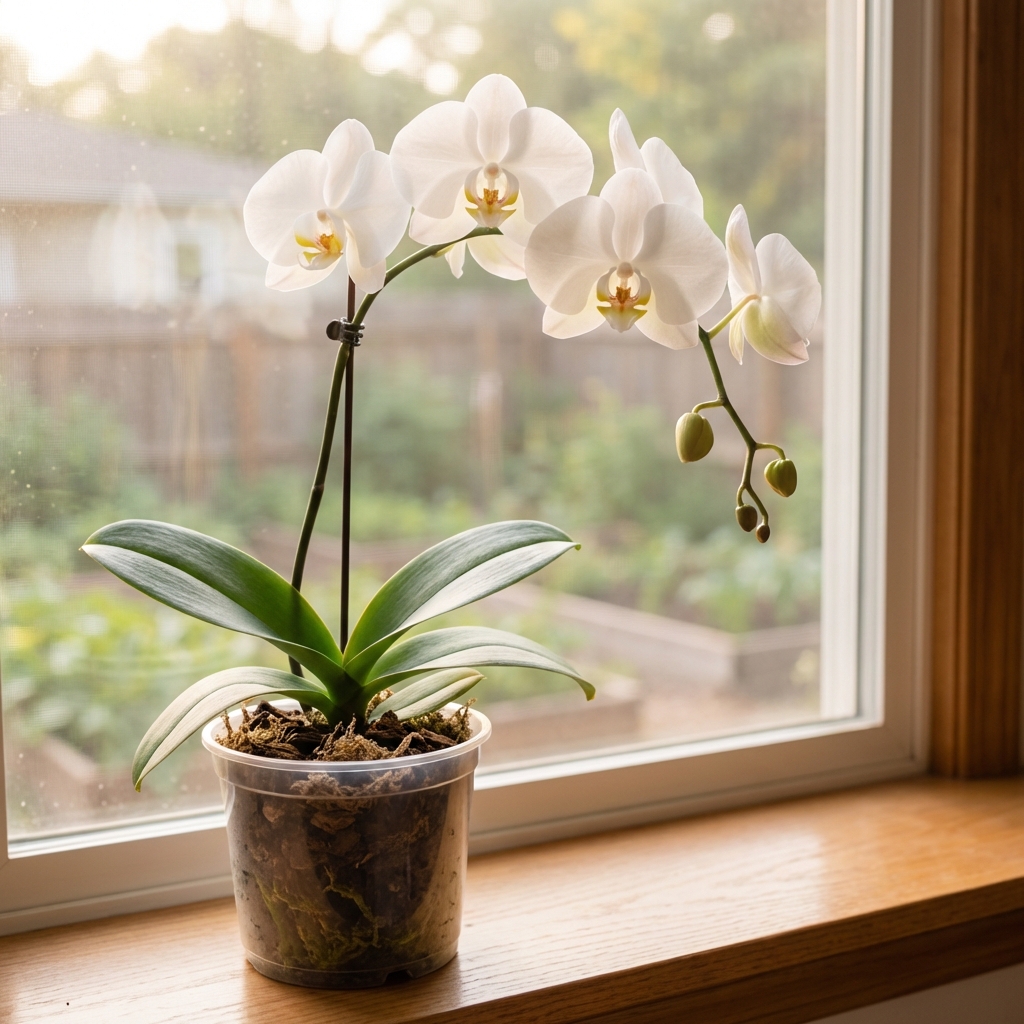
Quick care checklist
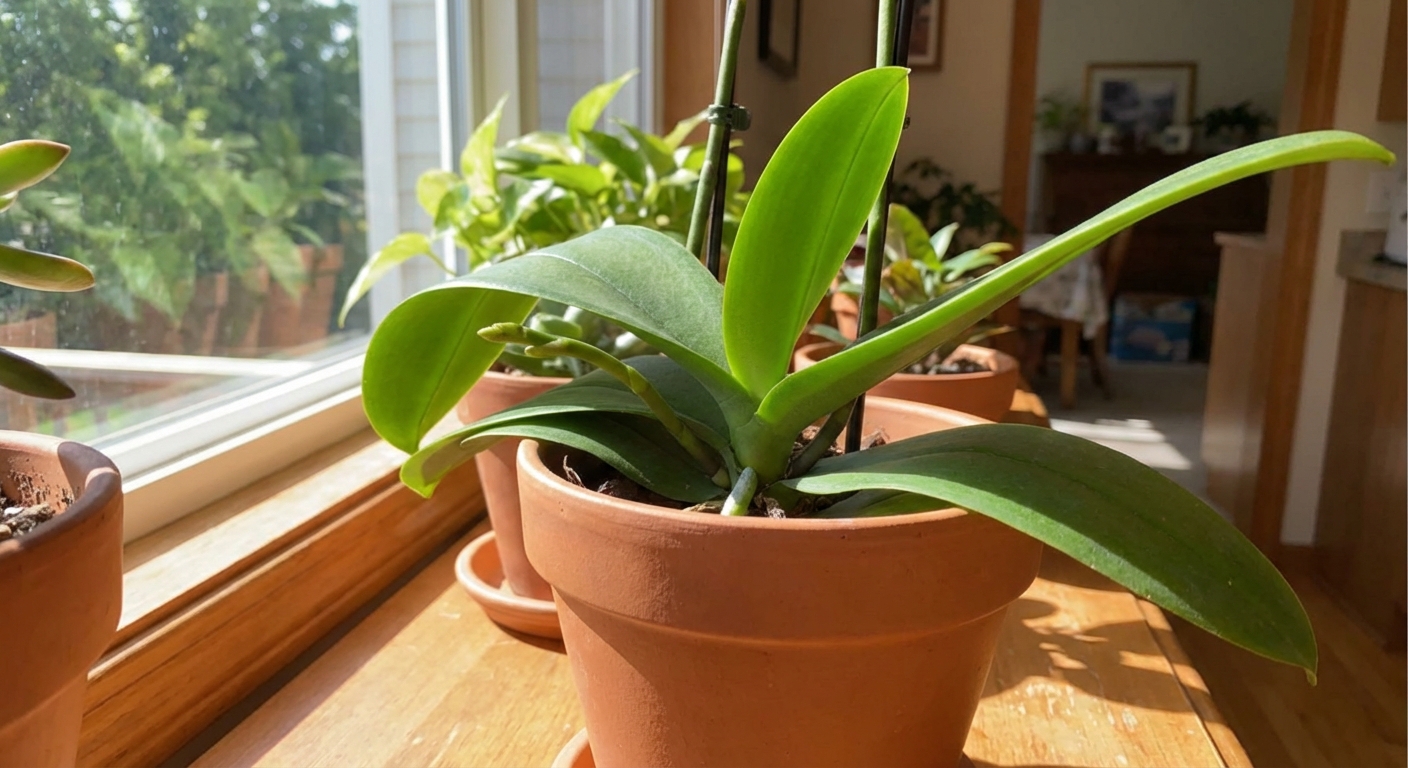
- Light: Bright, indirect light. An east window is ideal, or a few feet back from a south or west window.
- Water: Water thoroughly, then let the mix approach dryness before watering again. Never let the pot sit in water.
- Pot and mix: Clear pot with lots of holes plus chunky orchid bark (often bark with a little sphagnum mixed in).
- Temperature: 65 to 80°F days, a little cooler at night is fine.
- Humidity: 40 to 60% is a good target, with gentle air movement.
- Fertilizer: Light, consistent feeding during active growth.
Light: the real key to strong leaves and reblooms
If you want a Phalaenopsis to bloom again, light is the lever you can actually pull. They will survive in low light, but “survive” usually means slow growth, floppy leaves, and no flower spikes.
Best placement
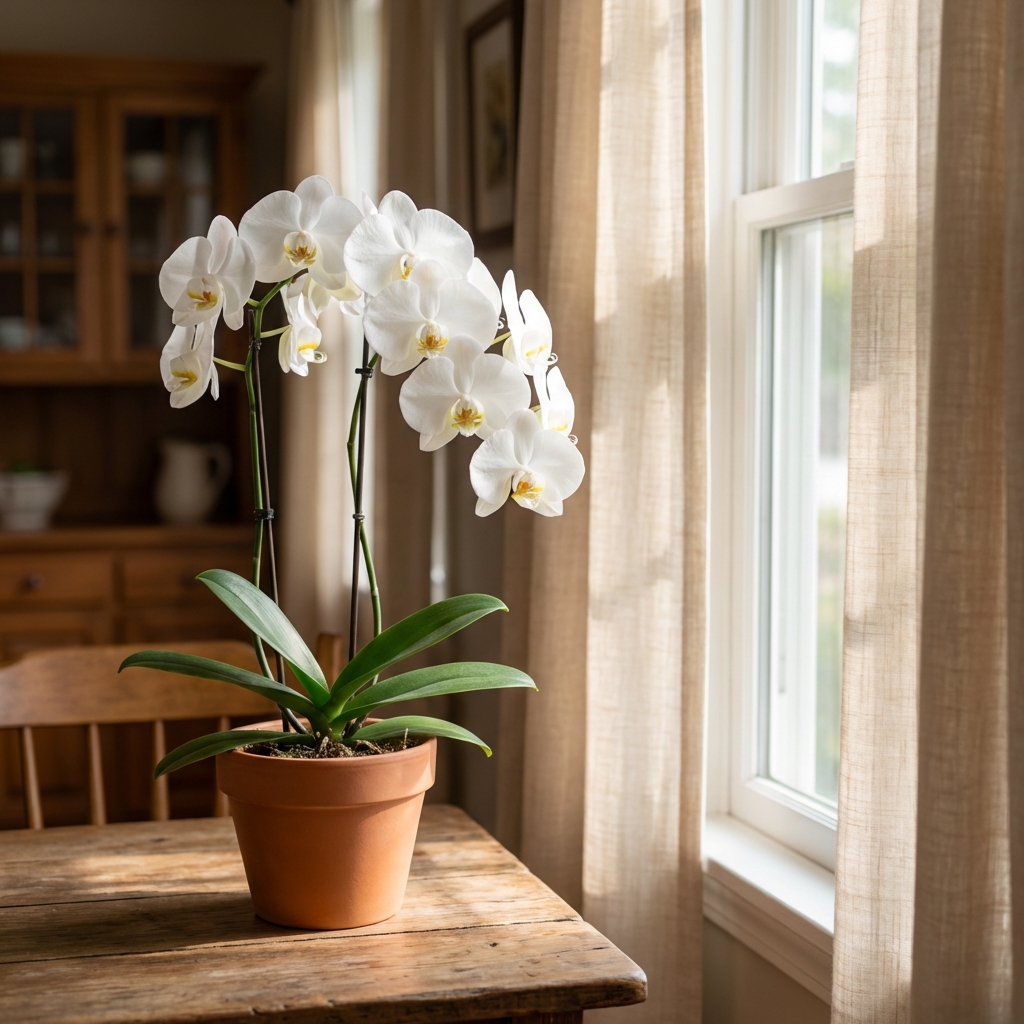
- East-facing window: Great choice. Gentle morning sun, then bright ambient light for the rest of the day.
- South or west window: Works well if you diffuse the light with a sheer curtain or place the plant back from the glass.
- North window: Often not enough unless the window is huge and unobstructed.
Temperature note: In winter, keep leaves from touching cold glass. In summer, avoid hot sun magnified through glass, which can scorch leaves quickly.
How to tell if the light is right
- Too little light: Very dark green leaves, slow growth, no spike.
- Good light: Medium green leaves, steady root and leaf growth.
- Too much light: Yellowing, bleached patches, or crispy spots, especially on the side facing the window.
Watering: soak, drain, then wait
Phalaenopsis roots need air as much as they need moisture. Your goal is to fully wet the mix, let excess drain, then wait until the root zone is nearing dry again.
A reliable watering routine
- Take the orchid to the sink.
- Run room-temperature water through the pot for 15 to 30 seconds. If your bark is very chunky or your home is dry, you can soak the pot for 10 to 15 minutes instead.
- Let it drain completely. No puddles in a cachepot or saucer.
- Put it back in its spot.
When to water again
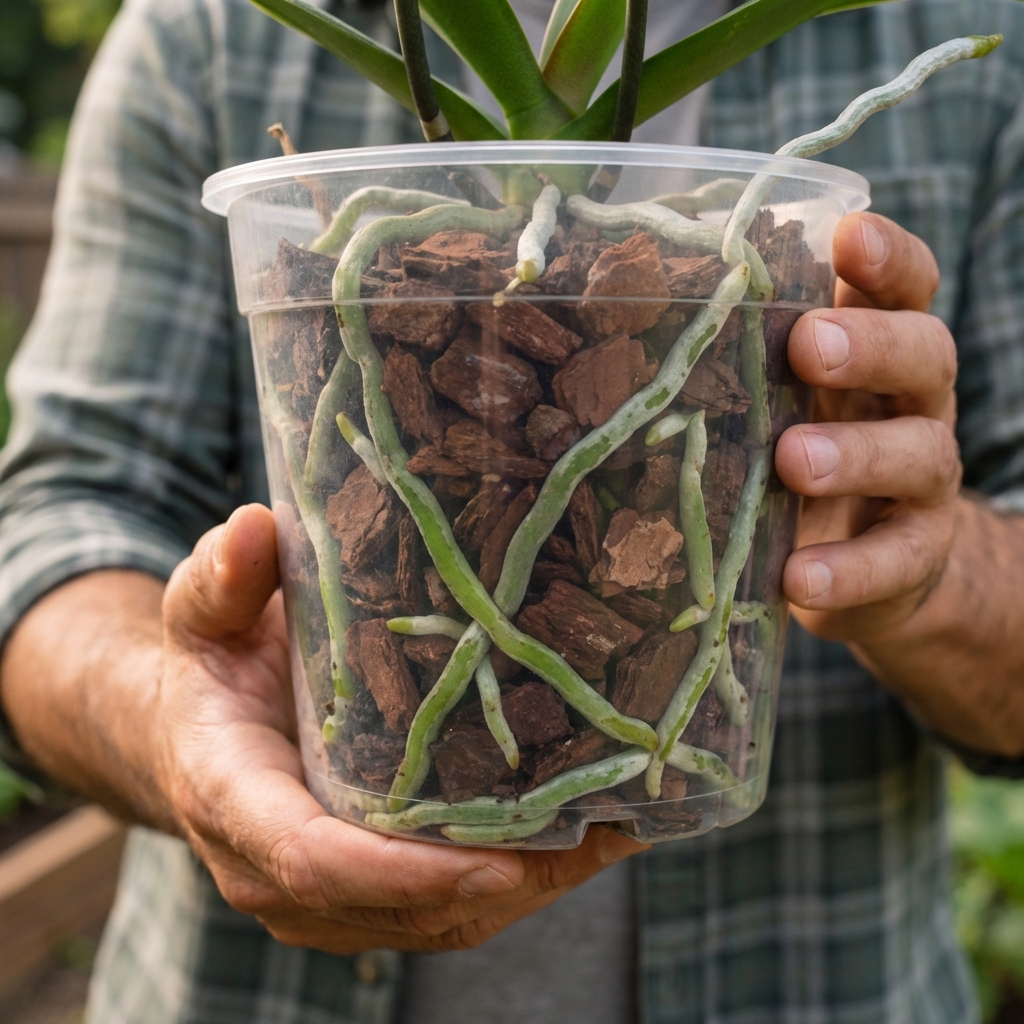
- Check the roots: In a clear pot, green roots usually mean moisture. Silvery roots usually mean it is time to water. Note: roots buried deeper in the pot may look pale even when moist, so use this cue along with the mix and pot weight.
- Feel the mix: The top can be dry while the center is still wet. Check an inch down.
- Lift the pot: A light pot is usually drier.
Important: Avoid getting water trapped in the crown (the center where leaves meet). If water collects there, blot it out with a paper towel. Crown rot is one of the few fast ways to lose a Phal.
Water quality basics
- Room temperature is best. Very cold water can shock roots.
- Avoid softened water (from a softener) since it can add salts.
- If your tap water is very hard or you see crusty buildup, consider filtered, rain, or distilled water, or flush the pot more often.
Humidity and airflow: keep it comfortable, not soggy
Most homes are fine for Phalaenopsis orchids if you avoid two extremes: bone-dry air and stagnant, constantly damp conditions. Aim for 40 to 60% humidity if you can.
Simple ways to boost humidity
- Group plants together.
- Use a small humidifier nearby.
- Set the pot on a tray of pebbles with water below the pot (the pot should not sit in water).
Gentle airflow helps prevent fungal issues. A ceiling fan in the room or a small fan on low across the room is enough.
Potting and media: orchids are not houseplants in soil
Phalaenopsis are epiphytes. In nature they cling to trees with roots exposed to air and quick drying after rain. That is why regular potting soil is a common mistake.
What to use
- Pot: Clear plastic orchid pot with many holes is ideal. It improves airflow and makes watering decisions easier.
- Mix: Chunky orchid bark is the standard. If your home is very dry, a small amount of sphagnum moss blended in can help hold moisture.
When to repot
- Every 12 to 24 months, or when bark breaks down and stays wet too long.
- When roots crowd the pot heavily.
- After you buy an orchid if it is packed tightly in old, soggy moss and the roots look stressed.
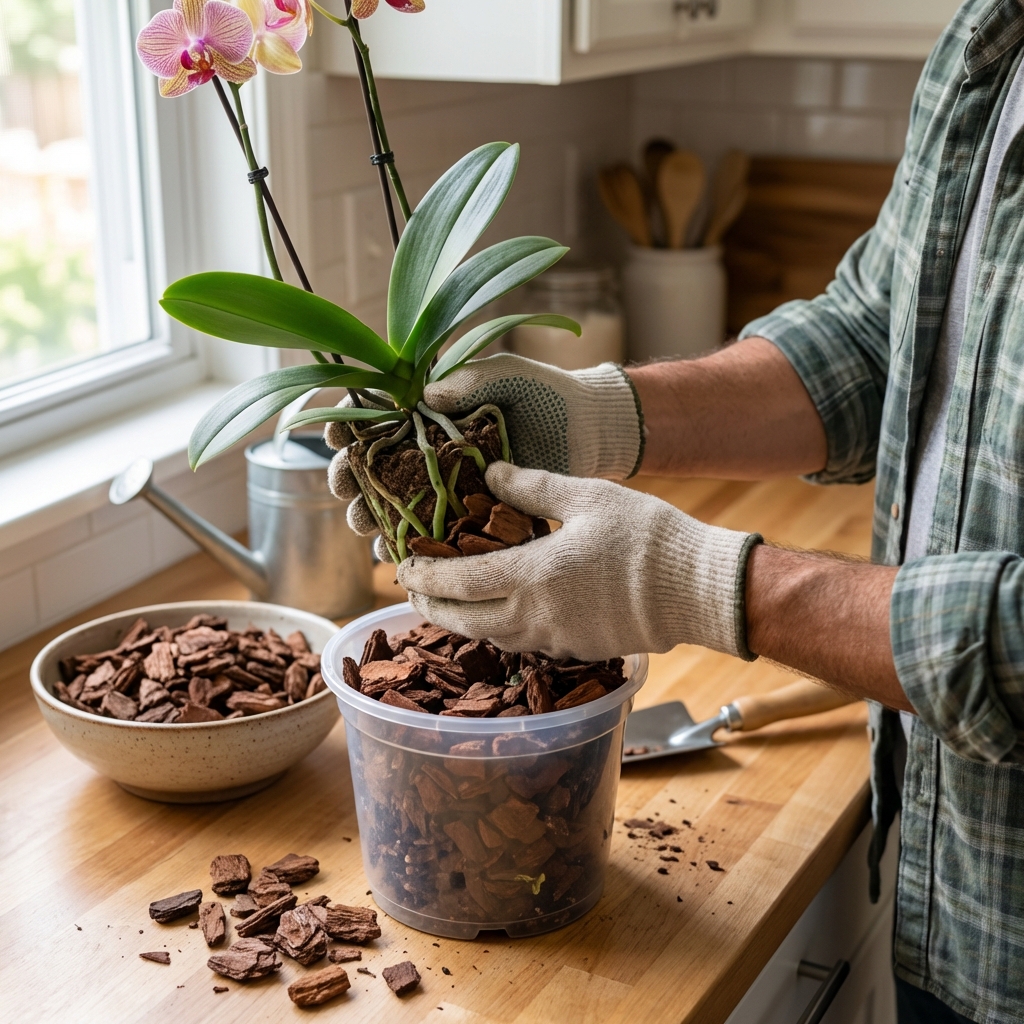
How to repot (simple method)
- Repot after blooming if possible.
- Slide the plant out, gently remove old mix.
- Trim mushy, hollow, or black roots with clean scissors. Keep firm roots.
- Tool tip: Wipe cutting tools with isopropyl alcohol before and after trimming, and let cut areas air-dry briefly before watering.
- Set the plant so the crown sits above the mix line. Do not bury it.
- Fill around roots with bark, tapping the pot to settle without packing tight.
Fertilizing: light feeding beats heavy feeding
Phalaenopsis orchids do best with modest, regular nutrition. You are not trying to force blooms with fertilizer. You are supporting healthy leaves and roots, which leads to blooming later.
A practical feeding plan
- Use a balanced orchid fertilizer diluted to 1/4 strength as your default. If you use a general houseplant fertilizer, follow label directions carefully and err on the weak side.
- Feed every 2 to 4 weeks during active growth (often spring through early fall indoors).
- Periodically (about monthly), water with plain water to flush any salt buildup, especially if your water is hard or you fertilize often.
After the blooms drop: what to do with the flower spike
When the last flower falls, the plant is not “done.” It is shifting energy back to roots and leaves. Your next steps depend on what the spike is doing.
Option A: The spike stays green
- You can cut the spike just above a node (a small bump) to encourage a side branch.
- Or leave it alone and let the plant decide. Sometimes it reblooms from the same spike.
Option B: The spike turns brown
- Cut it off near the base with clean snips. A brown spike will not rebloom.
If your orchid is weak or root-stressed, it is usually better to cut a green spike back and focus on recovery rather than pushing more flowers.
How to get a Phalaenopsis to rebloom
Many Phalaenopsis hybrids set spikes when they experience slightly cooler nights for a few weeks, along with good light. Indoors, that often happens naturally in fall and winter.
Rebloom steps that work in normal homes
- Increase light: Bright, indirect light is the number one factor.
- Cooler nights: Aim for nights around 60 to 65°F for 2 to 4 weeks if possible (a cooler room or near a window that is not drafty). A day to night difference of about 10°F is commonly cited, and many homes get this without special effort.
- Keep watering steady: Do not let it stay wet, but do not let it go bone-dry for long periods.
- Be patient: From spike to open flowers can take weeks.
Troubleshooting common Phalaenopsis orchid problems
Wrinkled or limp leaves
- Most common cause: Root trouble, not “thirst.” If roots are rotted, the plant cannot take up water.
- What to do: Check roots. Repot into fresh bark if the mix is broken down or roots are mushy. Water correctly after repotting.
Yellow leaves
- Normal: The oldest bottom leaf slowly yellows and drops.
- Not normal: Multiple leaves yellowing quickly, especially with a soft crown. That suggests overwatering or crown rot.
Bud blast (buds shrivel and drop)
- Common triggers: Big temperature swings, drafts, very dry air, moving the plant repeatedly, or ethylene from ripening fruit nearby.
- What to do: Keep conditions steady, move away from heating vents and fruit bowls, raise humidity modestly.
Black spots on leaves
- Possible causes: Sunburn (bleached then necrotic), bacterial or fungal spotting, cold damage from a chilly window, or leaves pressed against cold glass.
- What to do: Improve airflow, keep water off leaves, avoid cold drafts, and isolate the plant if spots spread.
Root rot
- Signs: Mushy, brown roots; sour smell; mix stays wet for many days.
- Fix: Repot, trim dead roots, switch to chunkier mix, and adjust watering frequency.
Pests to watch for (and what works)
Phalaenopsis orchids are not pest magnets, but indoor conditions can invite a few repeat offenders.
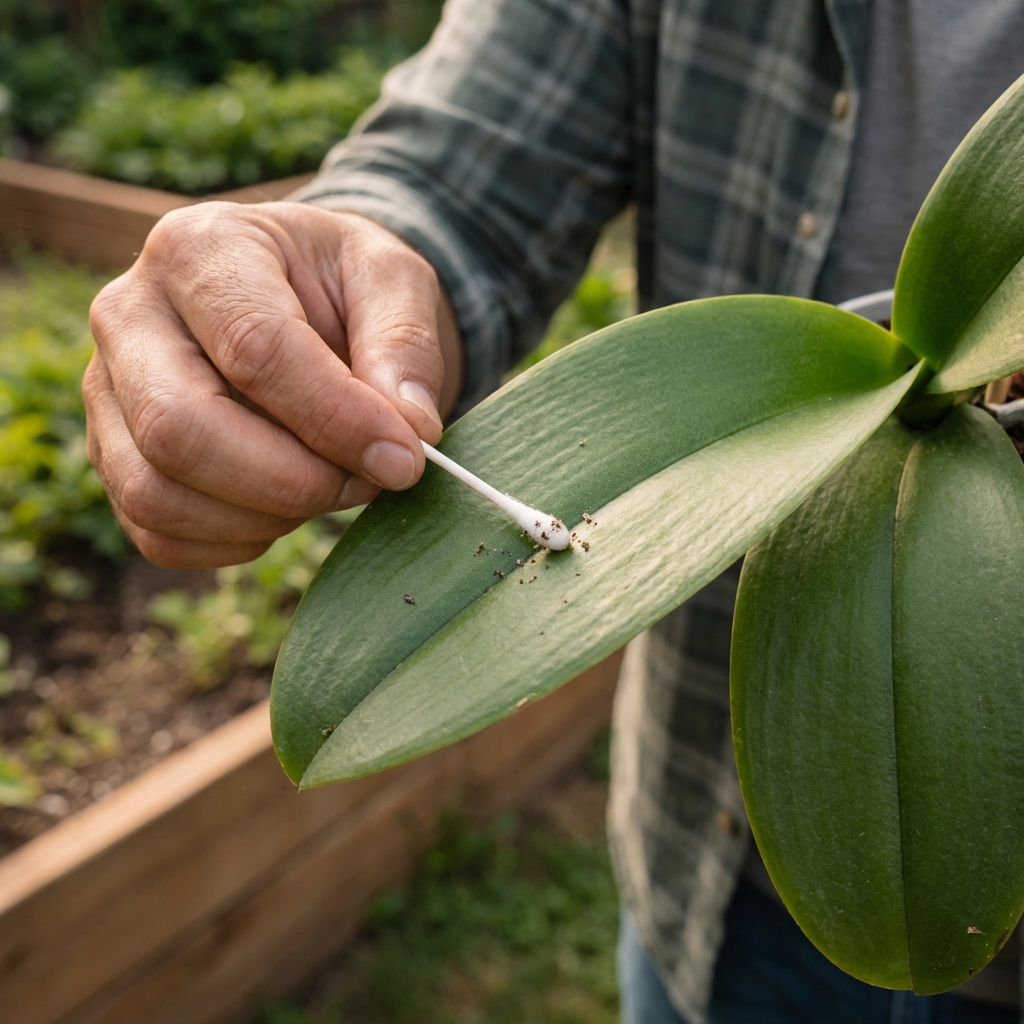
- Mealybugs: White cottony clusters, often in leaf joints. Remove with cotton swabs dipped in 70% isopropyl alcohol, then follow up weekly.
- Scale: Small brown bumps on leaves and stems. Scrape gently and treat like mealybugs.
- Spider mites: Fine webbing and stippled leaves in dry air. Rinse the plant and raise humidity, repeat as needed.
Isolate the plant while treating and re-check weekly. Most pest issues are fixable if you catch them early.
Phalaenopsis care mistakes to avoid
- Planting in regular potting soil: It suffocates roots.
- Watering on a schedule: Water based on root and mix dryness, not the calendar.
- Letting water sit in the crown: A common cause of crown rot.
- Keeping it in a decorative pot with no drainage: Use a slotted inner pot or remove it to water and drain fully.
- Too little light: The plant may look “fine” but will not rebloom.
FAQ
How often should I water a Phalaenopsis orchid?
It depends on your home and potting mix. Many growers land around every 7 to 10 days in bark, but the better rule is to water when roots look silvery and the mix is approaching dry.
Should I use ice cubes to water my orchid?
It is not my favorite method. Phalaenopsis prefer room-temperature watering and a full soak and drain. Ice can chill roots and often does not evenly wet the mix.
Do Phalaenopsis orchids need direct sun?
No. They want bright, indirect light. Gentle morning sun can be fine, but harsh afternoon sun can burn leaves.
How long do Phalaenopsis blooms last?
In a comfortable spot, blooms often last 6 to 12 weeks, sometimes longer.
What is a keiki?
A keiki is a baby orchid that sometimes grows on a flower spike. You can leave it attached until it has several roots a few inches long, then pot it up like a small plant.
The takeaway
Phalaenopsis orchid care is mostly about avoiding extremes: not too dark, not too wet, not too drafty. Give it bright, indirect light, an airy bark mix, thorough watering with full drainage, and steady indoor temperatures. Do that, and reblooming goes from “luck” to a predictable cycle.

Jose Brito
I’m Jose Britto, the writer behind The Country Store Farm Website. I share practical, down-to-earth gardening advice for home growers—whether you’re starting your first raised bed, troubleshooting pests, improving soil, or figuring out what to plant next. My focus is simple: clear tips you can actually use, realistic expectations, and methods that work in real backyards (not just in perfect conditions). If you like straightforward guidance and learning as you go, you’re in the right place.