When flies show up indoors, it usually feels like they multiplied overnight. The good news is you can catch a lot of them quickly without foggers or harsh chemicals. The trick is to do two things at once: trap the adults and remove what is attracting them. Do that, and the problem shrinks fast.
First, figure out what kind of fly you have
Different flies go for different baits. A 30-second check saves you time and makes your traps work better.
- House flies: medium size, gray body, often gathers at windows, trash, pet areas.
- Fruit flies: tiny, tan, often hovers around bananas, recycling, wine, and fermenting smells.
- Drain flies: tiny, fuzzy, moth-like wings, often in bathrooms, near sinks, and floor drains.
- Blow flies: larger, metallic green or blue, often points to something rotting (garbage, dead insect or rodent in wall, soiled diaper pail).
If you are seeing larger metallic flies, do a quick search for the source. Traps help, but you will not truly solve it until you remove what they are breeding in.
Quick confusion check: If you are seeing tiny “gnats” around houseplants more than around fruit or drains, you may be dealing with fungus gnats. Those need soil to dry out between waterings, plus yellow sticky cards near plants.
The fastest eco-friendly way to catch adult flies
1) Fly paper or sticky traps (best for quick knockdown)
If you want numbers to drop today, sticky traps are hard to beat. They are not pretty, but they work because flies naturally head to windows and light.
- Hang strips near windows, patio doors, and anywhere you see flies resting.
- Keep them out of reach of kids and pets.
- Replace when covered with dust or insects.
Tip: Put one trap right at the brightest window in the room. That is where a lot of house flies end up.
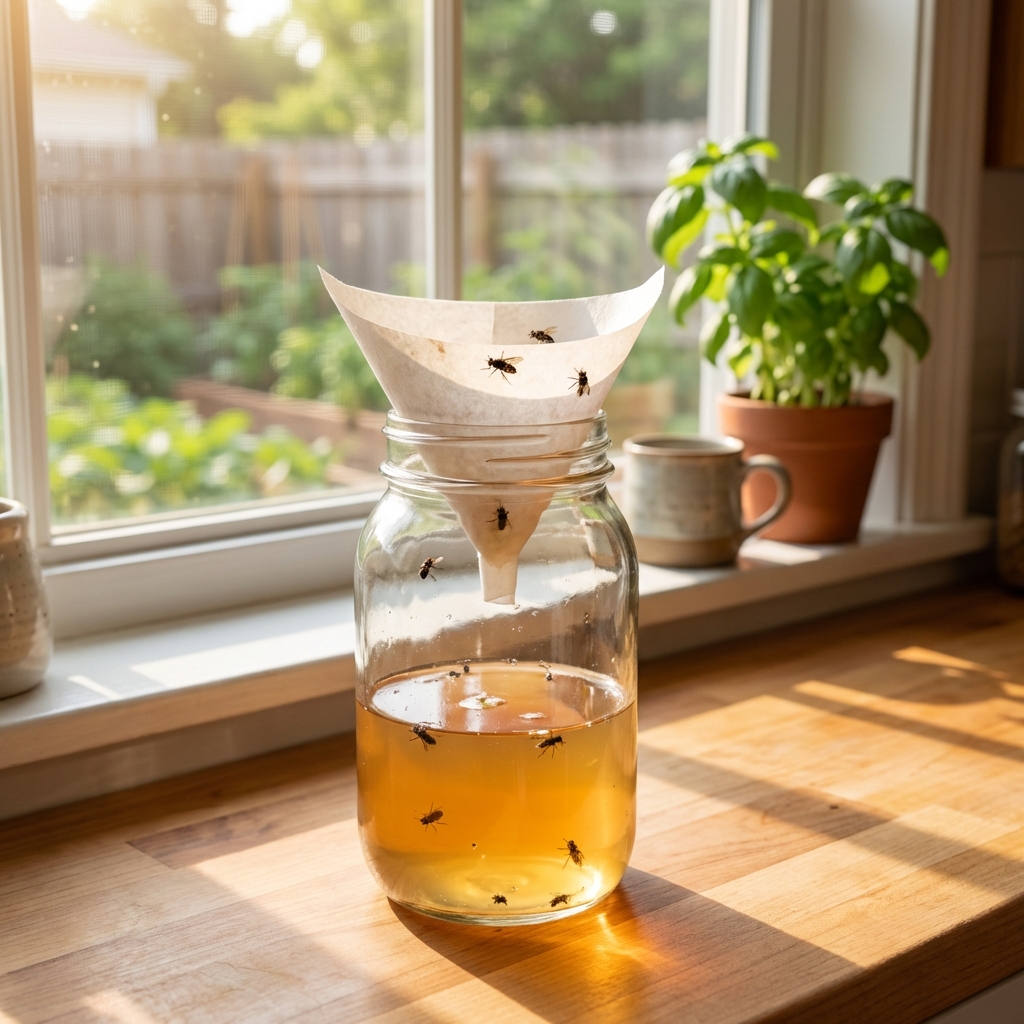
2) The jar and funnel trap (cheap, reusable, surprisingly effective)
This is my go-to for kitchens and utility rooms because it is simple and you can control the bait.
What you need:
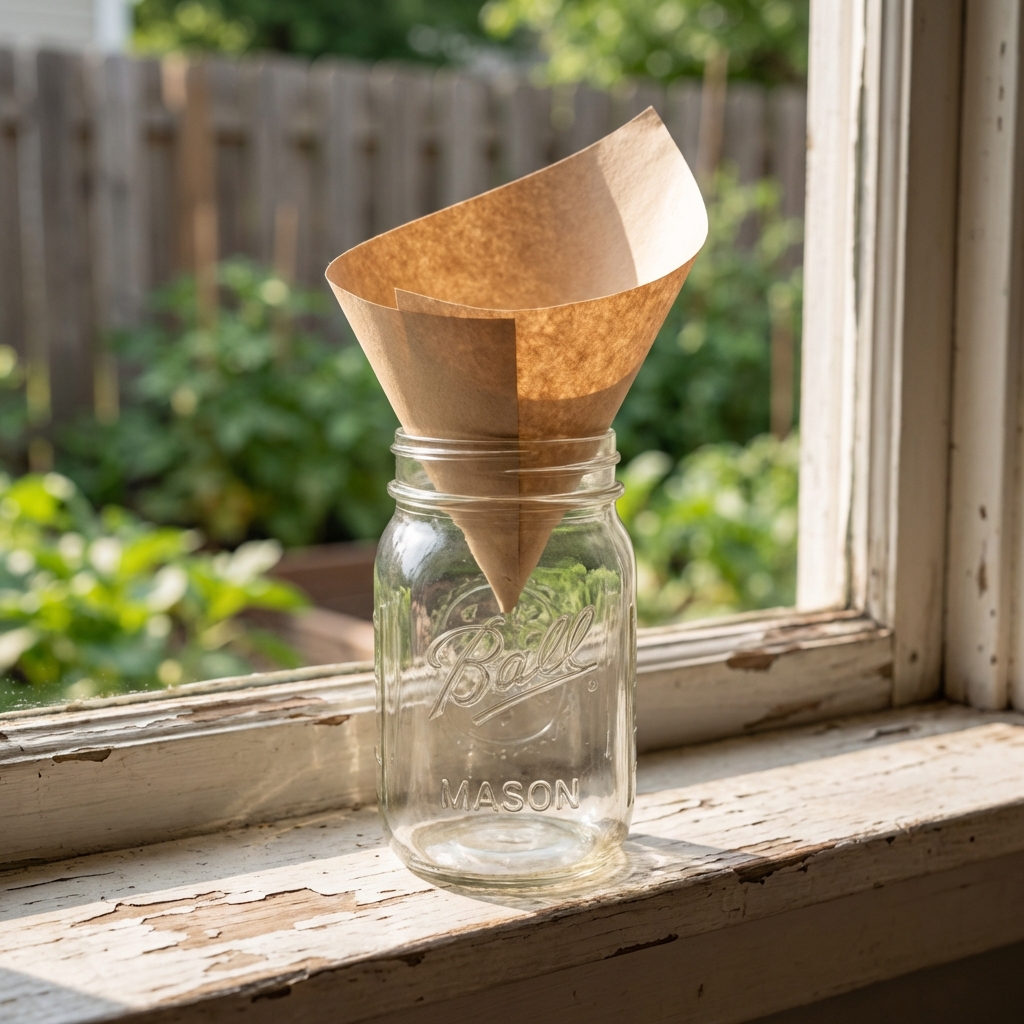
- A glass jar or cup
- Paper to make a funnel (or a plastic bottle cut into a funnel)
- Bait (see below)
How to set it up:
- Add 1 to 2 inches of bait liquid to the jar.
- Roll paper into a funnel with a small opening, about the size of a pencil eraser.
- Place funnel into the jar with the tip pointing down, not touching the liquid.
- Set near where flies are active, but not directly beside your food prep area.
Best baits for house flies: House flies often prefer protein and “stinky” organic material more than sweet baits, so start there if you are dealing with true house flies.
- A tiny bit of fish food or dog kibble soaked in warm water (strong, but effective)
- A small splash of meat drippings or broth in water (use only if you can empty it daily)
- Warm water + a spoon of sugar (can help, especially when mixed fly types are present)
- A small piece of overripe fruit mashed in water (sometimes works, but is usually better for fruit flies)
Soap note (important): In a funnel trap, dish soap is often optional. Many times you want flies alive long enough to crawl down into the funnel and stay in the jar, and soap can slightly reduce how readily they “commit” to the bait. If you notice flies getting in and then escaping, add one drop of dish soap later to break surface tension and make drowning more likely.
Quick cleanup tip: Refresh bait every 1 to 2 days to avoid odor and mold. Dump it outside, rinse the jar, and reset.
DIY traps for specific fly problems
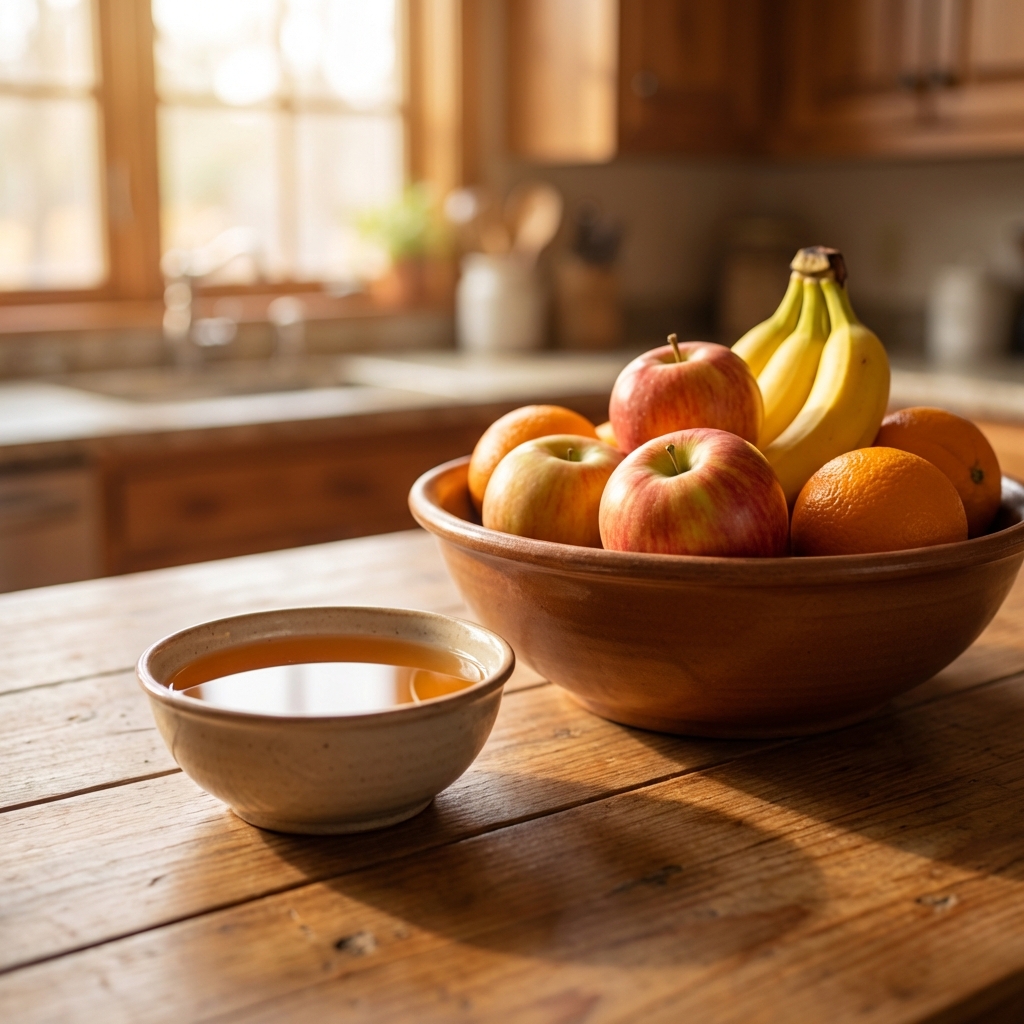
Fruit flies: apple cider vinegar bowl trap (easy and low mess)
Fruit flies are obsessed with fermentation. Vinegar works, but only if you make it easy for them to land and hard to escape.
How:
- Pour apple cider vinegar into a small bowl or cup (about 1/2 inch deep).
- Add 2 to 3 drops of dish soap and gently swirl.
- Set near fruit bowls, compost bins, or recycling.
The soap breaks surface tension so they sink instead of skating on top.
Drain flies: trap plus drain cleaning (traps alone will not solve it)
Drain flies breed in the slimy film inside pipes and overflow channels. If you only trap adults, new ones keep emerging.
Do this for 5 to 7 days:
- At night, cover the drain with clear tape. In the morning, if flies are stuck to the tape, the drain is the source.
- Scrub first: Scrub the drain walls and as far down as you can reach with a long brush. Mechanical cleaning is the most important step.
- Flush with very hot water. Boiling water can damage some PVC, older joints, or weak seals, so use caution and follow your plumbing limits. Then follow with an enzyme-based drain cleaner if needed.
Helpful trap: Place a small sticky trap near the suspected drain to catch adults while you clean.
Blow flies: find the source first
If you are catching big metallic flies, look for:
- Trash that sat too long, especially meat packaging
- A dirty outdoor garbage can right by the door
- Pet waste, litter boxes, or puppy pads
- A forgotten onion, potato, or bag of compost indoors
If the smell is strong and you cannot find the source, check basements, attics, and vents. In rare cases, a dead rodent in a wall can cause a persistent blow fly issue.
If you suddenly have tons of large flies: Skip the fancy trap setup and hunt for the source immediately. A single hidden item can produce a shocking number of flies fast.
Where to place traps for best results
Placement matters more than most people think. Flies follow light, warmth, and smell trails.
- Windowsills: best for house flies. They head to light when trying to escape.
- Near trash and recycling: but not where you eat. Keep traps 3 to 6 feet away if possible.
- Near pet feeding areas: especially if food sits out.
- Entry points: by patio doors, mudrooms, garage doors.
Food safety note: Keep traps away from prep surfaces, cover food, and wash hands after handling traps or bait.
One practical rule: use multiple small traps instead of one big one. A couple of jars spread out catches more flies than a single jar in the wrong spot.
Stop flies from coming back (the part that actually ends the problem)
Clean up the attractants
- Take out trash daily during a fly flare-up, and rinse sticky cans or bottles.
- Wipe counters, especially sugary spills and cooking splatter.
- Store fruit in the fridge until the issue is under control.
- Keep compost in a sealed container and empty it often.
- Do not leave pet food out all day. Feed, then pick up the bowl.
Break the breeding cycle
House flies can go from egg to adult in as little as 7 to 10 days in warm conditions. That is why “it keeps happening” if something damp and dirty is available.
- Rinse indoor recycling and keep it dry.
- Clean trash cans with soap and water, then let them dry fully.
- Check under appliances for spills and crumbs.
- Clean drains if you see tiny flies hovering near sinks.
Block entry points
- Repair torn window screens.
- Add a door sweep to exterior doors.
- Use a magnetic screen on patio doors if they are frequently open.
- Run a fan near an open doorway during busy in-and-out times. Flies struggle in strong airflow.

Eco-friendly tools that work well (and what to skip)
Worth using
- Electric fly swatter: quick for a few flies. No insecticides.
- Handheld vacuum: surprisingly effective at windows. Empty it outside right away.
- Enzyme cleaners: great for drains and trash areas where organic residue builds up.
Use with caution
- Essential oils: they may repel some insects, but they rarely solve an indoor fly problem on their own. Also, many oils are unsafe around pets, especially cats.
Usually not worth it
- UV bug zappers indoors: they can catch some flying insects, but indoors they are often less effective for house flies than you would expect.
Quick troubleshooting
Why are my traps not catching anything?
- Your bait might not match the fly. Switch to vinegar for fruit flies, or use a stronger protein bait for house flies.
- Traps are too far from fly activity. Move them closer to windows or trash.
- Competing smells are stronger. Take out garbage and clean first, then trap.
I caught a bunch, but more keep appearing
- There is a breeding source: drains, trash can residue, recycling, pet waste, or a hidden rotting item.
- Check screens and door gaps. If flies are coming from outside, you will keep seeing new ones.
When should I call a pro?
If you have repeated blow fly outbreaks, a strong unexplained odor, or you suspect a dead animal in a wall or attic, it is reasonable to call pest control or a wildlife professional. Traps are great, but they cannot remove a hidden source.
A simple 24-hour fly plan
- Morning: take out trash, rinse recycling, wipe counters, put fruit away.
- Midday: set 2 to 4 sticky traps at windows and 1 jar trap near the problem area.
- Evening: run a quick drain check if you see tiny flies near sinks. Clean what you can.
- Next day: refresh bait, rinse the jar, and relocate traps to the busiest spots.
Do that for a couple of days and you should see the numbers drop fast, especially once the attractant is gone.

Jose Brito
I’m Jose Britto, the writer behind The Country Store Farm Website. I share practical, down-to-earth gardening advice for home growers—whether you’re starting your first raised bed, troubleshooting pests, improving soil, or figuring out what to plant next. My focus is simple: clear tips you can actually use, realistic expectations, and methods that work in real backyards (not just in perfect conditions). If you like straightforward guidance and learning as you go, you’re in the right place.