Bed bugs are sneaky, but checking for them is not complicated once you know where they hide and what evidence they leave behind. The goal is not to panic or deep clean the whole house in one night. It is to do a focused inspection that tells you whether you are dealing with bed bugs or something else.
This guide walks you through a quick check you can do in about 15 to 30 minutes, plus a more thorough inspection if you want to be extra sure.
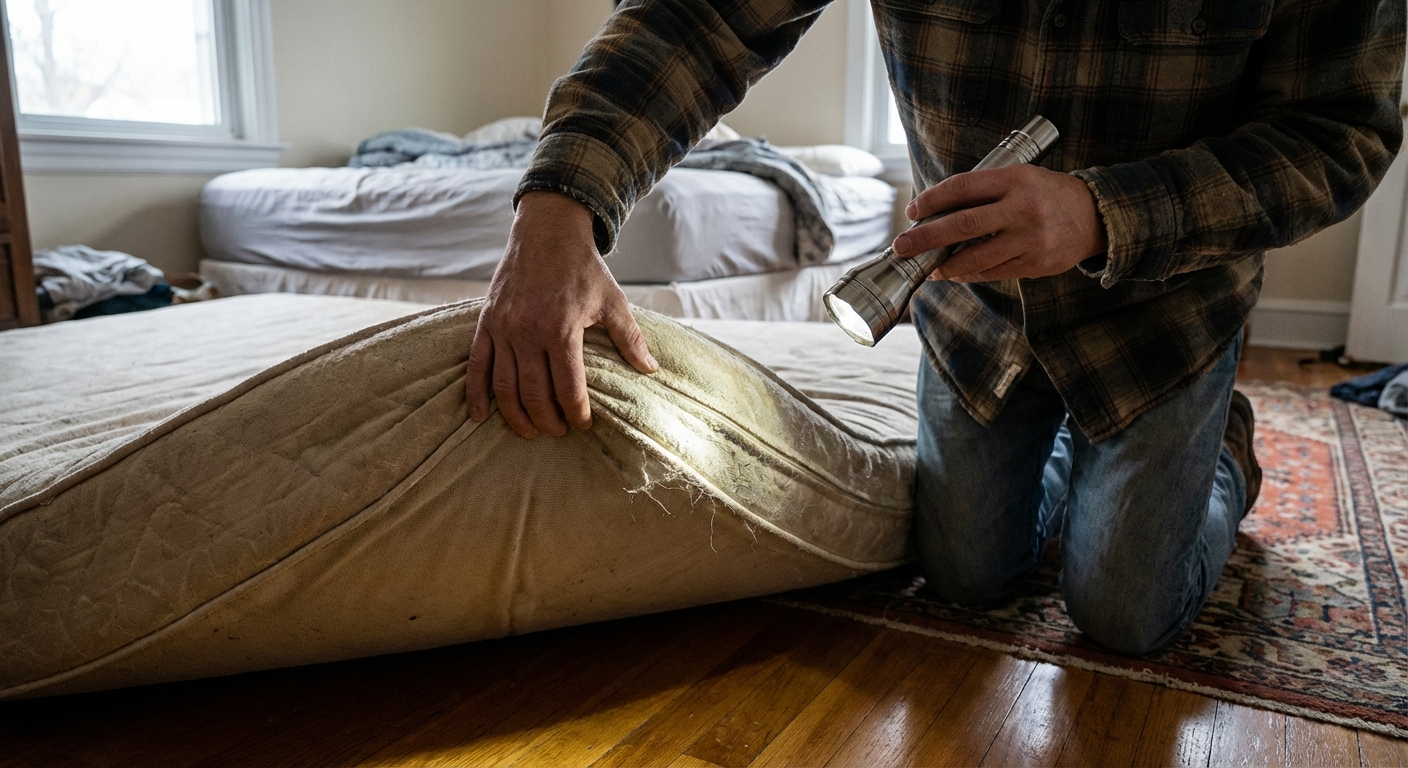
Before You Start: Grab a Few Basics
You do not need special tools. A few household items make it easier to see the signs and avoid spreading bugs around.
- Flashlight (your phone works)
- Thin card (old gift card) to run along seams and cracks
- Disposable gloves (optional but helpful)
- Paper towels and a small trash bag
- Clear tape or a small container if you need to save a sample for identification
Quick tip: If you suspect bed bugs, avoid moving bedding or clothing to other rooms until you inspect. Carrying items around is a common way they spread.
What You Are Looking For (Not Just the Bug)
Bed bugs are great at hiding, so you often find their “breadcrumbs” first. Here are the main signs.
1) Live bed bugs
Adults are about the size of an apple seed, flat, and reddish-brown. After feeding, they look more swollen and darker. Young bed bugs (nymphs) are smaller and paler.
2) Shed skins
As they grow, bed bugs shed their outer skin. These look like pale, papery “bug shells” tucked in seams and creases.
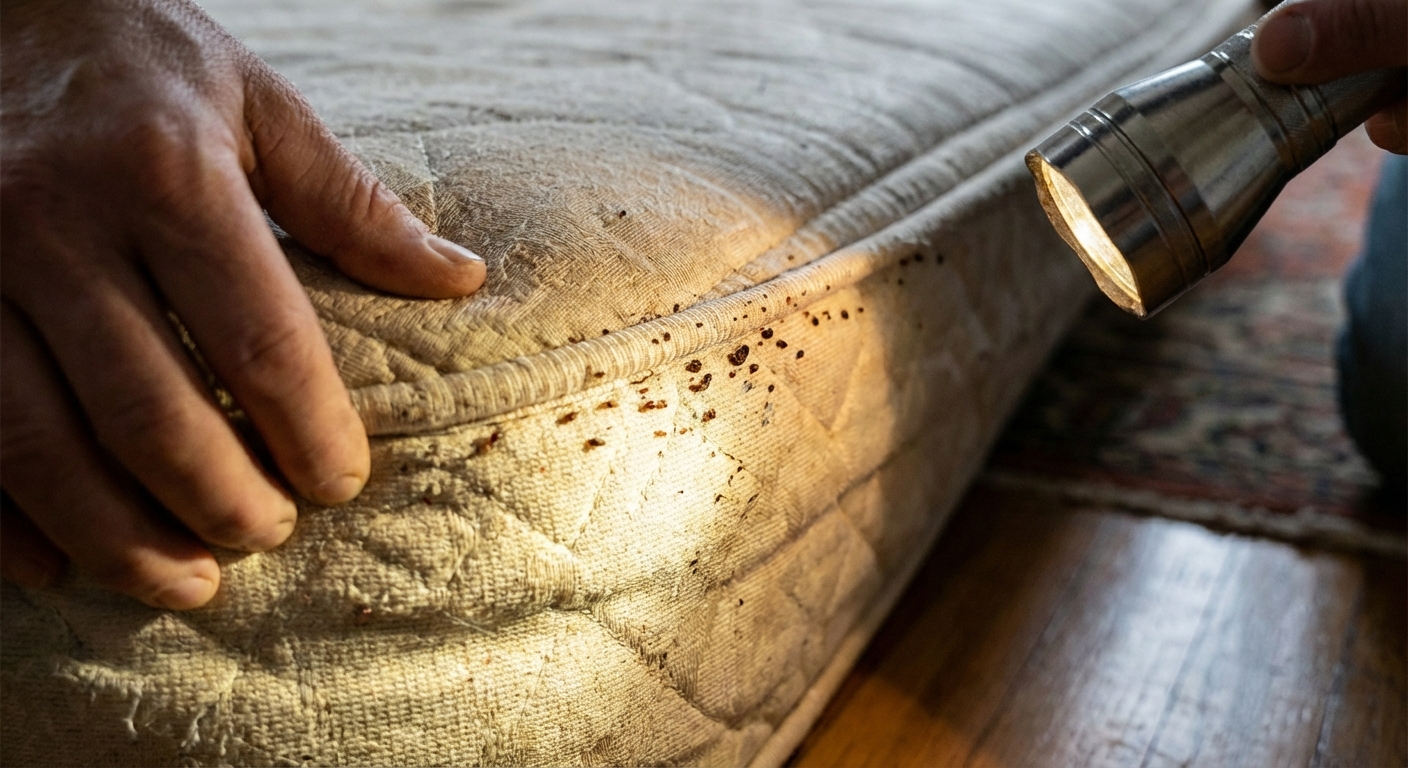
3) Dark spotting (fecal stains)
These look like tiny black dots, often in clusters. If you dab with a slightly damp paper towel, they may smear like ink.
4) Rusty or reddish stains
Small blood spots on sheets or pillowcases can happen if a bug is crushed after feeding.
5) Eggs and eggshells
Eggs are tiny, white, and sticky, about the size of a pinhead. They are usually tucked into protected cracks and fabric folds.
15 to 30 Minute Quick Check: The Highest-Value Spots
If you only have a little time, check the places bed bugs most often hang out. Focus on the bed first. Bed bugs want to stay close to a sleeping person.
Step 1: Inspect the mattress seams and corners
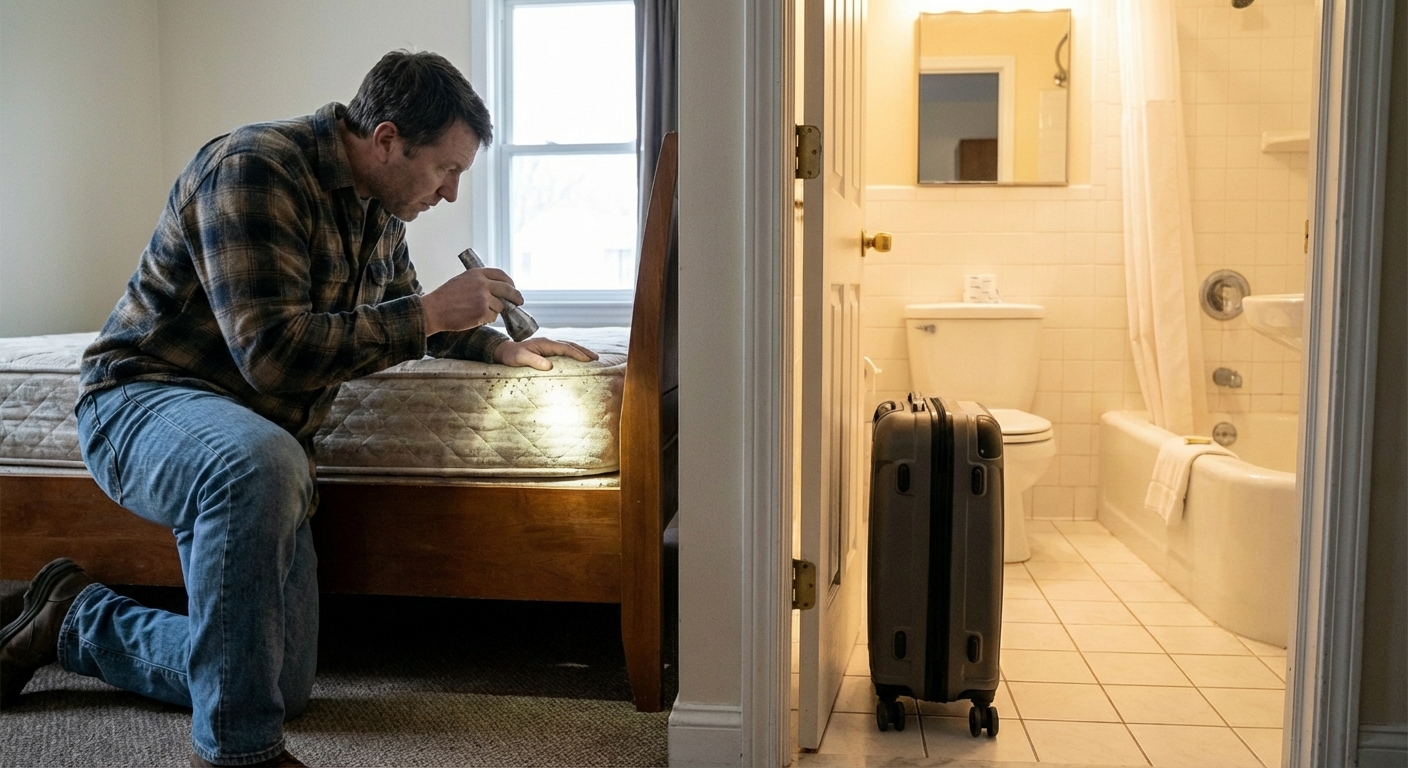
- Pull back sheets and look along piping, seams, and tags. (Piping is the raised edging cord sewn around the mattress.)
- Pay extra attention to the head end of the mattress.
- Use a card to gently run along seams and lift the edge.
Step 2: Check the box spring
- Inspect the fabric underside and stapled edges.
- Look closely at corners where wood meets fabric.
- If there is a thin dust cover underneath, bed bugs can hide behind it.
Step 3: Check the headboard and bed frame
- Inspect behind the headboard, especially where it meets the wall.
- Check screw holes, joints, and cracks in the frame.
If you find anything suspicious: Take a clear photo, and save a sample if you can (more on that below). Keep checking nearby spots so you know how far the issue may have spread.
Thorough Check: If the Quick Check Is Unclear
If you have bites, unexplained spots, or a sweet or musty odor but did not see obvious signs, do a deeper look. (Odor is not a reliable early clue and is more common with heavier infestations.) Bed bugs often stay within several feet of where people sleep, commonly up to about 20 feet, but they can spread farther, especially in clutter or larger infestations.
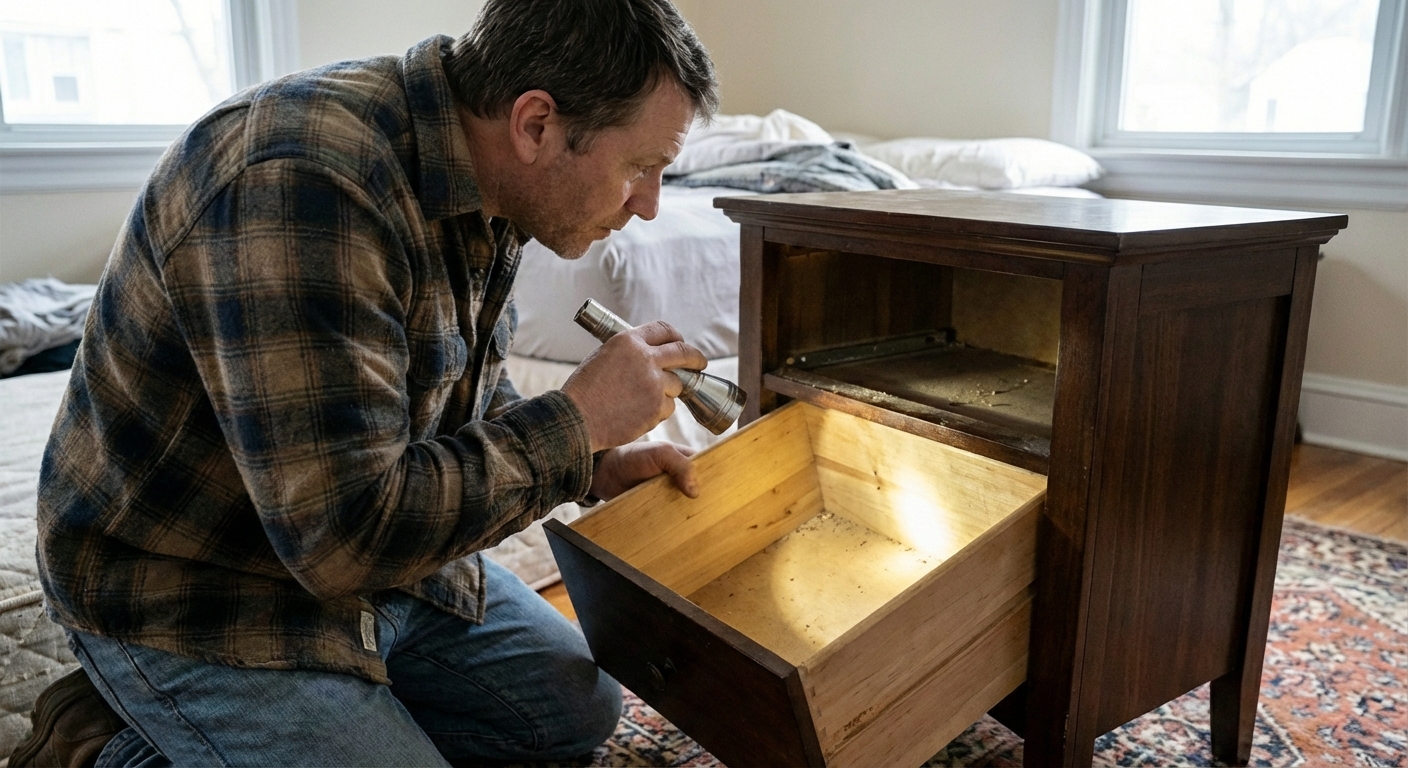
Nightstands and dressers
- Pull drawers out and inspect corners, joints, and the underside.
- Check the back panel and any gaps where wood meets wood.
Upholstered furniture
- Inspect seams, zippers, and under cushions.
- Look at the fabric where it is stapled to the frame underneath.
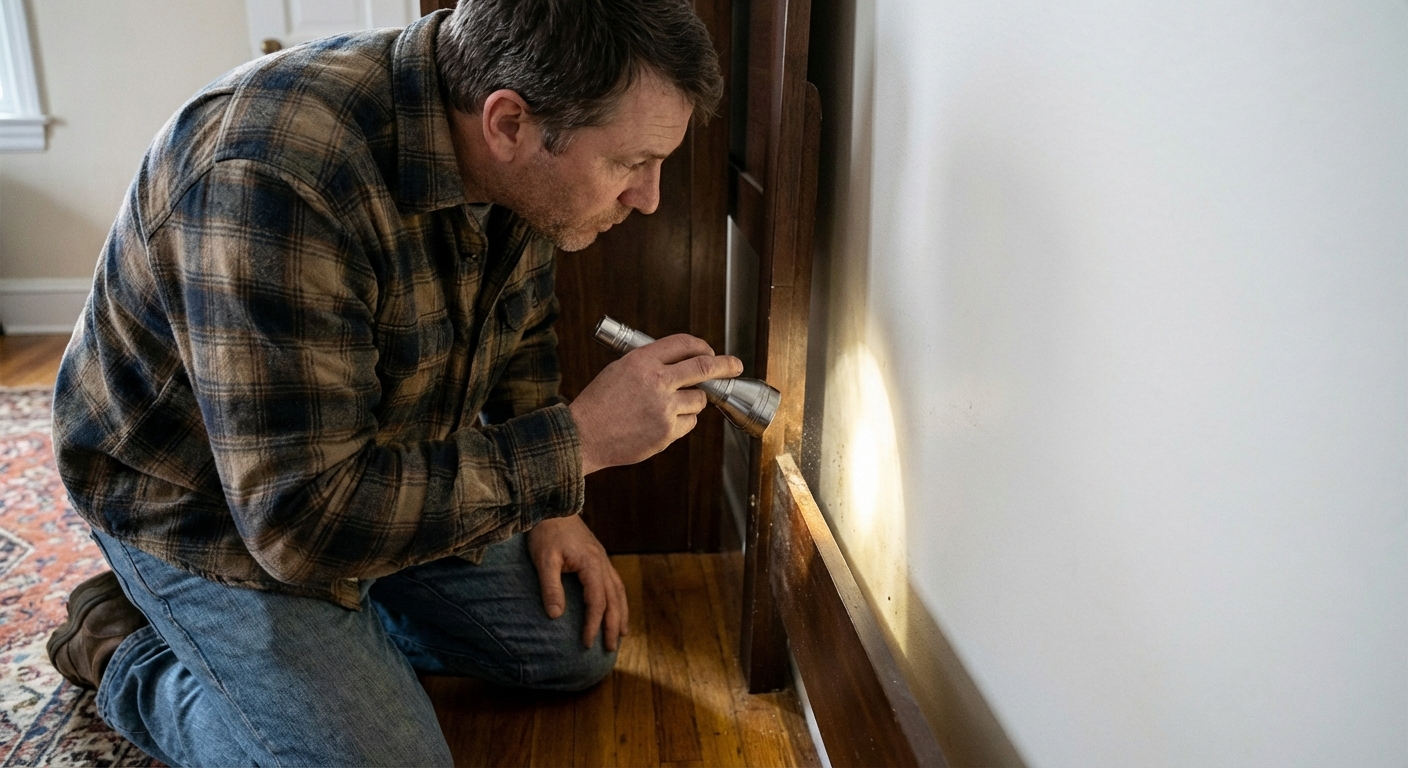
Baseboards, wall cracks, and outlets
- Inspect baseboards near the bed, especially loose edges.
- Check cracks in drywall or peeling wallpaper.
- Look around outlet plates. Do not open electrical boxes unless you know what you are doing and power is off.
Curtains, rugs, and laundry piles
- Check curtain hems and folds near the bed.
- Inspect the edge of rugs where they meet the wall.
- If clothing is piled near the bed, bed bugs can hide there too.
If You Are Not Sure: Lookalikes and ID Help
Not every small bug in a bedroom is a bed bug. Common lookalikes include carpet beetles (often found near windows, baseboards, or fabrics) and bat bugs (closely related and usually linked to bats). If you can safely capture a sample, it can save you time and unnecessary treatment.
- Press the bug onto clear tape, then stick the tape to white paper.
- Or place it in a small sealed container or zip bag.
- Label it with the date and where you found it (for example, “mattress seam, head end”).
Many local extension offices and pest professionals can confirm identification from a clear photo or sample.
What About Bites? A Reality Check
Bites alone cannot confirm bed bugs. Some people do not react at all, while others get itchy welts. Mosquitoes, fleas, and even skin irritation can look similar.
Instead of relying on bites, use this rule of thumb: you need physical evidence such as bugs, spotting, shed skins, or eggs.
- Bed bug bites often appear in clusters or lines on exposed skin, but not always.
- Flea bites tend to cluster around ankles and lower legs.
- Mosquito bites can be random, especially in warm months.
If You Find Bed Bugs: What to Do Next
Finding bed bugs is stressful, but quick, contained action helps a lot.
1) Do not move items room to room
Dragging bedding or clothes through the house can spread bugs. Bag items before moving them.
2) Start with heat and containment
- Put bedding, pajamas, and nearby clothing into sealed bags.
- Wash and dry on the hottest settings the fabric can handle. Drying on high heat is especially effective. As a practical rule, aim for at least 30 minutes on high heat once the dryer is fully hot. Thick items may need longer. (Washing alone may not kill all life stages.)
- Store clean items in fresh bags or sealed bins until the issue is resolved.
3) Vacuum carefully
- Vacuum mattress seams, bed frame cracks, and baseboards.
- Immediately seal and discard the vacuum contents. If you have a bagless vacuum, empty into a bag, seal it, and take it outside.
4) Use mattress and box spring encasements
Bed bug-proof encasements can trap bugs inside and reduce hiding places, but only if they are the right type and used correctly. Choose a certified bed bug-proof encasement, install it carefully (fully zipped with no gaps), and leave it on for the full duration recommended by the manufacturer, often months. Keep in mind that encasements do not stop bugs elsewhere in the room from biting.
5) Avoid foggers and be cautious with sprays
Do not use “bug bombs” or foggers. They tend to be ineffective for bed bugs and can push them deeper into hiding places. Also avoid spraying random pesticides on beds or sofas. Misuse can be unsafe and can make control harder. If you use any product, follow the label exactly.
6) Consider monitoring and professional help
If you are not finding clear evidence but you still suspect bed bugs, consider placing interceptor cups under bed and furniture legs or using a passive monitor to help confirm activity.
DIY can work for small, early problems, but many infestations need a professional plan. If you are seeing bugs in multiple areas, or you keep finding new signs after treatment, call a licensed pest professional.
How to Check Hotel Rooms and Luggage (Fast)
Travel is a common way bed bugs hitchhike. Here is a quick routine that takes a couple of minutes.
- Set luggage in the bathroom or bathtub while you check. Hard surfaces and fewer hiding spots make it lower risk, but not zero.
- Pull back bed sheets and inspect the mattress corners and headboard.
- Check the upholstered chair or couch seams if the room has one.
- When you get home, unpack on a hard surface and wash and dry travel clothes on hot if possible.
Simple Bed Bug Inspection Checklist
If you want the quickest possible summary, use this checklist.
- Mattress seams and tags: bugs, spotting, shed skins
- Box spring edges and underside: spotting, bugs tucked in corners
- Headboard and frame joints: cracks, screw holes, wall side
- Nightstand drawers: corners and underside
- Baseboards near bed: cracks and gaps
- Upholstery nearby: seams, zippers, under cushions
If you find even one live bed bug, treat it like a real issue and take action quickly. Early detection is your best friend.

Jose Brito
I’m Jose Britto, the writer behind The Country Store Farm Website. I share practical, down-to-earth gardening advice for home growers—whether you’re starting your first raised bed, troubleshooting pests, improving soil, or figuring out what to plant next. My focus is simple: clear tips you can actually use, realistic expectations, and methods that work in real backyards (not just in perfect conditions). If you like straightforward guidance and learning as you go, you’re in the right place.