Mildew smell has a way of hanging on, especially in towels, gym clothes, and anything that sat damp in a hamper too long. The good news is you usually do not need harsh fragrance boosters to fix it. You need to remove the trapped moisture, break down the odor-causing gunk, and dry the fabric fully.
This guide sticks to practical, garden-friendly methods that work in real life: white vinegar, baking soda, oxygen bleach (the color-safe kind, often sodium percarbonate-based), good airflow, and sunshine.
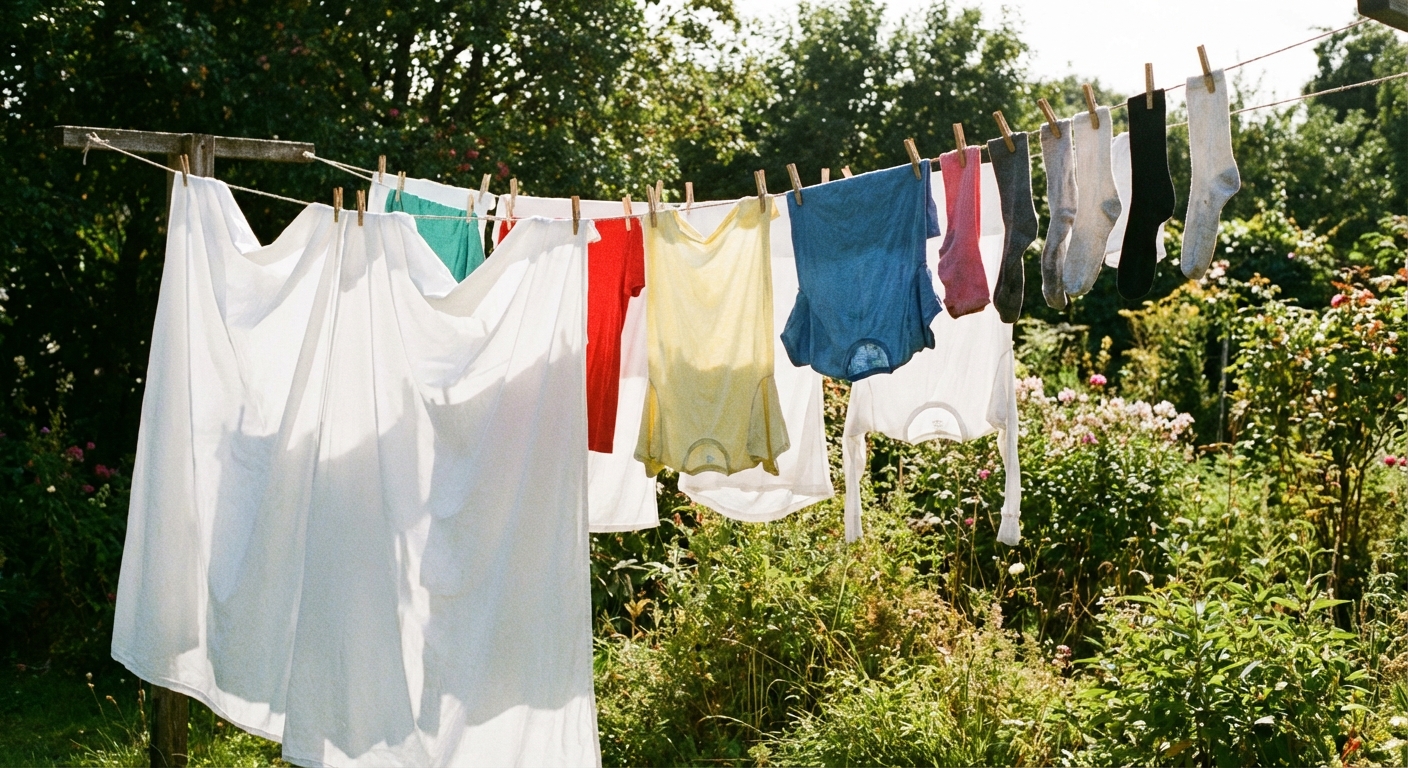
Why clothes get that mildew smell
That musty odor usually comes from mildew or bacteria feeding on residues in fabric. Common culprits are body oils, detergent buildup, fabric softener coatings, and leaving items damp too long. Front-load washers and high-efficiency cycles can make it worse when water is cooler and loads are packed tight.
- Damp time: Wet towels in a pile overnight are the classic setup.
- Detergent and softener buildup: Coatings trap odors instead of letting water rinse them away.
- Not enough agitation: Overloaded machines cannot rinse well.
- Washer funk: A musty washer can make clean loads smell musty again fast.
Start here: quick checklist
- Smell it when it is dry: If it smells musty when dry, you need a deeper treatment than a regular wash.
- Do not dry it in the dryer yet: Heat can make the smell harder to remove, especially in synthetics.
- Check care labels: Vinegar and oxygen bleach are generally safe for many everyday items, but wool, silk, leather trims, and some dyes need extra caution.
- Mind elastic: Avoid long vinegar soaks for items with lots of stretch (waistbands, bras, swimwear, spandex blends). Use a shorter soak and wash promptly instead.
- Shake out dirt: Mud and compost stains should be brushed off first so the wash water stays effective.
Method 1: Vinegar soak
White distilled vinegar helps dissolve mineral buildup and break down odor-causing residue. It is simple and usually the fastest win for towels, washcloths, and cotton tees.
How to do it
- Fill a bucket, sink, or tub with warm water (or cool if the care label calls for it).
- Add 1 cup white vinegar per 1 to 2 gallons of water. You want it clearly vinegary, not harsh.
- Soak 30 minutes to 2 hours. For heavy odor, go longer, but skip long soaks for stretchy items.
- Wash normally using less detergent than you think (too much detergent can trap smells).
- Air-dry if possible, or dry fully in the dryer only after the smell is gone.
Tip: Vinegar and chlorine bleach do not mix. If you use vinegar, do not add bleach in the same soak or wash.
Method 2: Baking soda boost
Baking soda helps neutralize odor and can loosen some residue. It is a nice option for loads that are only slightly musty.
How to do it
- Add 1/2 cup baking soda directly into the drum with the clothes.
- Use warm or hot water only if the care label allows. Heat helps with oils and grime.
- Skip fabric softener for this load.
If the smell is strong, baking soda alone often is not enough. Pair it with a vinegar pre-soak or switch to oxygen bleach.
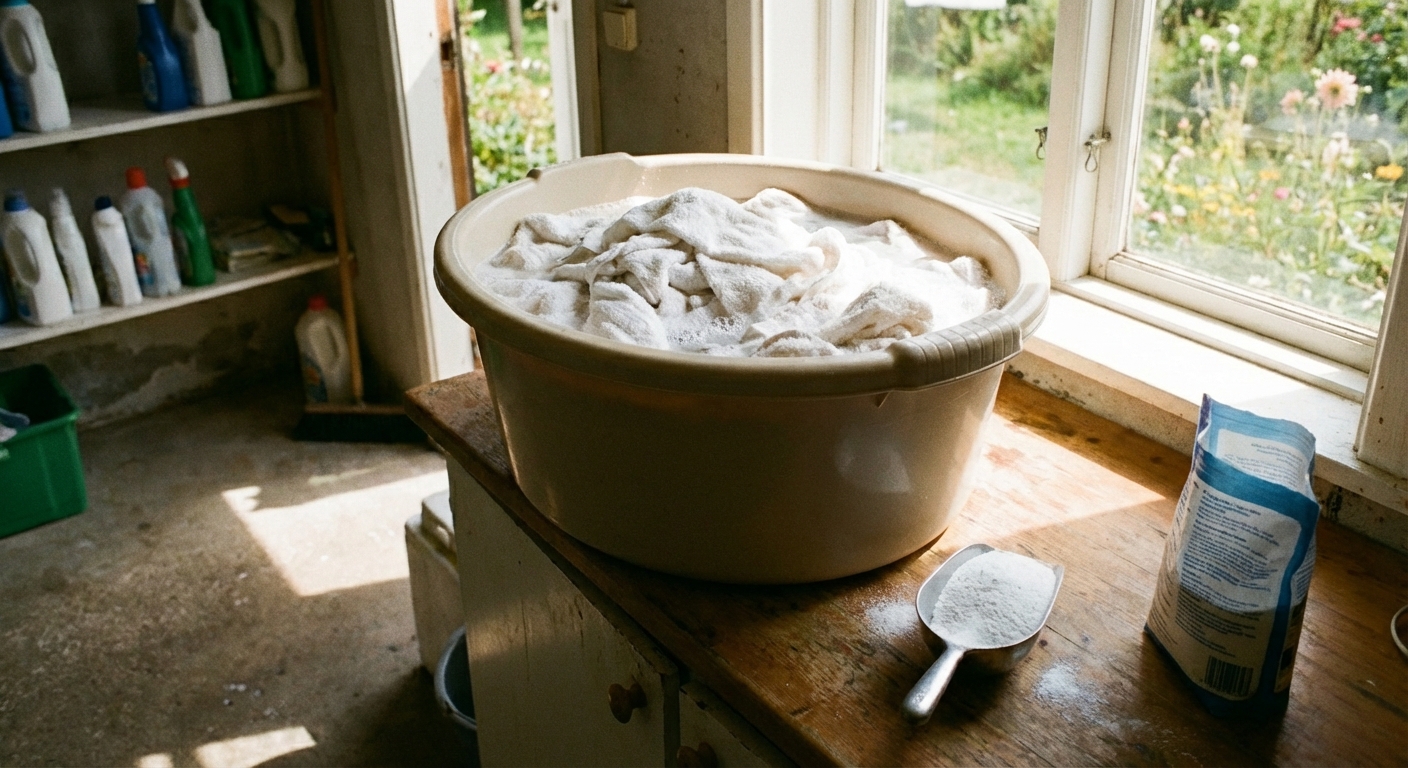
Method 3: Oxygen bleach soak
Oxygen bleach (often sold as “oxygen cleaner” or “color-safe bleach”) is a workhorse for deep odors in towels, sheets, and many clothes. It breaks down organic gunk that feeds mildew.
How to do it
- Dissolve oxygen bleach powder in warm water (follow the product label for the right amount).
- Soak 4 to 8 hours for heavy odors. A shorter soak can still help, but longer is usually the difference-maker.
- Wash normally afterward. Do an extra rinse if your machine has the option.
Good to know: Oxygen bleach is different from chlorine bleach. It is generally gentler on colors, but do not use it on wool, silk, leather trims, or “dry clean only” items. Spot test if the item is delicate or brightly dyed.
Method 4: Sunshine and airflow
Sunlight helps in two ways: it dries fabric thoroughly and UV light can reduce some odor-causing microbes. Even a breezy shaded spot helps if you cannot use direct sun.
How to do it
- Hang items fully spread out, not folded over a rail.
- Give them space between pieces for airflow.
- Bring them in as soon as they are dry. Damp evening air can undo your progress.
- Color note: Direct sun can fade darks and brights. Turn items inside out or use bright shade if you are worried about color.
Garden note: A simple clothesline near the garden pulls double duty. It saves energy, and it is one of the best “odor removers” you already own.
What not to do
- Do not mask it with fragrance beads: That can trap the problem under perfume.
- Do not overload the washer: Clothes need room to rinse clean.
- Do not use fabric softener on towels: It coats fibers, reduces absorbency, and holds odors.
- Do not dry musty clothes in the dryer: If you still smell it wet, stop and treat again.
Special cases
Towels and washcloths
Towels hold onto oils and detergent residue, so they go musty fast. Vinegar soak or oxygen bleach soak usually fixes them. Wash warm or hot if the care label allows, and skip softener.
Workout clothes and synthetics
Synthetics trap body oils in a way cotton does not. Start with a short vinegar soak, then wash on warm if allowed. Use a small amount of detergent and consider an extra rinse.
Also helpful: A fragrance-free enzyme-based detergent can do a great job on body oils and sweat buildup, especially on athletic fabrics. Use it in place of extra detergent, not in addition to it.
Delicates (wool, silk, “dry clean” items)
Do not soak these aggressively. Try gentle airing outdoors first. If the item is washable, test a small area with diluted vinegar and cool water. When in doubt, use a professional cleaner, especially for structured jackets or lined pieces.
If it keeps coming back: clean the washer
A musty washer can re-contaminate every load. If you notice the smell returning fast, the machine is part of the problem.
Quick washer cleanup routine
- Check your washer manual first: Some manufacturers discourage vinegar use or recommend specific cleaners.
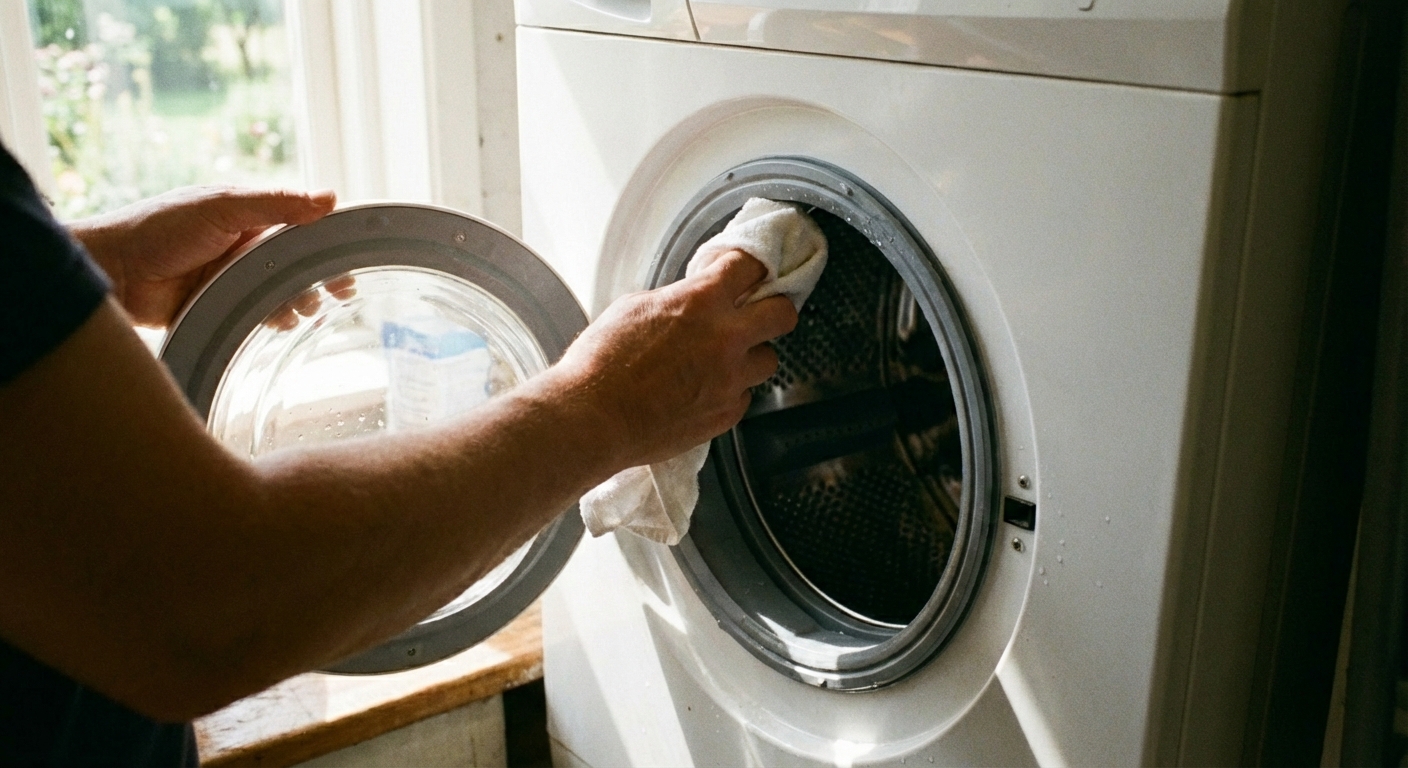
- Run an empty hot cycle with 2 cups white vinegar (in the drum).
- After that cycle, sprinkle 1/2 cup baking soda in the drum and run another hot cycle.
- Wipe the door gasket (front-loaders), detergent drawer, and any visible grime.
- Leave the door cracked open after loads so the drum dries out.
Prevention
- Do not leave wet laundry sitting: Move it to the dryer or line right away.
- Hang towels to dry between uses: Spread them out, do not ball them up on a hook.
- Use less detergent: If you see lots of suds in an HE washer, you are likely using too much.
- Skip softener and dryer sheets on towels: They leave residue.
- Keep hampers breathable: A basket with airflow beats a sealed bin.
- Sun-dry when you can: It is one of the easiest, most garden-friendly habits.
When to call it
If an item was left wet for days, smells sour even after multiple treatments, or has visible mold that will not wash out, it may be time to replace it. This comes up most often with older towels that have deep buildup. Sometimes the most hygienic fix is a fresh start.
Quick FAQ
Can I pour vinegar into the fabric softener dispenser?
You can for a rinse boost, but for real mildew smell, a pre-soak is usually more effective. If you do use the dispenser, use plain white vinegar and do not combine with bleach.
Will vinegar damage my washing machine?
Occasional use in normal household amounts is widely used for deodorizing and descaling, but check your manual. Avoid constant heavy use, and do not use it at the same time as chlorine bleach.
What if the odor is still there after one treatment?
Repeat with an oxygen bleach soak or extend the soak time. Stubborn odors are often layered: residue plus mildew plus a musty washer.
Best option picks
- Light musty smell: Wash warm + 1/2 cup baking soda.
- Towels that always smell: Vinegar soak, then hot wash, then sun-dry.
- Heavy mildew stink: Oxygen bleach soak 4 to 8 hours, then wash and air-dry.
- Smell returns fast: Clean the washer and leave the door open between loads.
If you want one habit that helps everything, it is this: dry clothes completely, every time. Mildew is stubborn, but it is not complicated. Take away the damp, and you take away the problem.

Jose Brito
I’m Jose Britto, the writer behind The Country Store Farm Website. I share practical, down-to-earth gardening advice for home growers—whether you’re starting your first raised bed, troubleshooting pests, improving soil, or figuring out what to plant next. My focus is simple: clear tips you can actually use, realistic expectations, and methods that work in real backyards (not just in perfect conditions). If you like straightforward guidance and learning as you go, you’re in the right place.