Orchids have a reputation for being fussy, but most “my orchid won’t bloom” problems come down to a handful of fixable basics: not enough light, inconsistent watering, the wrong potting mix, or no seasonal temperature cue. The good news is that your orchid can look perfectly healthy and still refuse to bloom until you nudge it back into the right rhythm.
This guide walks you through what to check, what to change, and what to leave alone so you can get reliable reblooms without turning your living room into a greenhouse.
First, know what kind of orchid you have
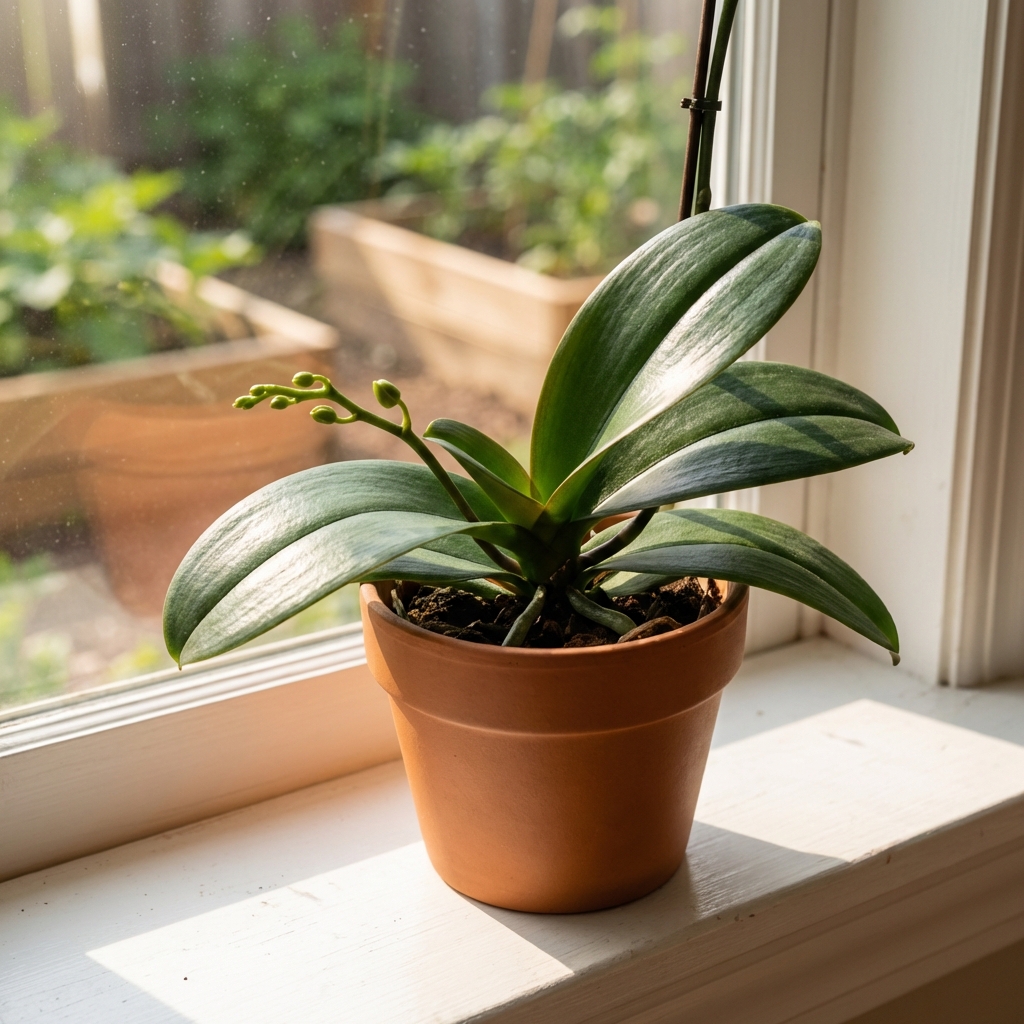
Care is similar across common orchids, but the rebloom trigger can differ. Most grocery store orchids are Phalaenopsis (moth orchids). They are the easiest to rebloom indoors.
- Phalaenopsis: blooms off a spike, often triggered by a slight drop in nighttime temps.
- Cattleya: needs brighter light than Phals and often blooms from a sheath.
- Dendrobium: some types need a drier, cooler rest to bloom well.
- Oncidium: likes bright, indirect light and steady moisture, often blooms from pseudobulbs.
If you are unsure, look at the leaves: Phalaenopsis usually has broad, thick leaves and no pseudobulbs. If you see swollen “bulbs” at the base (pseudobulbs), it is likely not a Phal, and many of those types tend to prefer brighter light, but it varies by genus and hybrid.
What “reblooming” actually requires
To bloom again, an orchid must do two things:
- Grow enough energy reserves through healthy leaves and roots.
- Get a bloom signal (often light level and a temperature pattern) that tells it the season is right.
If your orchid has limp leaves, damaged roots, or is stuck in soggy mix, focus on recovery first. A struggling plant may survive, but it usually will not flower.
Step 1: Fix the light (the number one reason orchids do not bloom)
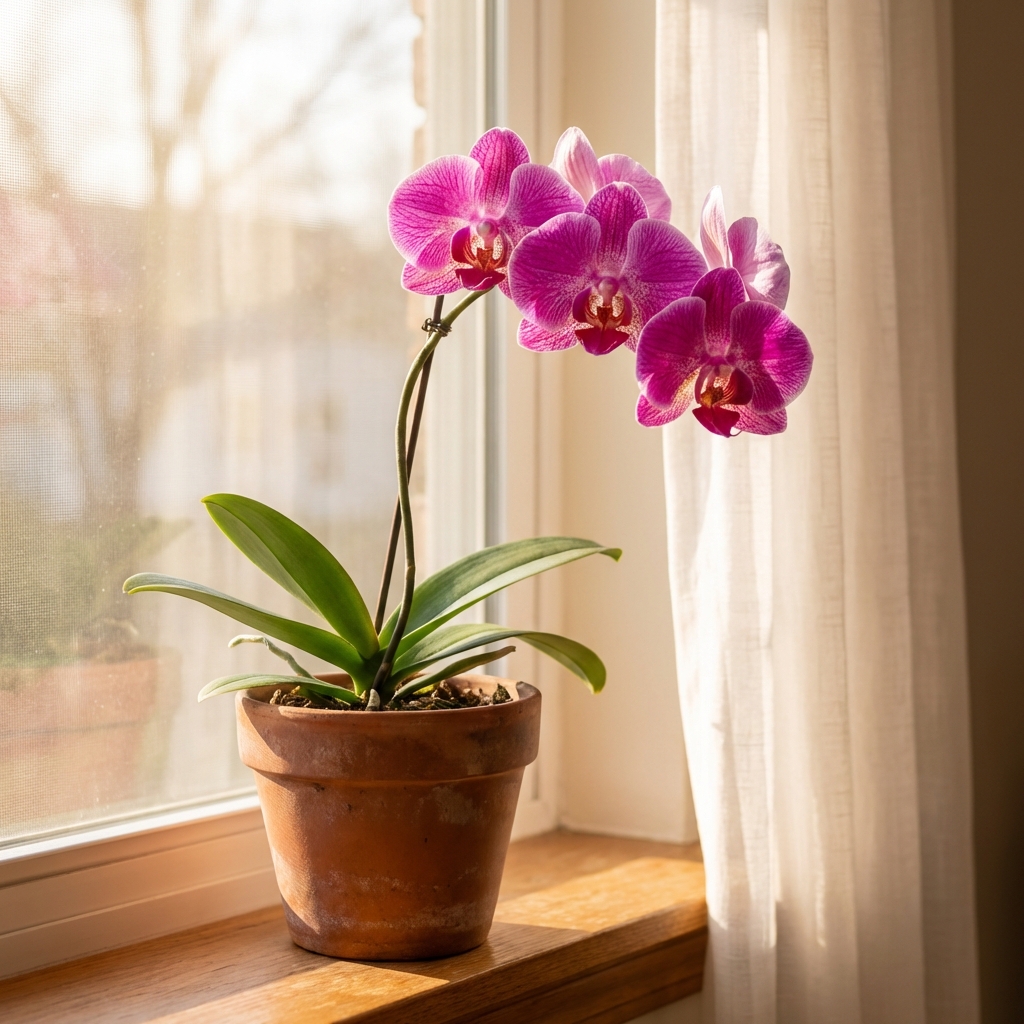
Orchids do not need harsh sun, but they do need bright light to bloom. A Phalaenopsis can stay alive in low light, yet never make a spike.
Best indoor light setups
- East window: usually ideal for Phalaenopsis.
- South or west window: can work with a sheer curtain to prevent leaf scorch.
- North window: often too dim for reblooming unless supplemented with a grow light.
Quick check: in daytime, you should be able to comfortably read near the plant without turning on lights. If the area feels “shady,” it is probably too dark for blooms.
Another easy proxy: aim for “bright shade.” You want a soft, visible shadow, not a dark one and not full sun blasting the leaves.
Optional for precision: many Phalaenopsis bloom more reliably around 1,000 to 2,000 foot-candles (about 10,000 to 20,000 lux) for part of the day.
Leaf color clue: dark green leaves often mean low light. For many orchids, a medium green is a better bloom sign.
Light safety: if you move your orchid brighter, do it gradually over 1 to 2 weeks so leaves do not sunburn.
Step 2: Water correctly so roots stay alive, not soaked
Healthy roots are the engine that powers flowering. For many indoor growers, the most common issue is watering too often in a mix that stays wet, especially in low light.
How to water (simple method)
- Water when the pot feels light and the mix is mostly dry, not bone dry for days.
- Take the orchid to the sink and water thoroughly until it drains freely.
- Do not let it sit in a saucer of water.
Use root cues, not the calendar
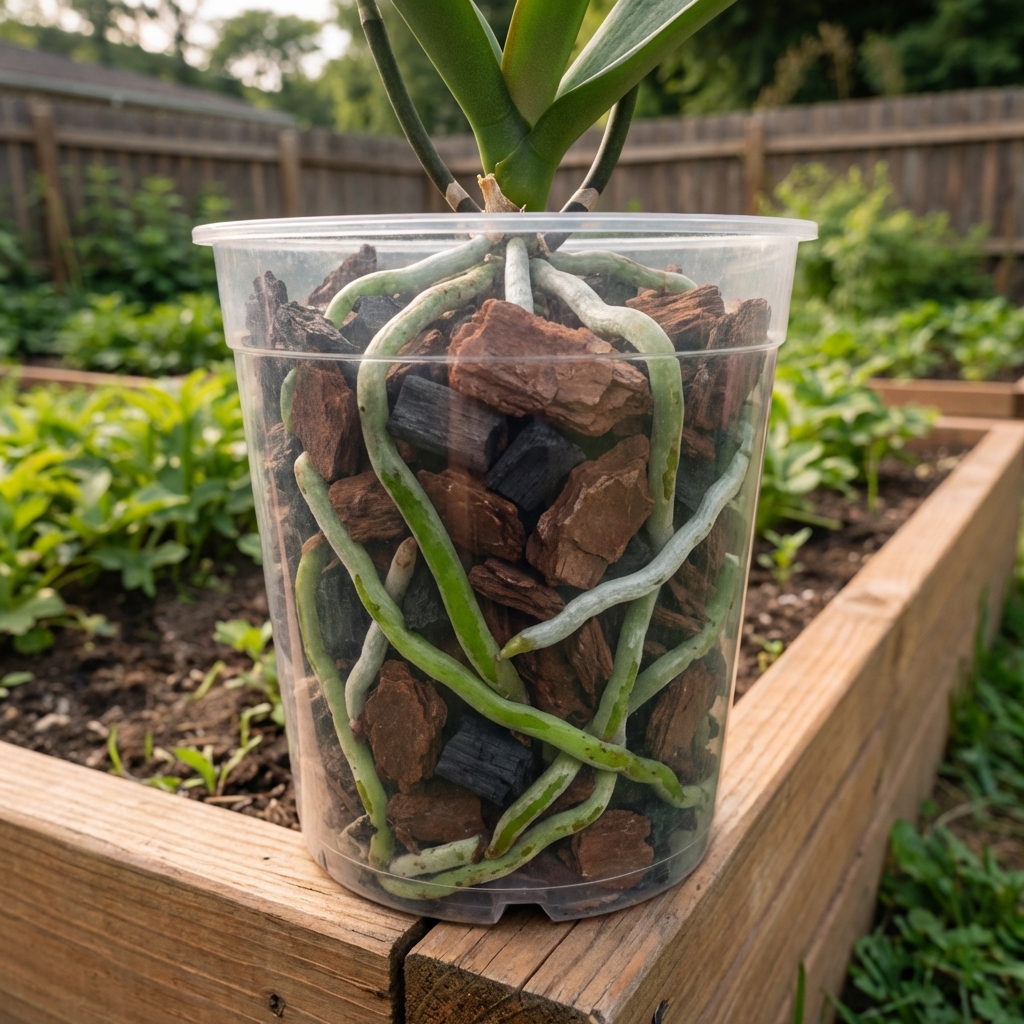
- Silvery roots: usually ready for water.
- Bright green roots: recently watered, wait.
- Mushy brown roots: staying too wet, fix this before chasing blooms.
If your orchid is in a decorative outer pot, pull the inner pot out after watering so it can fully drain.
Step 3: Feed lightly, consistently
Orchids are not heavy feeders, but they do benefit from regular nutrition, especially during active growth.
A realistic fertilizer routine
- Use a balanced orchid fertilizer or a general houseplant fertilizer at quarter to half strength.
- If possible, choose a urea-free formula and avoid high-nitrogen blends (especially “lawn” type fertilizers) that push leaf growth over blooms.
- Feed every 2 to 4 weeks during active growth (often spring through early fall indoors).
- Flush the pot with plain water about once a month to reduce salt buildup.
If your water is very hard, consider using filtered or rainwater occasionally. Excess mineral salts can stress roots and slow blooming.
Step 4: Give Phalaenopsis a temperature cue
For many Phalaenopsis orchids, the bloom trigger is a small but consistent drop in nighttime temperature. In real homes, this often happens naturally in fall and winter when windows are cooler at night. Different hybrids respond a bit differently, so think in ranges, not a single magic number.
What to aim for
- Night temps roughly 55 to 67°F (13 to 19°C) for 2 to 4 weeks can help trigger a spike.
- Aim for a 10 to 15°F (6 to 8°C) difference between day and night when you can.
- Day temps can stay in the comfortable indoor range, around 70 to 78°F (21 to 26°C).
You do not need to chill the plant. You just want that gentle difference between day and night. A spot near an east window that cools slightly overnight often does the job.
Step 5: Handle the flower spike
Once the flowers fall, you have options. What you do depends on your orchid’s health and what you want next.
When flowers finish
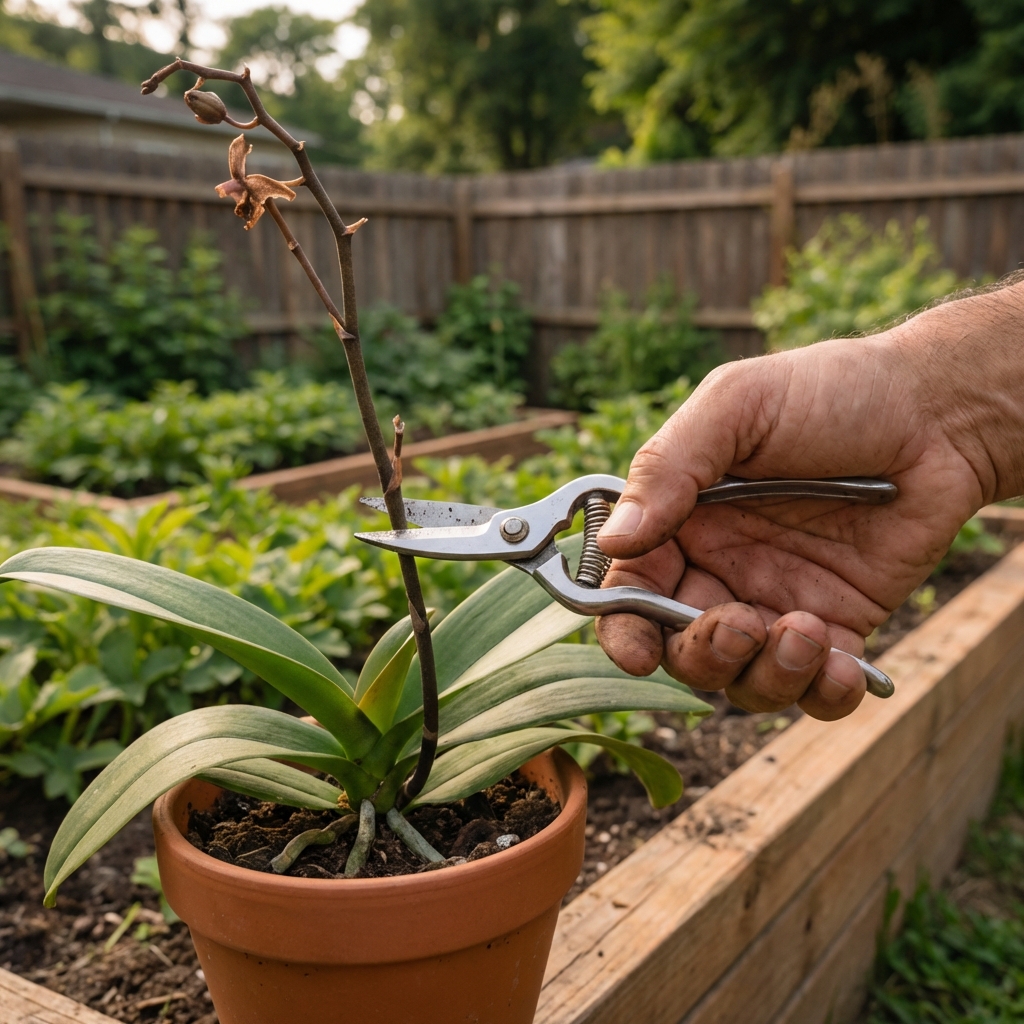
- If the spike turns brown and dry: cut it off near the base with clean scissors.
- If the spike stays green: you can leave it for a possible smaller rebloom, cut it back to a node, or cut it to the base to reset the plant for a stronger next cycle.
Cutting a green spike: what to choose
Leaving a green spike can sometimes produce a smaller secondary bloom, but it can also delay the plant from building strength for a bigger show later. If your orchid is small, recently repotted, or has weak roots, cutting the green spike back to the base often helps it focus on growth.
If you want to try for a secondary bloom: trim the spike just above a node (a small bump on the spike). Results vary, and that is normal.
Step 6: Repot if the mix is old
Orchid bark breaks down over time, turning into a moisture-holding sponge. That is great for fungus, not for blooms.
Signs your orchid needs repotting
- The potting mix looks fine-particle and soil-like (not chunky bark).
- Water drains slowly or the pot stays wet for many days.
- You smell a sour, swampy odor.
- Roots are rotting or the plant wobbles in the pot.
When to repot
Best time is usually after blooming when you see new root growth starting. If the mix is breaking down badly or roots are rotting, repot sooner, even if it interrupts flowering.
Basic repot steps
- Use a pot with lots of drainage holes and an orchid bark mix (often bark with some perlite and charcoal).
- Trim only dead, mushy roots. Keep firm roots, even if they look a bit wrinkled.
- Set the plant so the base sits above the mix, not buried deep.
Common reasons an orchid will not bloom
- Not enough light: healthy leaves, no spikes year after year.
- Too much nitrogen: lots of leaves, no flowers, especially with strong lawn or high-nitrogen fertilizer.
- Root problems: rot from staying wet, or severe dehydration from never soaking thoroughly.
- No temperature difference: stable warm temps day and night for months.
- Recent stress: repotting, pest issues, or moving locations repeatedly.
- Expecting constant blooms: many orchids bloom once or twice a year, not nonstop.
Timeline: how long until it blooms again?
This is the part most guides gloss over. Orchids move on their own schedule.
- After improving light and care: you may see a spike in 4 to 12 weeks (often in fall or winter for Phals).
- From spike to open blooms: commonly 6 to 12 weeks.
- If the plant is rebuilding roots: expect several months before it is ready to bloom.
If your orchid is growing a new leaf and new roots, you are heading in the right direction even if flowers are not immediate.
Quick troubleshooting by symptom
No spike, but leaves look fine
- Increase light gradually over 2 weeks.
- Try cooler nights for a couple of weeks (Phalaenopsis).
- Feed lightly during growth.
Spike starts, then stops growing
- Check watering consistency. Do not let it swing between very dry and very wet.
- Move away from heat vents and cold drafts.
- Ensure bright, indirect light.
Buds form, then drop (bud blast)
- Avoid moving the plant once buds appear.
- Keep it away from cold windows at night and hot, dry air.
- Do not let the pot dry out completely during bud development.
- If your home is very dry, a small humidity boost and gentle airflow can help (pebble tray, room humidifier, or grouping plants, plus a fan across the room).
Sticky leaves or white fluff
- Check for common pests like scale and mealybugs along leaf undersides, leaf joints, and the base of the plant.
- Isolate the orchid and treat early (wipe pests off, then use insecticidal soap or horticultural oil as directed).
Do not confuse roots and spikes
This trips up a lot of Phalaenopsis owners. A new root is usually rounder with a shiny, green or silvery tip and can grow in any direction. A new spike tends to be flatter with a mitten-like tip and usually emerges between leaves, aiming upward toward the light.
A simple weekly routine that works
- Once a week: check pot weight and root color, water if needed.
- Every 2 to 4 weeks: fertilize at low strength (more often in brighter conditions).
- Monthly: flush with plain water to clear fertilizer salts.
- Seasonally: in fall or winter, aim for slightly cooler nights to encourage spikes.
If you keep those basics steady, orchids usually do the rest.
FAQ
Will an orchid bloom again on the same spike?
Sometimes, especially Phalaenopsis. A green spike can branch and rebloom, but it often produces fewer flowers than a fresh spike. If the plant is weak, cutting the spike can help it recover faster.
Do orchids need a bigger pot to bloom?
Not usually. Orchids often prefer snug pots. What matters more is fresh, airy mix and good drainage.
Should I use ice cubes to water my orchid?
I do not recommend it. It can under-water parts of the pot and chilled water can stress tropical roots. A thorough soak and full drain is more reliable.
Bottom line
If your orchid will not bloom again, start with light, then confirm roots and watering are solid, then add a gentle temperature cue and consistent feeding. Orchids reward steady care. Once you hit the right setup in your home, reblooming becomes predictable instead of a guessing game.

Jose Brito
I’m Jose Britto, the writer behind The Country Store Farm Website. I share practical, down-to-earth gardening advice for home growers—whether you’re starting your first raised bed, troubleshooting pests, improving soil, or figuring out what to plant next. My focus is simple: clear tips you can actually use, realistic expectations, and methods that work in real backyards (not just in perfect conditions). If you like straightforward guidance and learning as you go, you’re in the right place.