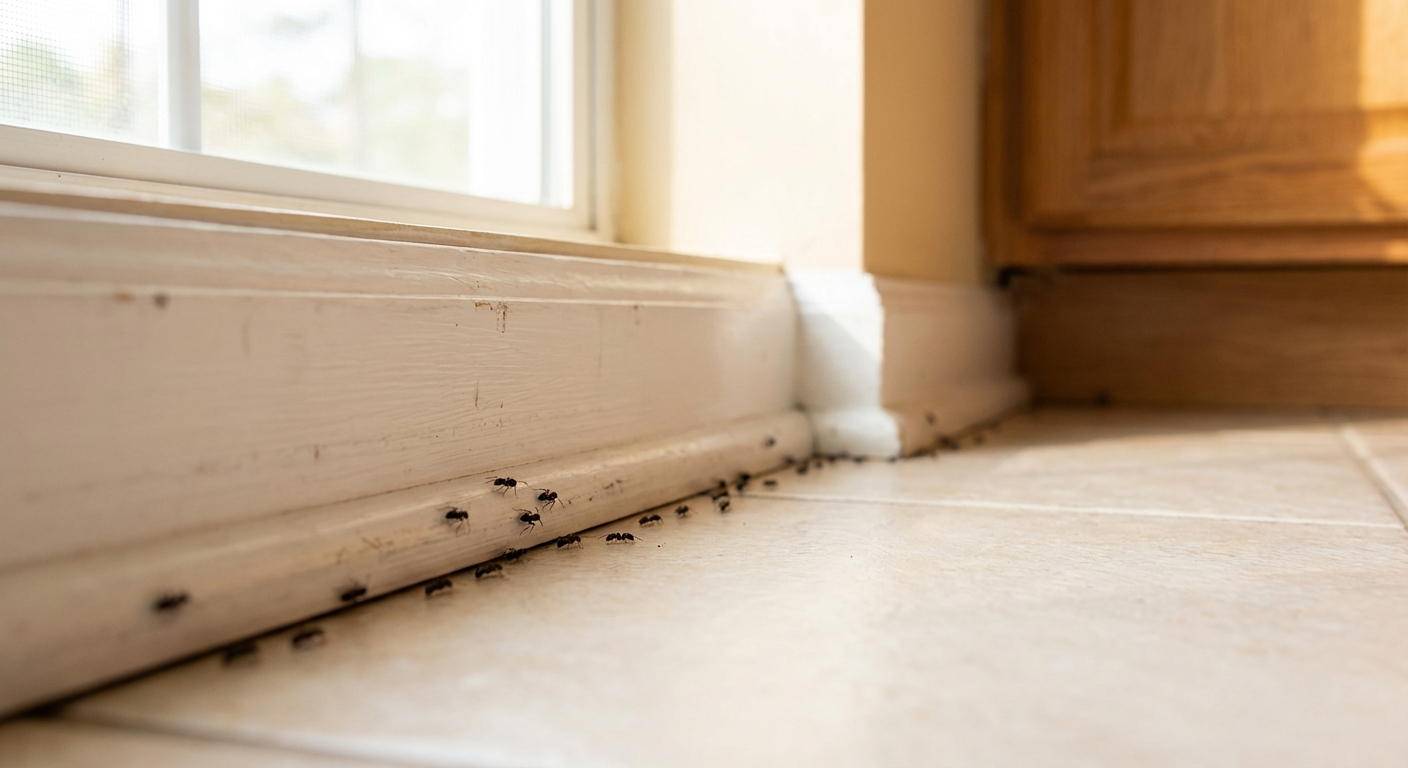
Black ants in the house most often show up because they found resources: food and water. They might look like random wanderers, but most of the time you are seeing a steady worker trail heading back to a nest or satellite nest outside, under a slab, in a wall void, or in damp wood.
This guide walks you through what to do today to knock down the ants quickly, plus what to fix this week so they are far less likely to return.
First: confirm what you are dealing with
Most homeowners call any small dark ant a “black ant.” The approach below works for the common indoor invaders, but it helps to watch their behavior for a minute.
- Small ants (often 1/16 to 1/8 inch) in long trails to crumbs, pet food, sugary spots, or grease are commonly pavement ants, odorous house ants, or little black ants.
- Bigger black ants (often 1/4 inch or more) could be carpenter ants. If you also notice sawdust-like debris, hollow-sounding wood, or ants coming from damp trim, treat this as a moisture and wood issue, not just a baiting issue.
Note: Size alone is not a perfect ID. Odorous house ants are often closer to 1/8 inch, while little black ants can be closer to 1/16 inch. Use behavior and where you find them as clues, too.
If you are unsure, still start with the cleaning and bait steps. If the ants are large and persistent, consider getting an ID from a local extension office or pest pro.
Quick action plan (do these in order)
1) Stop the food and water that is feeding the trail
This sounds basic, but it is the fastest way to slow the invasion and make baits work better.
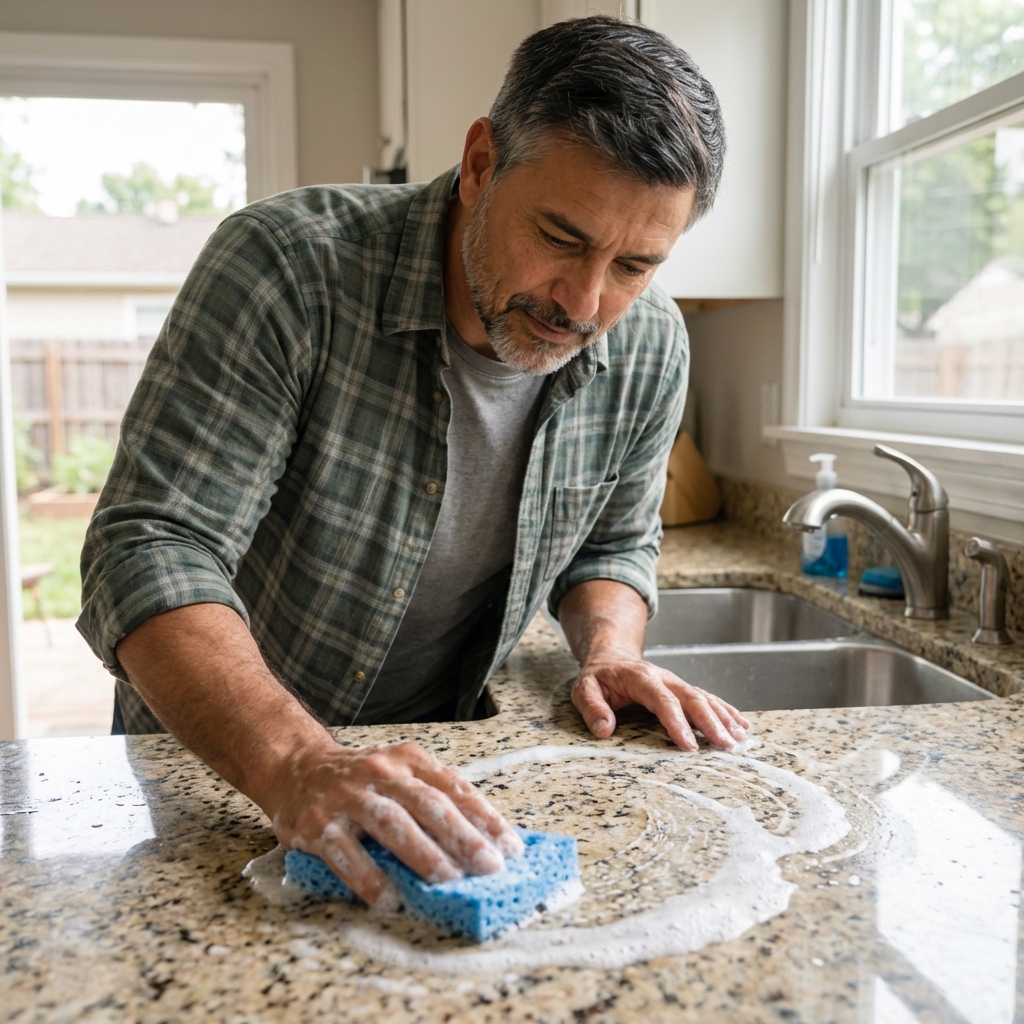
- Wipe counters, stove edges, and table legs with hot soapy water.
- Vacuum crumbs along baseboards, under the toaster, and under the fridge.
- Rinse recyclables and take out trash, especially sugary cans or bottles.
- Put pet food in timed meals or store it in a sealed container.
- Fix drips under sinks and wipe wet sponges or dishcloths dry.
2) Erase the scent trail (without making the problem worse)
Ants lay down chemical trails that guide the next wave. If you only kill the ants you see, the trail often stays active.
- Use a mix of warm water and dish soap to wipe where you see ants traveling.
- For extra trail removal, follow with a 1:1 mix of white vinegar and water on hard surfaces (test stone first).
Avoid spraying repellent insecticide along the trail if you plan to use bait. Repellents can reduce bait uptake and, with some species, can cause ants to reroute or split into new trails.
3) Identify where they are coming in
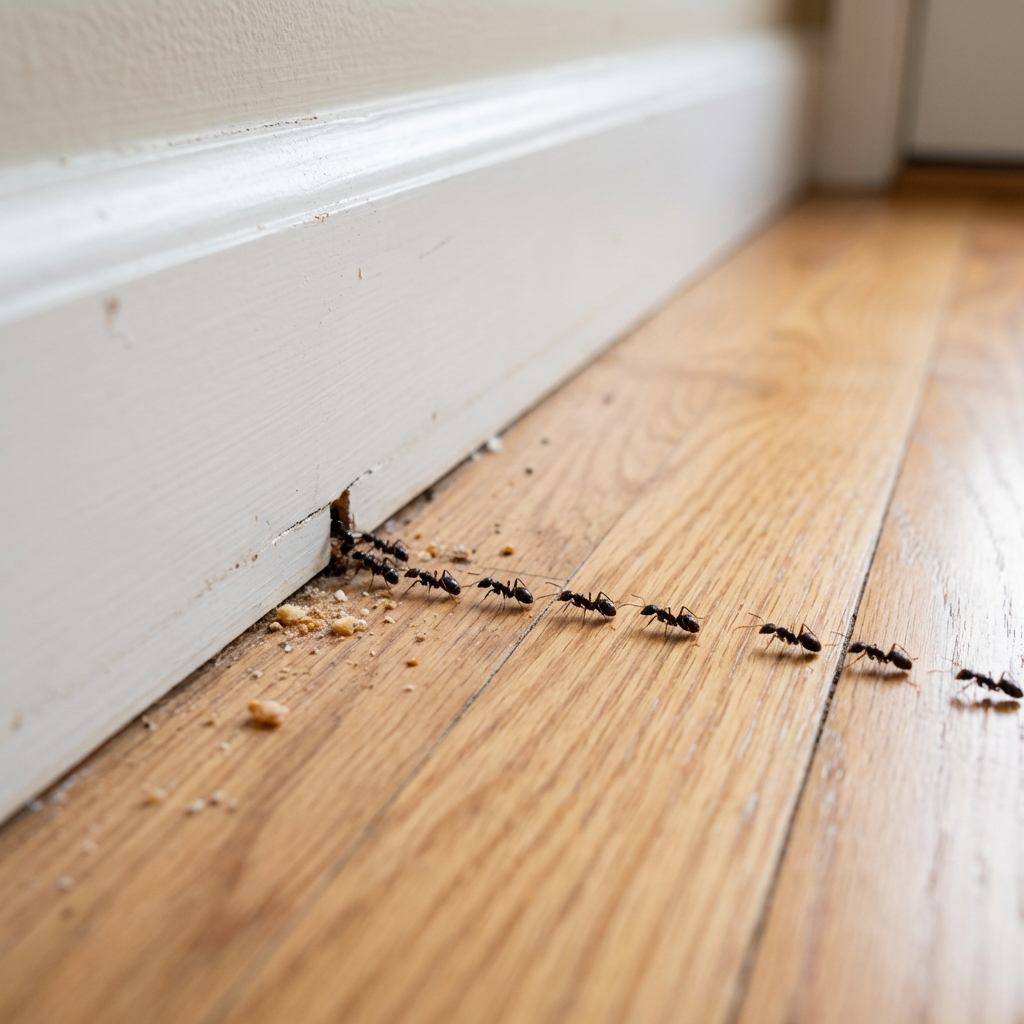
Spend 5 minutes watching the line. You are looking for a crack, gap, or hidden edge where the ants disappear.
- Baseboard corners
- Window trim and weep holes
- Gaps around pipes under sinks
- Door thresholds
- Cracks where the slab meets the wall
4) Use ant bait the right way (this targets the colony)
If you want the problem to actually end, bait is usually the most effective tool for common house-invading black ants. Workers carry the bait back to the nest and share it, which is what you need.
- Place bait near the trail, not directly in the middle of where you walk.
- Use multiple placements in the same room: near entry points, behind appliances, under sinks.
- Do not spray cleaner, vinegar, or insecticide on top of bait spots.
- Expect to see more ants for 24 to 72 hours. That is often a good sign because more workers are feeding and carrying it home.
- Refresh baits until activity is gone for a full week.
Tip: Ants can switch preferences. If they ignore a sweet bait, they may want protein or grease, and vice versa. Try a different bait type if there is no interest after a day.
Choosing a bait: Look for slow-acting ant baits labeled for indoor ants. Common active ingredients include boric acid or borax, indoxacarb, and fipronil. Follow the label directions and use the smallest effective amount so ants can feed and carry it back.
5) Seal entry points after baiting starts working
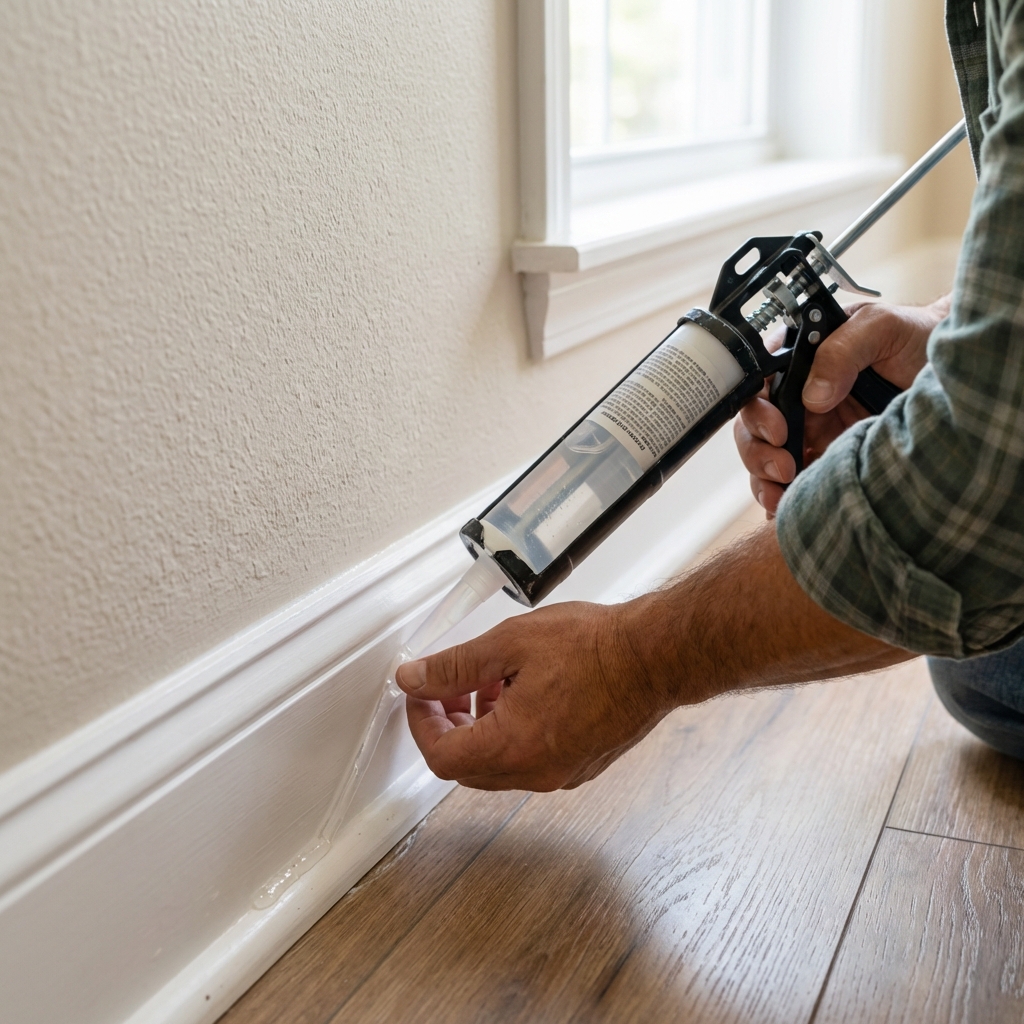
Do not seal everything on day one if ants are actively carrying bait. Let them keep traveling to deliver it to the colony. Once the trail is fading, block the routes.
Also: Sealing helps with exclusion, but it will not solve the problem by itself if you have an indoor nest (less common, but possible). That is why baiting comes first.
- Use caulk along baseboard gaps and small cracks.
- Use expandable foam for larger voids around pipe penetrations (sparingly).
- Add door sweeps or fix worn weatherstripping.
DIY remedies that can help (and what to avoid)
Soapy water: good for immediate knockdown
A spray bottle of water with a small squirt of dish soap kills ants on contact and helps remove trails. It is great for the ants you can see right now, especially around a sink or pantry corner.
Vinegar: useful for trail cleanup, not colony control
Vinegar can disrupt trails and reduce activity, but it rarely solves an infestation by itself. Think of it as a cleaning tool, not a finish-the-job tool.
Diatomaceous earth: works when kept dry
Food-grade diatomaceous earth can kill ants that walk through it. The catch is it must stay dry and lightly dusted. Heavy piles make ants walk around it, and humidity can reduce performance.
- Apply a thin dusting into dry cracks, behind appliances, or along a dry sill.
- Keep it away from kids and pets as a general safety practice, and avoid creating airborne dust. Use minimal product and consider wearing a mask during application.
Essential oils: mixed results
Peppermint, tea tree, and other oils may repel ants short-term, but repellents can also push ants into new routes. If you use them, use them for spot deterrence after the colony is under control, not as your main strategy.
What to avoid: random perimeter spraying indoors
Sprays can kill visible ants but often fail to reach the nest. They can also cause budding or route changes for some species, which means you get more trails in more rooms.
If the ants keep coming back: common hidden causes
1) Moisture problems
Ants love damp areas. Check under sinks, around dishwashers, behind toilets, and anywhere there is condensation.
- Fix slow leaks and replace water-damaged cabinet bases.
- Run a fan or dehumidifier in damp basements.
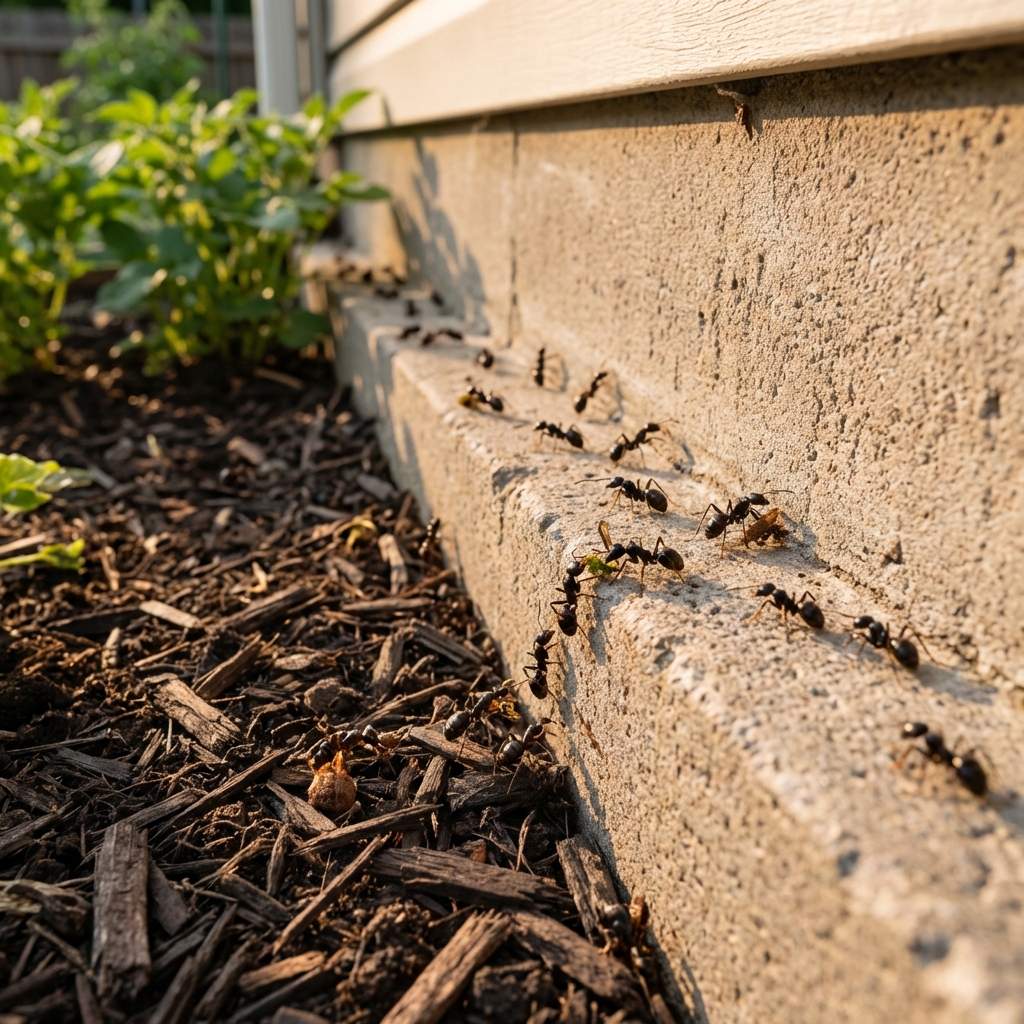
2) Outdoor colonies too close to the foundation
Sometimes the nest is outside but the food is inside. Look for ant activity along the foundation, patio edges, driveway cracks, and mulch beds right against the house.
- Pull mulch back a few inches from siding.
- Trim plants touching the house and remove debris piles.
- Store firewood away from the foundation.
3) Pantry attractants you forgot about
Ants can find the tiniest leak in packaging.
- Move sugar, cereal, flour, and snacks into sealed containers.
- Check for spills under shelf liners and in corners.
- Do not forget sticky spots around honey, jam, and syrups.
4) Outdoor honeydew sources near entry points
If you have aphids or scale on plants near windows, doors, or siding, ants may be harvesting honeydew and following that route toward your home. Trimming vegetation back and addressing plant pests can reduce traffic at the edges of the house.
When it might be carpenter ants
Carpenter ants do not eat wood like termites, but they tunnel in damp or softened wood to nest. If you see large black ants plus any of the signs below, treat this as a bigger home-maintenance issue:
- Sawdust-like piles (frass) near trim, windows, or baseboards
- Faint rustling in walls at night (sometimes)
- Winged ants indoors (especially outside of the usual spring swarming window)
- Ants consistently coming from a specific wall, window frame, or damp area
In that case, address moisture first, locate the nest if possible, and consider professional help. Baits can still help, but you do not want to ignore rotted wood or a hidden leak.
When to call a pro
DIY steps work for many situations, but it is smart to get help if:
- You still have strong ant activity after 10 to 14 days of proper baiting.
- Trails are showing up in multiple rooms or multiple levels at once.
- You suspect carpenter ants, moisture damage, or rotting wood.
- You cannot place baits safely due to kids, pets, or sensitive occupants.
- You are in a rental or HOA situation where treatment and exclusion need coordination.
Prevention checklist (the stuff that actually keeps them out)
- Weekly: wipe kitchen floors at edges, vacuum crumbs, rinse recycling.
- Monthly: inspect weatherstripping, check for new gaps, clean under appliances if you can.
- Seasonally: trim vegetation off the house, refresh caulk where it cracked, reduce mulch contact with siding.
- Always: store sweet and dry goods in sealed containers.
FAQ
Why are there suddenly black ants in my house?
Most sudden ant trails are triggered by a food source (crumbs, pet food, sugar) or water (a drip, condensation, damp sponge). Weather changes and seasonal foraging can also push outdoor colonies to explore indoors, especially along edges near doors and windows.
How long does bait take to work?
Often you will see a noticeable drop in 3 to 7 days, but stubborn situations can take 2 weeks. Keep bait available until activity stops completely.
Should I kill the ants I see?
You can wipe up stragglers with soapy water, but if you are baiting, do not wipe out the entire feeding trail right next to the bait. Let them carry it back to the nest.
Is it safe to use bait around kids and pets?
Use enclosed, tamper-resistant bait stations and place them where kids and pets cannot access them, like behind appliances or inside cabinets. Follow the label directions for any product you choose.
Bottom line
If you want black ants gone fast, focus on two things: remove the attractants and use bait so workers take it back to the colony. Once the trail is fading, seal the entry points and tidy up the outdoor edges of your home. That combination usually turns a repeating ant problem into a much rarer one, even during peak ant season.

Jose Brito
I’m Jose Britto, the writer behind The Country Store Farm Website. I share practical, down-to-earth gardening advice for home growers—whether you’re starting your first raised bed, troubleshooting pests, improving soil, or figuring out what to plant next. My focus is simple: clear tips you can actually use, realistic expectations, and methods that work in real backyards (not just in perfect conditions). If you like straightforward guidance and learning as you go, you’re in the right place.