Boxelder bugs are one of those pests that feel scarier than they really are. They rarely bite people, they do not chew your house, and they are not trying to “infest” your pantry. What they will do is gather in big numbers on sunny walls, slip into tiny cracks, and stain fabrics if you crush them.
This beginner-friendly guide walks you through what works in a real yard: identifying them correctly, removing the ones you see, and doing the key prevention steps that keep them from coming back every fall and spring.
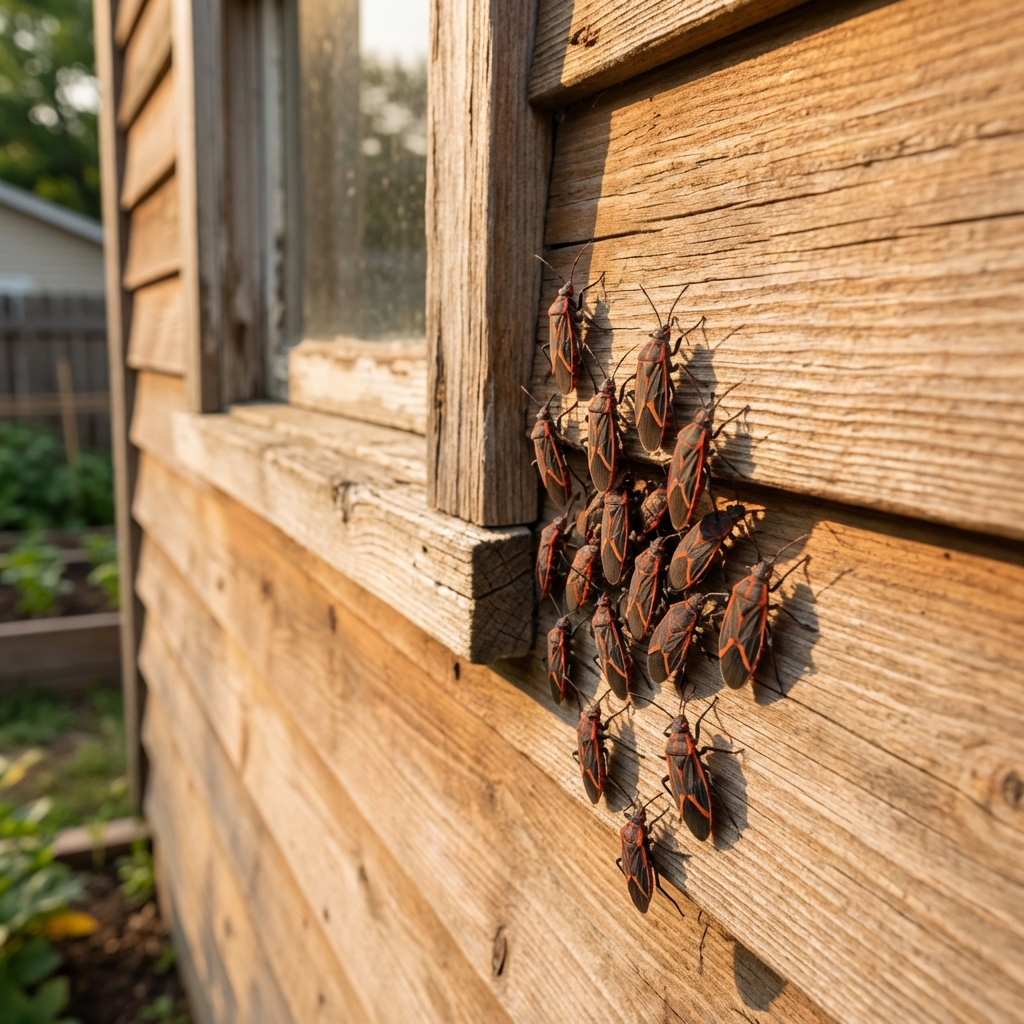
Identify boxelder bugs first
Correct ID matters because treatment is mostly about timing and entry prevention.
What they look like
- Adults: about 1/2 inch long, mostly black with thin red or orange lines. Wings lay flat and form an X shape.
- Nymphs (young): smaller, bright red with black legs and developing wing pads.
Common lookalikes
- Stink bugs: wider, shield-shaped bodies.
- Milkweed bugs: often brighter orange with larger color blocks, usually seen on milkweed seed pods.
- Cluster flies: slow, buzzy flies that gather at windows; they are not black-and-red.
- Asian lady beetles: rounder beetles (often orange) that can show up indoors in fall.
If what you have is a cluster of black bugs with red lines sunning themselves on a south or west wall, it is very often boxelder bugs.
Why boxelder bugs show up
Boxelder bugs feed on seeds and sap, especially from boxelder trees (a type of maple), and also sometimes from ash and other maples. They are mostly a nuisance outdoors, but they seek shelter when the weather changes.
Where they come from
In most neighborhoods, the bugs you see on your house started outside near a seed source (often a boxelder or other maple dropping “helicopter” seeds). When they show up indoors, they usually wandered in from outside to overwinter. They do not typically breed indoors like pantry pests.
The big seasonal pattern
- Late summer into fall: they gather on warm, sunny surfaces and look for cracks to overwinter indoors.
- Winter: they hide in wall voids, attics, and around windows.
- Warm spells in winter or early spring: they wake up and show up inside, often around windows.
The goal is to reduce the outdoor population and block the easy entry points before they wander in.
Quick plan: what to do today
Outside
- Knock them down with a strong stream of water from a hose on siding, decks, and sunny foundations.
- Spray directly on clusters with a simple soap-and-water mix (details below) or a labeled insecticidal soap.
- Vacuum or sweep up piles around door thresholds and window wells, then seal them in a bag and put them in the trash so they cannot crawl back out.
Inside
- Vacuum them rather than squishing them to avoid staining and odor.
- Empty the vacuum promptly (or use a disposable bag) so they do not crawl back out.
- Seal the gap they are using once the immediate bug traffic is under control (common spots include around window trim, door thresholds, and where cables or pipes enter).
Best removal methods (beginner-friendly)
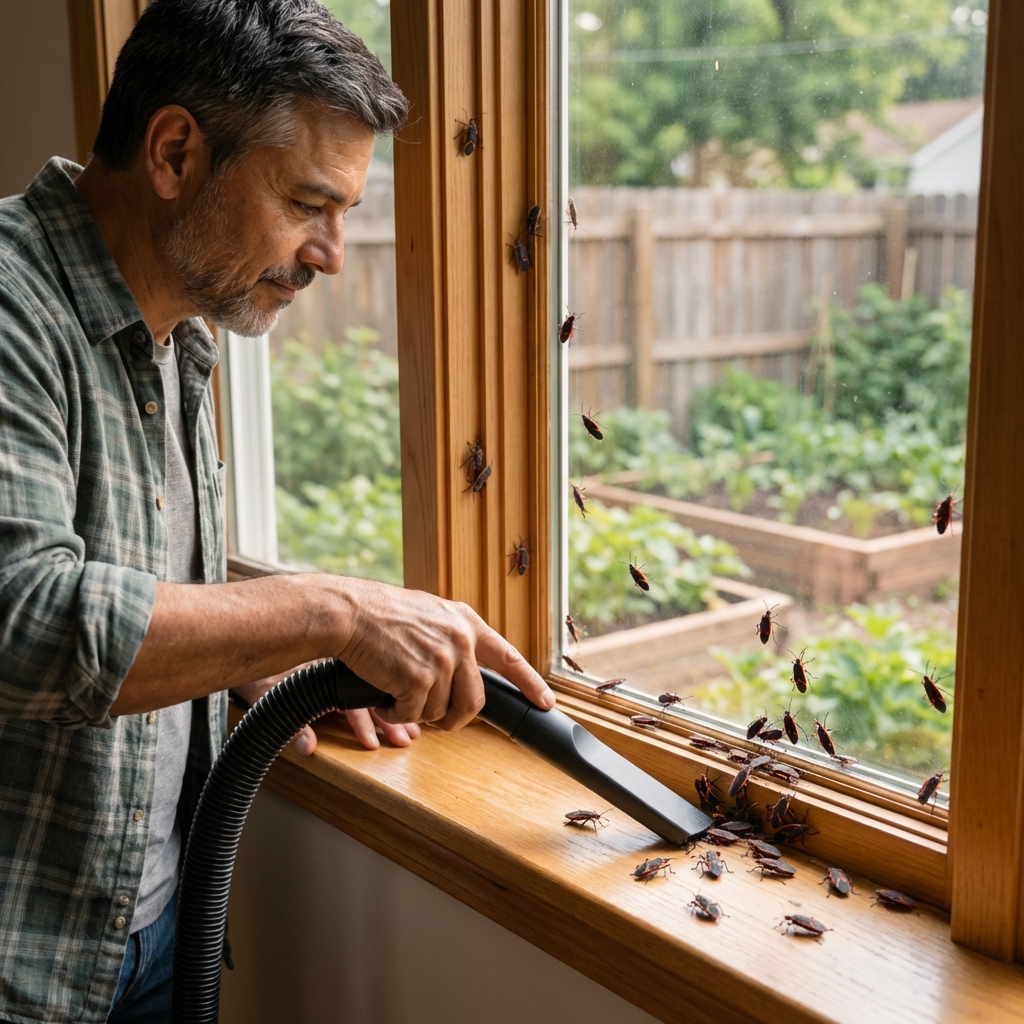
1) Vacuuming: the cleanest indoor option
If boxelder bugs are inside, a vacuum is usually the fastest fix. Skip indoor sprays when you can. Vacuuming plus sealing is almost always the better combo.
- Use a hose attachment to grab bugs on window sills and baseboards.
- If you have a bagless vacuum, empty it outdoors immediately into a sealed bag.
- To make cleanup easier, some people place a piece of pantyhose or a thin sock over the end of the hose or wand (inside the opening), secured with a rubber band, so bugs collect there. Use caution and do not damage your vacuum or restrict airflow too much.
2) Soap spray: simple and effective on contact
In plain terms, insecticidal soaps work by damaging the bug’s outer protective layer. They are most effective when you spray the bugs directly.
Two options:
- Labeled insecticidal soap: more consistent and generally safer for plants and many surfaces when used as directed.
- DIY dish-soap mix (spot treatment): can work in a pinch, but dish soap is not the same as insecticidal soap and can be harsher on plants and some finishes.
Easy DIY mix for spot treatment:
- 1 quart of water
- 1 to 2 teaspoons of liquid dish soap (use a basic, non-bleach soap)
How to use it: Shake gently, then spray directly onto clusters on siding, around door frames, or on foundation areas where they gather. Test a small spot first on painted surfaces, especially if your siding is older or delicate.
Important: Soap sprays can affect some plants if you soak foliage in hot sun. Aim for the bugs on hard surfaces when possible. If you need to treat near plants, spray in the evening and avoid soaking leaves.
3) Water knockdown: good for big clusters
A strong hose spray does not solve the root problem, but it is a great reset when you have hundreds sitting on one warm wall. Follow up with sealing and prevention or they will return.
Timing that helps
- Best time to seal gaps: late summer to early fall, before the big migration to warm walls and overwintering spots.
- Best time for outdoor spot treatments: early fall when clusters first show up on sunny siding and around entry points.
Prevention that actually works
If you do only one thing, do this: seal entry points. Most boxelder bug misery indoors is a weatherstripping problem, not a “bad house” problem.
Seal the top entry points
- Repair screens on windows, vents, and soffit openings.
- Replace worn weatherstripping around doors and sliding doors.
- Caulk gaps around window frames, trim boards, and where pipes or cables enter the house.
- Add door sweeps if there is daylight under exterior doors.
A flashlight test helps: at night, have someone shine a bright light from inside while you look outside for glowing gaps around doors and windows.
Reduce “welcome mats” outside
- Keep leaf piles and weeds cleared away from the foundation.
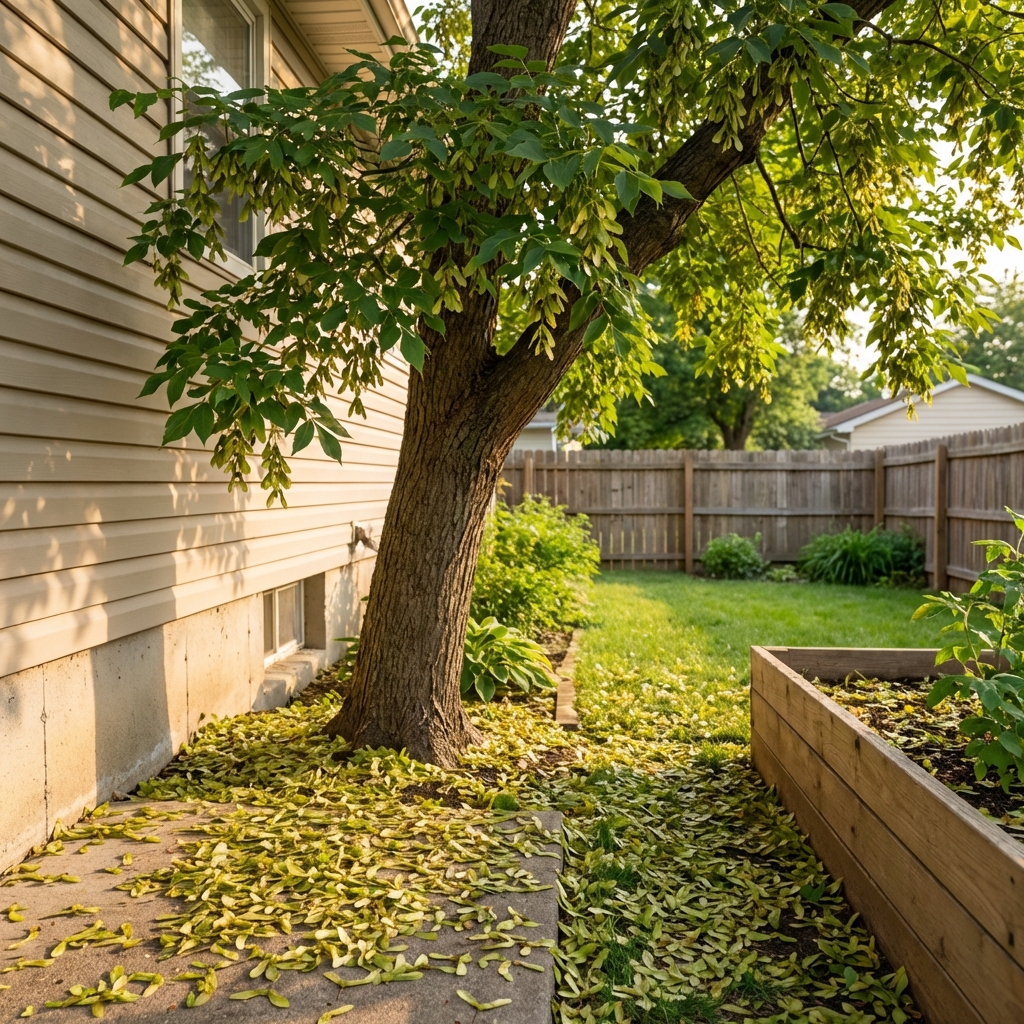
- Rake up helicopter seeds (maple seeds) where practical.
- Store firewood away from the house and off the ground.
What about the boxelder tree?
Boxelder trees (and some maples) are a major host. Removing a mature tree is a big decision and not always necessary. If the tree is yours and it is a female boxelder producing lots of seeds, reducing seedlings and seed drop cleanup can help. If the tree is a neighbor’s or a city tree, focus on house sealing and targeted outdoor control near your foundation.
Outdoor treatment options (when sealing is not enough)
If you are seeing heavy pressure every year, you can add a targeted outdoor treatment to reduce the numbers gathering on your home.
Insecticidal soap or pyrethrin sprays (contact sprays)
These are generally used as spot treatments for clusters on siding and around doors. They work best when you hit the bugs directly.
- Spray in the cooler part of the day so it dries slower and works better.
- Do not spray flowering plants where pollinators are active.
- Always follow the product label for mixing, surfaces, and safety.
Residual perimeter sprays (use carefully)
Some products are designed to leave a residue around entry points. They can be effective, but they also come with higher risk to beneficial insects if misused. If you go this route, keep it tight to the foundation, door thresholds, and cracks. Avoid broad spraying across plants and soil beds.
A note on indoor insecticides
Indoor aerosols and “quick kill” sprays are usually not worth it for boxelder bugs. You often will not reach the bugs in wall voids, and you still have the entry points. Indoors, stick with vacuuming and exclusion.
What not to do
- Do not crush them on fabric or painted walls. They can stain and leave an unpleasant odor.
- Do not rely on “bug bombs” indoors. They rarely solve the issue because the bugs are often inside wall voids, and you still have the entry points.
- Do not spray random mixes on your plants. Heavy dish soap mixtures can damage leaves. Keep DIY soap sprays mild and targeted, or use labeled insecticidal soap.
- Do not expect one spray to fix a seasonal migration. Prevention plus a little maintenance is what works.
Beginner checklist: your 7-day reset
Day 1 to 2: Knock down and remove
- Hose off clusters outdoors.
- Vacuum indoors and dispose of contents outside in a sealed bag.
Day 3 to 5: Block the entry
- Replace weatherstripping and add door sweeps.
- Caulk around windows and utility penetrations.
- Repair any torn screens.
Day 6 to 7: Reduce the attraction
- Clear leaves and seeds near the foundation.
- Trim dense growth that touches the house.
- Plan a fall routine: seal first, then spot treat clusters as needed.
FAQ
Are boxelder bugs harmful to people or pets?
They are mostly a nuisance. They rarely bite people and are not known to spread disease. Pets may mouth them out of curiosity, but the bigger issue is the odor and potential staining if crushed.
Why are there so many on the sunny side of my house?
They love warmth. South and west walls heat up, especially on cool fall days, and that draws them in to bask before searching for shelter.
Will they damage my garden?
Usually not in a noticeable way for home gardeners. Their main “damage” is being in the wrong place in large numbers, especially near homes.
How long does the problem last?
Most people notice peaks in fall (seeking winter shelter) and again in late winter or early spring (waking up indoors). If you seal entry points and keep up with quick knockdowns outdoors, the problem usually becomes manageable.
When to call a pro
If you have recurring heavy swarms every year and sealing has not helped, a local pest professional can identify hidden entry points and recommend a targeted perimeter plan appropriate for your home and climate. This is especially helpful if the bugs are entering through soffits, attic vents, or complex siding details.
Bottom line
Getting rid of boxelder bugs is less about one miracle spray and more about a simple routine: vacuum indoors, knock down outdoor clusters, and seal the gaps. Do those three things and you will usually go from “why are there hundreds?” to “I see a few, and it’s not a big deal.”

Jose Brito
I’m Jose Britto, the writer behind The Country Store Farm Website. I share practical, down-to-earth gardening advice for home growers—whether you’re starting your first raised bed, troubleshooting pests, improving soil, or figuring out what to plant next. My focus is simple: clear tips you can actually use, realistic expectations, and methods that work in real backyards (not just in perfect conditions). If you like straightforward guidance and learning as you go, you’re in the right place.