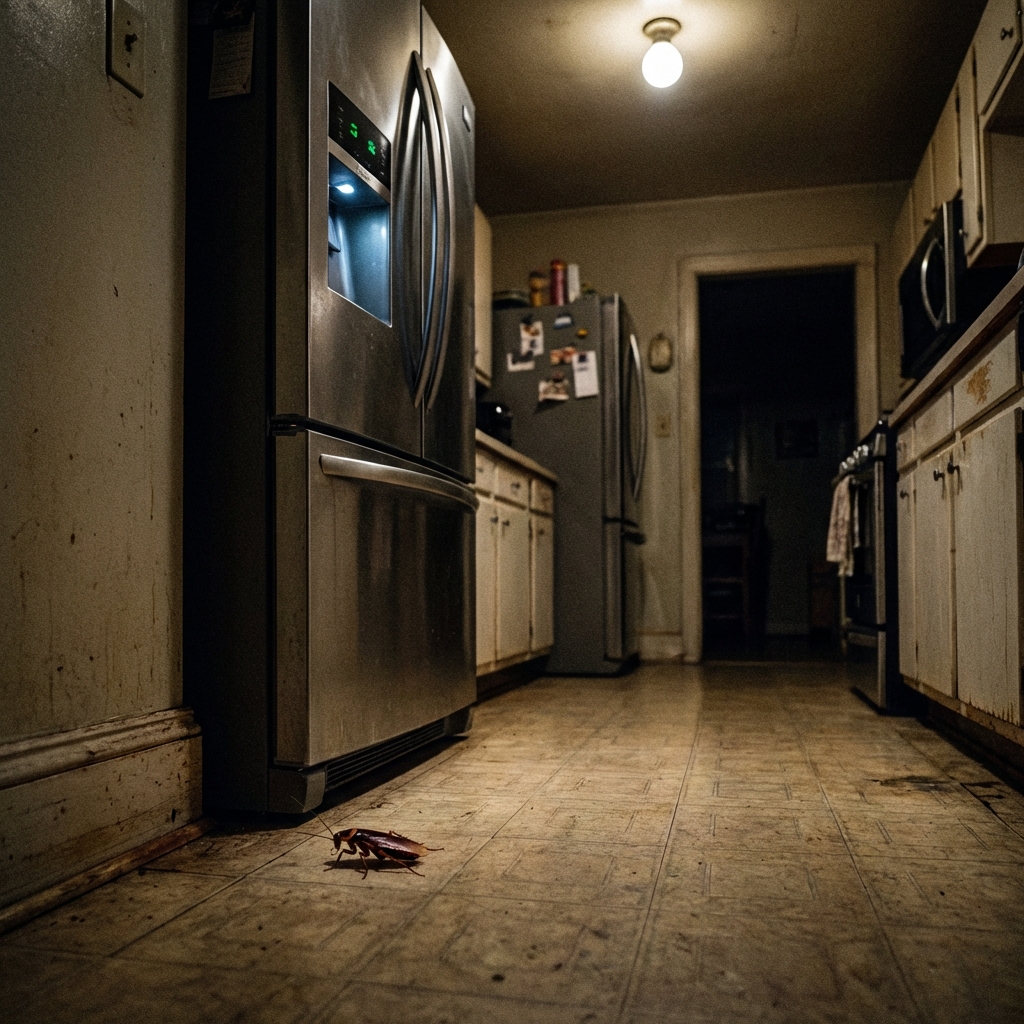
Cockroaches are not just gross, they are persistent. The good news is you can beat them without turning your home into a chemical war zone. The key is to stop feeding them, block their routes, and use the right products in the right places. This guide walks you through a simple system that works for most homes.
First, figure out what you are dealing with
Different roaches behave differently. If you treat the wrong problem, you waste time and money.
Common household cockroaches
- German cockroach: Small (about 1/2 inch, roughly 13 to 16 mm), tan to light brown, often with two dark stripes behind the head. Usually found in kitchens and bathrooms. This is the most common indoor infestation.
- American cockroach: Larger (often 1.5 inches or more), reddish-brown. Often comes from basements, crawl spaces, sewers, boiler rooms, and drains.
- Oriental cockroach: Dark and shiny, likes cool, damp areas like basements and floor drains.
- Smokybrown cockroach: Dark brown to black, commonly outdoors but can invade attics and garages, especially in warm climates.
Quick clue: If you see roaches mostly at night and especially near the fridge, stove, dishwasher, or sink, you are likely dealing with German roaches, and baiting is usually your best tool.
How to confirm an infestation
One roach can be a fluke. Repeated signs mean a population is living close by.
- Droppings: German roach droppings look like black pepper or coffee grounds in drawer corners and cabinet seams.
- Egg cases (ootheca): Small, brown cases in cracks, behind appliances, or inside clutter.
- Odor: A musty, oily smell in heavy infestations.
- Smear marks: Dark streaks along walls or cabinet edges in damp areas.
Severity clue: If you see roaches in the daytime, especially more than once, it often means the hiding spaces are crowded and you need to move fast.
Why roaches keep coming back
Roaches stick around for three reasons: food, water, and safe hiding places. If you remove just one of those, you help. If you hit all three, you win.
- Food: Grease splatter, crumbs under appliances, pet food left out, open trash.
- Water: Leaky pipes, condensation under sinks, wet sponges, standing water in plant saucers.
- Harborage: Cardboard, clutter, gaps behind cabinets, cracks in baseboards, voids around plumbing.
The smart plan: do these steps in order
This is the most effective sequence for most infestations. You can start today and improve results week by week.
Step 1: Clean like you mean it (but focus on the right areas)
You do not need to bleach every surface. You do need to remove the hidden food sources that keep roaches breeding.
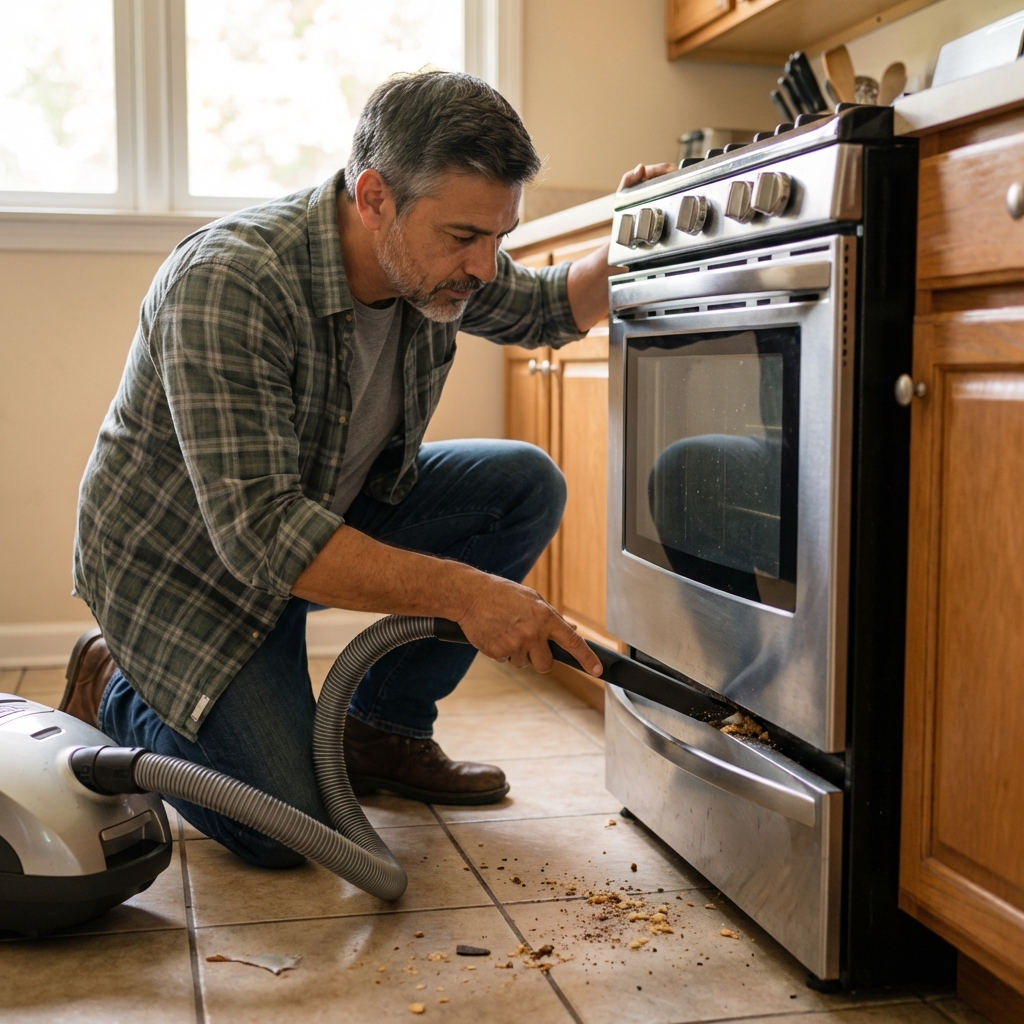
- Pull the fridge and stove out and vacuum the sides, back, and floor underneath. Degrease if needed.
- Clean the drip pan under the fridge if your model has one.
- Wipe inside cabinet corners, especially near the sink and trash.
- Store food in sealed containers and do not leave pet food out overnight.
- Take trash out nightly and rinse recyclables.
Step 2: Remove water sources
- Fix leaks under sinks, behind toilets, and at the dishwasher supply line.
- Dry the sink at night and wring out sponges.
- Reduce condensation by improving ventilation and using a dehumidifier if needed.
Step 3: Use sticky traps to map the problem
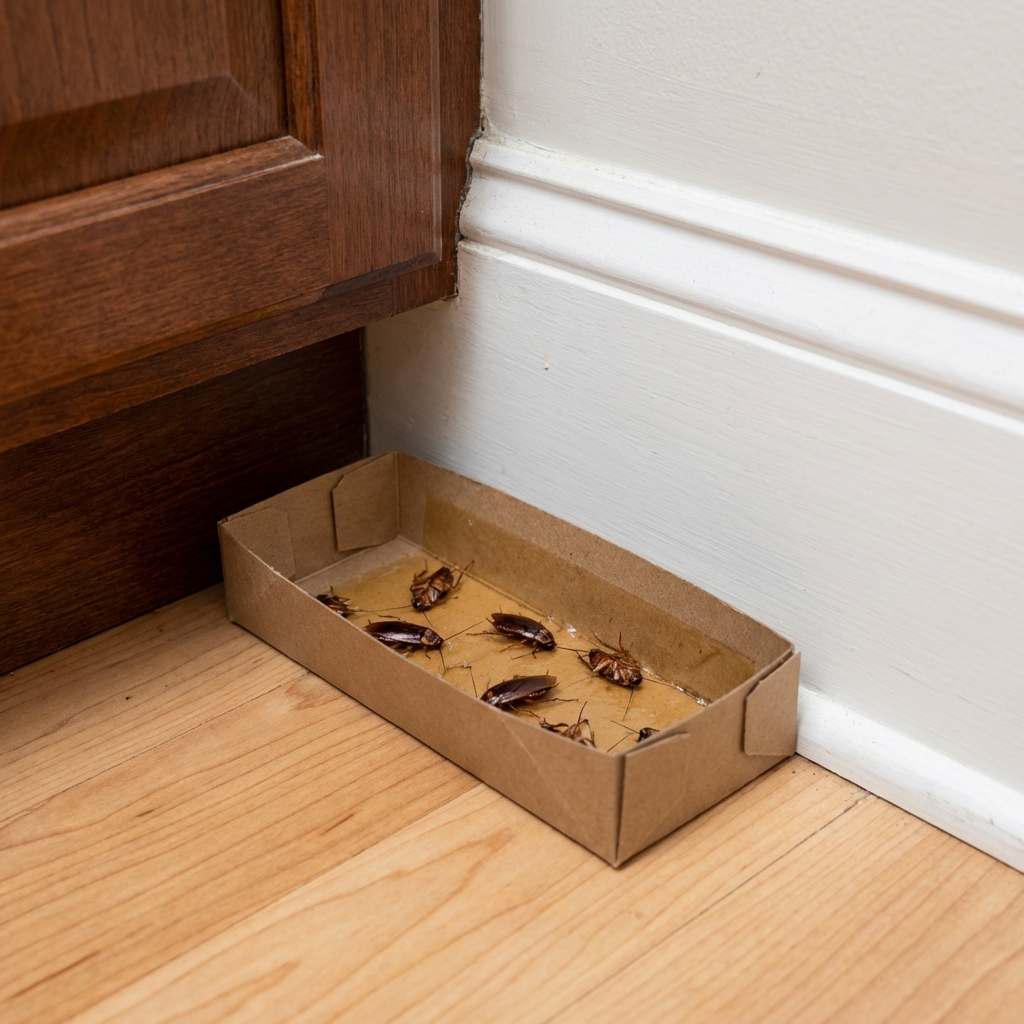
Sticky traps help you confirm where the activity is highest so you can focus bait and sealing work. They also show progress.
- Place traps along walls, behind the toilet, under the sink, and behind appliances.
- Check weekly and replace as needed.
Step 4: Use gel bait correctly (this is usually the game changer)
For most indoor infestations, especially German roaches, gel bait is more effective than sprays because it reduces the population where roaches hide and feed. Roaches eat it, then the toxicant can spread through the colony via shared harborages, feces, and sometimes cannibalism.
- Place tiny dots, not big globs. For German roaches, aim for grain-of-rice size dots, and use more placements instead of bigger ones.
- Put bait where roaches travel: under the sink, in cabinet corners, behind the fridge, near the dishwasher, and along baseboards.
- Do not bait on surfaces that get wet or hot.
- Refresh bait every 1 to 2 weeks, or sooner if it dries out or gets eaten.
- Follow the product label, and avoid placing bait right after using strong cleaners or degreasers in that exact spot. Strong odors can reduce feeding.
Important: Avoid spraying insecticide near bait placements. Many sprays repel roaches and can reduce bait feeding.
Tip: If you are baiting for weeks with limited results, consider rotating to a different bait active ingredient (check the label). Not every colony responds the same way.
Step 5: Seal entry points and hiding gaps
Sealing does not kill roaches already inside, but it stops reinforcements and cuts down hiding spots. For German roaches, focus first on outside entry points and obvious cracks. Save heavy “tighten every seam” sealing until you have knocked the population down with bait, so you do not accidentally force roaches to spread to new rooms.
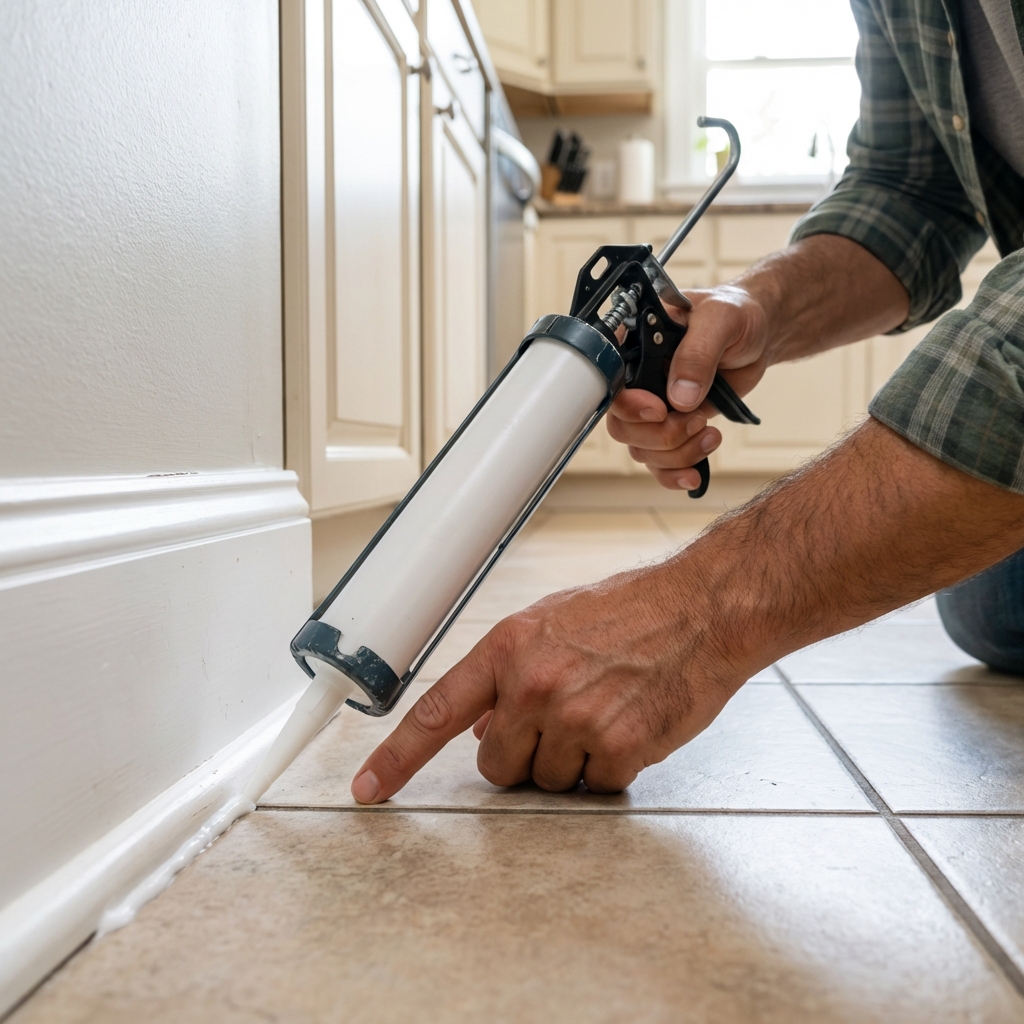
- Use silicone caulk for cracks along baseboards, cabinet seams, and around plumbing penetrations.
- Add door sweeps to exterior doors and weatherstrip obvious gaps.
- Use steel wool plus caulk for larger gaps around pipes where pests travel.
Step 6: Use dusts only in the right places
Dusts can be excellent, but only if applied lightly and kept dry. A thick layer is not better.
- Boric acid: Effective, inexpensive, and long-lasting when kept dry. Apply a very light dust in wall voids, under appliances, and behind cabinets. Keep it out of open areas and off food-contact surfaces.
- Silica gel or diatomaceous earth (food grade): Works by damaging the roach’s outer coating and drying it out. Best for cracks and dry voids.
Safety note: Keep dusts out of reach of children and pets and avoid applying where they can become airborne. Follow the label directions.
Optional boost: add an IGR
If you are battling German roaches, an insect growth regulator (IGR) can help. It does not kill instantly, but it interrupts breeding so the problem collapses faster when combined with bait and cleanup. Follow the label, and treat it as an add-on, not a replacement for bait.
What to avoid (common mistakes that slow you down)
- Foggers and bug bombs: They rarely reach the cracks where roaches live and can push roaches deeper into walls and cabinets.
- Heavy spray-only approach: Sprays can kill on contact, but they often miss the core problem. Overuse can also repel roaches and reduce bait feeding.
- Leaving cardboard and clutter: Roaches love it. Switch to plastic bins with lids.
- Inconsistent baiting: One application rarely finishes the job. Plan on a few weeks of steady pressure.
How long does it take to get rid of cockroaches?
That depends on the species and how established the infestation is, but here is a realistic timeline if you follow the plan above.
- Week 1: Sometimes you may see more cockroaches as bait starts working and activity shifts.
- Weeks 2 to 4: Activity should drop noticeably if bait placements are correct and food and water are limited.
- Weeks 4 to 8: Many households reach “no sightings” or only an occasional one. Continue monitoring with traps.
If you have German roaches and you are still seeing daily activity after 4 weeks of baiting and cleanup, something is off. Usually it is bait placement, competing food sources, a hidden water leak, or a neighboring source (common in apartments).
Natural and low-tox options that actually help
There is no magic natural spray that solves a serious cockroach problem. But several lower-tox strategies do work when used correctly.
- Sanitation and exclusion: The most “natural” and the most important.
- Sticky traps: Non-toxic and great for monitoring.
- Silica gel or food-grade diatomaceous earth: Useful in dry voids and cracks. Apply lightly.
- Vacuuming: A quick way to remove live roaches, egg cases, and debris behind appliances. Empty the vacuum immediately.
If cockroaches are coming from outside
If you mostly see larger cockroaches (American or smokybrown), the problem may be outdoors first and indoors second.
- Remove leaf litter and thick mulch right up against the foundation.
- Fix outdoor water sources like dripping spigots and leaky irrigation.
- Store firewood away from the house and off the ground.
- Seal exterior entry points and add screens to vents where appropriate.
For outdoor pressure, a targeted perimeter treatment may help, but it works best after you reduce moisture and hiding spots near the house.
If you live in an apartment or multi-unit building
This is the tough truth: you can do everything right and still get reinfested if cockroaches are traveling through walls, plumbing chases, or shared hallways. You can still make your unit much harder to live in, but results are fastest when the building treats the source.
- Tell management early and ask about a bait-focused IPM plan for the whole building.
- Use traps to document hotspots and share the findings.
- Seal obvious gaps around plumbing, baseboards, and door frames, but avoid sealing every void shut until bait has knocked the population down.
When to call a professional
Sometimes you can do everything right and still need extra help. Consider calling a licensed pest control pro if:
- You have daytime sightings, which can signal a heavy infestation.
- You live in a multi-unit building where cockroaches move between units.
- You cannot locate the source, or you suspect wall void nesting and plumbing chase movement.
- There are health concerns like asthma triggers and you need a tightly managed plan.
If you hire help, ask specifically about bait-focused integrated pest management (IPM), whether they use an IGR for German cockroaches, and what you should do between visits to keep results lasting.
Quick checklist: your 7-day roach reset
- Day 1: Deep clean behind fridge and stove. Remove cardboard and clutter.
- Day 2: Fix leaks and dry sinks at night.
- Day 3: Place sticky traps to identify hotspots.
- Day 4: Apply gel bait in targeted areas (grain-of-rice size dots, many placements).
- Day 5: Seal exterior gaps and obvious cracks near cabinets and plumbing.
- Day 6: Lightly dust dry voids if needed (boric acid or silica gel).
- Day 7: Check traps, refresh bait if eaten or dried, and keep food sealed.
Stick with it for a few weeks and you should see a clear downward trend. The goal is not just fewer cockroaches, it is breaking the cycle so they do not rebuild.

Jose Brito
I’m Jose Britto, the writer behind The Country Store Farm Website. I share practical, down-to-earth gardening advice for home growers—whether you’re starting your first raised bed, troubleshooting pests, improving soil, or figuring out what to plant next. My focus is simple: clear tips you can actually use, realistic expectations, and methods that work in real backyards (not just in perfect conditions). If you like straightforward guidance and learning as you go, you’re in the right place.