Fleas are tiny, stubborn, and surprisingly organized. If your cat has them, you are not just dealing with what is on the fur today. You are dealing with a life cycle that is likely already happening in your carpets, bedding, and couch cushions.
The good news: you can knock fleas back naturally with a steady plan. The key is doing cat + home + prevention at the same time, because treating only the cat is how fleas come right back.
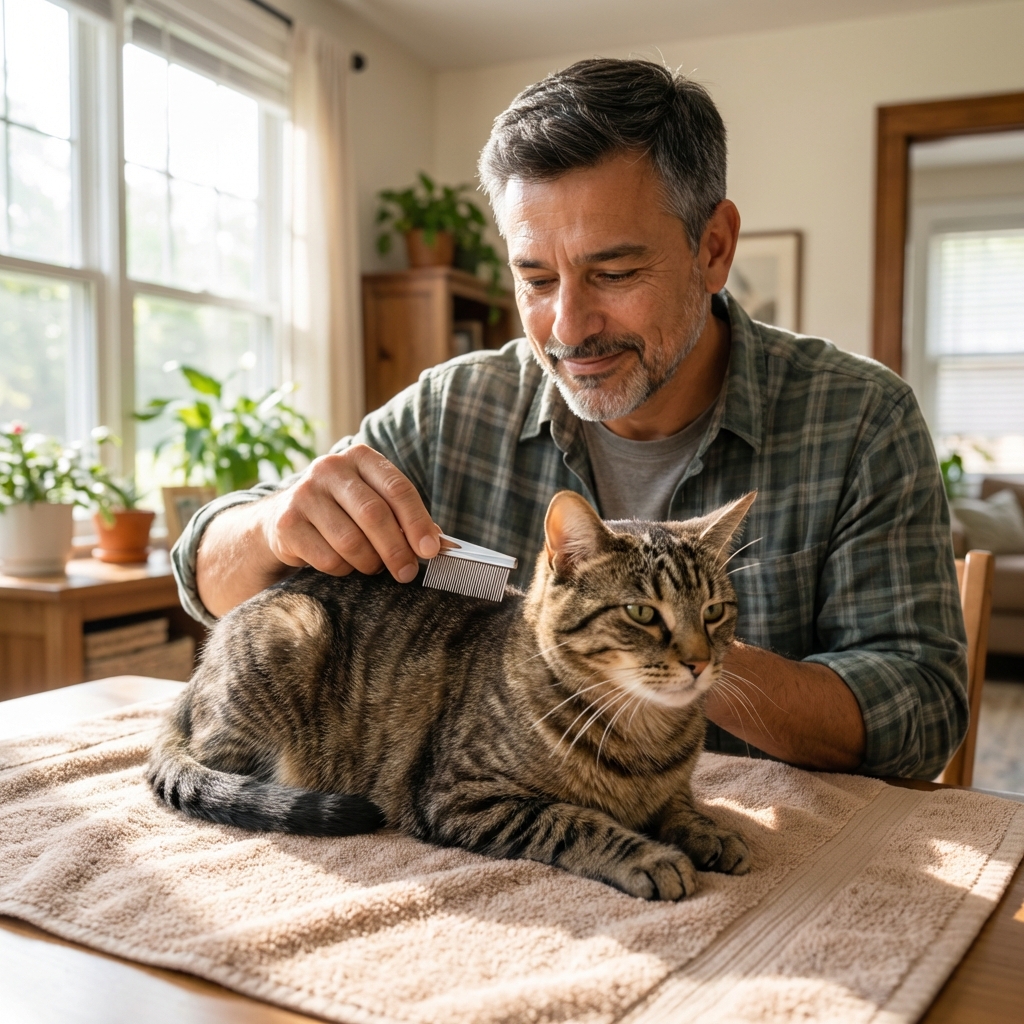
First, identify fleas
Before you treat, confirm what you are seeing. Over-treating can irritate your cat’s skin and waste time.
Common flea signs on cats
- Frequent scratching or over-grooming, especially along the back, base of tail, belly, and inner thighs
- Small scabs or red bumps (often called flea allergy dermatitis)
- Hair thinning over the rump or back legs
- Restlessness or twitchy skin
Quick reality check: If your cat has flea allergy dermatitis, even one bite can trigger intense itching and scabs. That is why some cats look miserable even when you only catch a few fleas.
How to do the “flea dirt” test
Flea dirt is flea poop. It looks like black pepper. To check:
- Put your cat on a white towel or paper towel.
- Use a flea comb and comb along the neck and base of the tail.
- Tap what you collect onto a damp white paper towel.
- If the specks turn reddish-brown, that is digested blood and is strong evidence of fleas.
Fleas vs dandruff vs scabs
- Dandruff stays white and does not smear red on a damp towel.
- Scabs are stuck to the skin and do not comb out like pepper.
- Fleas may be hard to spot, but flea dirt often shows up even when you do not catch an adult flea.
Safety notes
Natural does not automatically mean safe for cats. Cats process some chemicals differently than dogs and people, and they are meticulous groomers, which makes topical products riskier.
Avoid these on cats
- Essential oils applied to the cat (including tea tree, peppermint, eucalyptus, citrus, clove, oregano). Even small amounts can be toxic when licked or absorbed.
- Garlic or other “home remedies” meant to be eaten. They can be harmful.
- Dog flea products or any product not labeled for cats. Some contain permethrins that are dangerous for cats.
Dish soap note
You will see dish soap mentioned in flea tips online. In this guide, it is used only in the bowl of water to drown fleas you comb off. Do not use dish soap as a cat shampoo unless your vet specifically tells you to. It can be drying and irritating.
When to call a vet quickly
- Kittens, seniors, or cats under about 4 pounds
- Pale gums, weakness, or heavy infestation (risk of anemia)
- Open sores, intense inflammation, or suspected skin infection
- If you have tried for 2 to 3 weeks and fleas are not decreasing (for example, you still see the same or more flea dirt on the comb, trap catches are not dropping, or itching is not improving)
Remove fleas from your cat
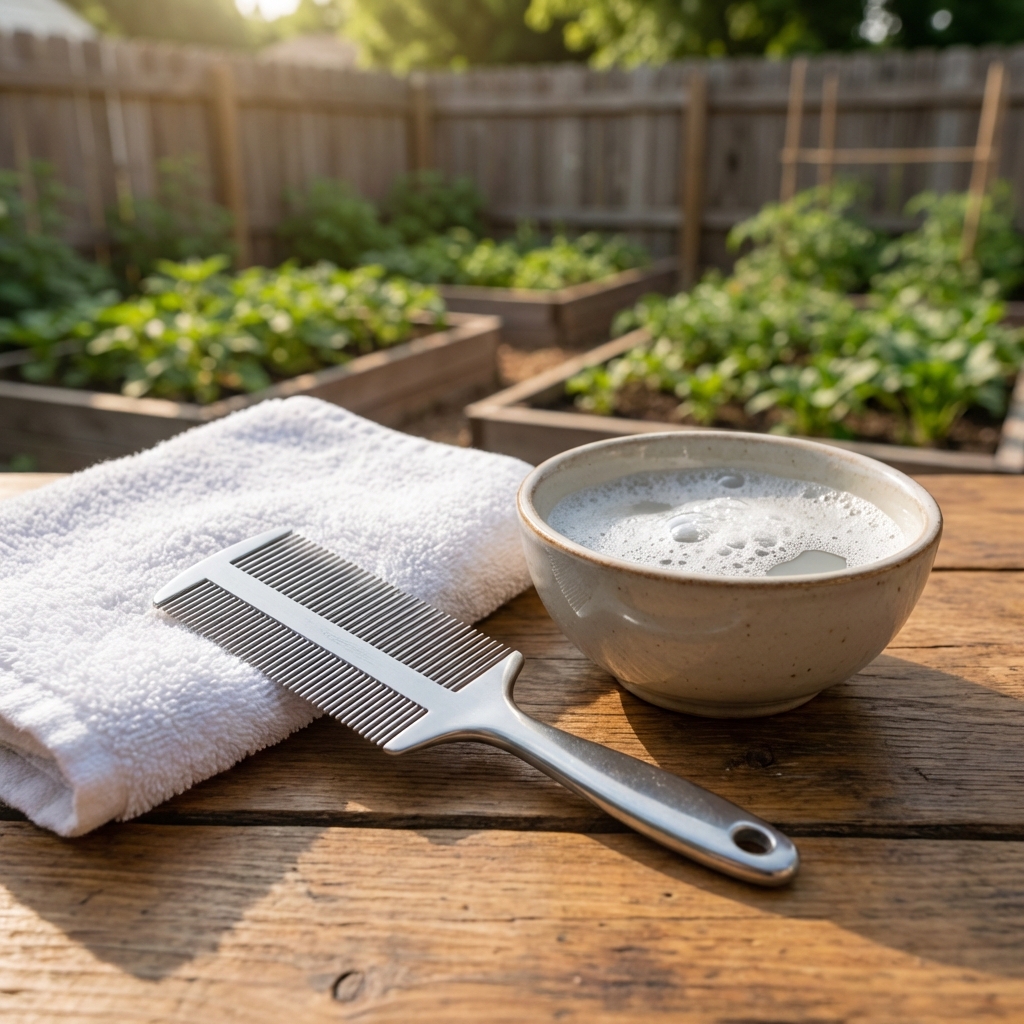
Step 1: Set up a flea comb station
This is your most reliable natural tool. You are physically removing adult fleas and flea dirt (and sometimes a few eggs), which helps right away.
- White towel
- Fine-toothed flea comb
- Bowl of warm water with a few drops of mild dish soap (to drown fleas)
- Paper towels
- Treats to keep your cat cooperative
Comb slowly from head to tail, focusing on the neck, behind ears, armpits, groin, and base of tail. Dip the comb in the soapy water often.
Step 2: Comb daily for 7 to 14 days
Plan on 5 to 10 minutes per session (longer for long-haired cats if they tolerate it). Once is not enough. Fleas emerge in waves. Daily combing helps break the cycle and gives you a real read on whether you are winning.
Step 3: Bathe only if your cat tolerates it
Bathing is not required for every cat, but it can reduce adult fleas fast. If your cat panics around water, skip this and focus on combing plus home control.
- Use warm water and a fragrance-free cat shampoo or a vet-approved gentle cleanser.
- Start by making a “ring” of lather around the neck. This helps prevent fleas from running up to the head.
- Lather the body, then rinse thoroughly.
- Towel dry and then comb again.
Note: Avoid using essential oil shampoos. “Natural scented” products often contain oils that are not cat-safe.
Step 4: Soothe irritated skin
If your cat has mild itch, keep it simple and non-irritating. A damp cloth to remove flea dirt and a clean resting area help more than strong-smelling sprays.
Remove fleas from your home
Most of the flea population is not on your cat. Eggs fall off into the environment, then hatch into larvae and pupae. If you only treat the cat, the house keeps re-seeding the problem.
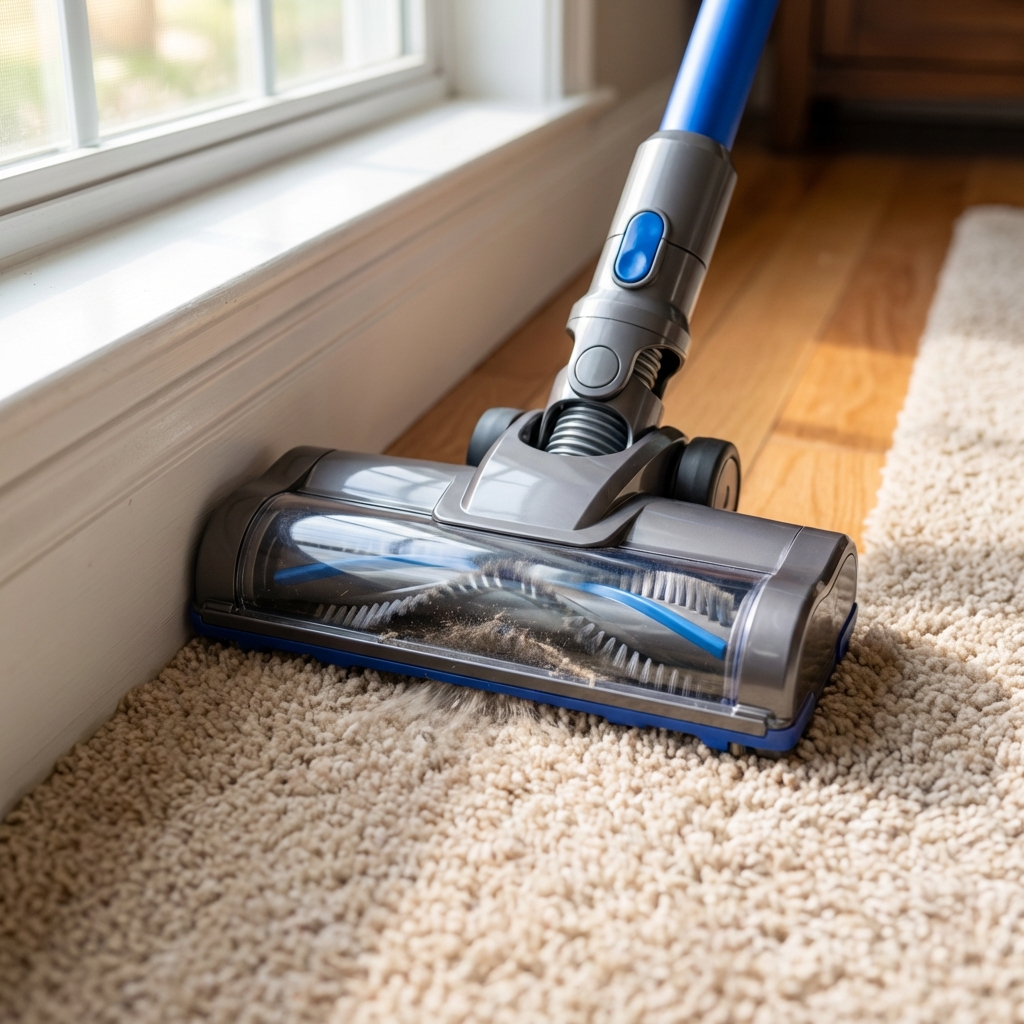
Step 1: Vacuum thoroughly
Vacuuming is one of the strongest “natural” tools because it can pick up some eggs and larvae, plus it disturbs carpets and upholstery in a way that can encourage adult fleas to emerge from pupae over time (vibration and warmth are part of it). That makes them easier to catch and remove.
- Vacuum carpets, rugs, baseboards, and under furniture.
- Focus on the cat’s favorite nap spots.
- Use crevice tools on couch seams and chair cushions.
- Vacuum daily for the first week, then every other day for 2 to 3 more weeks.
If you use a bagged vacuum, seal and discard the bag outside. If bagless, empty into a sealed trash bag outside and wash the canister.
Step 2: Wash fabrics on hot
- Cat bedding, blankets, and throws
- Your bedding if your cat sleeps there
- Slipcovers and washable pet beds
Heat is what helps here. A hot dryer cycle can be more effective than detergent alone.
Step 3: Use simple physical controls
- Sticky flea traps near pet sleeping areas (especially at night). They help monitor activity and catch adults.
- Steam cleaning carpets and upholstery if available. Heat helps kill multiple life stages.
Replace or dispose of trap pads regularly, and keep traps where pets and kids cannot access them.
Step 4: Use diatomaceous earth carefully (optional)
Food-grade diatomaceous earth (DE) can help in dry areas by damaging flea exoskeletons. It still has inhalation risk, so treat it like dust, not like a harmless powder.
- Only use food-grade, not pool-grade.
- Wear a well-fitting mask while applying, and avoid creating airborne dust.
- Apply a light dusting to cracks, edges of carpets, and under furniture, not into the air.
- Keep pets and people out of the area while applying and until dust fully settles.
- Vacuum it up after 24 to 48 hours and repeat if needed.
If your home has asthma concerns, or your cat is sensitive, skip DE and lean harder on vacuuming, laundering, steam, and traps.
Yard and entry points
Outdoor cats can pick up fleas from shaded, damp areas where wildlife passes through. Even indoor cats can get fleas brought in on clothing or from other pets.
Simple yard steps
- Mow and reduce dense, shady spots where fleas thrive.
- Limit wildlife access when possible (secure trash, block crawl spaces).
- Wash or replace outdoor bedding areas where your cat lounges.
Prevention
Once you get ahead of fleas, your job becomes maintenance. Think of it like keeping weeds out of a garden bed. You do small things consistently so you never have to do a big rescue again.
Weekly prevention checklist
- Flea comb your cat 1 to 2 times per week.
- Vacuum high-risk areas weekly (pet beds, couch seams, rugs).
- Wash pet bedding weekly or every other week.
- Keep an eye out for flea dirt after outdoor time.
Multi-pet homes
- Comb all pets during the same week, not just the itchiest one.
- Wash and rotate bedding, and consider giving each pet their own sleep spot while you are getting ahead of the problem.
- Coordinate cleaning with treatment so your home is not constantly re-seeding fleas onto everyone.
If natural methods are not enough
Some infestations are too heavy for natural control alone, especially in warm, humid climates or multi-pet homes. A vet can recommend the lowest-intervention cat-safe options that actually break the life cycle, such as a prescription oral or topical adulticide and, in some cases, an insect growth regulator (IGR) approach for the environment. You can still keep your plan “low chemical” by using the smallest effective treatment and continuing the cleaning steps so you do not have to repeat it.
Quick FAQ
Can I use apple cider vinegar on my cat for fleas?
It is not a reliable flea killer, and many cats hate the smell. If it irritates skin or your cat grooms it off heavily, it can create more problems than it solves. Flea combing and home cleaning work better.
How long does it take to get rid of fleas naturally?
Expect improvement within a few days, but full control usually takes 3 to 6 weeks, and sometimes longer (up to 8 to 12 weeks) because pupae can emerge over time. Consistency is what wins.
Do I need to treat every pet?
Yes. If one pet is untreated, fleas will keep circulating. Use only species-appropriate products and methods for each animal.
Why do I still see fleas after cleaning?
Often it is newly emerged adults that were protected as pupae. Keep vacuuming, laundering, and combing. This is common during the first few weeks of a serious infestation.
A simple plan for today
- Today: Confirm fleas with the flea dirt test, start combing, wash bedding, vacuum thoroughly.
- Next 7 days: Comb daily (5 to 10 minutes), vacuum daily, run flea traps at night.
- Weeks 2 to 4: Vacuum every other day, wash bedding weekly, keep combing 2 to 3 times a week.
- After that: Weekly maintenance so fleas do not regain momentum.
If you stick with the steps, you can usually get control without turning your home into a chemical zone. The biggest mistake is stopping too early. Keep going until you go at least two full weeks with no flea dirt showing up.

Jose Brito
I’m Jose Britto, the writer behind The Country Store Farm Website. I share practical, down-to-earth gardening advice for home growers—whether you’re starting your first raised bed, troubleshooting pests, improving soil, or figuring out what to plant next. My focus is simple: clear tips you can actually use, realistic expectations, and methods that work in real backyards (not just in perfect conditions). If you like straightforward guidance and learning as you go, you’re in the right place.