Those tiny gnats hovering around your houseplants are more than just annoying. Most of the time they are fungus gnats, and the real problem is not the adults you see flying. It is the larvae living in the top 1 to 2 inches of moist potting mix.
The good news: you can get rid of them without harsh chemicals. The key is a two-part plan:
- Catch and reduce the adults so they stop laying eggs.
- Eliminate larvae in the soil so the cycle breaks.
Know what you are dealing with
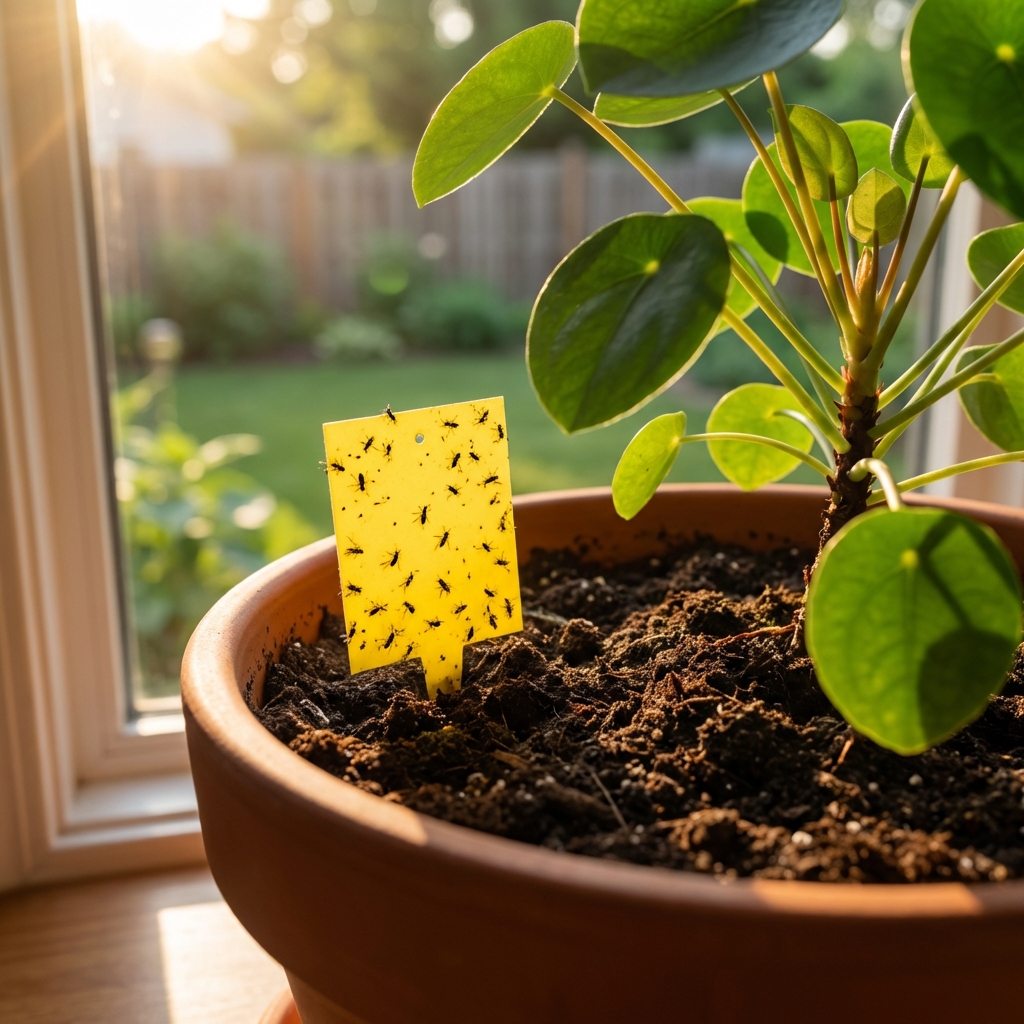
Before you treat, make sure it is actually fungus gnats. They are usually:
- Small, dark, mosquito-like flies that run or flutter near soil.
- Most visible when you water or bump the pot.
- Often show up in plants kept consistently moist or in bags of potting mix stored open.
Common lookalikes
- Fruit flies hover around fruit, trash, drains, and fermenting spills more than plant soil.
- Drain flies look fuzzy and rest on bathroom or kitchen surfaces near drains.
- Whiteflies are white and cling to leaves, especially outdoors or in greenhouses.
If the swarm is mostly around pots and the soil stays damp, treat it like fungus gnats.
If you keep seeing flies but your sticky traps stay mostly empty, pause and check for fruit fly or drain fly sources instead (produce, trash, recycling, drains).
Why gnats show up on plants
Fungus gnat adults lay eggs in moist potting mix. The larvae feed on algae, fungi, and decaying organic matter. In heavier infestations, larvae can also nibble fine roots, which can slow growth and make seedlings struggle.
What triggers outbreaks most often:
- Overwatering or pots that never dry out near the top.
- Poor drainage or a pot sitting in a saucer of water.
- Old or breaking-down potting mix with lots of fine particles.
- New plants brought home with eggs or larvae already in the soil.
Fastest natural plan (do these in this order)
Step 1: Let the top layer dry
This is the foundation. Fungus gnat eggs and larvae need consistent moisture near the surface. For most houseplants, letting the top 1 to 2 inches dry before watering again makes a big dent.
- Empty saucers after watering so roots are not sitting in water.
- Water thoroughly, then wait longer between waterings so the top layer has time to dry.
- Bottom watering can help, but only if you do not keep the pot soaking for hours. Let it drink for 10 to 20 minutes, then drain.
If you are dealing with moisture-loving plants (like ferns or some calatheas) that cannot dry much, do a smaller dry-down (even just the top 1/2 inch), improve airflow and light, and lean more on BTI or beneficial nematodes for larval control.
Step 2: Set yellow sticky traps
Sticky traps are low-effort and very effective for catching adults. Place them:
- Right at soil level, close to the stem.
- In every affected pot, not just the worst one.
Replace traps when they are covered with insects or dust. You should see the number caught drop week by week.
Step 3: Treat the soil to kill larvae
Drying soil reduces larvae, but it often does not finish the job alone. Pick the option that fits your situation (BTI and nematodes are the most reliable), then repeat as directed.
Natural soil treatments that work
Option A: BTI (mosquito bits or dunks)
BTI (Bacillus thuringiensis israelensis) is one of the most reliable natural controls for fungus gnat larvae. It targets certain fly larvae and is widely used for mosquito control.
How to use it for houseplants:
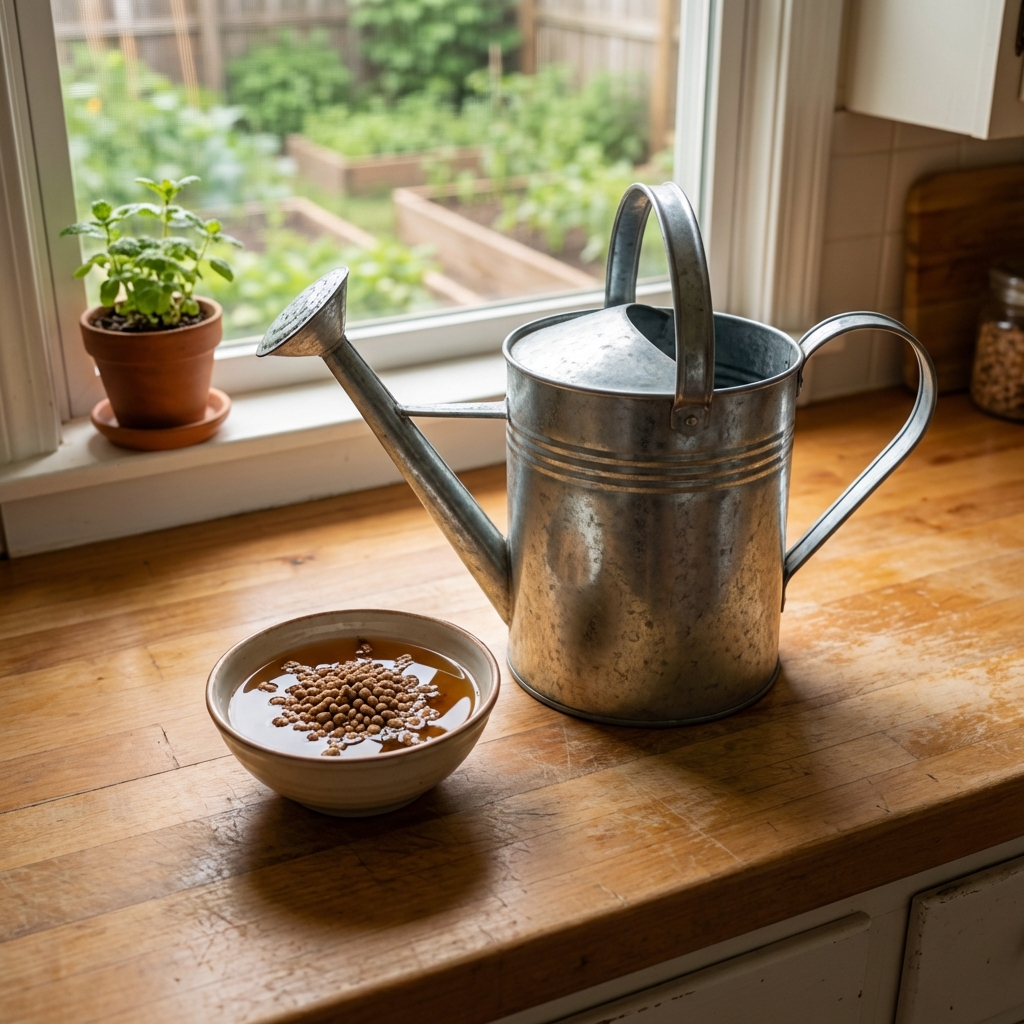
- Soak a small amount of mosquito bits in water for 20 to 30 minutes, then strain out the solid bits and use only the BTI water to water your plants. (Leaving the corn cob granules on the soil can get moldy, which can feed larvae.)
- Or soak a piece of a mosquito dunk in your watering can, then water as usual.
Follow label directions, and remember BTI works best when larvae are active and can ingest it. Repeat weekly for 2 to 4 weeks to break the life cycle.
Option B: Beneficial nematodes (best for persistent infestations)
Steinernema feltiae beneficial nematodes hunt fungus gnat larvae in moist soil. They are a great option when gnats keep returning or you have many plants.
- Apply according to the package directions (storage and freshness matter).
- Keep soil lightly moist for the first week so nematodes can move through the media.
- Use sticky traps at the same time to reduce adults.
Option C: Hydrogen peroxide flush (optional, variable results)
This is a commonly used home method, but results vary and it can be hard on roots and helpful soil microbes if overused. Consider it a spot treatment, not your main strategy.
If you try it, use 3% hydrogen peroxide (the common pharmacy kind) diluted with water:
- Mix 1 part 3% hydrogen peroxide with 4 parts water.
- Water the plant until liquid drains out the bottom.
- Expect some fizzing as it reacts with organic material.
Do not use this every watering. Typically once, then again 7 to 10 days later only if needed. Stop if you notice wilting, yellowing, or leaf stress, and avoid it on sensitive plants unless you test a small area first.
Option D: Neem oil soil drench (use carefully)
Neem can help, but it is not my first pick for fungus gnats because results vary and drenches can stress some plants. Neem works more like a growth disruptor and feeding deterrent than a quick knockdown. If you use it, follow label directions and avoid strong sunlight right after application to reduce leaf stress if any gets splashed.
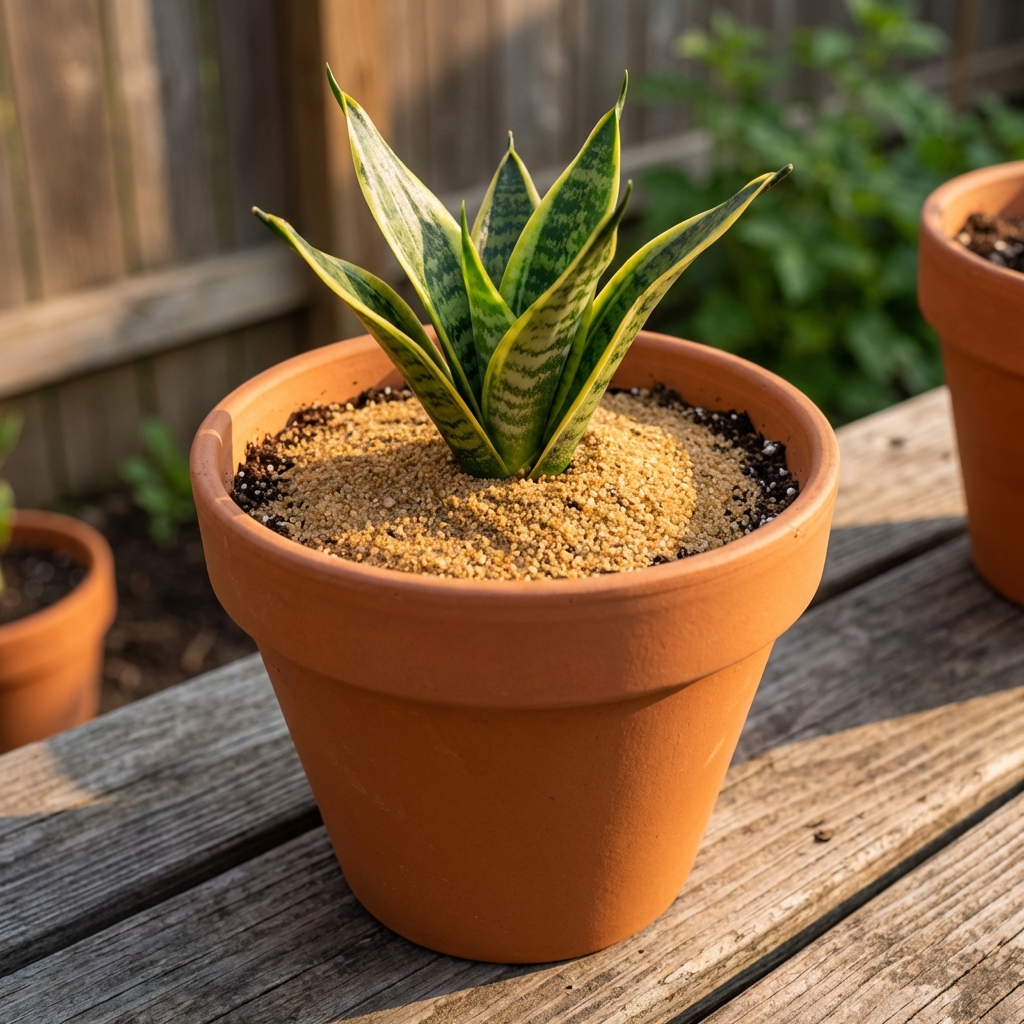
Option E: A physical barrier on top of the soil
A dry top layer makes it harder for adults to lay eggs and for new adults to emerge. For this to work, apply a barrier layer that is at least 1/4 to 1/2 inch deep.
Good barrier options:
- Coarse sand (not packed down)
- Fine gravel
- Horticultural grit
Important: barriers only help if your watering habits improve and the surface can actually dry. If you keep the mix wet, a top dressing can trap moisture below and make the problem linger, especially for plants that need consistently moist topsoil.
What not to do
- Do not keep watering on a schedule. Water based on soil dryness and plant needs.
- Do not rely on apple cider vinegar traps alone. They might catch a few adults but do not touch larvae in the soil.
- Do not smother the soil with thick organic mulch indoors. It often keeps the surface moist, which gnats love.
- Do not repot everything immediately. Repotting can spread gnats if you reuse contaminated tools or mix and it stresses plants. Treat first, then repot if needed.
If you do repot
Sometimes repotting is the right call, especially if the mix is old, compacted, or staying wet for days. If you repot:
- Discard the old potting mix (do not compost it indoors).
- Wash the pot and saucer with hot soapy water and rinse well.
- Use fresh, well-draining mix and make sure the pot has drainage holes.
- Keep sticky traps up and consider BTI for a couple waterings to catch any stragglers.
How long it takes
Most people see improvement quickly with sticky traps plus better watering, but full control usually takes 2 to 4 weeks. In warm rooms the life cycle can run faster, so you may see faster turnover, but you still need to treat long enough to break the cycle.
A realistic timeline:
- Days 1 to 3: Sticky traps start filling up, fewer gnats flying.
- Week 1: Soil dries more between waterings, larvae numbers begin dropping.
- Weeks 2 to 4: With BTI or nematodes, the population collapses.
Prevention that sticks
Water smarter
- Check moisture with your finger or a wooden skewer before watering.
- Use pots with drainage holes and empty saucers.
- For plants that like moisture, improve airflow and light so the surface still dries a bit.
Refresh old potting mix
If your mix is compacted, stays wet for days, or looks broken down and fine, repot into a fresh, well-draining mix. Consider adding perlite or pumice to reduce sogginess.
Quarantine new plants
Keep new plants separate for a week or two. Use a sticky trap in the pot during quarantine. It is an easy early warning system.
Store potting soil properly
Close bags tightly or move soil into a sealed bin. Open bags in warm areas are a common source of repeat infestations.
Quick safety notes
- Keep sticky traps away from pets and kids (they are very sticky).
- Store BTI and nematodes according to package directions.
- Avoid getting neem or peroxide in eyes or on skin, and rinse splashes off leaves with plain water.
Quick checklist
- Let the top 1 to 2 inches of soil dry between waterings (or as much as your plant safely tolerates).
- Put yellow sticky traps in every affected pot.
- Use strained BTI water weekly for 2 to 4 weeks, or apply beneficial nematodes.
- Improve drainage and airflow, and stop letting pots sit in water.
- Quarantine new plants and seal potting soil bags.
When to escalate
If you have done the steps above for 3 to 4 weeks and still see lots of adults on traps, look for a hidden moisture source:
- A pot with no drainage hole inside a decorative cachepot holding water
- A plant sitting in a constantly wet self-watering setup
- A tray, humidifier spill, or leaky sink keeping an area damp
- A bag of potting mix nearby that has become a breeding site
Once you remove the constant moisture and treat larvae, fungus gnats usually stop being a recurring problem.

Jose Brito
I’m Jose Britto, the writer behind The Country Store Farm Website. I share practical, down-to-earth gardening advice for home growers—whether you’re starting your first raised bed, troubleshooting pests, improving soil, or figuring out what to plant next. My focus is simple: clear tips you can actually use, realistic expectations, and methods that work in real backyards (not just in perfect conditions). If you like straightforward guidance and learning as you go, you’re in the right place.